
The Man from U.N.C.L.E. (2015)
Taking a popular franchise that is familiar to fortysomethings and remaking it for modern audiences is a difficult proposition and a calculated risk. More often than not such undertakings fail. Consider The Wild Wild West, The Avengers (no not that one, the other) and more recently The Lone Ranger. The problem lies in trying to make a film that can please all audiences. Often the finished product is too different from original material to appeal to the “get off my lawn” brigade. Younger viewers often have no connection to the franchise or knowledge of the era it came from. This results in the film failing to find a market and leads to box office failure. However it doesn’t necessarily indicate that the movie is poor per se.
Taking a popular franchise that is familiar to fortysomethings and remaking it for modern audiences is a difficult proposition and a calculated risk. More often than not such undertakings fail. Consider The Wild Wild West, The Avengers (no not that one, the other) and more recently The Lone Ranger. The problem lies in trying to make a film that can please all audiences. Often the finished product is too different from original material to appeal to the “get off my lawn” brigade. Younger viewers often have no connection to the franchise or knowledge of the era it came from. This results in the film failing to find a market and leads to box office failure. However it doesn’t necessarily indicate that the movie is poor per se.
The Man from U.N.C.L.E. is a text book example of this phenomenon, which is a shame. Guy Ritchie’s action comedy is far from a bad film. It’s stylish, sporting a wonderful stylised 60s production design and also has an amusing script. There are numerous homages and clever references to the spy genre, specifically those from the sixties. There’s more than a touch of Bond to the action scenes, international locations and some of the characters personal traits. The movies also boast a splendid cross section of international popular music from the period. The cast are also rather engaging. I was quite surprised by the lead performances from both Henry Cavill and Armie Hammer. I actually came away from watching The Man from U.N.C.L.E. quite entertained.
Yet I can totally understand why this movie was not commercially successful. For anyone unfamiliar with the original sixties TV show, this remake is just another comedy spy drama set in a period of history that is now just a chapter in a history book. An equivalent movie in a similar idiom such as Spy has the advantage of a contemporary setting and a broader rating. It is far more accessible and has no barriers to entry. Older viewers are similarly perplexed by The Man from U.N.C.L.E. as it is not an identical copy of what they are familiar with. The cast may not be known to them and the postmodern sensibilities of this film can be a major stumbling block. Nostalgia is sometimes a millstone.
Yet despite the odds being stacked against them, film studios still seem to back remakes of classic TV shows and movies. The allure of creating a franchise is strong and there are a handful of successful examples, such as the Mission Impossible movies, that appear to justify the risks involved. Therefore the recycling of “classic” content from the past five decades of TV and cinema is likely to continue. I have no doubt that the levels of success and failure will also remain the same.
The Hobbit: The Battle of the Five Armies Extended Edition (2014)
The theatrical edition of The Hobbit: The Battle of the Five Armies was light on plot and heavy on action sequences. As a result it had many unresolved story lines. The extended editions once again attempts to address these deficiencies but sadly out of the twenty minutes of additional material that has been added, most are extended action scenes. There are moments of substance buried within this ponderous expanded edition but they are few and far between. Compared to other entries in the extended trilogy, this is the weakest as it really doesn’t add any major plot or narrative improvements. It does however add a lot more orc based violence.
The theatrical edition of The Hobbit: The Battle of the Five Armies was light on plot and heavy on action sequences. As a result it had many unresolved story lines. The extended editions once again attempts to address these deficiencies but sadly out of the twenty minutes of additional material that has been added, most are extended action scenes. There are moments of substance buried within this ponderous expanded edition but they are few and far between. Compared to other entries in the extended trilogy, this is the weakest as it really doesn’t add any major plot or narrative improvements. It does however add a lot more orc based violence.
If you are familiar with Peter Jackson’s earlier work such as Bad Taste and Braindead, then the splatter and CGI gore that has been added to The Hobbit: The Battle of the Five Armies will come as no surprise. As ever with his treatment of violence, Mr. Jackson tries to mitigate it’s over the top nature with a little slapstick humour. It may well me cunningly contrived and well-staged but it seems tonally out of place. Is this really Tolkien’s work? It’s a shame really because Peter Jackson is a very good film maker but he needs someone to curb his excesses and pull his focus back to the narrative when he becomes too enamoured with spectacle.
The new scenes added to The Hobbit: The Battle of the Five Armies are as follows.
Gandalf and Narya, The Ring of Fire.
The first new scene starts during Gandalf’s captivity in Dol Guldur. A large Uruk interrogates him regarding Narya the ring of fire. After brutally flinging him to the ground (shades of Pontius Pilate in The Life of Brian), the torturer attempts to sever the wizard’s hand.
Galadriel arrives and subsequently causes the Uruk to explode when revealing her power. Apparently this nameless Uruk, created via the use of an actor wearing prosthetics, was the original design for Azog.
Fighting the Ringwraiths and Radagast’s staff.
There are additional shots of Saruman and Elrond fighting the Ringwraith, which remains an entertaining but incredibly lore breaking sequence.
A more important scene is added after the expulsion of Sauron from Dol Guldur by the White Council. Radagast gives Gandalf his staff, as Mithrandir had lost his when confronting the Necromancer. Bunny Sled fans will enjoy its brief return during this expanded section.
Bilbo and Bofur.
One of the few strong points of this trilogy is the interaction between Bilbo and Bofur. During the night Bilbo decides to leave Erebor and go the Dale and give the Arkenstone to Bard and Thranduil to stop the ongoing conflict. Bofur mistakenly thinks that Bilbo is leaving for home again, as he did in the first movie. It’s a nice character driven vignette, that highlights the quality of the performances of both Martin Freeman and James Nesbitt.
Thorin considers Bard and Thranduil’s terms.
In this expanded scene Thorin ponders Bard and Thranduil’s terms, with regard to ransoming of the Arkenstone. This is a nice embellishment that showsThorin’s resolve wavering. There’s a nice lore based quip when Thranduil says to Bard “Ecthelion of Gondor will give you a good price for it”. However the arrival of a Raven on the wall informs Thorin that his Cousin Dáin Ironfoot has come and the negotiations swiftly end.
Send in the Goats.
In this considerably expanded section of the movie Dáin Ironfoot arrives with a sizeable army of Dwarves armed with Ballistas and Battle Rams in armour. After a pithy exchange with Thranduil, he decides to “send in the Goats” against the Elven Archers. It all ends in a scene very reminiscent of Braveheart with the Goats being skewered by a sheltron.
The Dwarves also deploy a Ballista based weapon that deals with the Elven arrow barrage very effectively. This new content adds gravitas to the decision by all parties to cease fighting when the Orc army arrives.
Bofur and the Troll.
After Thorin and company join the battle, there is new material involving the Dwarves. One such scene features a reoccurring joke involving a hand axe being thrown between Dwarves. This is the sort of embellishment that works very well and adds character to the proceedings.
Sadly shortly after this fun new addition, we get a completely over the top action sequence in which Bofur rides a Blind Troll and causes havoc among the Uruks.
The Dwarven War Chariot.
This next action scene is quite lengthy and is possibly the most controversial addition to the extended edition of the film. When Thorin decides to attack Azog at Ravenshill , he rides on a Battle Ram, with Kili Fili, Dwalin and Balin providing support in a Dwarven war Chariot. A hectic pursuit ensues as they are attacked by Wargs, Orcs and an armoured Troll.
This scene contains a lot of CGI splatter violence that may well have pushed the US rating from PG-13 to R. There is a short pause for a dialogue exchange between Dwalin and Balin which again shows that there is some depth to the little narrative there is.
The Death of Alfrid.
Alfrid (Ryan Gage) is an utterly contrived character and frankly serves no real purpose in this movie, beyond the functional. Did the story really need a comic foil? However in the extended edition at least we get to see his demise, which is equally phony and laboured. The scene benefits from some light relief as Gandalf tries to get the staff that Radagast gave him to work.
Bifur and the Axe in his Head.
I’ve always found the concept of Bifur having an axe embedded in his head a step too far. However this new scene does at least make use of this particular “MacGuffin”. After headbutting an Orc Bifur finds himself stuck. Both Bofur and Bombur wrestle to free him resulting in the axe head finally being removed from his skull. A zinger line follows, which I believe is the only piece of dialogue Bifur (William Kircher) has in all three films.
Legolas and the Gratuitous Action Scene.
If you are a fan of the scene in the theatrical version of the movie in which Legolas hung from a Gaint Vampire Bat, then you’ll love this expanded scene in which he dangles upside down and attacks an entire column of Uruks singlehandedly. It is staggeringly crass and frankly embarrassing to watch.
The Funeral.
Finally and perhaps in some ways the most important addition to the movie, we have the funeral for Thorin Oakenshield. This short and sombre scene does see the Arkenstone restored to Thorin as he as well as Kili and Fili lie in state on top of their stone tombs. The montage then cuts to Dáin Ironfoot being crowned king under the mountain.
Fans of this trilogy will no doubt enjoy this latest extended edition, as will those viewers who are not Tolkien aficionados and are just looking for come casual fantasy entertainment. However there are many who still feel that this adaptation of The Hobbit is deeply flawed and is very much a case of style over substance. This is very much Peter Jackson's interpretation of Middle-earth, rather than an authentic depiction of Tolkien's. However irrespective of your point of view this extended edition is ultimately superior to the theatrical release and remains the recommended version of the film.
Black Belt Jones (1974)
Among the many Blaxploitation films of the seventies, Black Belt Jones is certainly one of the best. Director Robert Clouse skilfully blends the action with humour and no cliché is left unturned. Jim Kelly proves very adept and his fighting style is both accomplished and enjoyable. Sporting cast of known genre names, such as Scatman Crothers, Gloria Hendry the film proves to be an entertaining eighty seven minutes. If you like this genre along with big Afro's, plaid pants and jive talking pimps, then Black Belt Jones ticks all the boxes. The plot is hardly complex drawing from stock story lines from the martial arts and action genres. However some of the dialogue is priceless with Malik Carter having all the best lines.
Among the many Blaxploitation films of the seventies, Black Belt Jones is certainly one of the best. Director Robert Clouse skilfully blends the action with humour and no cliché is left unturned. Jim Kelly proves very adept and his fighting style is both accomplished and enjoyable. Sporting cast of known genre names, such as Scatman Crothers, Gloria Hendry the film proves to be an entertaining eighty seven minutes. If you like this genre along with big Afro's, plaid pants and jive talking pimps, then Black Belt Jones ticks all the boxes. The plot is hardly complex drawing from stock story lines from the martial arts and action genres. However some of the dialogue is priceless with Malik Carter having all the best lines.
Pinky: "You see I got a couple of Bogarts coming in from Frisco".
Mafia Boss: "Bogarts? What are Bogarts?”
Pinky: "Treacherous Niggers".
The soundtrack is composed and performed by Dennis Coffey and Luchi De Jesus; the former a funk star in his own right, the latter an established composer within the Blaxploitation genre. Together the pair have produced some exceptional cues that mix guitars, funky basslines and traditional string orchestrations that reflect the musical idiom that was established by Shaft. The current soundtrack album nicely mixes together lines of dialogue and sound effects from the movie. The title theme itself is very memorable with its hip vocalisations, cool bass and blasting horns. If you enjoy this genre of movie and the music form this period, then soundtrack to Black Belt Jones is a solid investment.
Dawn of the Dead: The Extended Mall Hours Cut (1978)
In the last few years I’ve become acquainted with the concept of fan edits. Fan edit are versions of a film that has been modified by a viewer. This involves the removal, reordering, or the addition of new material to create a new interpretation of the film. Fan edits include the removal of scenes or dialogue, replacement of audio and visual elements, as well as adding material from sources such as deleted scenes or even other films. Due to the easy access to pro-quality software and high definition source material, such editions are often very professionally realised. Naturally fan edits often fall foul of copyright law.
In the last few years I’ve become acquainted with the concept of fan edits. Fan edit are versions of a film that has been modified by a viewer. This involves the removal, reordering, or the addition of new material to create a new interpretation of the film. Fan edits include the removal of scenes or dialogue, replacement of audio and visual elements, as well as adding material from sources such as deleted scenes or even other films. Due to the easy access to pro-quality software and high definition source material, such editions are often very professionally realised. Naturally fan edits often fall foul of copyright law.
I was introduced to this sub-genre when I was tipped off about an extended version of George A. Romero's classic Zombie movie Dawn of the Dead. After a little investigation on the internet I discovered Dawn of the Dead: The Extended Mall Hours Cut. This fan edit produced by the intriguingly named Officially Unofficial, uses the 139 minute Cannes Cut of the film and the 117 minute Dario Argento version. Effectively this is the closest approximation of Romero’s original rough cut of the movie and clocks in at a total running time of 155 minutes.
There is quite a lot of extra footage in this fan edit. As well as miscellaneous scenes of violence in the mall sequences, there are various dialogue extensions which enhance the narrative and give more weight to the story. When the bikers arrive at the movies finale, there is an expanded scene where we see them planning their “attack strategy”. There also some extended dialogue between Peter and Stephen after they return from “shopping” the first time. The pair argue over how they would deal with Fran if she was ever bitten. It is a very different version of the film with a more depressing tone to the theatrical cut. The new material is integrated into this edit seamlessly.
Dawn of the Dead is a genre milestone and there is no need to review the films merits here as they’re clearly established. This fan edit does add an interesting new aspect to the movies pedigree, offering a slightly more human perspective to the narrative. There’s a subtle shift in tone which implies a sense of futility to the lead characters fight for survival. I would be most curious to learn what George A. Romero himself thought of this edit, if he were ever to see it.
UPDATE: There is now an official Blu-ray release of Dawn of the Dead called “The Complete Cut” that comprises of all available footage. It effectively replaces the unofficial “Extended Mall Hours Cut”.
SPECTRE (2015)
Sam Mendes brought a degree of depth to Skyfall which we've not seen in a Bond movie for a long time. SPECTRE continues in the same vein as its predecessor with an involving plot, fully rounded characters and some finely honed set pieces. I like this approach to Bond and feel that a more cerebral interpretation of the character is not only beneficial for the franchise but to the genre itself. If SPECTRE does turn out to be Daniel Craig’s swansong as James Bond then it will be a fitting epitaph.
Sam Mendes brought a degree of depth to Skyfall which we've not seen in a Bond movie for a long time. SPECTRE continues in the same vein as its predecessor with an involving plot, fully rounded characters and some finely honed set pieces. I like this approach to Bond and feel that a more cerebral interpretation of the character is not only beneficial for the franchise but to the genre itself. If SPECTRE does turn out to be Daniel Craig’s swansong as James Bond then it will be a fitting epitaph.
Much has been made of SPECTRE’s running time, which at one hundred and forty eight minutes makes it the longest entry in the franchise since On Her Majesties Secret Service. However none of that time is squandered and the production balances the pace well between action scene and narrative exposition. The plot is straight forward but allows for moments of introspection. MI6 is under threat of closure and replacement by surveillance and drones. Bond goes AWOL after receiving a posthumous message from the previous M (Judi Dench). The tip leads him to the nebulous crime organisation SPECTRE and a face from his past in the guise of sockless villain, Franz Oberhauser (Christophe Waltz).
Daniel Craig once again shows his total ownership of this role, bringing nuance and subtlety. Bond is a complex man and not just a hired assassin. He has convictions, loyalties and weaknesses. SPECTRE also affords an opportunity for the supporting cast to do more than usual. Ben Whishaw excels as Q and has the lion share of the movies amusing quips. Ralph Fiennes again shows that M is more than just a bureaucrat. But it is Léa Seydoux as Dr Madeleine Swann who adds weight to SPECTRE. It makes a change to see such a well-crafted female lead in a Bond movie. Christope Waltz is suitably menacing although his evil propensities are somewhat telegraphed by his Nehru jacket.
SPECTRE benefits greatly from concise action scenes. The opening helicopter fight is gripping and impressive without being bloated or excessive. The production once again uses minimal CGI FX work, relying on superb miniature and physical effects. The demolition of the MI6 headquarters at Vauxhall is particularly impressive, maintaining a sense of scale and mass. It should be noted that SPECTRE pushes the limits of the 12 rating (UK). It is tonally very bleak and has two scenes that contain surprisingly unpleasant violence (all of which is justified). Bond movies have never been family films irrespective of what some viewers may erroneously think.
If I have a criticism with SPECTRE then it lies with Thomas Newman’s score. The soundtrack is perfectly functional and provides an adequate ambient back ground track. But it is no more than an accompaniment and never asserts any personal identity upon the proceedings. John Barry wrote cues that not only embellished the Bond franchise but which stayed with you when you left the movie theatre. I enjoyed SPECTRE a lot but remember nothing of Newman’s score.
Skyfall set a new benchmark for Bond and although SPECTRE does not necessarily exceed that standard, it most definitely provides more of the same. Where many film makers are hamstrung by the perceived constraints of the PG-13 action movie market, Sam Mendes proves that it doesn't have to be an artistic or creative handicap. SPECTRE is a robust and entertaining entry in to the canon, tempered by a healthy streak of gallows humour. It will be very interesting to see where Bond goes from here.
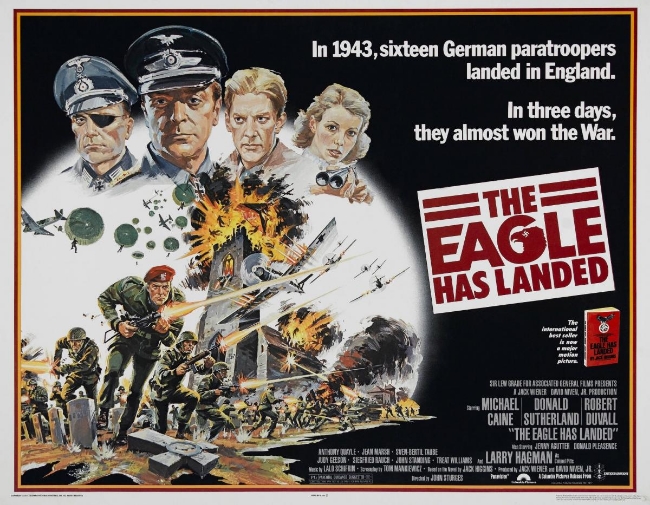
The Eagle Has Landed (1976)
The Eagle Has Landed was veteran director John Sturges' final movie, whose body of work includes such classics as Bad Day at Black Rock, The Magnificent Seven and The Great Escape. Based on the bestselling book by Jack Higgins and adapted by Tom Mankiewicz, the film is a curious beast. It’s an in-depth character driven drama you would expect from such a veteran director, with the succinct and violent action scenes that were prevalent during the seventies. Although the phrase “they don’t make them like that anymore” is somewhat of a cliché, it is quite apt in the case of The Eagle Has Landed. Many of the crew as well as the producers hailed from the golden age of Hollywood.
The Eagle Has Landed was veteran director John Sturges' final movie, whose body of work includes such classics as Bad Day at Black Rock, The Magnificent Seven and The Great Escape. Based on the bestselling book by Jack Higgins and adapted by Tom Mankiewicz, the film is a curious beast. It’s an in-depth character driven drama you would expect from such a veteran director, with the succinct and violent action scenes that were prevalent during the seventies. Although the phrase “they don’t make them like that anymore” is somewhat of a cliché, it is quite apt in the case of The Eagle Has Landed. Many of the crew as well as the producers hailed from the golden age of Hollywood.
The plot involving a unit of Germans infiltrating a coastal village in the guise of Polish soldiers is somewhat reminiscent of Went the Day Well? After the successful rescue of Mussolini, Col.Max Radl (Robert Duvall) is asked to prepare a feasibility study on kidnapping Winston Churchill. Chance intelligence indicates that Churchill will spend a weekend in the Norfolk village of Studley Constable, only a few miles from a deserted stretch of coastline. Suddenly a wild plan made for political reasons, becomes a viable operation. Col.Kurt Steiner (Michael Caine) and his crack unit of Paratroopers are subsequently parachuted into Norfolk to carry out the mission, aided by IRA sympathiser Liam Devlin (Donald Sutherland). They are also assisted by Joanna Grey (Jean Marsh), a German sleeper agent.
Like so many movies of the time, the emphasis is primarily on the plot and the central characters. In the international cut of the movie, we come to understand the full motives of Caine, Sutherland and Marsh. Larry Hagman provides an enjoyable cameo as Col. Pitt, a US officer desperate to see action before being side-lined by politics and the end of the war. Tom Mankiewicz’s screenplay dispenses with the framingstory set in the present featuring an aged Devlin as well as some other less pertinent characters from the original book. The action sequences featured in the second half of the movie and are efficient and credible. The production also takes full advantage of the village of Mapledurham and the surrounding estate, which doubles for the fictitious Studley Constable.
After filming finished in late summer 1976, director John Sturges effectively abdicated his responsibility for the movies post production. Editor Anne V. Coates however managed to fashion a respectable movie from the rough cut, which ran 145 minutes. However the producers wanted a leaner cut with a focus on the action, so the theatrical release was edited further to 135 minutes. This version is the most commonly available and has recently been released on Blu-ray in the US. The longer cut features some interesting additional scenes, several of which bolster the weakest element of the film, namely the romance between Molly Prior (Jenny Agutter) and Devlin.
Watching The Eagle Has Landed, highlights the difference between the depiction of violence during the seventies and how it is portrayed today. Ratings were more flexible and less delineated that they are today. The Eagle Has Landed was a movie that was intended for a wide audience. Yet in contains a fair amount of bullet hits and squib effects that would push it beyond a PG-13 rating these days. The recent Blu-ray release shows the incidental violence quite clearly. In one scene towards the end of the movie, a US Ranger is shot in the arm and the actor next to him is sprayed in the face by stage blood. Nowadays, studios are far more mindful of exactly what can and cannot be depicted for each respective rating and there is a huge amount of creative horse-trading with the MPAA and BBFC with regard to content.
As World War II becomes an increasingly remote event, I am curious as to how such movies as The Eagle Has Landed are perceived by contemporary audiences. Does this period in history have any more significance to today’s viewer, beyond being a convenient plot MacGuffin? Jack Higgins story as well as the movie adaptation hails from a time where the war was very much part of the publics memory. It provided a common experience that was frequently used to explore tales of courage and adventure. The concept of Churchill being assassinated and the impact it would have upon history would have chimed with viewers. However since the seventies, the war movie as a genre has declined. More recent explorations of the subject seem to be couched in far more political terms. If The Eagle Has Landed was made today it may be interpreted in a very different fashion.
Marooned (1969)
Depending on your point of view, Marooned directed by John Sturges was considered either “a taut and interesting film…” or “Tedious and Sad…” upon its release. That still remains the case today. It’s curious that despite the space race being such a big story at the time it seldom translated into good drama on the big screen. Like Robert Altman’s Countdown from the preious year, Marooned suffers from a rather clinical approach to the subject matter and a somewhat pedestrian pace. Perhaps the focus on real space travel and science fact was the problem. Robert Parrish’s Journey to the Far Side of the Sun which was released at the same time is far more dramatically engaging with its more overt science fiction narrative.
Depending on your point of view, Marooned directed by John Sturges was considered either “a taut and interesting film…” or “Tedious and Sad…” upon its release. That still remains the case today. It’s curious that despite the space race being such a big story at the time it seldom translated into good drama on the big screen. Like Robert Altman’s Countdown from the preious year, Marooned suffers from a rather clinical approach to the subject matter and a somewhat pedestrian pace. Perhaps the focus on real space travel and science fact was the problem. Robert Parrish’s Journey to the Far Side of the Sun which was released at the same time is far more dramatically engaging with its more overt science fiction narrative.
Marooned focuses on the three man crew of Ironman One as they experience a technical malfunction which renders the ship inoperative. Unable to return to their space station or affect a re-entry, it soon become apparent that both oxygen and time is running. Mission control desperately tries to find a solution, turning to an experimental space vehicle to affect a rescue. A further dimension is added to the problem when political pressure is applied from the President, anxious to avoid a disaster in space and the associated propaganda fallout. Does the only viable solution lie with co-operation with the Russians?
Marooned is technically proficient, yet struggles to find the correct balance between accurately depicting the technology of the time and making it cinematically entertaining. The effects work was cutting edge at the time and is cleverly used with a selection of matching stock footage to create a credible environment. The movie boasts a quality ensemble cast for the times, featuring such names as Gegory Peck, Richard Crenna, Gene Hackman and James Franciscus. It does it’s best to be avoid an excess of melodrama but the deliberately slow pacing is somewhat challenging. The earnest script and technical exposition is the main culprit here.
Fans of director John Sturges may well be flummoxed by this uncharacteristic change of style. Marooned could easily lose twenty minutes of material to tighten the flow of the story. Perhaps NASA’s direct involvement in the production hampered the development of some of the more dramatic story lines such as the political dimensions and the public “handling” of the astronauts’ wives. The film can be rewarding to the patient viewer as well as a window into the space race during the cold war era. For the more casual viewer it will be an uphill struggle.
The Man Who Haunted Himself (1970)
Roger Moore has often been accused of being an actor of limited range, although in all fairness, this may be down to typecasting. This cinematic curiosity from 1970 proves otherwise and is considered by some to be his best performance. Made immediately after The Saint TV series, it afforded its star an opportunity to tackle a character who is rather puritanical, potentially impotent and in every way the complete opposite of Simon Templar and James Bond.
Roger Moore has often been accused of being an actor of limited range, although in all fairness, this may be down to typecasting. This cinematic curiosity from 1970 proves otherwise and is considered by some to be his best performance. Made immediately after The Saint TV series, it afforded its star an opportunity to tackle a character who is rather puritanical, potentially impotent and in every way the complete opposite of Simon Templar and James Bond.
The Man Who Haunted Himself begins with executive Harold Pelham driving home from work, when he uncharacteristically starts to drive dangerously. After crashing he is taken to hospital where his heart stops during the operation. Once resuscitated, there are two heart beats briefly showing on the monitor. Returning home, Pelham finds his life has been turned upside down. At his job as a director of a marine technology company he learns that he now supports a merger that he once opposed. Furthermore it would appear that he is having an affair. Friends, colleagues and acquaintances claim they have seen him in places that he has never been. Does Pelham have a doppelganger, or is he actually going insane?
Director Basil Dearden had prior experience in handling tense supernatural tales, having directed segments for the classic Dead of Night. He handles the unfolding story in The Man who Haunted Himself in a competent fashion. The tension slowly builds and there is growing sense of disquiet rather than sudden shocks. The end is somewhat ambiguous and is open to several interpretations. Overall this is an intriguing character study, with solid performances. It is definitely a product of the times and may not necessarily appeal to contemporary viewers with little patience. However for genre fans and Roger Moore aficionados, this is a rewarding ninety minutes.
Orca (1977)
Orca (Aka: Orca: The Killer Whale) is a damn odd 1977 creature feature directed by Michael Anderson and produced by Dino De Laurentiis, that was designed to cash-in on the success of Jaws. Where Steven Spielberg’s movie is a character driven, suspense movie, Orca is all over the shop; veering between such themes of environmentalism, horror and revenge. Furthermore the revenge in question is exacted by the titular whale against Richard Harris. It’s sort of a reverse Moby Dick situation. Ponder that for a moment. This is a movie about a whale getting even. Make no mistake, this is a cinematic mess, yet because of its European production credentials it is still morbidly fascination.
Orca (Aka: Orca: The Killer Whale) is a damn odd 1977 creature feature directed by Michael Anderson and produced by Dino De Laurentiis, that was designed to cash-in on the success of Jaws. Where Steven Spielberg’s movie is a character driven, suspense movie, Orca is all over the shop; veering between such themes of environmentalism, horror and revenge. Furthermore the revenge in question is exacted by the titular whale against Richard Harris. It’s sort of a reverse Moby Dick situation. Ponder that for a moment. This is a movie about a whale getting even. Make no mistake, this is a cinematic mess, yet because of its European production credentials it is still morbidly fascination.
Disgruntled fisherman Nolan (Richard Harris) dreams of leaving Nova Scotia and returning back to Ireland. After watching a presentation by marine biologist Dr. Rachel Bedford (Charlotte Rampling), he and his crew set off to bag an Orca in the hope that they can sell it to a theme park or aquarium. Unfortunately the plan to harpoon the whale in the dorsal fin and secure it, goes awry, resulting in a pregnant female being injured. In a very distressing scene, she is caught in the harpoon cable and mutilated by the ships propeller. As the crew winch her on-board she aborts her unborn calf, as her mate looks on.
This opening gambit is hard hitting, exploitative and as subtle as flatulence in a library. Within minutes the movie lurches from montages of capering whales set to a beautiful Ennio Morricone score, to blood and mayhem. Needless to say that the whale subsequently terrorises the fishing town until Nolan decides to fight like a man (or should that be whale) and face justice for his crime. For those curious as to how a whale, a conspicuously sea based mammal manages to achieve this, he sinks all the boats moored, blows up the fuel depot (he bloody does to, look at the damn picture!) and even manages to bite off the leg of one of Nolan’s crew (Bo Derek). All these acts of vengeance are punctuated by close up shots of the whale’s eye as he give the Cetacean equivalent of Paddington’s “hard stare”.
So in the final act, Nolan, Dr. Bedford, Miss One Leg’s boyfriend (Peter Hooten) and the ubiquitous wise Native American Jacob Umilak (Will Sampson) give chase to the vengeful whale as it leads them in to the frozen waters off the coast of Labrador. Cue some personal introspection by Harris and obligatory words of wisdom from Umilak. Let is suffice to say that as this is a movie from the seventies and film makers felt less disposed towards mandatory happy endings, so things do not go well in the human cast in the denouement. Viewers less familiar with movies from this genre and time period may well be left bewildered and confused by the abrupt but valedictory nature of the ending. I will stop short of declaring it a WTF moment because you could level that criticism about the films entire premise.
Like Jaws two years before, Orca was marketed at a similar audience. Both movies contain a level of violence and unpleasantness that would not be present in equivalent movies today, or at least not within the PG rating. Free Willy this is not. I saw this movie as a child, a few years after its release. It left a big impression upon me mainly due to the impact of the opening scenes. I certainly would not recommend the movie today as family viewing. However despite the insane premise, the stilted dialogue and hard boiled performances, there is still a thread of drama and pathos running through the proceedings. It’s heavy handed and unsophisticated but it’s there; along with the blood, the mayhem and the hateful gaze from the prosthetic whale eye.
The optical and prosthetic effects are quite good for the time. The distinct black and white colour of the Orca works in the favour of the full sized models that are used. The studio bound frozen finale, filmed in the water tanks of the Mediterranean Film Studios in Malta, is no better or worse than what you’d find in Ice Station Zebra or a comparable movie. As previously mentioned the soundtrack by Ennio Morricone covers a lot of ills. Richard Harris gives an honest performance and his commanding screen presence also helps viewers excuse the overall absurdity of the proceedings. Returning to my point about European productions of this nature, they always adopt a more bombastic and strident tone than their US counterparts. In some respects it is part of their schtick and overall appeal. Orca typifies this and if such things float your boat (crap pun intended) then this is a rather unique example of the natural horror sub-genre (and yes, that is a thing).
Shaolin Soccer (2001)
Stephen Chow’s Shaolin Soccer is very much a product of the culture and regional film industry that created it. An established comedian from Hong Kong, he puts an interesting spin on the traditional rags to riches sports movie genre! It is liberally laced with a lot of visual slapstick and showcases some aspects of Chinese humour that may confuse and wrong foot the average westerner. This film is also a treat for the film buff, as Chow has included numerous homages to classics martial arts movies, which are often referred to in a very tongue in-cheek fashion.
Stephen Chow’s Shaolin Soccer is very much a product of the culture and regional film industry that created it. An established comedian from Hong Kong, he puts an interesting spin on the traditional rags to riches sports movie genre! It is liberally laced with a lot of visual slapstick and showcases some aspects of Chinese humour that may confuse and wrong foot the average westerner. This film is also a treat for the film buff, as Chow has included numerous homages to classics martial arts movies, which are often referred to in a very tongue in-cheek fashion.
The story is formulaic and centres on a group of disillusioned Kung-Fu exponents who have gone their separate ways and languish in mundane jobs. Chow is spotted using his Kung-Fu skills at work by crippled ex-football star Ng Man Tat. He sees the potential of forming a football team using the Shaolin martial art as its underlying ethos. The former friends subsequently reform, regain their self-respect and set their sights upon the prestigious China Cup. Throw into the mix an evil team manager of genetically enhanced players and a romantic sub plot and you have Shaolin Soccer.
This film is clearly a comedy that will either delight you or annoy you. The digital effects that embellish the action scenes are very cheesy but add to the total package. Some of the jokes are somewhat culturally specific and therefore may not appeal to all audiences. For example one of the team, an overweight gentleman, has a penchant for eggs and will not see them wasted. He happily licks up a broken egg of another’s player’s boot. This leads to some rather interesting gags that may bother the homophobic viewer.
Despite the niche market nature of Shaolin Soccer it has many redeeming qualities. The characters are very appealing and the football matches are a pleasure to watch. The novel central idea of the film works quite well and has a well-paced story arc. The main themes are surprisingly moral, yet do not in any way spoil the humour by be self righteous. There is also an excellent pounding soundtrack from Raymond Wong which encapsulates the seventies Kung-Fu idiom.
Once again I have to draw your attention to the different versions of this film. I saw a R3 DVD copy in the original Cantonese dialogue as the director intended. When Miramax released this film in the US, it was re-cut (to remove any aspect of the plot that would confuse an American audience) and the dialogue dubbed into English. Even the bill boards and posters in the football stadium were digitally altered to reflect US products. Avoid this copy! It robs the film of much of its charm and displays an unpleasant air of condescension to the source material. Try the original if you have broad taste or like martial arts comedies.
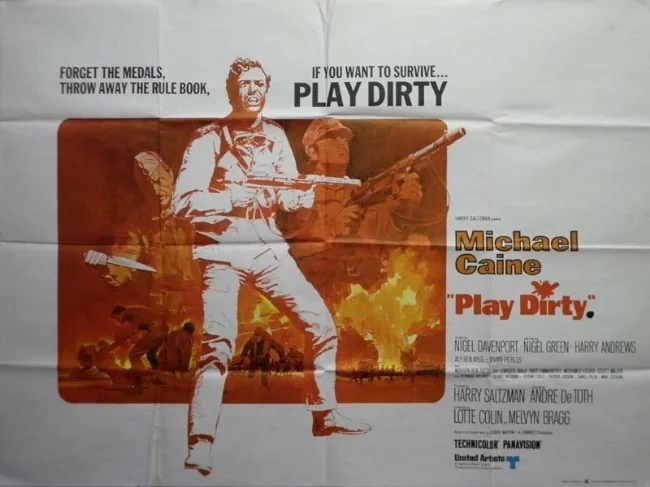
Play Dirty (1969)
Gritty, grim and fatalistic are just a few of the ways I would describe Play Dirty. Made at a time when cinema was becoming more realistic and cynical, it eschews the traditional depiction of World War II heroism and paints a singularly unglamorous picture. Due to some minor plot similarities, it is frequently compared to The Dirty Dozen but they are far from identical movies. Robert Aldrich’s film despite having an offbeat plot and a cast of quality characters actors still followed a traditional action based formula and had a relatively upbeat ending. Play Dirty is content to pursue its dour storyline to its inevitable conclusion.
Gritty, grim and fatalistic are just a few of the ways I would describe Play Dirty. Made at a time when cinema was becoming more realistic and cynical, it eschews the traditional depiction of World War II heroism and paints a singularly unglamorous picture. Due to some minor plot similarities, it is frequently compared to The Dirty Dozen but they are far from identical movies. Robert Aldrich’s film despite having an offbeat plot and a cast of quality characters actors still followed a traditional action based formula and had a relatively upbeat ending. Play Dirty is content to pursue its dour storyline to its inevitable conclusion.
Michael Caine plays Captain Douglas of the Royal engineers, who is press-ganged from his cushy position with Anglo-Iranian Oil, into a shady squad of mercenaries who freelance for the British Military. The group is mainly made up of criminals and disgraced soldiers and over seen by Colonel Masters (Nigel Green). Due to Douglas’ lack of field experience he is heavily dependent on Captain Leech (Nigel Davenport), whose only real concern is the £2000 bonus he will be paid if he brings Douglas back alive. Disguised as Italian soldiers the group cross the desert to strike at a fuel dump, hundreds of miles behind enemy lines.
The dialogue in Play Dirty is minimal and succinct. The squad comprising of a Greek narcotics smuggler, a Tunisian terrorist, a convicted rapist, a Turkish smuggler and two homosexual Senussi tribesmen have precious little to say but this does not impede the viewer from understanding the dynamics of the group. The wry looks, sardonic smiles and derisive laughter are more than enough to demonstrate what each man is. The main tension lies between Douglas and Leech, with the former clinging to outmoded notions of gallantry and etiquette. The latter frequently undermines his superior and is sceptical of his abilities. However both become dependent on each other. Douglas uses his engineering savvy to winch their vehicles up a steep incline. Leech saves Douglas when his British dog tags blow their cover.
Veteran director Andre De Toth, who took over when René Clément left the project, does a fine job in driving the movie forward. There is a well implemented battle scene which shows a convoy of trucks and accompanying Jeeps being efficiently dispensed with by entrenched German troops. It plays out wordlessly as the main protagonists look on. The director doesn't balk either at showing the ragtag group of criminals for what they are as they loot all corpses, enemy and allies alike. The arrival of a German nurse also leads to an attempted rape. It all proves to be very challenging for Captain Douglas who still feels bound by the notion that war has rules.
Perhaps the biggest plot element that makes Play Dirty such a product of its time is its ending. The late sixties and early seventies saw a great deal of change in film making and many sacred cows were put to the sword. Play Dirty avoids schoolboy patriotism and opts for something far more bleak. The military goals of the mission prove to be fluid and the chain of command eventually deem the rogue group to be a liability. Betrayal eventually comes from unexpected quarters and hammers home the point that war frequently has little or no honour. Overall the British military of the time are shown to be governed by petty politics and class prejudice. It’s not necessarily a palatable conclusion but it most certainly is credible.
The Martian (2015)
Within a few minutes of watching Ridley Scott’s big budget adaptation of Andy Weir’s best-selling novel The Martian, it became immediately apparent that the emphasis was on dialogue and science. Naturally there are competent action sequences of the magnitude you’d expect from such a movie but they are not the driving force of the narrative. The Martian is very much a procedural drama with strong and likeable characters. It’s about how they react to adversity and the underlying mechanics of solving the logistical problems of rescuing a man marooned on Mars. If you don’t like movies with a lot of dialogue and having to think too hard then you may wish to see something else.
Within a few minutes of watching Ridley Scott’s big budget adaptation of Andy Weir’s best-selling novel The Martian, it became immediately apparent that the emphasis was on dialogue and science. Naturally there are competent action sequences of the magnitude you’d expect from such a movie but they are not the driving force of the narrative. The Martian is very much a procedural drama with strong and likeable characters. It’s about how they react to adversity and the underlying mechanics of solving the logistical problems of rescuing a man marooned on Mars. If you don’t like movies with a lot of dialogue and having to think too hard then you may wish to see something else.
If there’s one facet of this movie that I had to highlight as its strongest selling it has to be its tone. The Martian maintains a healthy balance between drama, emotion, tension and science. All of which are approached in a measured and intelligent fashion. This makes the film very accessible. The science and technology is essential to the story but is constantly tempered with dry wit and nerd banter. Astronaut Mark Watney copes with his isolation and desperate situation through humour and a droll personal monologue. Writer Drew Goddard (Cabin in the Woods, Cloverfield) has successfully adapted the source text and added a more human layer to the proceedings.
Despite having a great ensemble cast, it is Matt Damon that underpins this movie. His performance is both likeable and credible. He remains resolute in the face of adversity relying on his scientific training but he is never smug. On occasions when his emotions do get the better of him it is used to great dramatic effect. Jessica Chastain, Bill Pullman, Chiwetel Ejiofor and Sean Bean all have something tangible to do and the screenplay seldom takes a wrong step. The movie successfully creates an atmosphere where you feel that all involved are genuinely working towards a common goal. The Martian also manages to honestly depict how academia and nerd culture often goes hand-in-hand, without lapsing into negative stereotypes.
When dealing with a global subject such as space exploration, many movies cannot help but default to conventional tropes and memes regarding contemporary geopolitics. The Martian is curiously free from this and beyond the involvement of the Chinese space authorities at a key point in the story, the focus remains upon NASA and JPL and not political leaders. A lot of the technical solutions and hardware featured in the film are based upon designs currently under development. The administrative and procedural aspects of The Martian are also based upon those currently followed by the institutions depicted. Of course there are concessions made for creative and cinematic reasons but the movie still maintains a largely authentic air.
Ridley Scott last two movies have not been commercial or critical successes. The Counsellor and Exodus: Gods and Kings seemed to lack the director’s usual acumen. The Martian remedies this run of bad form by being entertaining, cerebral and accessible to multiple audiences. There is humour, pathos as well as spectacle. Through a minor plot contrivance, there’s also a great soundtrack featuring some disco classics. Scott also manages to dovetail David Bowie’s Starman in to the proceedings without it coming off as a shocking cliché. Again I feel compelled to mention the tonal confidence of this film. As a result The Martian deserves to be a critical and financial success. According to Professor Brian Cox it’s a great advertisement for a career in engineering. It certainly proves that mainstream cinema does not have to be big and dumb.
Movie Trivia: The Wilhelm Scream
In the 1951 movie Distant Drums starring Gary Cooper, a small band of soldiers are crossing a swamp in pursuit of Seminole Indians. While wading through the Everglades, one unnamed soldier is attacked and dragged underwater by an alligator. His last sound is an agonised, startled scream. Two years later in The Charge at Feather River, a soldier named Private Wilhelm screamed as he’s struck by an arrow in his leg. So began the cinematic legend that is the “Wilhelm Scream”, a sound effect that has punctuated a multitude of films over six decades.
In the 1951 movie Distant Drums starring Gary Cooper, a small band of soldiers are crossing a swamp in pursuit of Seminole Indians. While wading through the Everglades, one unnamed soldier is attacked and dragged underwater by an alligator. His last sound is an agonised, startled scream. Two years later in The Charge at Feather River, a soldier named Private Wilhelm screamed as he’s struck by an arrow in his leg. So began the cinematic legend that is the “Wilhelm Scream”, a sound effect that has punctuated a multitude of films over six decades.
Most studios add audio effects for a film during post-production and of course it’s not unusual for them to recycle material from their archives. In the case of Distant Drums, six short screams were recorded and creatively titled “man getting bit by an alligator, and he screams”. The fifth take was used for the alligator scene and the others were used throughout the rest of the film. Following the movie’s release the distinctive scream was placed in the Warner Bros. sound effects library and used regularly over the years in various productions. It can be heard in Them! (1954), Swiss Family Robinson (1960) and The Green Berets (1968).
Ground breaking sound engineer Ben Burtt noticed the repeated use of the scream during the course of his career. When he made the The Scarlet Blade in 1974 he decided to use the scream, so he cunningly copied it from another film’s soundtrack. Two years later, he was hired to create the sound effects for Star Wars and he managed to track down the original source recording from the Warner Bros. archive. Burtt subsequently began to regularly insert the sound effect into projects he worked on, including the Star Wars sequels. He dubbed it the “Wilhelm scream” in honour of the first named character to use it. The use of the scream rapidly become an in-joke for those in the post production business and from there it use has spread.
The “Wilhelm scream” has been featured in over two hundred movies, TV programs, commercials and video games. Notable film-makers have also specifically requested the “Wilhelm scream” for their movies after learning of its history, including directors such as Quentin Tarantino, Robert Rodriguez, Tobe Hooper, Joe Dante and Peter Jackson. A comprehensive list of titles that incorporate the scream can be found at the IMDB and it’s growing yearly.
The source of the of the “Wilhelm Scream” remains a mystery, but many believe it to be the voice of Sheb Wooley. Wooley is most famous for his song “Purple People Eater”, which was a number-one hit for six weeks in 1958. He had a small part in Distant Drums and was one of a few actors who were called back after filming for some additional dialogue recording. Although he died in 2003 his wife Linda believes it was his scream. She recalls that Sheb was a very gifted voice artist, performing screams, laughs, and other vocals effects for film and TV.
The “Wilhelm Scream” has joined a library of sound effects that are frequently used by sound editors. Others include a thunder clap created for the James Whale’s Frankenstein. Also a particular recording of the red-tailed hawk’s distinctive cry has become ubiquitous in Westerns or any movie with a desert setting. You can also include the universal telephone ring, which has been used on hundreds of films. It would appear that the entire field of audio effects is filled with re-occurring material. Bond films are rife with generic audio effects for automated doors, explosion, electronic devices, jet engines and death screams. A lot of these sound effects seem to have migrated from the back catalogue of Gerry Anderson’s productions.
Like many in jokes, once it becomes too widely known it can lose its impact. The “Wilhelm Scream” is no longer a secret outside of the movie industry and possibly may now have become too ubiquitous. However its history remains interesting like so many obscure facets of the industry. It will interesting to see that as the entertainment industry continues to evolve whether they be equivalents to the “Wilhelm Scream” in five decades times.
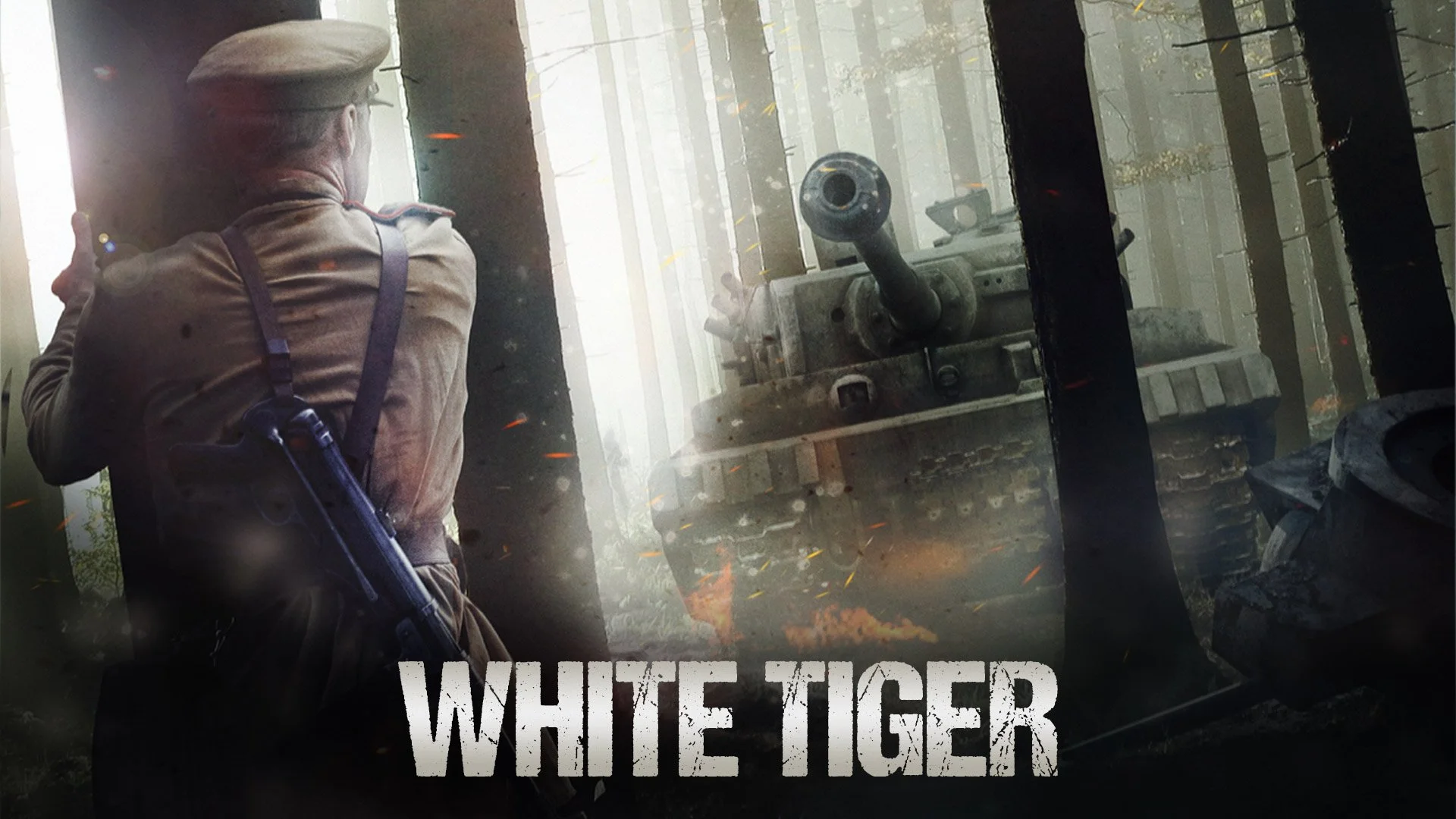
White Tiger AKA Belyy Tigr (2012)
It is rewarding to find a movie that wrong-foots you and challenges your perceptions on certain subjects. White Tiger is exactly such a film. Starting of as a traditional war movie, the story quickly evolves into a supernatural revenge story with shades of Moby Dick. The final act and subsequent sting in the tail ending provides immense food for thought. It proposes an idea that many will find particularly challenging. However the film succeeds in making such a bold pitch because of its inherent Russian earnestness and the fact that that nation’s war experience is so subtly different from others.
It is rewarding to find a movie that wrong-foots you and challenges your perceptions on certain subjects. White Tiger is exactly such a film. Starting of as a traditional war movie, the story quickly evolves into a supernatural revenge story with shades of Moby Dick. The final act and subsequent sting in the tail ending provides immense food for thought. It proposes an idea that many will find particularly challenging. However the film succeeds in making such a bold pitch because of its inherent Russian earnestness and the fact that that nation’s war experience is so subtly different from others.
White Tiger starts with Russian soldiers find a blackened tank driver in a burnt out wreck with burns to 90% of his body. He miraculously survives and recovers in just three weeks. Remembering nothing of his past life or identity he is renamed Ivan Naydenov (Aleksey Vertkov). He claims to have gained the mystical abilities and to have been charged with the mission of destroying the White Tiger that is decimating Russian tanks. Major Fedotov (Vitaly Kishchenko) reluctantly supports Ivan as he does seem to have uncanny skills in combat. He subsequently assigns to him a customised T-34 along with a sceptical crew who balk at being instructed to attack targets they cannot see. Ivan finally catches up with the allusive Tiger tank in a deserted village but is everything as it seems?
It soon becomes apparent that much of what is happening in White Tiger is not to be taken literally. Both the White Tiger and Ivan himself are symbols. Physical manifestations of war itself, locked in an unending battle; like the human body continuously fighting disease and infection. Finally when the war ends and the Russian POWs are released, Ivan declares that he cannot stop fighting as the White Tiger is still at large. The codicil at the end of the movie shows Hitler calmly discussing the policies he pursued during the war and attempting to justify them. He declares that war is a natural thing and he has simply released a force of nature. “War is fought everywhere and always; it has no beginning and no end. War is life itself”.
Director Karen Shakhnazarov has crafted a singularly enigmatic piece of cinema with White Tiger. It has an eerie quality about it which is not something expected in the war genre. Curiously enough I felt myself reminded of Duel and The Car as well as Herman Melville’s famous novel. The purposely erratic pace of the narrative may not be to everyone’s taste but the performances and prevailing atmosphere are compelling. The ending is a major talking point in itself and I envisage that there will be many discussions and possibly arguments over the many plot elements that are not resolved or explained. However I consider this to be a good thing as cinema has become too much of a passive experience of late. A subject as complex as global war should not be rendered into binary terms; thankfully White Tiger does exactly the opposite.



El Dorado (1966)
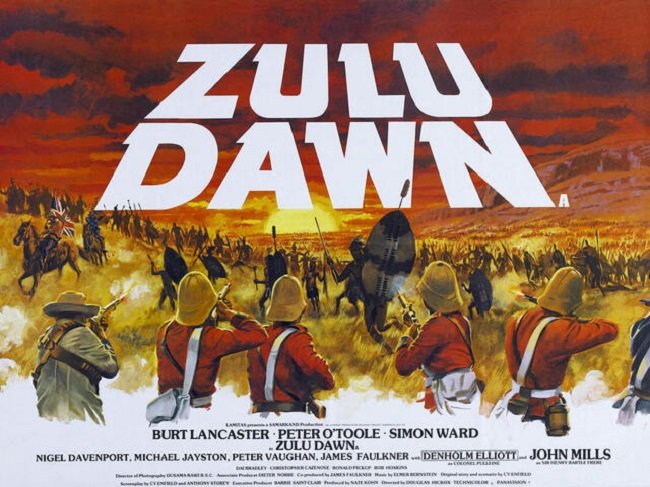
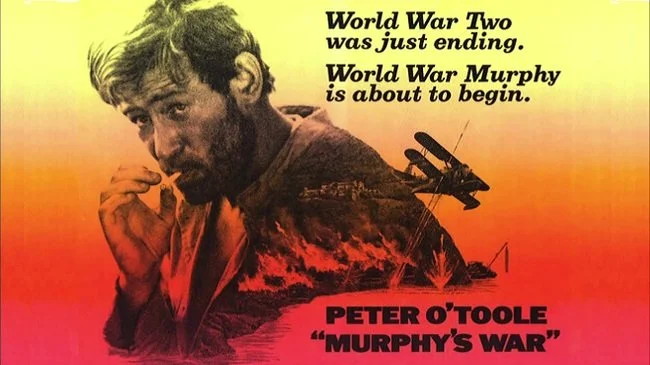
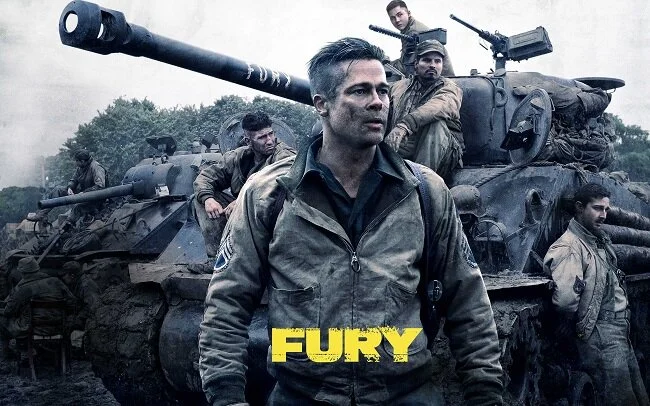
El Dorado opens with a montage of paintings by celebrated Western artists Olaf Weighorst. These beautiful pictures in many ways reflect the nature of the movie, depicting a stylised representation of the Old West that despite its beauty, never really existed. Director Howard Hawks includes every possible genre trope and meme into El Dorado but far from being a handicap, it makes the movie a perfect distillation of Hollywood Western. The pairing of John Wayne and Robert Mitchum is sublime as the two effortlessly riff off each other. If you need an example of how the Western is the most flexible and accessible movie genre, then El Dorado is a text book example.
El Dorado opens with a montage of paintings by celebrated Western artists Olaf Weighorst. These beautiful pictures in many ways reflect the nature of the movie, depicting a stylised representation of the Old West that despite its beauty, never really existed. Director Howard Hawks includes every possible genre trope and meme into El Dorado but far from being a handicap, it makes the movie a perfect distillation of Hollywood Western. The pairing of John Wayne and Robert Mitchum is sublime as the two effortlessly riff off each other. If you need an example of how the Western is the most flexible and accessible movie genre, then El Dorado is a text book example.
Wayne plays Cole Thornton, a hired gun who travels El Dorado to pursue a potential job offer from Rancher Bart Jason (Ed Asner). Jason needs Thornton to remove my any means, a rival rancher who own the local water rights and to also take care” of local Sheriff J P Harrah (Robert Mitchum). Thornton refuses the contract as Harrah is a friend and subsequently leaves town. Six months later Thornton returns to El Dorado to find his friend has become a drunk after being crossed in love. The range war has also escalated and Bart Jason now has a formidable army of men, led by notorious gunman Nelse McLeod (Christopher George, sporting an excellent scar and contact lens). Outnumbered, Thornton and Harrah try to keep the peace with only the help of an old Indian fighter (Arthur Hunnicutt) and an inexperienced greenhorn called Mississippi (James Caan).
The mid-sixties were a very interesting time for Hollywood as writers and directors tired of the status quo, started pushing boundaries of movie ratings. El Dorado blends traditional Western machismo with Greek tragedy and plenty of sassy dialogue. It is also quite violent for the times, something that becomes more apparent with the clarity of the latest Blu-ray release. Although predominantly set bound, the film does have some scenic what location work. The chemistry between the two leads is by far the movies strongest selling point and their real life friendship is clear. Leigh Bracket’s script is loaded with wise cracks, Western philosophy and musings on the Code of the West. Caan and Hunnicutt are great foils.
On release El Dorado was considered to be a little old school compared to the emerging revisionist trends of the time. The ballad that plays over the opening credits, sung by George Alexander and The Mellomen, is very traditional. Nelson Riddles score conversely has quite a contemporary arrangement. The movie sits squarely between the old and the new. Its theatrical release was delayed by Paramount so that it would not clash with Nevada Smith, which depicted a far more cynical and bleaker interpretation of the West.
Over the years El Dorado has grown in critical and public acclaim and is now rated more highly than it was upon its initial release. Roger Ebert gave the film a near-perfect rating at 3 1/2 out of four stars, stating “El Dorado is a tightly directed, humorous, altogether successful Western, turned out almost effortlessly, it would seem, by three old pros: John Wayne, Robert Mitchum and director Howard Hawks”. The movie certainly made an impact upon me as I saw it as a child and has stayed with me over the years. I still have a soft spot for Edgar Allan Poes poem Eldorado that is quoted by James Caan throughout the movie.
Overfamiliarity with a Genre
I have watched a lot of movies over the years; more so than the average viewer. Being a fan I seek out new and obscure content on a daily basis. A day seldom goes by without me watching a movie or at the least a TV show. As I am not a causal viewer, a movie gets my undivided attention. I focus on dialogue, composition, editing and also try to take in the subtle background detail that can often yield some extra level of enjoyment. As a result of my passion, I can often remember minute detail and recollect specifics, long after viewing. I guess this is the nature of fandom. If you like something, you retain it.
I have watched a lot of movies over the years; more so than the average viewer. Being a fan I seek out new and obscure content on a daily basis. A day seldom goes by without me watching a movie or at the least a TV show. As I am not a causal viewer, a movie gets my undivided attention. I focus on dialogue, composition, editing and also try to take in the subtle background detail that can often yield some extra level of enjoyment. As a result of my passion, I can often remember minute detail and recollect specifics, long after viewing. I guess this is the nature of fandom. If you like something, you retain it.
I have a particular fondness for horror films and enjoy the universal monster movies from the thirties, through to the halcyon days of Hammer in the fifties and sixties. I was raised on the slasher genre of the eighties and since then have branched out into euro-horror and many other sub genres. I can remember when I saw such classics as Dawn of the Dead, Suspiria and Night of the Demon for the first time and how they made me feel. I'm sure many other horror fans will look back upon their own rite of passage with similar affection.
Sadly there is a downside to having such a veracious appetite for new content. The more one watches horror movies (or any other genre), the more familiar you become with the actual mechanics of scaring the audience. The accumulative knowledge one builds up overtime ends up negating any chance of being taken by surprise or “frightened”. I became acutely aware of this recently when The Conjuring was released. It is a very well-crafted shocker with a great atmosphere that builds at a measured pace. The shocks, jolts and jumps are well conceived and effective, yet they failed to elicit anything more from me other than my admiration for their execution.
I have simply seen too many horror movies and as a result, my brain is constantly analysing them as I view them; deconstructing them on the fly. The moment the protagonist moves towards the open window with the curtains billowing, I know that they’ll subsequently be an epic act of misdirection as a cat or bird causes the audience to jump. Then as the characters turns away from the false alarm, I await for them to walk straight into the arms of the psychopath who was behind them all along. The horror industry is founded upon variations on a theme and I am aware of most of the tropes and memes it draws upon.
As a result I will never be able to experience a horror movie in the same way I did twenty or thirty years ago. Ignorance can indeed be bliss. That’s not to say that I can no longer enjoy the genre I love so much but that I’ve definitely fallen victim to overfamiliarity. As a gamer I have heard a similar lament from other players that they cannot go back and experience certain key games as they did originally. In fact it seems to be a universal refrain among fans that they can’t forget or erase certain experiences so they have the pleasure of reliving them again. With regard to horror films, the nearest we can get to reliving a particular movie experience is to watch them with someone who is new to them. This way we can vicariously enjoy their reactions as they jump and scream, with a degree of avuncular self-satisfaction and even a little envy.
Subtitles
My hearing is fairly robust for a man of my age. I also pride myself on my ability to concentrate. Yet despite the benefits of both those attributes, I still often find myself struggling to keep up with the dialogue and plot of many a game, TV show or movie. It’s something that is not unique to me and seems to be part of a growing phenomenon. Take last year’s science fiction blockbuster Interstellar. Amongst the critical praise there was a lot of grumbling over the mixing of ambient sound effects and the movies score drowning out dialogue. Similar complaints have been levelled at a lot of contemporary TV shows.
My hearing is fairly robust for a man of my age. I also pride myself on my ability to concentrate. Yet despite the benefits of both those attributes, I still often find myself struggling to keep up with the dialogue and plot of many a game, TV show or movie. It’s something that is not unique to me and seems to be part of a growing phenomenon. Take last year’s science fiction blockbuster Interstellar. Amongst the critical praise there was a lot of grumbling over the mixing of ambient sound effects and the movies score drowning out dialogue. Similar complaints have been levelled at a lot of contemporary TV shows.
This problem frequently manifests itself in video games, although it is more often than not due to overlapping dialogue. All too often I’ve been playing a game in which an essential piece of narrative from a key NPC is competing against the ambient dialogue from background characters. As someone who enjoys a good story and likes to absorb as much details as possible, this problem can be quite frustrating. Hence I’ve recently started enabling all subtitle options on games, TV shows and movies by default. It was a little disconcerting initially but it’s something I have adapted to quite quickly.
Subtitles apart from reflecting the main dialogue, often have the benefit of providing a lot more detail. Audio descriptions of sound effects, as well as secondary dialogue and other background noise can prove to be most illuminating. When watching the movie Right at Your Door, the subtitles displayed all the details of the radio and TV broadcasts that were playing in the background. This greatly enhanced the plot and provided some invaluable narrative detail. Subtitles are also a great way of obtaining an accurate quote and resolving the esoteric spelling of certain words and character names.
I find subtitles in gaming to be increasingly useful. Unlike a movie you cannot easily rewind a cutscene or the bestowal dialogue for a quest. If like me you find the story one of the main selling points of a game then you don’t really like to miss any of the plot. Also games don’t always have the best voice acting and subtitles allow you a means of penetrating poor accents and poorly expressed dialogue. Therefore having an additional tier of information is useful. It can also provide some amusement when the text is misspelt or has not been updated and is merely place-holder content.
However subtitles are not for everyone. Some people find onscreen text very distracting and a major impediment to their enjoyment of the game or movie. Plot and dialogue are also not important to all gamers, many of whom simply want to get to the action, rather than waste time upon a story that is superfluous to them. Therefore it very much is a question of taste and mercifully subtitles are more often than not optional. For me I consider them to be a great asset and an enhancement to my entertainment. They also play a great part in making many leisure activities far more accessible and inclusional. As a result I find their absence from certain mediums an inconvenience.
The Manitou (1978)
After the commercial success of The Exorcist in 1973, the low budget independent horror films of Hammer and American International fell into decline. The major Hollywood studios started financing more expensive genre movies. Twentieth Century Fox scored a box office hit with The Omen in 1976 proving once again that the supernatural was financially viable. Subsequently several independent film financiers realized that they would have to invest in bigger budget projects if they wished to compete. William Girdler’s 1978 adaptation of the bestselling horror novel, The Manitou, was one such example of this.
After the commercial success of The Exorcist in 1973, the low budget independent horror films of Hammer and American International fell into decline. The major Hollywood studios started financing more expensive genre movies. Twentieth Century Fox scored a box office hit with The Omen in 1976 proving once again that the supernatural was financially viable. Subsequently several independent film financiers realized that they would have to invest in bigger budget projects if they wished to compete. William Girdler’s 1978 adaptation of the bestselling horror novel, The Manitou, was one such example of this.
The Manitou by Graham Masterton is an eminently enjoyable piece of pulp horror fiction despite its outrageous premise. However adapting such a book for the big screen can test an audience’s suspension of disbelief. It would appear that critics and cinema goers alike struggled with the plot of The Manitou upon its release. The story is about a 400 year old re-incarnated Indian Medicine Man called Misquamacus, who is growing in a tumour on a woman’s back. Her ex-boyfriend, a fake medium, turns to a contemporary Indian Medicine Man for help. The use of x-rays by the hospital staff cause birth defects in Misquamacus, resulting in him being born deformed.
Despite the bizarre nature of the plot, the production managed to assemble an impressive cast. Tony Curtis plays the lead role of Harry Erskine, with Michael Ansara as John Singing Rock and Susan Strasberg as Karen Tanday. There is a cameo appearance by Burgess Meredith as the anthropologist and Native American History expert Dr. Snow. The screenplay by director William Girdler and cast member John Cedar is a fairly good adaptation of the source novel, remaining true to the overall plot. The first act of the movie features some pleasant location work set in San Francisco. However once the story moves to the hospital where surgeons attempt to remove Karen Tandy’s tumour, the film becomes an entirely studio bound production for the remainder of its duration.
The Manitou is very much a movie of its time, with an extremely seventies production design. Flared trousers and shirts with unfeasibly large collars abound. The plot explores the clash between modern technology and ancient supernatural forces. As a result a great deal of the hardware on display, such as the hospital computer system and surgical laser are now somewhat archaic. The soundtrack by the ubiquitous Lalo Schifrin is steeped in the musical style of the time. The infamous birth scene created by the Burman studios is suitably ghoulish. Felix Silla best known as Twikki in Buck Rogers and Joe Gieb both play Misquamacus at various points during the film. Sadly some of the optical effects at the movies climax are a little lacklustre.
The Manitou despite its clumsy racial politics is never genuinely disrespectful of Native American culture and the central characters although verging on caricature, are still likeable. If you can look beyond the far-fetched nature of the initial premise there is an entertaining movie to be found. Sadly The Manitou was met with a lukewarm reception from both critics and the public upon its release and failed to live up to box office expectations. The proposed sequel based upon Graham Masterton’s second novel was subsequently abandoned during pre-production.
Legend (2015)
Legend is an extremely lavish biopic. Despite being about a pair of notorious British villains it has both the look and feel of an American gangster epic. There is no real attempt to depict either the period or the locations accurately nor is the story of the Kray twins themselves factually correct. As ever with American productions of this nature both the era and the subject matter are viewed through a miasma of sentimentality and faux nostalgia. The Krays are portrayed as folk heroes rather than the petty thugs that they were. However if you are prepared to overlook these deliberate biases then Legend is can still be an entertaining movie.
Legend is an extremely lavish biopic. Despite being about a pair of notorious British villains it has both the look and feel of an American gangster epic. There is no real attempt to depict either the period or the locations accurately nor is the story of the Kray twins themselves factually correct. As ever with American productions of this nature both the era and the subject matter are viewed through a miasma of sentimentality and faux nostalgia. The Krays are portrayed as folk heroes rather than the petty thugs that they were. However if you are prepared to overlook these deliberate biases then Legend is can still be an entertaining movie.
There is a very slick and even Vogue-like aesthetic to Legend. The cinematography by Dick Pope is very luxuriant as it strives to recreate that Sixties look and feel. However, as so often is the case, the production design becomes a caricature of what it strives to achieve, resulting in distinct lack of authenticity. London was never that glamourous and no amount of Burt Bacharach or ambient period music can really convince us otherwise. This ersatz world of the Krays is also somewhat tonally inconsistent with the bloodletting and violence.
Naturally the dual roles played by Tom Hardy dominate the proceedings and the critical reviews. Such a daunting task as creating two unique performances is seldom undertaken by actors. I can only recollect two convincing prior attempts, namely Jeremy Irons in Dead Ringers and Sam Rockwell in Moon. In this instance Hardy’s portrayal of Reggie Kray is thoroughly credible. His performance with regard to Ronnie is shall we say a little more experimental. Ronnie has a somewhat comic element to his nature which at times veers from sinister to borderline Alan Partridge. The interaction between the twins is also inconsistent. On occasions you feel you are in the company of two genuine gangsters and at others it’s like you’re listening to Peter Cook and Dudley Moore discussing Shelley Winter’s in The Poseidon Adventure. Because of the focus on Hardy’s dual roles, it puts a lot of the rest of the cast in the shade which is a shame. There’s a lot of talent in the cast of Legend.
Legend has obviously been made for an international market and therefore plays to the tropes and memes of the genre. Emily Browning’s voice-over highlights this in every way as it attempts to sell this patently stylised mythology of the Krays. The violence depicted during the film is unpleasant but curiously mitigated by the patently phoney historical context. Although there were failings in Peter Medak’s 1990 movie The Krays, it got a lot more right and was far more powerful in its depiction of East End thuggery. It was also a more honest movie because it didn't try and sell us the folk hero myth that writer/director Brian Helgeland does in Legend.
If you are happy to accept from the get go that Legend is a commercial and stylised gangster story rather than a credible biopic then it may well grant you an undemanding evening’s entertainment. Tom Hardy is fascinating to watch and if the narrative is not to your liking then you can happily focus on the technical achievement of the movie. The seamless interaction between Hardy’s two performances is impressive. Legend is no The Long Good Friday or Sexy Beast, so don’t expect a film of commensurate calibre. This is very much a pop culture movie rather than a serious evaluation of Britain’s most infamous criminals. However as the legacy of the Kray twins has since become a commercial brand in itself perhaps Legend is the most appropriate form of depiction.
Lifeforce (1985)
It’s funny how the very name of certain films will get a noticeable response. Especially when talking to fans of genre movies and connoisseurs of the obscure and cult. If you mention Lifeforce to a film buffs of a certain age you’ll more than likely get one of following three reactions.
• Oh that’s the one where that woman wanders around naked all the time.
• Didn't that star Peter Firth? (Usually said with a degree of incredulity)
• That was one seriously fucked up movie.
It’s funny how the very name of certain films will get a noticeable response. Especially when talking to fans of genre movies and connoisseurs of the obscure and cult. If you mention Lifeforce to a film buffs of a certain age you’ll more than likely get one of following three reactions.
• Oh that’s the one where that woman wanders around naked all the time.
• Didn't that star Peter Firth? (Usually said with a degree of incredulity)
• That was one seriously fucked up movie.
Now all of these are true and totally justified. Remember that we are talking about a film featuring a naked female space vampire who’s found on a spaceship in Halley’s Comet, brought back to earth where she zombiefies half the population of London and confounds Shakespearean actors and an ex Double Decker (click here for clarification).
Before we proceed, let us quickly reflect upon the history of this cinematic oddity. Lifeforce was the last of a three picture deal between Canon Films and celebrated director Tobe Hooper. The other two films were a remake of Invaders from Mars and The Texas Chainsaw Massacre 2. Canon films had become big on the back of a string of cheap action films made in the early eighties and where now looking to hit the big league. Lifeforce was supposed to cater to the public’s appetite for both sc-fi and horror which were extremely marketable genres at the time.
The movie was originally filmed and promoted under the title The Space Vampires, based upon Colin Wilson’s novel. Cannon Film spent over $25 million on the production intending to create an international blockbuster. In an attempt to distance themselves from their own low budget past, the film’s title was changed to Lifeforce to try and avoid any exploitation connotations. However what was originally envisaged as sci-fi horror filled with American and European stars ended up as a curious over blown B movie with a distinctly British cast and flavour.
On paper the basic premise for Lifeforce was sound. Tobe Hooper was (and still is) a director with a reputation and the market was ripe for a blockbuster of this kind. Remember that Aliens came out the following year and was a massive commercial success. However Lifeforce was not destined to be a comparable movie. The production was extremely problematic. There were financial issues, continuous revisions to the screenplay, casting changes, further re-writes, arguments between the producers and the director, arguments between the producers and the effects team, arguments between the producers and the cast. Finally it ended with arguments between producer and producer.
After much blood, sweat and tears Tobe Hooper produced an initial cut of the film clocking in at 128 minutes. This was then trimmed down to 116 minutes, removing much of the early material set on-board the space shuttle. Due to poor test screenings the US version was further reduced to 101 minutes. This turned an already confused film into an incoherent mess. These factors along with the lack of any US actors of note (apologies to Steve Railsback) doomed the film. The critics turned on it with relish, the film tanked and Canon films moved a step closer to bankruptcy.
Let us take a few moments to reflect upon some flaws that can be found in Lifeforce. Remember that this movie was originally conceived to be a big budget, star driven, cinematic blockbuster. Consider the following:
• Since when have Frank Finlay, Peter Firth and Michael Gothard been A list box office stars?
• Why do the security guards try to apprehend the naked female space vampire by offering her a half-eaten biscuit?
• Why did the costume department think that SAS officers wear roll neck sweaters and flasher macs?
• Who thought casting Nicholas Ball was a good idea?
• Who the fuck wrote this dialogue?
• Exactly how big did the production designers think the space shuttle was?
• If a corpse sits up as you are about to carry out an autopsy, wouldn’t it be prudent to make like Scooby Doo?
• Why do the UK military have Bloodhound anti-aircraft missiles deployed on Blackheath, when they are supposed to be fighting a communicable contagion?
• Why does Mathilda May spend the whole film naked. Really, why? I mean I dig naked women (usual caveats and small print applicable) but this really has no relevance.
• Why is Halley’s Comet green?
Lifeforce has to be seen to be believed. The dialogue is appalling and yet the film is littered with British character actors of good standing. The effects work, particularly Nick Maley’s animatronics are superb. Henry Mancini’s score is also very effective and is wasted on such drivel. Yet this utter train wreck of a film still exudes a morbid fascination and can be compelling viewing. Furthermore you can see brief references and flashes of inspiration derived from wider genre works. The ending in particular has an uncanny similarity to Nigel Kneale’s Quatermass and the Pit. Yet Lifeforce ultimately fails because the producers, Menahem Golan Yoram Globus simply had no idea how to handle such material and a production of this size.
Once you have seen Lifeforce, you will begin to understand the reactions I listed at the start of this post. It's a film that stays with you for a long time after viewing. You may frequently find yourself musing on it and ending your thought process with the phrase “what the fuck?” Finally I’ll leave you with some dialogue from the film. It may entice you into watching it. I regularly do so, although I’m not entirely sure why.
Colonel Tom Carlsen: She’s resisting. I’m going to have to force her to tell me. Despite appearances, this women is a masochist. An extreme masochist. She wants me to force the name out of her. She wants me to hurt her. I can see the images in her mind. You want to stay? Otherwise wait outside!
Colonel Colin Caine: Not at all. I’m a natural voyeur.
NB The DVD and Blu-ray versions of Lifeforce currently available in the US and Europe, feature the 116 minute international print as well as the shorter theatrical release.