
James Bond Novels
I recently started reading fiction again after spending half a year focused upon academic subjects and ploughing my way through numerous non-fiction books. I’ve always been a fan of the Bond franchise so decided it was time to familiarise myself with Ian Flemings’ the source material. The results so far have proven to be quite surprising and not at all as I expected. I managed to purchase the first seven novels in the series from a second hand book shop and have so far completed five of them. I also have audio book version available of the all of Fleming’s stories should I need to consume them in such a fashion.
I recently started reading fiction again after spending half a year focused upon academic subjects and ploughing my way through numerous non-fiction books. I’ve always been a fan of the Bond franchise so decided it was time to familiarise myself with Ian Flemings’ the source material. The results so far have proven to be quite surprising and not at all as I expected. I managed to purchase the first seven novels in the series from a second hand book shop and have so far completed five of them. I also have audio book version available of the all of Fleming’s stories should I need to consume them in such a fashion.
One of the first things that stands out when reading Fleming’s novels, is how the books notably vary from the films. The stories are often quite minimalist and not especially as epic in scope as the movies. The content is often quite adult and very much reflects the mood and prevailing sensibilities of the times. Remember that Fleming created these books during the 1950s which were a particularly hard time for the United Kingdom. The country was virtually bankrupt and dealing with the demise of its Empire. America was in ascendancy, both politically and economically and the Cold War dominated international foreign policy.
The Bond franchise focuses of many things that would appeal to the reading public of the time; namely the glamour and opulence that was missing from their lives. Fleming is a master at describing exotic foreign travel, fine cuisine and “playboy” lifestyle. The depiction of sexual activity is quite candid for the times, although it betrays the patronising attitude prevalent to women during that era. There are also a lot of themes that will strike today’s reader as simply xenophobic and racist. Context in key in not allowing such elements to impair ones enjoyment..
“Casino Royale” and “Live And Let Die” are both fairly straight forward thrillers. The events are far from incredulous and the stories progress at a rapid pace. The use of violence is striking and well written. Bond being tortured by having his genitals beaten still has the power to shock. But it is not until “Moonraker” that the books truly hit their stride. The storylines have become a little more complex and you feel that this is the Bond that you remember. “Diamonds Are Forever” and “From Russia With Love” further demonstrate this. The style is very compelling and the characters are well defined. The locations and organisations that feature are meticulously researched. Fleming shows a knack for maintaining tension.
The modern spy or espionage novels owe a tremendous amount to the legacy of Ian Fleming. His own experiences in Naval Intelligence and as a journalist afforded him the ability to create credible and absorbing stories. His own personality trait, such as his penchant for women and the “bon viveur” lifestyle, permeates his writing. For British readers enduring the hardship of the post-war austerity years, he gave glimpses of the world beyond their shores and a lifestyle they could only dream of.
It may be difficult for modern readers to connect to the world in which Bond exists, as it is now removed by several generations. It lacks a lot of the technology that people now associate with the franchise due to the movies. The books also showcase a lot of social conventions and geo-political outlooks that contemporary audience may struggle to identify with. However for those who are prepared to look beyond these points, and embrace the culture of the times, Fleming work provides an intriguing insight into post-colonial Britain that has long gone. He also still offers robust and entertaining spy yarns, especially in the later novels.
The Keep by F. Paul Wilson (2006)
Author F. Paul Wilson has always been vitriolic regarding the 1983 film version of his novel. “Visually intriguing, but otherwise utterly incomprehensible” is one of his more sedate quotes. Michael Mann’s adaptation of the 1981 bestseller is a curiosity in itself, which I will not discuss at great length here. Suffice to say that I may write an extended piece on its troubled history and many versions, at some point in the future. In 2006 F. Paul Wilson scripted a graphic novel version of his book with artwork drawn by Matthew Dow Smith, of Hellboy fame. In the foreword F. Paul Wilson states “I consider this visual presentation of The Keep my version of the movie, what could have been... what should have been.”
Author F. Paul Wilson has always been vitriolic regarding the 1983 film version of his novel. “Visually intriguing, but otherwise utterly incomprehensible” is one of his more sedate quotes. Michael Mann’s adaptation of the 1981 bestseller is a curiosity in itself, which I will not discuss at great length here. Suffice to say that I may write an extended piece on its troubled history and many versions, at some point in the future. In 2006 F. Paul Wilson scripted a graphic novel version of his book with artwork drawn by Matthew Dow Smith, of Hellboy fame. In the foreword F. Paul Wilson states “I consider this visual presentation of The Keep my version of the movie, what could have been... what should have been.”
In April of 1941 a message is sent to German High Command from an Army Captain stationed in a remote castle keep in the Dinu Pass high in the Transylvanian Alps. “Something is murdering my men.” A Nazi SS extermination squad is dispatched as it is assumed that this is the work of partisans. A Jewish History Professor, Theodore Cuza and his daughter Magda, are forced by SS Sturmbannfuhrer Eric Kaempffer to provide background information and help with the investigation. The professor is useful at first in translating a mysterious message that has been written in an ancient Romanian dialect. It is not long before he encounters the malevolent force that is loose in the keep. Cuza fails to grasp that the being is not a mere vampire but actually something much worse. It is at this time that a stranger appears in the village as if summoned by the ongoing events.
The Keep works exceptionally well as a graphic novel and the minimalist artwork ideally suits the plot and characters. This is a story that would have suffered if the art work had over embellished the storyline. In its existing form the reader is given enough visual data but still has scope to use their imagination. This adaptation retains all the important aspects and themes of the source novel. If there is a weakness, it is that the ending is a little low key. Contemporary readers may be expecting something a little more spectacular. However this minor flaw can be overlooked as the story as a whole is engaging and offers an interesting perspective on a traditional genre.
In an age of poor film adaptations, it would be nice to see more authors using this medium as a means of adaptation. The graphic novel is extremely flexible format and can accommodate a wide variety of literary genres without having to compromise on dialogue or depth. They’re also ideal for tablets and other mobile platforms. If you are a fan of the horror genre then this version of F. Paul Wilson’s The Keep comes highly recommended.
Uninstalling Games
I’ve recently started reclaiming space on my hard drive and have subsequently started a gaming purge. Contemporary games are often very large and it doesn’t take long for a few titles to monopolise your storage capacity. As fickle gamers we can fall out of love with a game very quickly making these large client installations redundant. It’s a curious thing but the entire process of removing a game from your PC is quite therapeutic. It can be similar to bidding a fond farewell to a dear friend, or wiping some offending matter from the sole of your shoe. It all comes down to how you feel about the game in question.
I’ve recently started reclaiming space on my hard drive and have subsequently started a gaming purge. Contemporary games are often very large and it doesn’t take long for a few titles to monopolise your storage capacity. As fickle gamers we can fall out of love with a game very quickly making these large client installations redundant. It’s a curious thing but the entire process of removing a game from your PC is quite therapeutic. It can be similar to bidding a fond farewell to a dear friend, or wiping some offending matter from the sole of your shoe. It all comes down to how you feel about the game in question.
At present I have seventy eight games linked to my Steam account and a further dozen that run independently or via other platforms such as origin or Uplay. Yet out of those one hundred titles I currently have just seven installed. The only one that I’m actively playing at present is The Witcher 3: Wild Hunt, although I do check in once a week with LOTRO, STO and Guild Wars 2. It seems quite ironic that despite having a substantial collection of content to draw upon, very little of it is actually being used. I’ll probably never play at least half of the games that I have.
I guess this cavalier attitude reflects a broader change in gaming. Apart from pre-ordering and earlier adoption, gaming is no longer the premium priced pastime that it use to be. The vast majority of my gaming library is made up of titles that have been bought as discount bundles. Pricing does affect how a product is perceived and cheap games do smack of disposable items. A £75 pound investment usually garners some perseverance. A £2 pound game that fails to engage is given short thrift. My Steam library is somewhat akin to my sock draw, populated mainly by cheap and easily replaceable items.
I’ve reclaimed about two hundred gigabytes of disk space by uninstalling these games. As I stated earlier this has been more of a psychological exercise in “house cleaning” rather than a genuine search for more storage. It’s not as if hard drives are especially expensive these days. What remains to be seen is whether I replace these games with other discount titles that I won’t play over the remainder of the year. I suspect that I’ll be conducting this process again in spring.
Rediscovering Comics and Graphic Novels
As a child I avidly read comics during the seventies. I had a subscription to several titles and use to enjoy having them delivered. I purchased both US and UK titles and would trade old copies with friends. I wasn’t a collector or purists, I just loved what I read and in some respects that lead me on to discover other genres of fiction. However comics fell by the wayside when I hit my teens. I have no memory of there being any specific reason for this. It was simply a case of one pastime being replaced by another. I think music became more important to me and my reading moved on to classic horror and sci-fi literature.
As a child I avidly read comics during the seventies. I had a subscription to several titles and use to enjoy having them delivered. I purchased both US and UK titles and would trade old copies with friends. I wasn’t a collector or purists, I just loved what I read and in some respects that lead me on to discover other genres of fiction. However comics fell by the wayside when I hit my teens. I have no memory of there being any specific reason for this. It was simply a case of one pastime being replaced by another. I think music became more important to me and my reading moved on to classic horror and sci-fi literature.
In the late eighties and early nineties I returned to the genre and started reading a lot of graphic novels. The main attraction was their greater narrative depth. There was also a significant cultural shift roundabout this time and such material was becoming far more common place and popular. Watchmen and Batman: The Killing Joke, both by Alan Moore were literary milestones for me. I also enjoyed Eclipse Comics adaptation of Clive Barker’s Books of Blood. They offered far more with their visial interpretation of Rawhead Rex, than the film version. Sadly circumstance and a changing lifestyle meant that this hobby was also put aside.
I recently discovered that the Humble Bundle frequently offers selected comics and graphic novels at major discount. As I own a seven inch Android tablet that I don’t use as often as I should, I decided to resurrect my interest in the comic genre. After some basic research I decided to install the free version of Komik Reader on my Hudl and CoView on my PC. The results have been very satisfying. Reading comics on a seven inch screen is surprisingly good. The zoom facility solves any issues with the text and allows the artwork to be examined closely. Viewing on a PC is slightly different experience. My twenty four inch monitor presents the images perfectly but sitting at my desk lacks the comfort of perusing via a tablet on the couch or in bed.
What I have found very surprising is the wealth of material that is available. Most major publishing houses have online portals that can supply electronic version of the latest titles as well as an extensive back catalogue. Furthermore I have managed to track down copies of specific comics I read as a child. As a result I have reacquainted myself with Beep the Meep (from Marvel UK Doctor Who Weekly circa 1980) and found on iTunes the classic strip Hookjaw (from UK Action comic circa 1976). It will be available for the Android platform shortly. I am also working my way through The League of Extraordinary Gentlemen series and intend to read The Punisher revival from a decade ago.
I am very pleased that the comic genre has successfully migrated over to this contemporary medium. It has many practical benefits such as negating the need for storage and significant cost savings. It has also reminded me that the standard of writing in the genre is often outstanding and that there is a great deal of quality reading material out there. My subsequent rediscovery of the comics and graphic novels has also fuelled my latest vice, namely bundles and group discounts. I shall have to ensure that I do not get too carried away with my purchases. In the meantime I look forward to hours of entertainment from a medium I had previously forgotten.
Shaolin Soccer (2001)
Stephen Chow’s Shaolin Soccer is very much a product of the culture and regional film industry that created it. An established comedian from Hong Kong, he puts an interesting spin on the traditional rags to riches sports movie genre! It is liberally laced with a lot of visual slapstick and showcases some aspects of Chinese humour that may confuse and wrong foot the average westerner. This film is also a treat for the film buff, as Chow has included numerous homages to classics martial arts movies, which are often referred to in a very tongue in-cheek fashion.
Stephen Chow’s Shaolin Soccer is very much a product of the culture and regional film industry that created it. An established comedian from Hong Kong, he puts an interesting spin on the traditional rags to riches sports movie genre! It is liberally laced with a lot of visual slapstick and showcases some aspects of Chinese humour that may confuse and wrong foot the average westerner. This film is also a treat for the film buff, as Chow has included numerous homages to classics martial arts movies, which are often referred to in a very tongue in-cheek fashion.
The story is formulaic and centres on a group of disillusioned Kung-Fu exponents who have gone their separate ways and languish in mundane jobs. Chow is spotted using his Kung-Fu skills at work by crippled ex-football star Ng Man Tat. He sees the potential of forming a football team using the Shaolin martial art as its underlying ethos. The former friends subsequently reform, regain their self-respect and set their sights upon the prestigious China Cup. Throw into the mix an evil team manager of genetically enhanced players and a romantic sub plot and you have Shaolin Soccer.
This film is clearly a comedy that will either delight you or annoy you. The digital effects that embellish the action scenes are very cheesy but add to the total package. Some of the jokes are somewhat culturally specific and therefore may not appeal to all audiences. For example one of the team, an overweight gentleman, has a penchant for eggs and will not see them wasted. He happily licks up a broken egg of another’s player’s boot. This leads to some rather interesting gags that may bother the homophobic viewer.
Despite the niche market nature of Shaolin Soccer it has many redeeming qualities. The characters are very appealing and the football matches are a pleasure to watch. The novel central idea of the film works quite well and has a well-paced story arc. The main themes are surprisingly moral, yet do not in any way spoil the humour by be self righteous. There is also an excellent pounding soundtrack from Raymond Wong which encapsulates the seventies Kung-Fu idiom.
Once again I have to draw your attention to the different versions of this film. I saw a R3 DVD copy in the original Cantonese dialogue as the director intended. When Miramax released this film in the US, it was re-cut (to remove any aspect of the plot that would confuse an American audience) and the dialogue dubbed into English. Even the bill boards and posters in the football stadium were digitally altered to reflect US products. Avoid this copy! It robs the film of much of its charm and displays an unpleasant air of condescension to the source material. Try the original if you have broad taste or like martial arts comedies.
MMO Loyalty
I was toying with the idea logging in to The Secret World today. There’s been a lot of internet chatter about the game of late, mainly due to Funcom’s ongoing woes. I was smitten with a mixture of nostalgia regarding the game, especially the quality of its storytelling. Just for a fraction of a second I felt bad for not having played for a long time and even considered my current liking for other MMOs to be disloyal. However I quickly realised that such thinking is nonsensical and was reminded of the old adage about time being a finite quantity. The fact remains that you cannot play everything you’d like to. However I’m sure I’m not alone in having such thoughts and it got me thinking about the entire subject of MMO loyalty.
I was toying with the idea logging in to The Secret World today. There’s been a lot of internet chatter about the game of late, mainly due to Funcom’s ongoing woes. I was smitten with a mixture of nostalgia regarding the game, especially the quality of its storytelling. Just for a fraction of a second I felt bad for not having played for a long time and even considered my current liking for other MMOs to be disloyal. However I quickly realised that such thinking is nonsensical and was reminded of the old adage about time being a finite quantity. The fact remains that you cannot play everything you’d like to. However I’m sure I’m not alone in having such thoughts and it got me thinking about the entire subject of MMO loyalty.
As gamers we do have a very curious relationship with the object of our affection. Despite games being consumer products, they’re seldom seen in such terms. Many prefer to imbue them with a greater sense of meaning than they actually have or develop a curious adulation of those involved in their creation. Because so many players are invested in wider activities associated with MMOs, there is a tendency to see the game as the source of these social interactions rather than just a conduit. However it cannot be denied that the very nature of MMOs brings people together. Guilds are the source of many a friendship so it is only natural that such feelings as loyalty will manifest themselves.
Such things as subscriptions and owning a life time account certainly influence ones desire to play a specific MMO. In the past I’ve frequently kept playing games that I was no longer fully invested in, mainly because I felt an economic compulsion to do so. “I’ve paid for this, so I want my monies worth” is still a common refrain. The spending of money has a curious effect upon player perspectives, often keeping an individual doing something they no longer enjoy, just for the sake of some misplaced sense of fiscal prudence. One of the positive aspects of the free to play business model is that it can free us from this mindset if we so choose.
Then of course there are the twin blinkers of nostalgia and “the grass is always greener”; two of the strongest imperatives that drive gamers. I’ve lost track of how many times I’ve re-installed a game that I have previously abandoned purely because of the fond memories I associate with it. I returned to Rift recently to find that nothing had really changed since I last played it. There was plenty of new content but the mechanics were still the same. I’m not exactly sure what it was I expected to find, which segues nicely in to the “the grass is always greener” concept. I guess we all vaguely hope that the things we previously didn’t like have miraculously changed.
Although I’m not suggesting that we universally abandon all notions of MMO loyalty, I would certainly advocate tempering it. One of the things I’ve become more comfortable with as I’ve got older, is that it’s fine to stop doing something I’m not enjoying. If I don’t like a movie or a TV show, then I stop watching it. If a book is not sufficiently engaging me or I don’t care for the direction the plot is taking then I put it down. I never use to be able to do that. I guess that’s down to the traditional social conditioning that still prevails in Western culture. “Start what you finish” and “don’t be a quitter” being the usual mantras that get bandied about. However gaming is about leisure time and fun, not obligation or loyalty. If you are going to do something, then do it for the right reasons. If you have lost sight of why you’re doing something, then maybe it’s time to stop.
The Land That Time Forgot by Edgar Rice Burroughs (1924)
The Land That Time Forgot is the first part of Edgar Rice Burroughs’ “Caspak” trilogy of science fantasy novels. Commencing as a wartime sea adventure, hence its original working title of The Lost U-Boat, Burroughs’ story ultimately develops into a saga with similarities to Sir Arthur Conan Doyle’s The Lost World and Jules Verne’s The Mysterious Island. What makes Burroughs work unique is his plot device of a biological system specific to his island, in which the slow progress of evolution manifests itself as individual metamorphosis. This biological feature is only implied in The Land That Time Forgot and explored in greater depth over the course of the next two novels, The People That Time Forgot and Out of Time’s Abyss.
The Land That Time Forgot is the first part of Edgar Rice Burroughs’ “Caspak” trilogy of science fantasy novels. Commencing as a wartime sea adventure, hence its original working title of The Lost U-Boat, Burroughs’ story ultimately develops into a saga with similarities to Sir Arthur Conan Doyle’s The Lost World and Jules Verne’s The Mysterious Island. What makes Burroughs work unique is his plot device of a biological system specific to his island, in which the slow progress of evolution manifests itself as individual metamorphosis. This biological feature is only implied in The Land That Time Forgot and explored in greater depth over the course of the next two novels, The People That Time Forgot and Out of Time’s Abyss.
Set during World War I the book opens with a framing narrative in which a manuscript relating the main story is recovered from a thermos off the coast of Greenland. It relates the history of Bowen J. Tyler, an American passenger on a ship sunk in the English Channel by a German U-boat in 1916. He is rescued by a British tugboat with another survivor, Lys La Rue. The tug is later sunk but its crew manages to capture the submarine when it surfaces. A German crew member sabotages the compass sending the U-Boat off course. By the time this is discovered they are deep in Antarctic waters. Low on fuel they discover a large island ringed by cliffs, which they identify as Caprona; a land mass first reported by the (fictitious) Italian explorer Caproni in. A freshwater current guides the sub to a stream issuing from a subterranean passage, affording them access to the island. The U-boat surfaces into a tropical river teeming with prehistoric creatures. The surrounding land is home to various forms of life long extinct in the outside world. An uneasy allowance is then formed between Germans and allied forces as they seek a source of fuel and a way to escape the strange land of “Caspak”.
Edgar Rice Burroughs has a very traditional and earnest style of writing. Heroes are manly, villains are fiendish and duplicitious. Women are mainly objects of veneration. Like many other authors of this genre at the time, contemporary new technology and science play an important part in the story. The American hero is a mechanical engineer who is well versed in ship and U-Boat design. There is also a very romantic view of the English as a see fairing nation. However the most interesting element of the plot is the notion of individual evolution. “Ahm” a friendly Neanderthal Man, who befriends the crew believes that he will over the passage of time transform from his current status to Sto-lu (hatchet men), then to Band-lu (spearmen), finally Kro-lu (bowmen). It is a very bold idea and Burroughs handles it well by subtle implication. Sadly his stereotyped view of Germans diminishes the books credibility but you have to take into consideration the politics of the times. All things considered The Land That Time Forgot remains enjoyable pulp fiction which still has the capacity to entertain
Gaming and Unemployment
During my working life the job market has changed substantially. The concept of a job for life has been seriously eroded as has the sense of job stability. At present in the UK it is still very much an “employers market” and recruitment is definitely conducted on their terms. Periods of unemployment have therefore become increasingly common in comparison to my parent’s generation. I personally have endured times when contracts where not forthcoming and recollect 2009 and 2010 being particularly tough years. Although looking for work fills a lot of the time when unemployed, there is still a substantial void to fill. Unemployment also leaves you without a daily routine and clearly any defined goal to achieve. It is therefore not surprising that so many people fill these gaps by turning to gaming.
During my working life the job market has changed substantially. The concept of a job for life has been seriously eroded as has the sense of job stability. At present in the UK it is still very much an “employers market” and recruitment is definitely conducted on their terms. Periods of unemployment have therefore become increasingly common in comparison to my parent’s generation. I personally have endured times when contracts where not forthcoming and recollect 2009 and 2010 being particularly tough years. Although looking for work fills a lot of the time when unemployed, there is still a substantial void to fill. Unemployment also leaves you without a daily routine and clearly any defined goal to achieve. It is therefore not surprising that so many people fill these gaps by turning to gaming.
This post is not about those who do not to work and simply spend their time gaming through personal choice. Such people are a minority and should not define the debate over unemployment. Unemployment per se is a subject that has been hijacked in recent years and is now about blame, judgement and shame. The discussion needs to be far more intellectually and emotionally sophisticated than that. I am more interested in exploring how many who are out of work, after searching diligently for gainful employment, still find that they have a lot of time to fill without the daily routine of a job. It is worth considering exactly how much impact your job has upon your daily life, beyond the obvious fact that it pays the bills.
Over the years I’ve became aware how many writers, podcasters and live streamers mention that they are between jobs and that gaming has become a major aspect of their lifestyle as a result. Setting aside crass knee-jerk arguments such as “why are you wasting your time gaming, when you don’t have a job”, it has made me consider exactly what is the allure gaming during periods of unemployment and the potential benefits. Naturally I’ve drawn upon my own experiences of periods of unemployment and reflected upon how I spent my own time when not looking for work. I believe my conclusions are far from unique to me.
Gaming, especially MMOs, offer an interactive experience that is centred on goals and achievements. If you then take this a stage further and you blog, podcast or livestream about your gaming, then you have a further set of tasks to manage such as writing, publishing and communicating. It doesn’t take a rocket scientist to conclude that the games are supplying a degree of personal fulfilment, structure and self-discipline, in lieu of that gained from employment. This is a positive thing because unemployment has a terrible habit of leeching away self-worth and motivation. Gaming can offer challenges and impose a sense of order upon the day, similar to that of the working environment.
Being unemployed definitely has a tangible impact upon your social life. This often goes beyond the lack of money. The stigma of being jobless can also have an effect on friendships. It is not uncommon to find that after a lengthy period of unemployment that friends have either drifted away or actively ditched you, leaving you isolated. Gaming can offer a vital social lifeline and provide interaction, inclusion and an opportunity for genuine new friendships. Unemployed people sometimes find themselves exclusively in the company of others in a similar position. Although this can be supportive, it can also foster and reinforce a sense of negativity and despair. Therefore cultivating new friendships online via gaming can be a very positive and beneficial experience.
Many of the spinoff activities from gaming such as blogging, podcasting and livestreaming present a valuable opportunity in self-improvement. They can lead to learning new technical and writing skills, many of which are transferrable. Maintaining a forum or guild requires a lot of man management and “soft” skills. These can potentially be placed on a resume to illustrate the constructive use of time during a period without work. However there’s been a propensity of late towards inflated claims about gaming. Some seem to think that gamers are lateral thinking, problem solving savants. This is patently not the case as some time spent on a forums or world chat will succinctly verify. However this is not to say that gaming and its wider associated culture does not offer any positive benefits that can’t be quantified.
Now there are dangers associated with gaming during periods of unemployment. For some there is the risk that gaming itself becomes a surrogate job, in so far that it becomes the driving factor of the day. Patently this is not a good thing if it keeps you from finding the gainful employment you require. Having lots of spare time can lead to over indulgence. The structured hours that comes with most jobs bring simply cannot compete with this. Giving up ones indulgences can be hard to do and some people cannot or will not do it. Yet I feel such cases are a minority and most responsible gamers understand the restrictions and trade-off’s that employment demands.
Gaming is a useful support tool to the long term unemployed. It can be argued that the same benefits are applicable to several other groups of society; the disabled, the introverted and the agoraphobic. It also has the benefit of being an economical pastime, with F2P games offering a variety of options at no cost. As long as gaming not impeded the actual search for a job, then I believe it can be a positive force and influence during what is usually a very difficult period of someone’s life. However convincing an employer of such is another matter and prejudice and entrenched views are still common place. Therefore I would recommend exercising caution as to what you do and do not state in your resume.
MMO Economies
One of the greatest assets of Star Trek Online is its single shard server technology. Not only does this foster a great sense of community but it provides several logistical benefits. The most practical of these is the in-game auction house known as the Exchange, which due to the games server structure offers a universal and comprehensive market place. If it can be sold within the game then it’s usually available on the Exchange. Like any market it is driven by supply and demand and fluctuates accordingly. The Delta Recruitment event in May saw a rise in both the availability and price of low level items. The recent announcement regarding the Admiralty system has seen the prices of Mirror Universe ships increase tenfold.
One of the greatest assets of Star Trek Online is its single shard server technology. Not only does this foster a great sense of community but it provides several logistical benefits. The most practical of these is the in-game auction house known as the Exchange, which due to the games server structure offers a universal and comprehensive market place. If it can be sold within the game then it’s usually available on the Exchange. Like any market it is driven by supply and demand and fluctuates accordingly. The Delta Recruitment event in May saw a rise in both the availability and price of low level items. The recent announcement regarding the Admiralty system has seen the prices of Mirror Universe ships increase tenfold.
Although Guild Wars 2 launched with regional and game specific servers, the Black Lion Trading Company has always been across all worlds, providing yet another well stocked virtual market place. One of the most convenient touches that ArenaNet added to the game is the ability to access the auction house anywhere in Tyria. If a player is not near a Black Lion Trader NPC then the auction house can be simply be reached via the GUI. There is a minor caveat that transactions carried out this way require you to collect your gold direct from the nearest Black Lion Trader. However the game regularly drops tokens that can summon a Black Lion Trader directly to your location, therefore bypassing this minor inconvenience.
This progressive approach to auction houses and in-game economy is sorely missed when playing older titles such as LOTRO. The auction house system is server specific and very much reflects the current state of the game population. It is not unusual to find the auction house bereft of any significant gear at lower levels. Those that regularly play through old content either recycle gear or craft what they need as they proceed through the game. Therefore casual players will often find themselves reliant on quest rewards for their gear requirements. There are alternative options such as bartering skirmish tokens but farming such currency may not be deemed as casual friendly. Hopefully the ongoing server consolidations will result in more robust in-game economies.
Despite not being a World of Warcraft player I do envy the fact that the games auction house can be accessed remotely via mobile devices. Engaging players when they are out of game is a wise policy. Accessing the economy via an app keeps gamers involved and has obvious practical benefit. I have often played various MMO’s economies as a game in itself. When LOTRO use to have a thriving raiding culture I would often stockpile potions and other useful items, only to sell them at a higher price late on a Friday and Saturday evening, when they were in great demand. Lock boxes in STO have also proven to be a good long term investment. Remote access to both these markets would be beneficial.
I’ve often found gaming economies compelling because of the interesting effect upon the player base. It is fascinating to see different people’s reactions to the auction house system. As ever with gaming many players bring their own moral and ethical baggage along with them when they enter virtual worlds. I have been upbraided in the past by other LOTRO players for the item speculation I described earlier. I have also seen arguments start in MMOs over undercutting item prices on auction house. There are even some players who balk at the notion of selling crafted gear and loot drops, wishing to impose their own in-game work ethic upon others.
Auction houses can also be a useful barometer as to the health of a game. An active player population usually means a buoyant economy with essential items being readily available. Ageing MMOs tend to suffer from a lack of resources being traded. In such cases the only real solutions are to either consolidate servers to increase populations or to adjust the auction mechanics to allow cross server access. The latter is often too complex and expensive to implement. Bearing all this in mind, if I do decide to try any new MMOs in future, they’ll need to have a robust and accessible economy to secure my custom.
The Haunter of the Ring and Other Tales by Robert E. Howard (1925-36)
Robert E. Howard’s collective literary work is often overshadowed by his most famous character, Conan the Cimmerian. As with Conan Doyle’s Sherlock Holmes, the success of a single creation can lead to subsequent material being overlooked or discounted. This can be a dilemma for many a popular author. Fortunately we live in an age where the back catalogue of many a writer is now freely available and lesser known work is re-evaluated. The publisher Wordsworth has recently compiled a collection of Howard’s short stories that squarely fall in to this category. Like his more popular work, the anthology The Haunter of the Ring and Other Tales focuses on the supernatural, the fantastic and baroque.
Robert E. Howard’s collective literary work is often overshadowed by his most famous character, Conan the Cimmerian. As with Conan Doyle’s Sherlock Holmes, the success of a single creation can lead to subsequent material being overlooked or discounted. This can be a dilemma for many a popular author. Fortunately we live in an age where the back catalogue of many a writer is now freely available and lesser known work is re-evaluated. The publisher Wordsworth has recently compiled a collection of Howard’s short stories that squarely fall in to this category. Like his more popular work, the anthology The Haunter of the Ring and Other Tales focuses on the supernatural, the fantastic and baroque.
Howard’s literary style is accessible and very much in the idiom of the time. The men are virile and the women of exquisite beauty. This sets him aside from his contemporary, H.P. Lovecraft who shied away from such physical elements in his writing. However Howard shares that sense of the unearthly and the utterly alien, lurking beneath the everyday and the mundane. Like a good many of the great genre authors of the time, Howard conveys the sense that despite the modern world with its scientific and technological trappings, the ancient, arcane and inhuman is never far away. He also writes convincingly of the clash of cultures, as the colonial powers encroach into esoteric world of primeval Africa. There is a broad range of short stories in this collection.
“Wolfshead” tells of an 18th century soldier of fortune, haunted by the spirit of the werewolf he killed. Set in Eastern Africa in a private fiefdom, run on behalf of the Portuguese by a privateer, the story is interesting from both the fantastic and historical angles. “Sea Curse” tells of a more traditional tale of revenge and retribution. Again the nautical setting mixed with witchcraft, is very well researched and makes the story seem like a genuine sailor’s yarn; the sort told over a pint of ale in a lonely inn. In “The Hyena” we are confronted with a tale of New World meets old, as a young African rancher falls foul of a locally revered Witch Doctor or Fetish Man. It is a subtle story with a building sense of tension. You get a vivid mental picture of the enmity between the two central characters. Then for a change of direction, we have “The Skull” a thriller with a touch of the supernatural. This features East End opium dens, sinister crime lords with their fiendish knowledge of the occult, a flawed hero who fights for personal redemption and the love of an exotic, wronged woman. It is all very “traditional” yet the inclusion of the arcane plot elements makes it all the more enthralling.
It is essential that the reader be aware of the time period in which these stories were written. The prevailing social and political attitudes reflect the thinking of the time and should not be taken out of context. Anyone who has read the works of Edgar Rice Burroughs (whom Howard bears similarities) will understand this point. Men were men, woman were placed on pedestals and venerated. Love is prosaic and very verbose. Foreigners are sinister and their culture ancient and abstract. Yet there is a sense of innocence in Howard’s work. Morality and grim determination often triumph over outlandish odds and plot devices. The tradition of the classic high adventure in literature is an obvious influence on the author. His writing is also not as bleak as his rivals, Lovecraft and Ashton Clarke. The Haunter of the Ring and Other Tales is recommended to genre fans and readers of classic pre-war American literature.
LOTRO Update 17 Beta
Since the launch of Update 16 in May this year, I and many other LOTRO players have been standing on the cliffs of South Ithilien, looking across the River Anduin to Minas Tirith. It’s been a long and hard journey over the last eight years but finally players will be able to visit that iconic city in Update 17. At present a beta build is available on the Bullroarer test server, so I spent several hours over the weekend exploring the Pelennor Fields and the surrounding area known as Old Anorien. The city itself has numerous placeholder NPCs and it is clear that some textures and additional details are missing from the environment. However the essential layout and design of Minas Tirith is obviously set and as ever Turbine have done an interesting job interpreting Tolkien’s source text.
Since the launch of Update 16 in May this year, I and many other LOTRO players have been standing on the cliffs of South Ithilien, looking across the River Anduin to Minas Tirith. It’s been a long and hard journey over the last eight years but finally players will be able to visit that iconic city in Update 17. At present a beta build is available on the Bullroarer test server, so I spent several hours over the weekend exploring the Pelennor Fields and the surrounding area known as Old Anorien. The city itself has numerous placeholder NPCs and it is clear that some textures and additional details are missing from the environment. However the essential layout and design of Minas Tirith is obviously set and as ever Turbine have done an interesting job interpreting Tolkien’s source text.
The Tower of the Guard is accessed by a breach in the Rammas Echor at Harland. As I initially rode across the Pelennor Fields, I was at first impressed with the design and imposing nature of the White City. However upon reflection I think my reaction was mainly due to the iconic nature of Minas Tirith and its size. Once I entered the main gate it became very clear that Turbine have used standard Gondorian assets. I appreciate that there is an architectural style to be maintained but the streets are identical to those of Pelargir and Dol Amroth and devoid of anything distinctive. The same statues, Swan Wing embellishment and Númenórean faces adorn all structures. After a short time Minas Tirith becomes terribly familiar.
The journey through winding streets and the seven levels to the citadel becomes tiresome once the novelty of its initial completion wears off. I sincerely hope Turbine includes a quick travel system of some kind, especially in light of their penchant for fetch quests. The court yard of the fountain and white tree is adequate but the terrace set on top of the bastion of stone is somewhat bare and lacklustre. I took some comfort in riding off the edge but sadly there was no deed for such a foolhardy act as there has been in the past. Perhaps further embellishments will be added to Minas Tirith during the course of the beta testing. As is stands it’s more monumental than functional.
North of The Pelennor Fields is the region of Talath Anor. This includes the settlement of Crithost and Cair Andos. Again these areas are far from unique and are simply adequate. There are both roaming Orcs and mounted foes scattered throughout the new area. Stables are few and far between as are resurrection circles. At the Northern point on the map is the ubiquitous blocked bridge which leads to The Beacon Marches. It if from this direction the Rohirrim rode to Gondor’s aid.
Turbine have established a pattern since they moved away from paid expansions to free updates and Old Anorien seems to very much stick to it. I do not doubt there will be yet more rep factions and more daily repeatables. Minas Tirith will also feature more Epic Battles which doesn’t fill me with delight. Yet this sort of content seems to be keeping the faithful engaged and frankly I don’t think Turbine have the resources or the will do anything radically different at this stage in the games lifecycle. In a nutshell LOTRO’s future is simply more of the same. Content will meet a standard but nothing more. Therefore players will have to content themselves with variations on a theme. Those seeking more will have to rely upon emergent gameplay.
Play Dirty (1969)
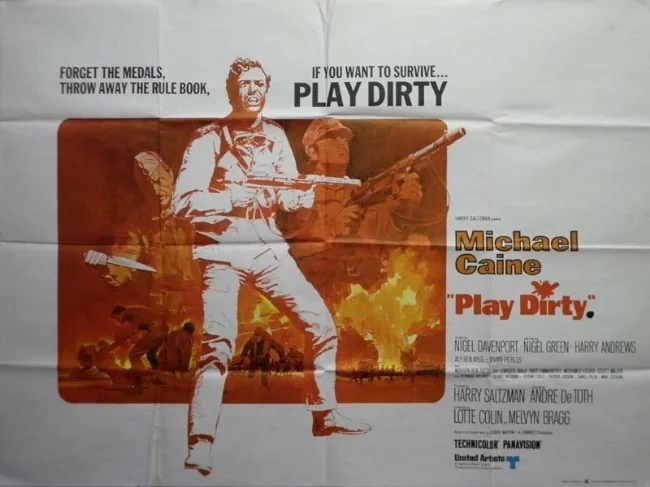
Gritty, grim and fatalistic are just a few of the ways I would describe Play Dirty. Made at a time when cinema was becoming more realistic and cynical, it eschews the traditional depiction of World War II heroism and paints a singularly unglamorous picture. Due to some minor plot similarities, it is frequently compared to The Dirty Dozen but they are far from identical movies. Robert Aldrich’s film despite having an offbeat plot and a cast of quality characters actors still followed a traditional action based formula and had a relatively upbeat ending. Play Dirty is content to pursue its dour storyline to its inevitable conclusion.
Gritty, grim and fatalistic are just a few of the ways I would describe Play Dirty. Made at a time when cinema was becoming more realistic and cynical, it eschews the traditional depiction of World War II heroism and paints a singularly unglamorous picture. Due to some minor plot similarities, it is frequently compared to The Dirty Dozen but they are far from identical movies. Robert Aldrich’s film despite having an offbeat plot and a cast of quality characters actors still followed a traditional action based formula and had a relatively upbeat ending. Play Dirty is content to pursue its dour storyline to its inevitable conclusion.
Michael Caine plays Captain Douglas of the Royal engineers, who is press-ganged from his cushy position with Anglo-Iranian Oil, into a shady squad of mercenaries who freelance for the British Military. The group is mainly made up of criminals and disgraced soldiers and over seen by Colonel Masters (Nigel Green). Due to Douglas’ lack of field experience he is heavily dependent on Captain Leech (Nigel Davenport), whose only real concern is the £2000 bonus he will be paid if he brings Douglas back alive. Disguised as Italian soldiers the group cross the desert to strike at a fuel dump, hundreds of miles behind enemy lines.
The dialogue in Play Dirty is minimal and succinct. The squad comprising of a Greek narcotics smuggler, a Tunisian terrorist, a convicted rapist, a Turkish smuggler and two homosexual Senussi tribesmen have precious little to say but this does not impede the viewer from understanding the dynamics of the group. The wry looks, sardonic smiles and derisive laughter are more than enough to demonstrate what each man is. The main tension lies between Douglas and Leech, with the former clinging to outmoded notions of gallantry and etiquette. The latter frequently undermines his superior and is sceptical of his abilities. However both become dependent on each other. Douglas uses his engineering savvy to winch their vehicles up a steep incline. Leech saves Douglas when his British dog tags blow their cover.
Veteran director Andre De Toth, who took over when René Clément left the project, does a fine job in driving the movie forward. There is a well implemented battle scene which shows a convoy of trucks and accompanying Jeeps being efficiently dispensed with by entrenched German troops. It plays out wordlessly as the main protagonists look on. The director doesn't balk either at showing the ragtag group of criminals for what they are as they loot all corpses, enemy and allies alike. The arrival of a German nurse also leads to an attempted rape. It all proves to be very challenging for Captain Douglas who still feels bound by the notion that war has rules.
Perhaps the biggest plot element that makes Play Dirty such a product of its time is its ending. The late sixties and early seventies saw a great deal of change in film making and many sacred cows were put to the sword. Play Dirty avoids schoolboy patriotism and opts for something far more bleak. The military goals of the mission prove to be fluid and the chain of command eventually deem the rogue group to be a liability. Betrayal eventually comes from unexpected quarters and hammers home the point that war frequently has little or no honour. Overall the British military of the time are shown to be governed by petty politics and class prejudice. It’s not necessarily a palatable conclusion but it most certainly is credible.
Star Trek: The Animated Series
Star Trek: The Animated Series (or TAS) is often overlooked by the public, getting lost among all the whites noise that accompanies the franchise. Yet it is a surprisingly good series with a distinguished writing pedigree. The series was produced by Filmation in association with Paramount Television and ran for two seasons from 1973 to 1974 on NBC. A total of twenty-two half-hour episodes were produced set in the same timeline and universe as the original series. Often characters and situations that had featured in the live action show re-appeared and where expanded upon, such as Harry Mudd, the Guardian of Forever and of course Tribbles.
Star Trek: The Animated Series (or TAS) is often overlooked by the public, getting lost among all the whites noise that accompanies the franchise. Yet it is a surprisingly good series with a distinguished writing pedigree. The series was produced by Filmation in association with Paramount Television and ran for two seasons from 1973 to 1974 on NBC. A total of twenty-two half-hour episodes were produced set in the same timeline and universe as the original series. Often characters and situations that had featured in the live action show re-appeared and where expanded upon, such as Harry Mudd, the Guardian of Forever and of course Tribbles.
Most of the original cast returned to provide their vocal talents, apart from Walter Koenig. New characters were added, such as Lt. M’Ress, a female Caitian and Lieutenant Arex, whose Edosian species had three arms and three legs. The animated format afforded the writers greater freedom with regard to the scope of the stories. As a result Star Trek TAS features a lot more monsters and planetary vistas that TOS. As with the original series, the standard of writing for the show was above average. The fact that cartoons were still perceived to be the province of children at the time did not deter the narrative from tackling weighty issues. Perhaps we can attribute this to Gene Roddenberry’s guiding hands who would not allow any dilution to the core concept. As a result story editor D C Fontana maintained a high standard, with some material being written by such writers as Larry Niven and Paul Schneider who both penned several stories for the original show.
Although animation offered some advantages, its cost required some additional compromises. Thus Star Trek TAS has a lot of stock shots and minimalist animated sequences. Life support belts providing personal force fields were introduced to dispense with the need to draw complex spacesuits. Also because of musical rights issues, the iconic theme music could not be used, requiring a contrived reworking of it by Ray Ellis and Norm Prescott. However it works well, as do the music cues that were used throughout the series from the Filmation library. Overall, considering the general low standard of animated material at the times, Star Trek TAS exceeds expectations. Each episode covers a lot of ground throughout its twenty three minutes duration.
Curiously enough, despite Gene Roddenberry’s involvement, the show is not officially considered canon, which is a shame. Several episodes really do stand out due to their strong stories and character exploration. Yesteryear features Spock having to revisit his past to prevent his own death. It’s a rather thoughtful and sad tale that provides further details on the Vulcan’s troubled youth. More Troubles, More Tribbles sees the return of everyone’s favourite squeaking fur balls. This direct sequel to the episodes from TOS is fun as well as expanding more on Tribble physiology and Klingon’s inherent aversion to them. The Slaver Weapon perhaps is the most cerebral episode of them all. The story which centres on Spock, Uhura and Sulu touches upon wider issues in the galaxy, by way of the extinct slaver race and their legacy of artefacts. This is far from shallow storytelling and it’s a shame that aspects of the plot were not explored further in later episodes.
Star Trek TAS is a worthy addition to the overall franchise. It has all the hallmarks that made the original series so enjoyable. Despite having a somewhat minimalist animated style, the strong narrative and presence of the original cast makes this an engaging show. Each episode is very story focused and follows the established themes of the live action show. Its shame that more episodes were not made and I’ve often wondered why other popular series from the time, didn’t make a similar transition to animation. Perhaps TAS is just yet another example of Star Trek doing something different and breaking new ground.
The Martian (2015)
Within a few minutes of watching Ridley Scott’s big budget adaptation of Andy Weir’s best-selling novel The Martian, it became immediately apparent that the emphasis was on dialogue and science. Naturally there are competent action sequences of the magnitude you’d expect from such a movie but they are not the driving force of the narrative. The Martian is very much a procedural drama with strong and likeable characters. It’s about how they react to adversity and the underlying mechanics of solving the logistical problems of rescuing a man marooned on Mars. If you don’t like movies with a lot of dialogue and having to think too hard then you may wish to see something else.
Within a few minutes of watching Ridley Scott’s big budget adaptation of Andy Weir’s best-selling novel The Martian, it became immediately apparent that the emphasis was on dialogue and science. Naturally there are competent action sequences of the magnitude you’d expect from such a movie but they are not the driving force of the narrative. The Martian is very much a procedural drama with strong and likeable characters. It’s about how they react to adversity and the underlying mechanics of solving the logistical problems of rescuing a man marooned on Mars. If you don’t like movies with a lot of dialogue and having to think too hard then you may wish to see something else.
If there’s one facet of this movie that I had to highlight as its strongest selling it has to be its tone. The Martian maintains a healthy balance between drama, emotion, tension and science. All of which are approached in a measured and intelligent fashion. This makes the film very accessible. The science and technology is essential to the story but is constantly tempered with dry wit and nerd banter. Astronaut Mark Watney copes with his isolation and desperate situation through humour and a droll personal monologue. Writer Drew Goddard (Cabin in the Woods, Cloverfield) has successfully adapted the source text and added a more human layer to the proceedings.
Despite having a great ensemble cast, it is Matt Damon that underpins this movie. His performance is both likeable and credible. He remains resolute in the face of adversity relying on his scientific training but he is never smug. On occasions when his emotions do get the better of him it is used to great dramatic effect. Jessica Chastain, Bill Pullman, Chiwetel Ejiofor and Sean Bean all have something tangible to do and the screenplay seldom takes a wrong step. The movie successfully creates an atmosphere where you feel that all involved are genuinely working towards a common goal. The Martian also manages to honestly depict how academia and nerd culture often goes hand-in-hand, without lapsing into negative stereotypes.
When dealing with a global subject such as space exploration, many movies cannot help but default to conventional tropes and memes regarding contemporary geopolitics. The Martian is curiously free from this and beyond the involvement of the Chinese space authorities at a key point in the story, the focus remains upon NASA and JPL and not political leaders. A lot of the technical solutions and hardware featured in the film are based upon designs currently under development. The administrative and procedural aspects of The Martian are also based upon those currently followed by the institutions depicted. Of course there are concessions made for creative and cinematic reasons but the movie still maintains a largely authentic air.
Ridley Scott last two movies have not been commercial or critical successes. The Counsellor and Exodus: Gods and Kings seemed to lack the director’s usual acumen. The Martian remedies this run of bad form by being entertaining, cerebral and accessible to multiple audiences. There is humour, pathos as well as spectacle. Through a minor plot contrivance, there’s also a great soundtrack featuring some disco classics. Scott also manages to dovetail David Bowie’s Starman in to the proceedings without it coming off as a shocking cliché. Again I feel compelled to mention the tonal confidence of this film. As a result The Martian deserves to be a critical and financial success. According to Professor Brian Cox it’s a great advertisement for a career in engineering. It certainly proves that mainstream cinema does not have to be big and dumb.
LOTRO World Transfers
This evening I successfully transferred my two primary LOTRO characters from Gilrain server to Laurelin. The process was intuitive and took about an hour in total. Considering this was mid-evening and therefore UK gaming primetime, I thought this to be an acceptable timeframe. I had no issues with any of the contents of my personal bags or vault and was refunded all the rent that I had paid in advance for my house. I took the opportunity brought about by the move to downsize to a smaller in-game property. I was please to find that the migration of my kinship was proceeding well with many other familiar faces arriving on Laurelin during the course of the evening. So from my point of view this migration was far from a difficult experience.
This evening I successfully transferred my two primary LOTRO characters from Gilrain server to Laurelin. The process was intuitive and took about an hour in total. Considering this was mid-evening and therefore UK gaming primetime, I thought this to be an acceptable timeframe. I had no issues with any of the contents of my personal bags or vault and was refunded all the rent that I had paid in advance for my house. I took the opportunity brought about by the move to downsize to a smaller in-game property. I was please to find that the migration of my kinship was proceeding well with many other familiar faces arriving on Laurelin during the course of the evening. So from my point of view this migration was far from a difficult experience.
The world transfers are a necessity and I have had no issue reconciling myself to this. I not an unduly sentimental person, so leaving Gilrain was simply a matter of logistics for me. Laurelin despite being an English RP server seems like a suitable home for my kinship. We mainly tend to have lore friendly names and are mindful of the needs of those who role play. I think we should have no issue settling in to our new virtual home. The benefits of a server with a higher population are already abundant. There is a healthy economy on Laurelin and prices seem to be far more reasonable than usual. It would appear the community is resistant to the concept of hyperinflation. The various chat channels throughout the game seem active and the atmosphere is far from unfriendly.
However despite my broadly positive experience, I have found threads on both the official and unofficial LOTRO forums that refer to alleged complaints about the influx of new players to Laurelin. There are also criticisms from those who have had to rename their characters due to RP TOS violations. Having spent some time in world chat and talking with both new and established denizens of Laurelin, it would seem that there are just a handful of individuals that are unhappy with the status quo. Some may be justified in their protestations, others not so. Either way it is not accurate reflection of the overall community on the server who seem to be adapting to the influx of new players.
As I get older I do find this predilection for drama from certain quarters rather tedious and it actively contributes to me further distancing from the gaming community. As for LOTRO its future seems to be somewhat unsurprising. The recent Player Council leak confirms that we shall continue to get more of the same and that there are no real surprises or radical changes to come in the immediate future. Therefore I am happy to play new content as and when it is released and to take pleasure in what the game can currently provide, rather than focus on what could be. LOTRO is in its autumn years and a more existential approach to the game seems prudent.
Movie Trivia: The Wilhelm Scream
In the 1951 movie Distant Drums starring Gary Cooper, a small band of soldiers are crossing a swamp in pursuit of Seminole Indians. While wading through the Everglades, one unnamed soldier is attacked and dragged underwater by an alligator. His last sound is an agonised, startled scream. Two years later in The Charge at Feather River, a soldier named Private Wilhelm screamed as he’s struck by an arrow in his leg. So began the cinematic legend that is the “Wilhelm Scream”, a sound effect that has punctuated a multitude of films over six decades.
In the 1951 movie Distant Drums starring Gary Cooper, a small band of soldiers are crossing a swamp in pursuit of Seminole Indians. While wading through the Everglades, one unnamed soldier is attacked and dragged underwater by an alligator. His last sound is an agonised, startled scream. Two years later in The Charge at Feather River, a soldier named Private Wilhelm screamed as he’s struck by an arrow in his leg. So began the cinematic legend that is the “Wilhelm Scream”, a sound effect that has punctuated a multitude of films over six decades.
Most studios add audio effects for a film during post-production and of course it’s not unusual for them to recycle material from their archives. In the case of Distant Drums, six short screams were recorded and creatively titled “man getting bit by an alligator, and he screams”. The fifth take was used for the alligator scene and the others were used throughout the rest of the film. Following the movie’s release the distinctive scream was placed in the Warner Bros. sound effects library and used regularly over the years in various productions. It can be heard in Them! (1954), Swiss Family Robinson (1960) and The Green Berets (1968).
Ground breaking sound engineer Ben Burtt noticed the repeated use of the scream during the course of his career. When he made the The Scarlet Blade in 1974 he decided to use the scream, so he cunningly copied it from another film’s soundtrack. Two years later, he was hired to create the sound effects for Star Wars and he managed to track down the original source recording from the Warner Bros. archive. Burtt subsequently began to regularly insert the sound effect into projects he worked on, including the Star Wars sequels. He dubbed it the “Wilhelm scream” in honour of the first named character to use it. The use of the scream rapidly become an in-joke for those in the post production business and from there it use has spread.
The “Wilhelm scream” has been featured in over two hundred movies, TV programs, commercials and video games. Notable film-makers have also specifically requested the “Wilhelm scream” for their movies after learning of its history, including directors such as Quentin Tarantino, Robert Rodriguez, Tobe Hooper, Joe Dante and Peter Jackson. A comprehensive list of titles that incorporate the scream can be found at the IMDB and it’s growing yearly.
The source of the of the “Wilhelm Scream” remains a mystery, but many believe it to be the voice of Sheb Wooley. Wooley is most famous for his song “Purple People Eater”, which was a number-one hit for six weeks in 1958. He had a small part in Distant Drums and was one of a few actors who were called back after filming for some additional dialogue recording. Although he died in 2003 his wife Linda believes it was his scream. She recalls that Sheb was a very gifted voice artist, performing screams, laughs, and other vocals effects for film and TV.
The “Wilhelm Scream” has joined a library of sound effects that are frequently used by sound editors. Others include a thunder clap created for the James Whale’s Frankenstein. Also a particular recording of the red-tailed hawk’s distinctive cry has become ubiquitous in Westerns or any movie with a desert setting. You can also include the universal telephone ring, which has been used on hundreds of films. It would appear that the entire field of audio effects is filled with re-occurring material. Bond films are rife with generic audio effects for automated doors, explosion, electronic devices, jet engines and death screams. A lot of these sound effects seem to have migrated from the back catalogue of Gerry Anderson’s productions.
Like many in jokes, once it becomes too widely known it can lose its impact. The “Wilhelm Scream” is no longer a secret outside of the movie industry and possibly may now have become too ubiquitous. However its history remains interesting like so many obscure facets of the industry. It will interesting to see that as the entertainment industry continues to evolve whether they be equivalents to the “Wilhelm Scream” in five decades times.
The Complete Ghost Stories of M R James – Read By David Collings (2007)
The supernatural fiction of Montague Rhodes James is a major milestone in the history of the literary ghost story. His work tangibly helped shape the genre as we know it today, focusing on classic themes such as retribution, vengeance and other aspects of traditional mythology literature. The protagonists are often socially dysfunctional intellectuals who face peril due to their excessive curiosity. The very physical nature of horror often masquerades for deeper psychological issues. They also serve as an invaluable window into the socioeconomic structure of Edwardian Britain.
The supernatural fiction of Montague Rhodes James is a major milestone in the history of the literary ghost story. His work tangibly helped shape the genre as we know it today, focusing on classic themes such as retribution, vengeance and other aspects of traditional mythology literature. The protagonists are often socially dysfunctional intellectuals who face peril due to their excessive curiosity. The very physical nature of horror often masquerades for deeper psychological issues. They also serve as an invaluable window into the socioeconomic structure of Edwardian Britain.
In more recent years critics have tried to determine if the author’s personal life and idiosyncrasies are reflected in his written work. Is there a hidden subtext within the narrative, hinting at inner conflict and repression in James own life? It’s quite possibly so. Either way there is no doubt that M R James is one of the finest authors of short stories, this country has known. His influence is still seen today in the works of Brian Lumley, James Herbert and Clive Barker. Furthermore his stories still have the capacity to disturb the reader.
Recently I was pleased to discover a comprehensive audio book featuring the complete collection of M R James ghost stories, read by David Collings. Previously selected stories had been recorded in the middle Eighties by the great Sir Michael Horden. Sadly these are no longer available. The new recordings are presented in two volumes by Craftsman Audio Books. They contain all short stories in chronological order and are unabridged. Atmospheric music is used strategically to bridge the material.
David Collings reads the works of M R James as they’re meant to be heard. He is word perfect and his delivery is smooth and lyrical. He alternates between regional accents and Latin with polished aplomb. Collings must be an M R James aficionado as he brings out all the sly humour of the Edwardian text, adding charm and chilling nuance to every story. Although I am a strong advocate of reading for oneself this material lends itself strongly to the audio book format and is an utter delight. I cannot praise this collection enough and consider it to be the perfect way to while away the cold winter nights.
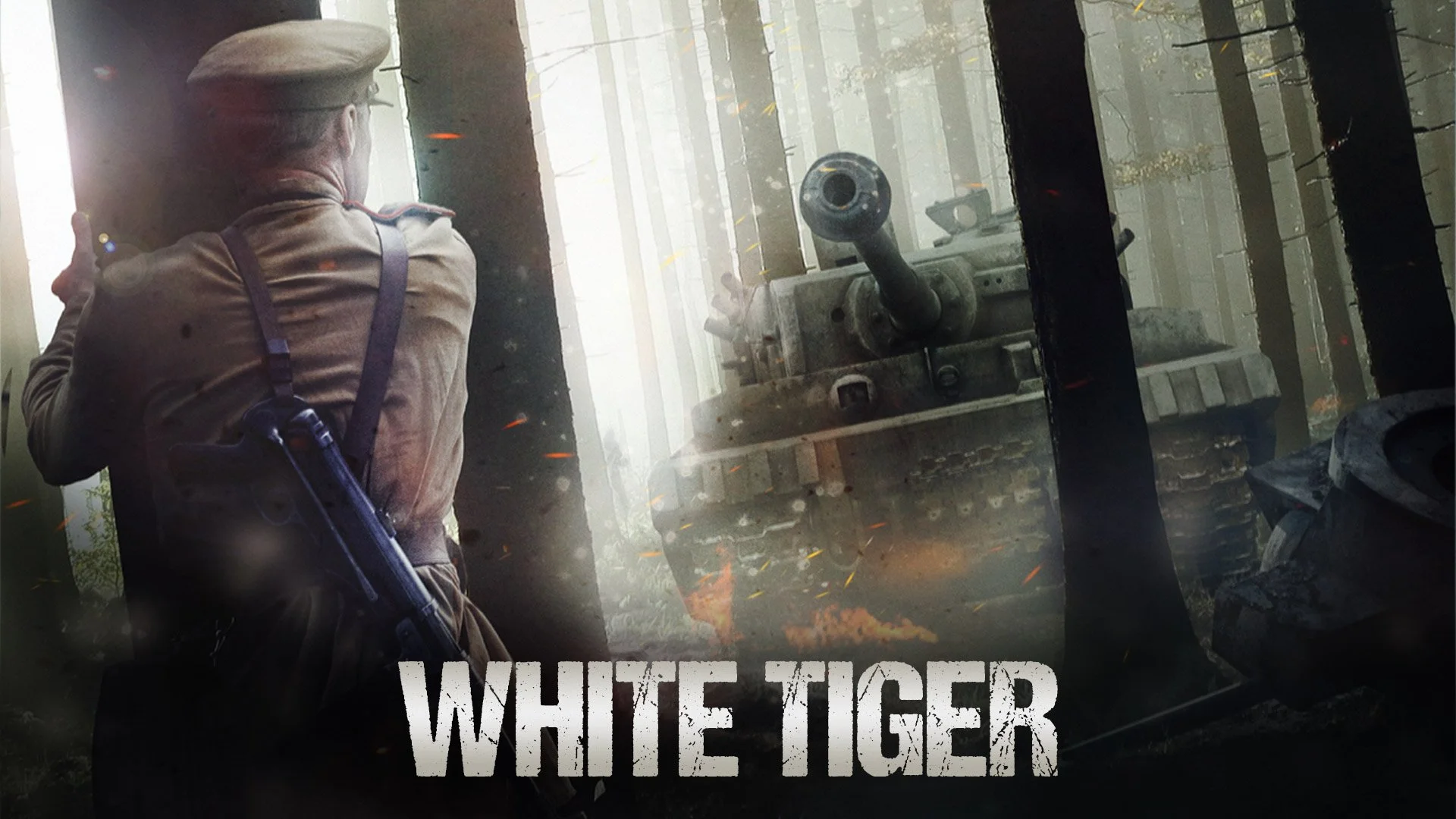
White Tiger AKA Belyy Tigr (2012)
It is rewarding to find a movie that wrong-foots you and challenges your perceptions on certain subjects. White Tiger is exactly such a film. Starting of as a traditional war movie, the story quickly evolves into a supernatural revenge story with shades of Moby Dick. The final act and subsequent sting in the tail ending provides immense food for thought. It proposes an idea that many will find particularly challenging. However the film succeeds in making such a bold pitch because of its inherent Russian earnestness and the fact that that nation’s war experience is so subtly different from others.
It is rewarding to find a movie that wrong-foots you and challenges your perceptions on certain subjects. White Tiger is exactly such a film. Starting of as a traditional war movie, the story quickly evolves into a supernatural revenge story with shades of Moby Dick. The final act and subsequent sting in the tail ending provides immense food for thought. It proposes an idea that many will find particularly challenging. However the film succeeds in making such a bold pitch because of its inherent Russian earnestness and the fact that that nation’s war experience is so subtly different from others.
White Tiger starts with Russian soldiers find a blackened tank driver in a burnt out wreck with burns to 90% of his body. He miraculously survives and recovers in just three weeks. Remembering nothing of his past life or identity he is renamed Ivan Naydenov (Aleksey Vertkov). He claims to have gained the mystical abilities and to have been charged with the mission of destroying the White Tiger that is decimating Russian tanks. Major Fedotov (Vitaly Kishchenko) reluctantly supports Ivan as he does seem to have uncanny skills in combat. He subsequently assigns to him a customised T-34 along with a sceptical crew who balk at being instructed to attack targets they cannot see. Ivan finally catches up with the allusive Tiger tank in a deserted village but is everything as it seems?
It soon becomes apparent that much of what is happening in White Tiger is not to be taken literally. Both the White Tiger and Ivan himself are symbols. Physical manifestations of war itself, locked in an unending battle; like the human body continuously fighting disease and infection. Finally when the war ends and the Russian POWs are released, Ivan declares that he cannot stop fighting as the White Tiger is still at large. The codicil at the end of the movie shows Hitler calmly discussing the policies he pursued during the war and attempting to justify them. He declares that war is a natural thing and he has simply released a force of nature. “War is fought everywhere and always; it has no beginning and no end. War is life itself”.
Director Karen Shakhnazarov has crafted a singularly enigmatic piece of cinema with White Tiger. It has an eerie quality about it which is not something expected in the war genre. Curiously enough I felt myself reminded of Duel and The Car as well as Herman Melville’s famous novel. The purposely erratic pace of the narrative may not be to everyone’s taste but the performances and prevailing atmosphere are compelling. The ending is a major talking point in itself and I envisage that there will be many discussions and possibly arguments over the many plot elements that are not resolved or explained. However I consider this to be a good thing as cinema has become too much of a passive experience of late. A subject as complex as global war should not be rendered into binary terms; thankfully White Tiger does exactly the opposite.



The Enduring Appeal of Mario Kart
One of the best games I have ever played is Super Mario Kart. It simply embodies all those elements that make Nintendo titles so great. It is a polished product with a cheerful aesthetic that is eminently playable. It has exactly the right balance between skill and random chance resulting in a fun and compelling game. No two races are ever the same. It is one of the few titles that I have literally played all night with friends. I still smart over the “incident” where someone stole my feather just as I was about to jump across the shortcut on the Ghost Valley 1 track (this will make perfect sense to those who have played the game).
One of the best games I have ever played is Super Mario Kart. It simply embodies all those elements that make Nintendo titles so great. It is a polished product with a cheerful aesthetic that is eminently playable. It has exactly the right balance between skill and random chance resulting in a fun and compelling game. No two races are ever the same. It is one of the few titles that I have literally played all night with friends. I still smart over the “incident” where someone stole my feather just as I was about to jump across the shortcut on the Ghost Valley 1 track (this will make perfect sense to those who have played the game).
Due to the game’s inherent appeal, there has been a further seven incarnations of Mario Kart. All have proven to be bestsellers. Despite Nintendo’s ongoing financial difficulties, last year’s release of Mario Kart 8 was a welcome shot in the arm for the ailing games company. Sales have reached 2 million copies in the US alone since its May release. The title has also been beneficial for sales of the ailing Wii U, a console that until recently had been effectively written off by many in the gaming industry. Furthermore Mario Kart 8 attracted “strongest review scores in franchise history,” according to the company.
So what exactly are the reasons behind the enduring appeal of Mario Kart? Obviously the accessible and well-conceived game mechanics are a big factor. Each new version of the game maintains the balance between refining old ideas while introducing fresh new ones. The pleasant graphics with their stylised cartoon aesthetic along with the playful soundtrack broadens its appeal to all age groups. The game also lacks the male-centric philosophy that is associated with so many driving and racing franchises. Perhaps the most important quality present in all versions of Mario Kart is the “fun factor”. It’s something Nintendo has always inherently. It’s the reason why I still play Super Mario Kart today, via an emulator on my PC and tablet.
El Dorado (1966)
El Dorado opens with a montage of paintings by celebrated Western artists Olaf Weighorst. These beautiful pictures in many ways reflect the nature of the movie, depicting a stylised representation of the Old West that despite its beauty, never really existed. Director Howard Hawks includes every possible genre trope and meme into El Dorado but far from being a handicap, it makes the movie a perfect distillation of Hollywood Western. The pairing of John Wayne and Robert Mitchum is sublime as the two effortlessly riff off each other. If you need an example of how the Western is the most flexible and accessible movie genre, then El Dorado is a text book example.
El Dorado opens with a montage of paintings by celebrated Western artists Olaf Weighorst. These beautiful pictures in many ways reflect the nature of the movie, depicting a stylised representation of the Old West that despite its beauty, never really existed. Director Howard Hawks includes every possible genre trope and meme into El Dorado but far from being a handicap, it makes the movie a perfect distillation of Hollywood Western. The pairing of John Wayne and Robert Mitchum is sublime as the two effortlessly riff off each other. If you need an example of how the Western is the most flexible and accessible movie genre, then El Dorado is a text book example.
Wayne plays Cole Thornton, a hired gun who travels El Dorado to pursue a potential job offer from Rancher Bart Jason (Ed Asner). Jason needs Thornton to remove my any means, a rival rancher who own the local water rights and to also take care” of local Sheriff J P Harrah (Robert Mitchum). Thornton refuses the contract as Harrah is a friend and subsequently leaves town. Six months later Thornton returns to El Dorado to find his friend has become a drunk after being crossed in love. The range war has also escalated and Bart Jason now has a formidable army of men, led by notorious gunman Nelse McLeod (Christopher George, sporting an excellent scar and contact lens). Outnumbered, Thornton and Harrah try to keep the peace with only the help of an old Indian fighter (Arthur Hunnicutt) and an inexperienced greenhorn called Mississippi (James Caan).
The mid-sixties were a very interesting time for Hollywood as writers and directors tired of the status quo, started pushing boundaries of movie ratings. El Dorado blends traditional Western machismo with Greek tragedy and plenty of sassy dialogue. It is also quite violent for the times, something that becomes more apparent with the clarity of the latest Blu-ray release. Although predominantly set bound, the film does have some scenic what location work. The chemistry between the two leads is by far the movies strongest selling point and their real life friendship is clear. Leigh Bracket’s script is loaded with wise cracks, Western philosophy and musings on the Code of the West. Caan and Hunnicutt are great foils.
On release El Dorado was considered to be a little old school compared to the emerging revisionist trends of the time. The ballad that plays over the opening credits, sung by George Alexander and The Mellomen, is very traditional. Nelson Riddles score conversely has quite a contemporary arrangement. The movie sits squarely between the old and the new. Its theatrical release was delayed by Paramount so that it would not clash with Nevada Smith, which depicted a far more cynical and bleaker interpretation of the West.
Over the years El Dorado has grown in critical and public acclaim and is now rated more highly than it was upon its initial release. Roger Ebert gave the film a near-perfect rating at 3 1/2 out of four stars, stating “El Dorado is a tightly directed, humorous, altogether successful Western, turned out almost effortlessly, it would seem, by three old pros: John Wayne, Robert Mitchum and director Howard Hawks”. The movie certainly made an impact upon me as I saw it as a child and has stayed with me over the years. I still have a soft spot for Edgar Allan Poes poem Eldorado that is quoted by James Caan throughout the movie.