
Libraries
If you wanted to find me on a Saturday afternoon during the late seventies and early eighties, then the local library was a safe bet. At one point I belonged to three including one in a neighbouring borough but Blackfen Library was my favourite. It was the nearest to our home and I was fond of the oddly austere building. Both of my parents have always been prodigious readers so going to the library quickly became a regular part of my youth. Initially, I was content to confine myself to the children’s section reading Hergé's Adventures of Tintin and the escapades of Asterix the Gaul. However, I was never really content with fiction aimed at children and especially stories about children. Hence as I grew older I expanded my horizons and strayed into the adult section. My parents didn’t interfere in my choice of books and took the attitude that if I were reading, then I wasn’t getting into trouble. My Dad would make the occasional recommendation. Usually classic science fiction by authors such as Ray Bradbury, Isaac Asimov and Arthur C. Clarke.
Blackfen Library prior to it’s relocation in 2004
If you wanted to find me on a Saturday afternoon during the late seventies and early eighties, then the local library was a safe bet. At one point I belonged to three including one in a neighbouring borough but Blackfen Library was my favourite. It was the nearest to our home and I was fond of the oddly austere building. Both of my parents have always been prodigious readers so going to the library quickly became a regular part of my youth. Initially, I was content to confine myself to the children’s section reading Hergé's Adventures of Tintin and the escapades of Asterix the Gaul. However, I was never really content with fiction aimed at children and especially stories about children. Hence as I grew older I expanded my horizons and strayed into the adult section. My parents didn’t interfere in my choice of books and took the attitude that if I were reading, then I wasn’t getting into trouble. My Dad would make the occasional recommendation. Usually classic science fiction by authors such as Ray Bradbury, Isaac Asimov and Arthur C. Clarke.
Despite it’s somewhat foreboding appearance, Blackfen Library was always warm and tranquil inside. The library ticket system was uncomplicated. Your ticket was a small cardboard pocket. Each book had a physical ticket associated with it which was filed along with your ticket when you borrowed it. Inside the cover of each book was a “date due” sheet which was stamped by the librarian with the return date. I believe you could keep your books for up to three weeks and borrow a maximum of six. As this was the seventies, the books were filed and organized using the Dewey Decimal System. I quickly learned to use this so I didn’t have to rely on the librarians to assist me. Choosing my books was always an exciting process. Sometimes I’d know in advance what I wanted and I’d race in between the heavy wooden bookshelves to the required section to see if my prize awaited. Other times I’d peruse the shelves in a leisurely fashion, reading the plot synopsis on the dust covers. They say not to judge a book by its cover but when you’re 10 years old, a glossy illustration by Chris Foss or Frank Frazetta was a major selling point.
Classic science fiction with Chris Foss artwork
Due to my parents and my local library, I still have a deep and abiding love for books and reading. One of my favourite excursions (pre-lockdown) is to travel to Rochester in Kent and lose myself in Baggins Book Bazaar, the biggest second hand bookshop in the UK. It has many similarities with a library and is a haven of tranquility in an otherwise noisy and frenetic world. Sadly, the original Blackfen Library in Cedar Avenue has now closed and the building was demolished and the land sold to a property development company in 2004. There’s a block of flats on the site now. The library has relocated to new premises in Blackfen Road. It has diversified and modernised in an attempt to stay relevant. It now has internet access and PCs that you can use. The premises also offer several meeting rooms and run numerous clubs and activities. It’s now a bustling and dynamic place. It’s all a far cry from the black and white tiled floors and quiet atmosphere of the former site.
As you may discern, I believe passionately in libraries and making books, knowledge and learning accessible to all. The ability to read is not only a great leisure activity and escape from the rigours of life but it’s also an opportunity for self improvement and to expand one's horizons. Which is why I greatly resent and deplore the closure of over 800 public libraries that have happened since 2010 in the UK. A recent survey from the Chartered Institute of Public Finance and Accountancy (Cipfa) has found that there are 3,583 public libraries open at present. 35 fewer than last year and 773 fewer than in 2010. The closure of nearly a fifth of the UK’s libraries is a result of a decline in spending by 29.6% over the past decade. The reduced funding is due to the UK government cutting spending on all public services after the banking crash of 2008. The debate continues as to whether this was necessary or driven by political ideology. I believe author and comedian Alexei Syale may have some insight when he said “austerity is the idea that the 2008 financial crash was caused by Wolverhampton having too many libraries”.
Blackfen Library as of 2020
I am a child of the seventies and although I won’t universally extol the merits of that decade, it did have some good points from a child’s perspective. Blackfen Library introduced me to the joys of H. G. Wells, Arthur Conan Doyle, Agatha Christie, J. R. R. Tolkien and many other classic authors. It also taught me that silence is not to be feared but something to be savoured when appropriate. Like most adults, as I’ve got older I find that I don’t read as much as I used to, although I still manage a book each month or so. Reading for me now centres on blogs and other online news outlets. But I still enjoy finding a quiet corner and losing myself in a good book. And I still visit my local library (which have now reopened) although now it tends to be more when they hold events. But it is important that we as a society fight any further closures and continue to foster in our children the importance and pleasure of reading. Although I suspect this will be more of an uphill struggle in the current political climate.
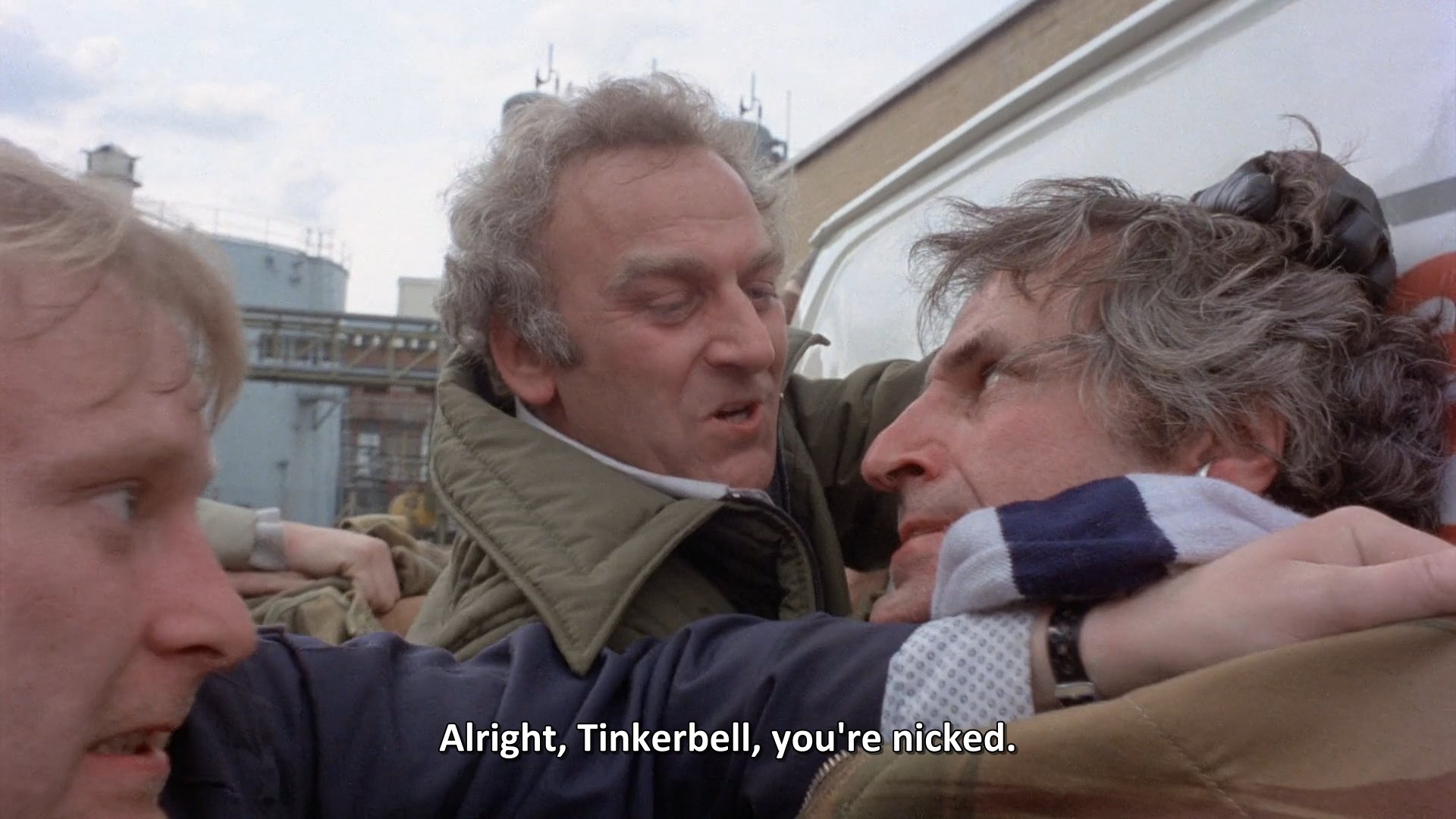
When I first started this series of posts back in 2023, they were originally intended to provide a useful overview into UK (mainly British) slang. US slang is ubiquitous globally due to the pervasive nature of American culture. Hence most people have a good grasp of its nuances. However, the proverbial door does not swing both ways. Hence most people will watch British TV dramas or read popular novels and can be quite bamboozled by some of the phrases that are used. That is what I was trying to address. However, over time this entire enterprise now reads like a some sort of Guy Ritchie film with Colin as the anti-hero. That notwithstanding, hopefully the list of slang phrases below will prove useful to know, if you ever visit the UK or tour around London. As ever I have given an example of their respective use. Feel free to ask questions if anything needs clarifying, or you wish to leave a comment with examples of you’re own national and regional slang.

As I write this post, the temperature in Greater London is 33°C (91.4°F). This has become a regular occurrence since the middle of May onwards. High temperatures are fine when you’re on holiday mainly because you’re off work and at your leisure. You don’t have to perform the usual daily task that life requires of you such as work, shop, cook, clean etc. Furthermore, if you’re on vacation you’ll probably be staying at a resort or hotel that is fully air conditioned and you’re dressed accordingly. However, if you’re still performing you’re daily routine such as commuting to work and spending time in an office that wasn’t built with such external temperatures in mind, then 33°C is frankly a pain in the ass. Oh and if you’re one of those people who always respond to discussions such as this with “well I live in Riyadh and it’s 40°C here”, please sod off. You live in a desert which is dumb to begin with. Plus this is not a commensurate comparison. Temperatures are rising in the UK. It’s always hot in Saudi Arabia.
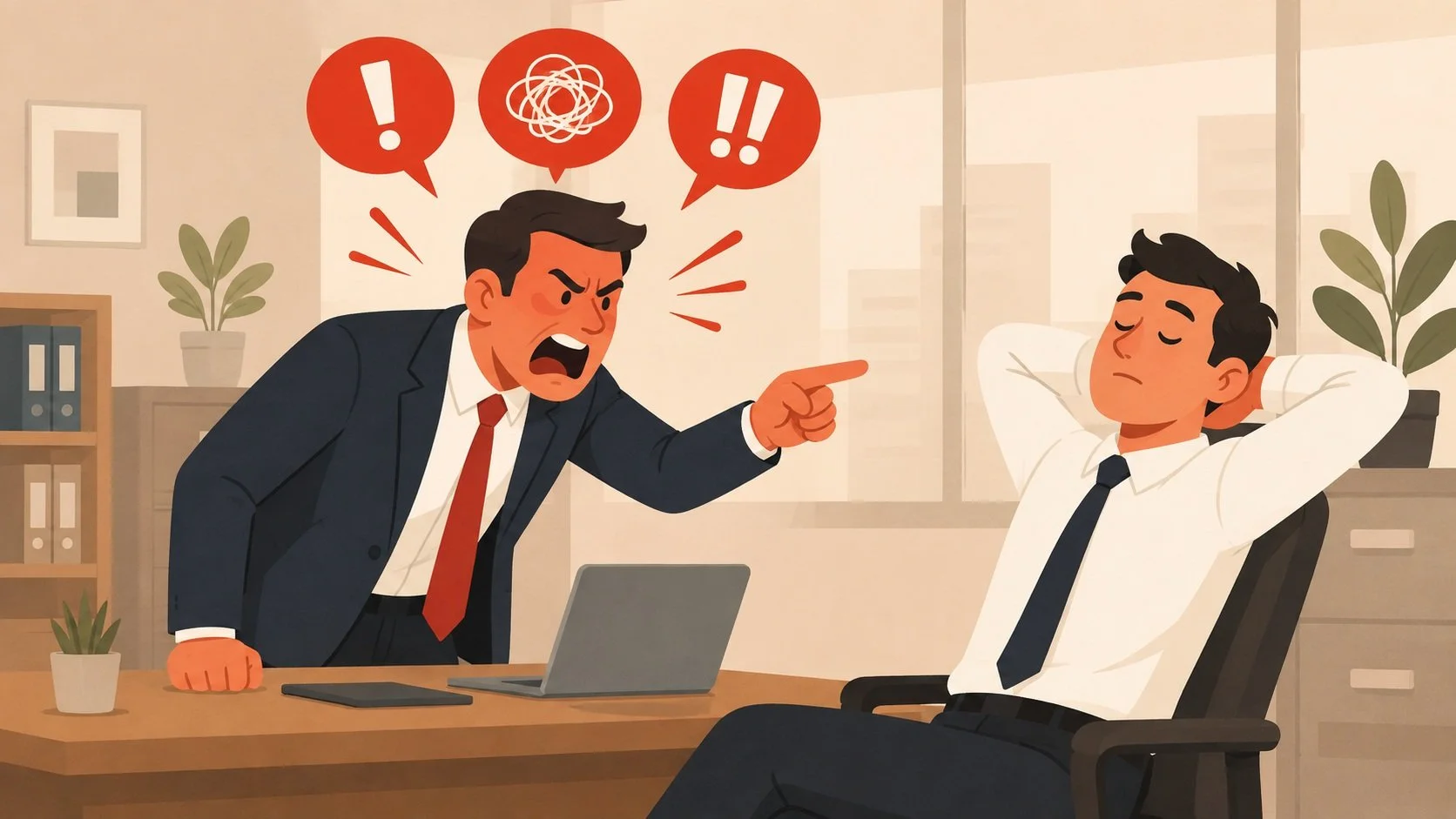
If you visit the websites for such UK tabloid newspapers as the Daily Express or the Daily Mail you will no doubt encounter prominent stories about Megan Markle, Nigel Farage and “immigrants”. If these two august institutions are short of column inches, they’ll run a piece about how some former celebrity has had the unmitigated gall and temerity to get old. I mean WTF? How dare they do what human beings are genetically disposed to do. It’s outrageous. Similarly, head over to the Unherd website and you’ll find foam flecked tirades regarding spurious points of contention over dubious subjects. Often the topic being harangued is incredibly niche and I’ve never heard of it before or even considered it being a thing. These sort of talking points are not about informing, debating and most certainly aren’t about thinking. They exist to provoke reactions.

Before we start, let me explain to those readers outside of the UK, the significance of a Dairy Milk Freddo chocolate bar and its relevance to this post. The “Freddo” is an 18g (0.63 oz) chocolate bar, in the shape of an anthropomorphic frog. When it was re-launched by Cadbury in 1990 (it had previously been manufactured by an Australian confectionery company in the seventies), it was priced at 10p (£0.10). It remained at that price until 2005 when a 1p to 2p increase began to occur each year. By 2016 Freddos were retailing at 25p. However, the following year the price “lept” to 30p with an increase that was double its usual yearly rise. This led to public outrage across social media. Since then the price of a Freddo has waxed and waned. Tesco supermarket reduced the price back to 10p as part of their centenary celebrations. The post COVID price in 2022 hit 49p. At present, the average price of a Freddo in the UK is somewhere around 35p.
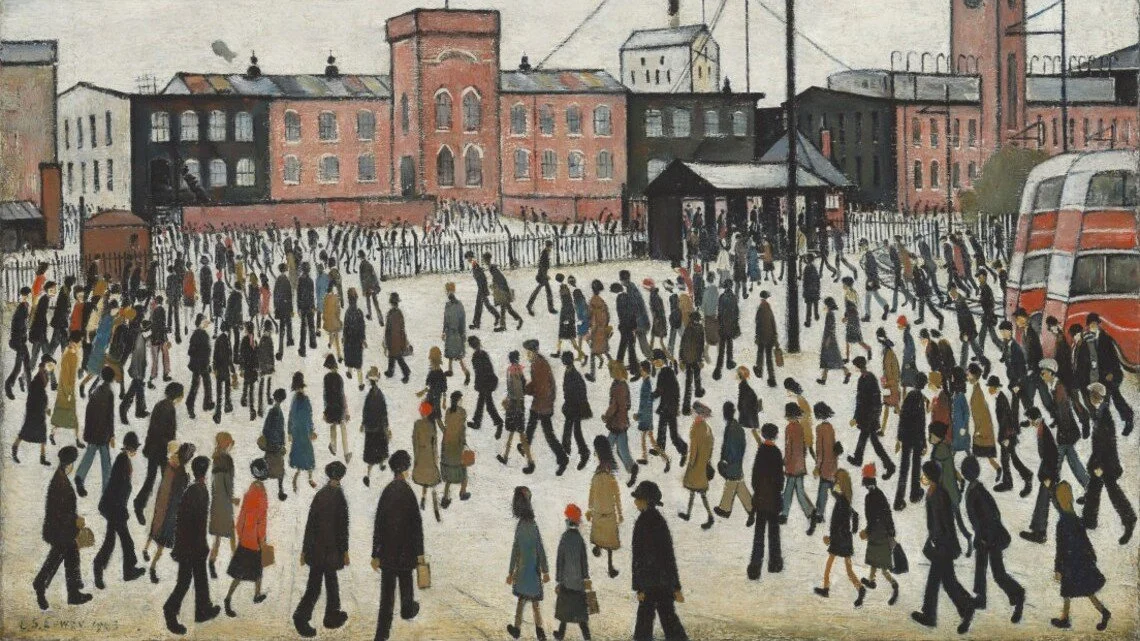
Over the last 10 years, I’ve written several blog posts about my personal working experiences and my career, such as it was. I touched upon working specifically in IT and how that industry changed over time, both technically and in the way that other people perceived it. I have also given my thoughts on the social dynamics of the modern work environment and the way we interact with our colleagues and employers. That is another area that has changed dramatically. Naturally my retirement from full time work has been written about, as it is such a radical change in one’s life. Especially if you’re the sort of person who is clearly defined by their job, which I personally was not. This time, I want to share a few thoughts I have about what I miss about “going to work” and “having a job”. I’m not sure if “miss” is the right word. Perhaps it is more a question of things being absent. Either way, there are some aspects of being employed that I use to enjoy or at least found beneficial that I now no longer experience.

UK Prime Minister, Sir Keir Starmer has resigned and intends to leave office before the parliamentary summer recess. By then Andy Burnham will more than likely be voted leader of the Labour Party and by default will become the new Prime Minister. Due to the current size of the incumbent Government’s majority, there is no pressing reason for a General Election that the UK’s right wing tabloid press is currently calling for. Whether this provides the Government with the reset they’re hoping for when Parliament reconvenes in autumn remains to be seen. With seven Prime Ministers coming and going in a decade, there are some serious questions to be asked about the current state of UK politics. However, the mechanics of contemporary politics, the decline of clearly defined ideologies and the people that seek elected office to be our leaders are only half of the problem. The other major impediment to the UK’s democracy functioning properly is the electorate.

The UK Government has formerly announced its intention to ban under-16s from using social media. This is due to increasing public pressure that “something must be done” about the perceived iniquities of many online platforms. However, as with most complex social problems of this nature, no one has any clear or practical ideas as to what that “something” is. It remains a nebulous, non-specific panacea and clearly someone else’s job to identify and implement. As ever, why choose a nuanced and multifaceted solution to a complex problem, when it is far easier and politically expedient to just “ban” something. The former requires effort and a degree of thinking. If such an approach fails it also means that those who came up with it now carry the can. The latter dumps the problem in the lap of various third parties, who can then be conveniently blamed when the ill conceived policy fails.

Every Thursday, Mrs P volunteers at a food bank that is run from a local church; Avery Hill Christian Fellowship. Today there was a shortage of staff so I agreed to help out. It proved to be an equitable arrangement as she collated the various orders and I packed the bags and took them to the respective clients. The food bank itself is organised and administered by the Trussell Trust, a UK based NGO and charity providing emergency food and support to people locked in poverty. It is open for 2 to 3 hours a week depending upon demand. During today’s session we served just six people. Some weeks its can be triple that amount. Upon closure, a member of staff from the Trussel Trust did a stock take and collated a list of what was needed. This is provided by various local church communities via parishioners donations, as well as local supermarkets who have an arrangement with the trust to provide surplus stock or good approaching the end of their sales window.
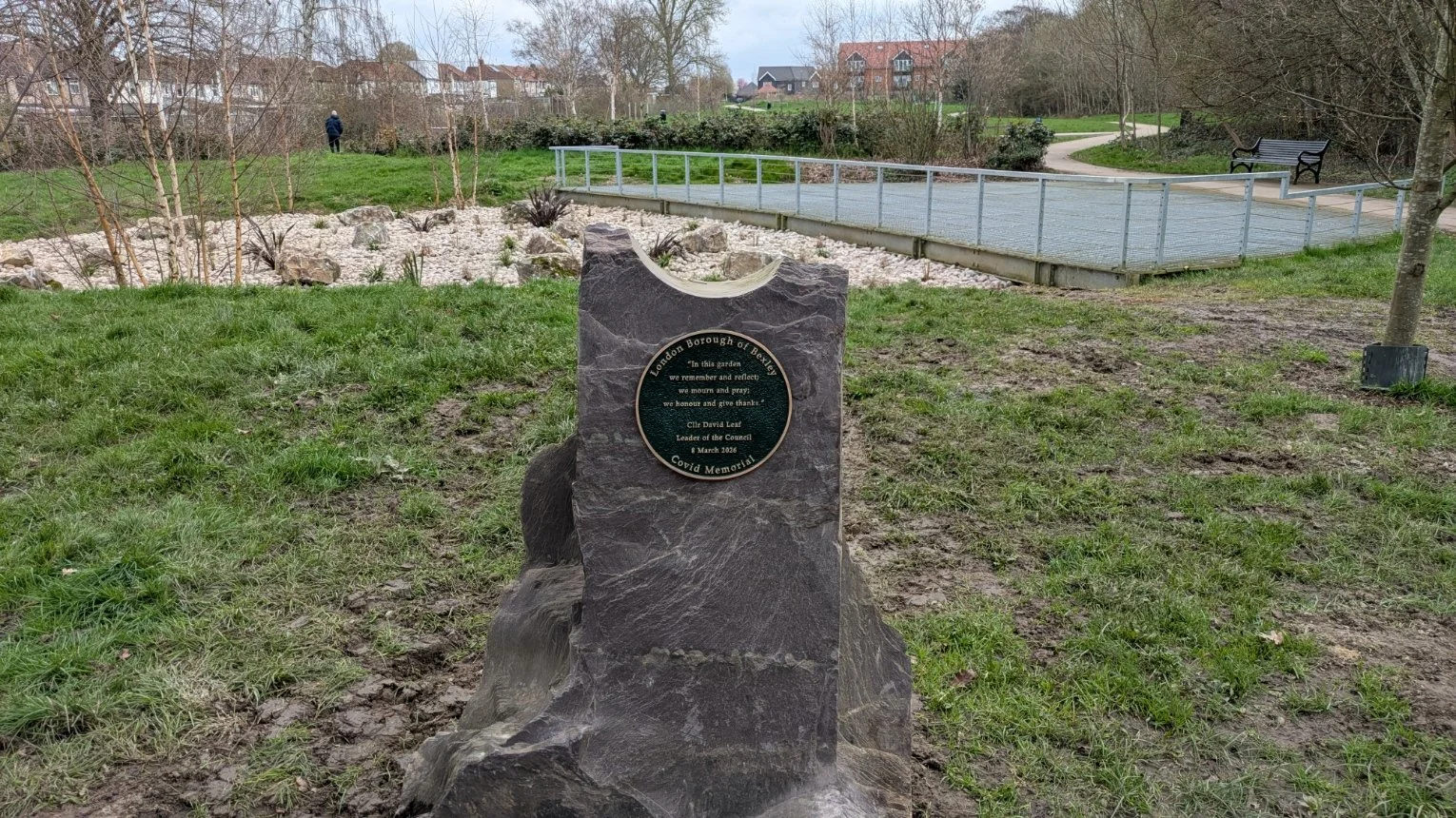
There are approximately 4000 parks and green spaces in Greater London. Bexley Borough alone has over 100. Public parks and green spaces are vital to modern cities, providing essential health, environmental and social benefits. They boost physical and mental wellbeing by reducing stress and providing a place for exercise. Furthermore they enhance urban sustainability, mitigate heat, and provide a sustainable environment for a wildlife. Parks are often a venue for social activities and events and as such are an important part of the local community. Going to the park has always been a part of my life. I live next to Old Farm Park in Sidcup and have made use of this recreational space throughout my life. I used visit with my parents in the seventies, when I was a child. Thirty years later my son, father in-law and I would fly kites there. Now I take my grandchildren to Old Farm Park as it now has a playground.

Being a 58 year old man, I welcome any undertaking which can potentially improve my health. One such thing is proactive screening and testing. The UK National Health Service has started doing a lot more of this in recent years, mainly because diagnosing a problem and treating it early is far more efficient and cost effective than retroactive action. Hence this policy and my age is why I was recently sent a NHS Bowel Cancer Test Kit via the post. This screening service takes place every two years for people aged 50 to 74 in the UK. The kit is very quick and simple to use. A sample of your stool is sent via a prepaid return envelope for testing and the entire process is free of charge. Upon receipt, the laboratory test determines whether there is any blood present in your stool, which is a potential indicator of bowel cancer. If detected, an early diagnosis greatly improves any subsequent treatment outcomes.

I like learning things. I always have. During my middle school years I thought I was a mediocre student and often I wouldn’t apply myself. According to an old school report this was because I was “too busy indulging in Tomfoolery”. Then I had the positive experience of meeting an exceptional teacher. Their lessons were the highlight of the week as they had an ability to make the subject matter, Classical History, utterly compelling and relevant. The teacher in question also treated us like adults and the class benefitted from only having five pupils. This really brought home to me that a lot of disinterest and underachievement in education is linked to the paucity of some teachers. One bad teacher can undermine the good work that all the others can do. Perhaps it has improved nowadays?
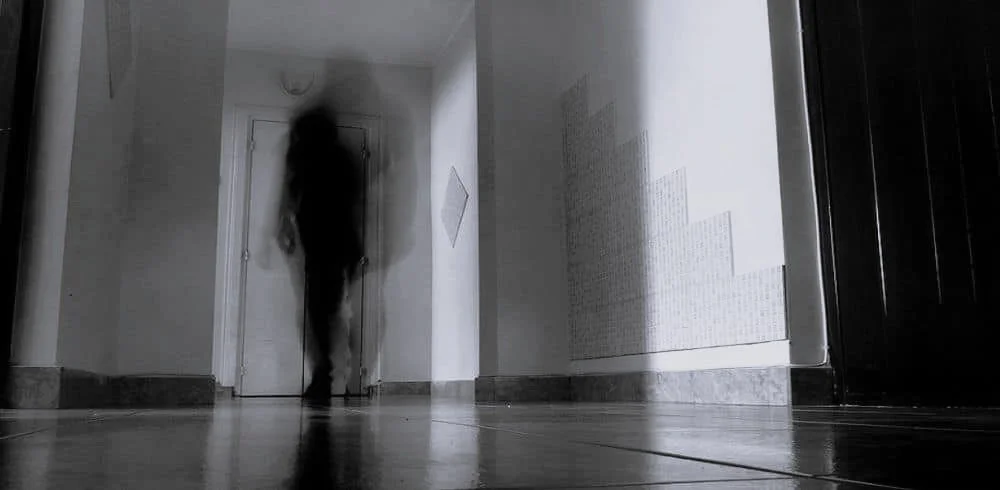
I’ve had an interest in the paranormal since I was a child. My mother always got books out of the library about ghosts and UFO phenomenon, so in some respects I was influenced by her reading habits. As a child such tales were by default interesting and any potentially scary element naturally made them more enjoyable. However, my father being an academic had taught me to question everything, so I felt fairly evenly equipped when exploring these subjects. Further to this point, over the years I have learned that humans have a very unique perspective on the world. We are hard wired to see patterns, regardless of whether they’re there or not. Our senses can also be fooled and often are. Perhaps the most important aspect of our nature that impacts upon any analysis we make into the paranormal is our penchant for creating stories. Hence unusual experiences can be subconsciously misremembered and “retconned” to form more precise narratives.
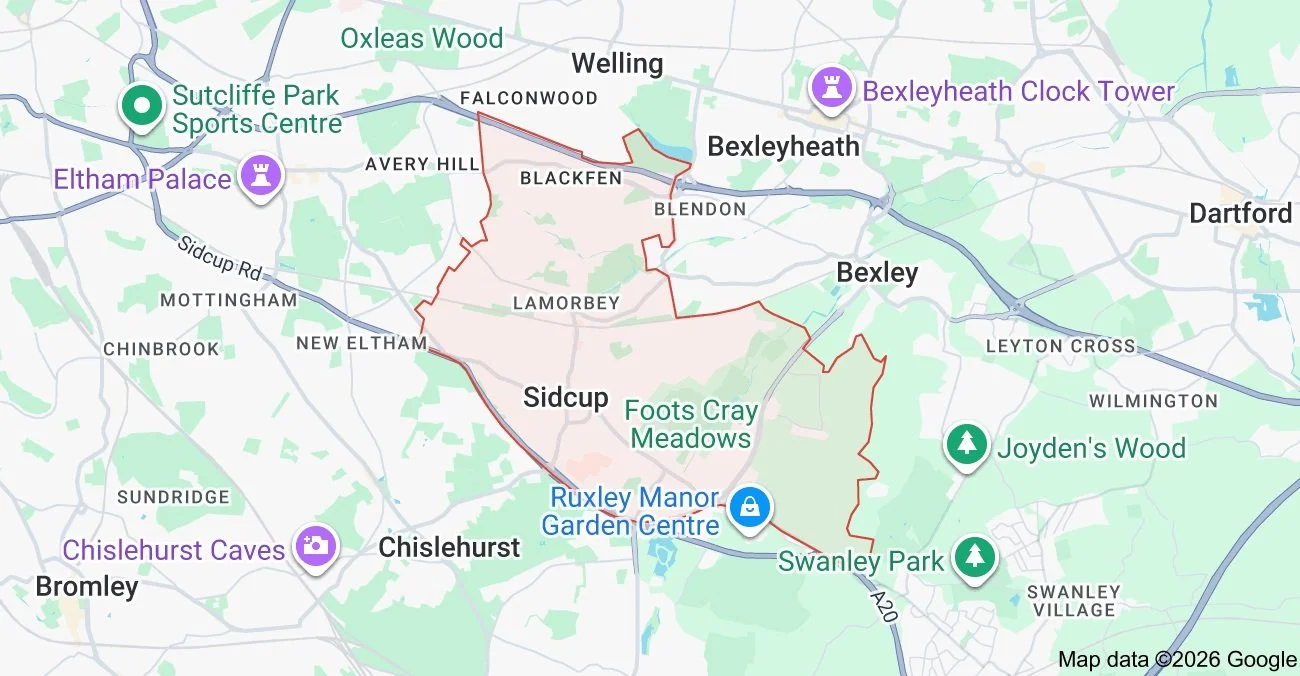
I have lived in Sidcup, in South East London, for most of my life. The first two schools that I went to were local and within 15 minutes walking distance. My Doctor’s Surgery and Dentist are only a few streets away, as is the barbershop that I’ve frequented since 1970. I now have my haircut by the son of the original barber. My point being that Sidcup has everything that residents immediately need. There’s a local hospital, good public transport networks and a broad range of shopping and restaurant facilities. It also has several parks with lakes, sport facilities and children’s play areas. It is a microcosm of the concept of suburbia with its residents commuting into Central London or out into Kent for work. People move here to raise families and end up staying. My parents lived here for 62 years.
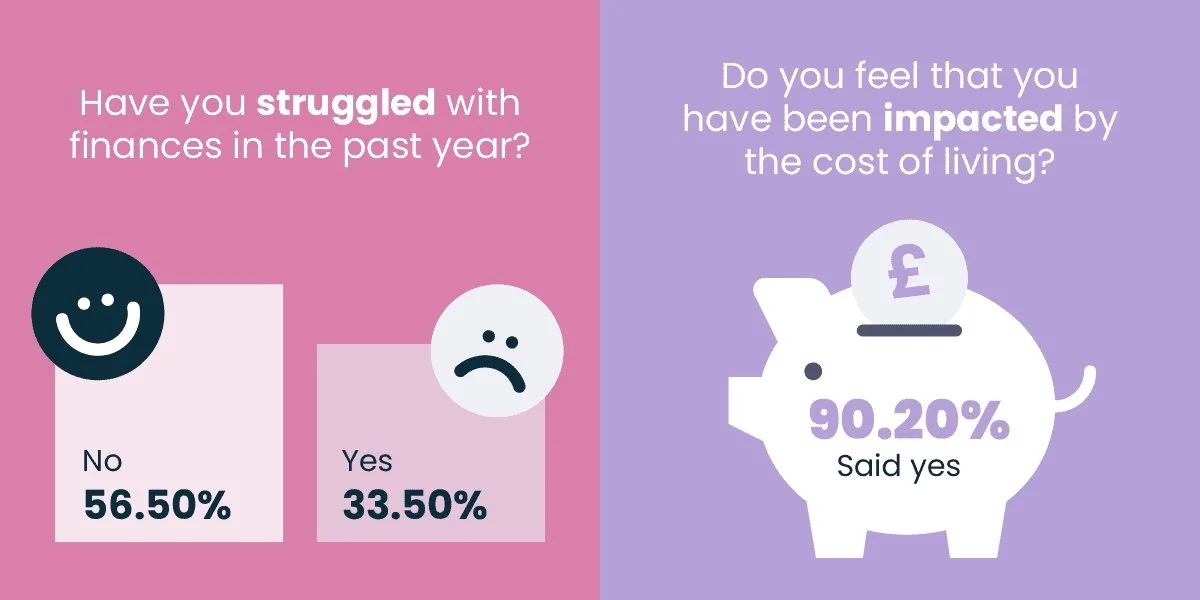
Our household is currently trying to reduce our monthly overheads in response to the ever increasing cost of living. April is not that far away and a great many service providers will increase their rates and tariff as the new financial year begins. Then there is the ongoing effects, both direct and indirect, of inflation to consider. Although the UK inflation rate is dropping, currently sitting at 3.4% in December 2025, food inflation remains higher at 4.5%. Being based in the UK, salaries and billed services tend to be administered monthly. You get paid usually at the end of the months and bills can turn up at any point, depending upon when you started a service. Any payments coming from central government, such as state pension or other benefits, are paid every 4 weeks. This means that there are 13 payments in a year. I thought it pertinent to clarify this point as other countries, such as the USA, favour a fortnightly financial cycle. Hence as a household we work around a monthly budget.

I try not to let the failings of contemporary capitalism get to me but such a mindset is very hard to maintain. From time to time it does just piss you off and you know damn well that there’s nothing you can do about it. So to begin this tale, at the end of November, our Indesit washer/dryer gave up the ghost after a valiant twelve year lifespan. As a result of this household appliance’s stirling work, it was decided to buy another from the same manufacturer. Their website informed me that the model that had just broken was no longer being produced. However, it recommended two newer appliances that had comparable specifications and more importantly the same size. This washer/dryer had to fit into a fitted kitchen unit. To cut a long story short, a model was chosen, purchased, delivered within 48 hours and installed. The broken predecessor was subsequently taken away. The wonders of modern consumer culture!

I was in a pub last night, catching up with friends before Christmas, when I noticed on the wall something I haven’t seen in a pub for a very long time. A jukebox. In my experiences most of the pubs I go to take one of the following two approaches to background music. They either have a sound system and exclusively manage any music via personally curated playlists from behind the bar. Or they have no music at all. The Wetherspoons chain of pubs broadly follow the latter policy and actively use it as a marketing point. Quiet pubs for clientele that just want to talk can be popular. Hence finding an accessible jukebox was a blast from the past. During the late eighties and early nineties, I regularly visited my local pub and often used the jukebox there, which at the time, was operated by an ever changing store of CDs. The jukebox I encountered last night was digital.

Today is my 58th birthday. It would appear that I have existed for nearly six decades. Put another way, I am over half a century old. All of which has given me pause for thought with regard to the passage of time. A phrase that is often bandied about, but what exactly does it mean? As I understand it, the “passage of time” refers to our perception of the flow of time and how we experience its movement. This is something distinct and different from objective time as measured by clocks. Our subjective experience of time can vary due to multiple factors. Two common examples are how time can feel like it's flying by when we're having fun and enjoying something or dragging its feet when you’re enduring something dull. Other factors are whether we are applying ourselves to a task, concentrating and general activity. Such focus can make time pass quickly.

When Mrs P and I moved into our current home, over twenty years ago, we were both working full time. As the garden was poorly maintained and neither of us had any horticultural skills, we decided to employ a gardener. At the time it was a practical solution to the issue of garden maintenance and remains so today. Hence it is a service we continue to use, although our personal health is now the main reason we pay a gardener.

In July the UK Government introduced the Online Safety Act which requires age checks for accessing sexually explicit content online. As a result of this, Pornhub, the 19th most visited site on the internet, has reported a 77% decline in UK traffic. Furthermore, according to the UK regulatory body, OFCOM (The Office of Communications), overall visits to pornographic websites from the UK have fallen by 33%. Naturally, those who championed this legislation are claiming a moral and political victory. However, once you consider what these facts actually mean, they paint a somewhat different and potentially more worrying picture. It would be staggeringly naïve to think that UK visitors to Pornhub have ceased visiting such sites due to the age verification requirements. The more likely explanation is that UK porn consumers are now using VPNs to circumnavigate these restrictions and that this traffic to Pornhub is now recorded as coming from elsewhere.

Formal education in the UK is a structured process, starting at early years learning and continuing through to higher education at university. Some aspects of the educational system are mandatory, whereas others are optional. At present, children in the UK must start full-time education from the age of 5 and remain until the age of 16. After this age, they are no longer required to attend school per se but must remain in some other form of education or training, such as a vocational college or an apprenticeship. Many students remain at school until 18, as there are specific exams to be obtained that are required for a subsequent university placement. Here is a breakdown of the current process as it exists in the UK.

I don’t know if you have noticed that there are quite a lot of companies that have names taken from Tolkien’s Legendarium. At first glance, this seems innocuous enough. Tolkien’s writings grew in popularity over the seventies and eighties but since the release of the film trilogy at the start of the twenty-first century, his work has become more well known and been assimilated into our wider pop culture. Hence, it seems quite logical that a startup tech company, for example, would choose a name from his writings. No doubt the founders grew up reading The Lord of the Rings and are fans. That all seems plausible. However if you take a further look, it gets somewhat more complex. Here are four companies that have Tolkien based names.

Last Wednesday, I woke up with what I thought to be a crick in my neck on the left hand side. I assumed this was simply due to sleeping awkwardly and so I self medicated with some non-prescription pain relief and judicious use of a heat pad. Unfortunately, the problem has persisted and in the last 24 hours it has become much worse. I awoke this morning at about 5:00 AM and as I sat up in bed, an intense pain ran up the left side of my neck and behind my ear. It took several attempts for me to get out of bed because if I turned my head in either direction or inclined my chin, the pain would again run up the side of my neck. Sitting down, getting up and raising my arms caused similar results. While dressing, I attempted to pull a t-shirt over my head. The pain in my neck on this occasion was so severe that I yelled out loud and nearly blacked out.

I am a non-driver. If you wish to know the specifics of how this situation came about, feel free to read the post I wrote about it back in early 2018. To be succinct, I don’t drive, I’ve never learned how and have never owned a car. I don’t feel that I’ve missed out. In fact I feel quite the opposite. I think I’ve dodged a major hassle and expense in life. Mrs P, my significant other, is the designated driver of our household. She owns a car, insures it and maintains it. She also mainly pays for the petrol, whereas I pick up the tab for other things such as lunch or hotels when we travel. All I have to do is make like Iggy Pop if we go anywhere. The most I am ever called upon to do is navigate using Google maps and Android Auto. Fortunately, Mrs P enjoys driving. Always has done. Hence I look upon this situation as an extremely fortunate and equitable arrangement.
I am getting old. I shall be 58 in December. Now, as soon as you say something like that these days, some folk will get uncomfortable and say things like “age is relative” or “you’re as old as you feel”. Well I don’t measure my age in geological terms, so it’s not relative and I’m not feeling anyone especially young at the moment, so both schools or thoughts can sod off. I am getting old by the yardstick we measure human life by, namely years. I have specific, age related health issues and I just don’t feel as energised as I did a decade ago. There are minor signs, such as deciding to go to bed earlier and taking longer to get dressed after taking a shower. I’m not at death’s door but I am slowing up physically. It would also appear that my reactions are also slowing down as I tend to get massacred in any FPS I play these days. So far, my mental faculties seem to be holding up. However, that is the one thing I worry about the most. The potential loss of cognitive abilities scares the shit out of me.

Foots Cray Reuse and Recycling Centre is the fancy name of our local dump. A few decades ago, this was no more than a scrap yard. The rubbish and bric-a-brac left by the public was sorted and scavenged for resaleable scrap. Everything that was left was subsequently sent to landfill or incineration. Much has changed. Today it is the embodiment of the modern recycling ethos. The recycling centre is a well managed, carefully segregated site providing safe disposal of a wide variety of household and garden waste. Wood, metal and hardcore are recycled and there is similar provision for a multitude of electrical goods. Plastics, oils, paint, batteries can be safely disposed of. I have yet to find a home item that they do not have provision to dispose of. The Foots Cray Reuse and Recycling Centre has won awards for the service it provides and is considered one of the best facilities of its kind in the South East of the country.
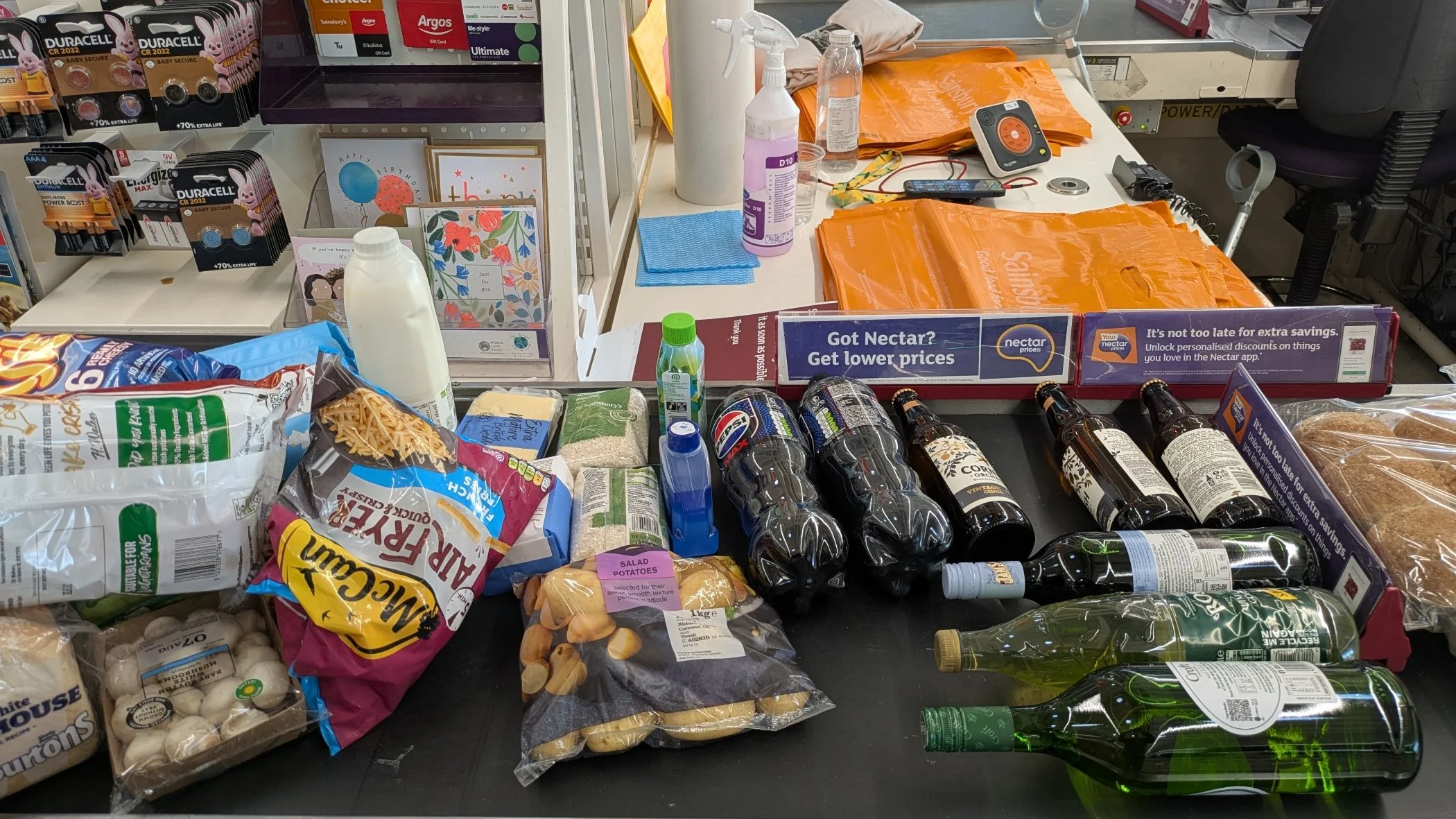
One of the things I enjoy most about having my own blog is the fact I can write about the mundane and the trivial. Mainly because so much of life falls into this category. Life defining events are all fine and dandy and certainly lend themselves to philosophical musings that make fine blog posts. However, you can get just as much mileage out of those everyday things in life with less gravitas, that we all do. Such as buying new clothes, taking out the recycling and going to buy groceries. I have written about all of these in the past. However, today I wish to broach a subject that both fascinates me but also raises my blood pressure. I believe it to be a social marker and a clear indication of an individual’s personal psychology. Yes, I’m talking about packing your groceries at the supermarket and the various rituals and social etiquette associated with it.

“Managed decline” is a phrase that refers to the processes associated with the end of a specific lifecycle, with the goal of minimizing costs or other forms of loss. The concept originated in business where it referred to the management of companies and industries. More recently it is used in wider contexts. The concept gained prominence with regard to urban policy, particularly in the UK during the eighties when several major cities suffered economic and political collapse. Of late, the term has been applied to the UK, encompassing a systematic weakening of the economy, social structures, and cultural values, as well as its global political and diplomatic force. In each case, managed decline involves making strategic choices about resource allocation and accepting the consequences of those decisions. It is a complex issue with ethical and practical considerations, often sparking debate about the best way to address decline and reverse the process.
Addons, Dependencies and Libraries in ESO
Once again, I’m writing a post not out of technical enthusiasm but to try and spare someone else the tiresome bullshit I’ve just had to endure this evening. I wrote earlier this year about the duality of addons in The Elder Scrolls Online. They can be a great boon to the player but they can also be fiddly to configure and frequently break when the game is updated. You’re dependent on the good will of a third party to maintain them. Naturally the recent addition of Elsweyr to ESO meant that a bunch of addons were broken by the expansion. Oddly enough I didn’t initially notice that several of mine had stopped working because I’ve been away from the game for a while, plus I was busy trying to transfer various settings from my previous character to my new alt. However, once I actually got down to the business of traversing Tamriel and questing, it came to my attention that lots of details were missing from my map. Hence, I discovered that all was not well in “Addonsville”.
Once again, I’m writing a post not out of technical enthusiasm but to try and spare someone else the tiresome bullshit I’ve just had to endure this evening. I wrote earlier this year about the duality of addons in The Elder Scrolls Online. They can be a great boon to the player but they can also be fiddly to configure and frequently break when the game is updated. You’re dependent on the good will of a third party to maintain them. Naturally the recent addition of Elsweyr to ESO meant that a bunch of addons were broken by the expansion. Oddly enough I didn’t initially notice that several of mine had stopped working because I’ve been away from the game for a while, plus I was busy trying to transfer various settings from my previous character to my new alt. However, once I actually got down to the business of traversing Tamriel and questing, it came to my attention that lots of details were missing from my map. Hence, I discovered that all was not well in “Addonsville”.
To cut a long story short when I brought up on screen the list of addons, there were several that had “Dependency” in red text next to the author details. A little research indicated that the addon relied upon a library and that this was out of date. According to Wikipedia “in computer science, a library is a collection of non-volatile resources used by computer programs, often for software development”. On the left-hand side of the addon menu there is a little triangular arrow next to each one that is installed. If you click on this, a list appears of all the libraries that the addon uses. Again several of these were written in red text, indicating they were out of date. Thus I checked on each addon that indicated and out of date dependency and made a note of which libraries needed replacing. This included such all-time classics as LibDebugLogger, LibDateTime andLibMapPing.
I ended up with a list of 11 libraries that needed to be updated. Mercifully, these were all easy to find and install via everyone’s favourite mod manager, Minion. I then logged back into ESO and found that all installed addons were now working, there were no further dependencies showing in red and I now had Skyshards and other collectables showing on the map. However, there’s a very good chance that the next lot of DLC or quality of life patch will fubar everything again. I would therefore suggest to ESO players who are not technical inclined, to regularly check their libraries as described to ensure they are not inconvenienced. So far ESO is still proving to be a fun and entertaining game but it is becoming increasingly high maintenance. I don’t mind tweaking things from time to time but the list of items to check and monitor with regard to addons seems to be growing. For gamers such as I, it can be a dangerous thing to upset the fun to effort ratio.

I was recently perusing my archive of old blog posts, when it struck me how much I’ve written about the MMORPG genre over the years. Naturally, there was far more material from between 2008 and 2012 as that was period when I immersed myself in the genre and was very enthusiastic about it. I was at a point in my life when I had the time to dedicate to such games and I was happy to participate in the social aspect of they offered. I would regularly play through group content and spend time socialising online with fellow guild members. My experience remains a textbook example of how online games can be more than the sum of their parts and that where you are at in your life has a major impact upon your overall enjoyment. As I read though various old posts it became clear that my experiences where specific to this particular part of my life and that they cannot be repeated. My relationship with the genre is very different now and that’s fine.
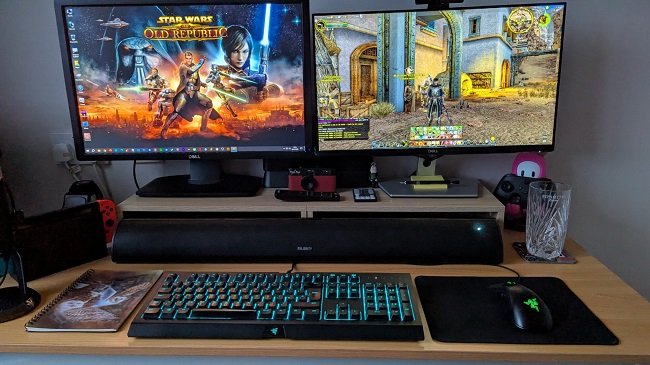
I have two monitors on my desk. The first (which is the primary monitor as far as my PC is concerned), is on the left and the second is on the right. The primary monitor is a 24 Dell U2412M, which has a resolution of 1920 x 1200. It therefore has an aspect ratio of 16:10 which adds a little extra desktop real estate, which I prefer when writing. The second monitor is a 24 inch Dell S2421H with a screen resolution of 1920 x 1080. It has an aspect ratio of 16:9 which is standard FHD. My chair is adjacent to the middle of my desk and I can turn according to each monitor I’m using. I tend to use the primary, larger monitor on the left for tasks such as writing via Google Docs and emails. The second monitor on the right is used for YouTube and gaming. This is because of its FHD format. I also have a Nintendo Switch connected to the second monitor for the same reason.
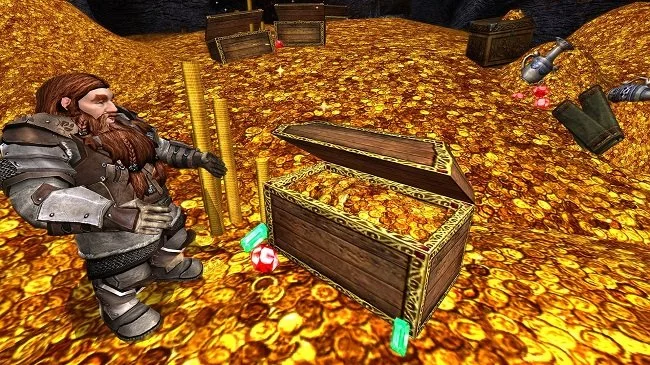
Bree Royce, editor-in chief at Massively Overpowered, recently asked the question “what is the most expensive MMORPG right now”. My first thought was to search through my old draft blog posts and track down an MMO cost analysis I wrote circa 2019. It includes data such as subscription rates and the price of current expansions. There was also information on what were the most popular cash shop items at the time. However, I then read some of the comments that had been left on Bree’s post and I quickly realised that this wasn’t just a matter of financial expenditure. Whether or not an MMO is expensive is also determined by one’s disposable income, respective wealth and personal relationship with money. The latter is perhaps the most important, irrespective whether you consider yourself rich or poor.
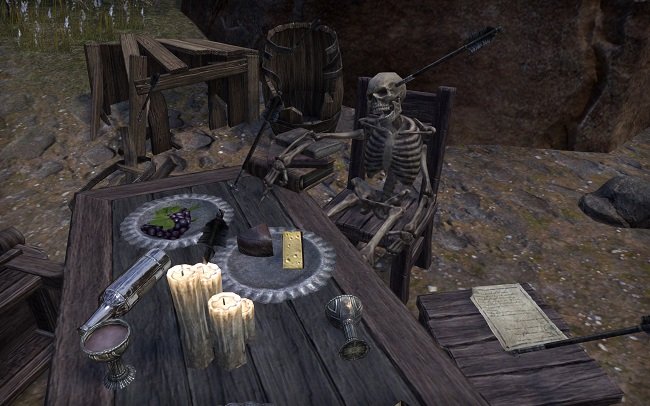
“The MMO genre is rife with its own set of tropes; recurring themes and motifs that have become established and ubiquitous. All of which are ideal material for a hastily produced, lazily conceived, recurring blog post”. Dying in an Massively Multiplayer Online Role-Playing Game is a clear and unambiguous fail state. A means by which to teach the player that they’re doing something wrong and that they need to rethink their strategy. IE Don’t mess with the foul Marmydons unless you have back up and are wielding the Sword of Kagnazax. Dying is a reminder to not get overconfident and maintain situational awareness. It teaches us to ensure you have the right gear and consumables, to be au fait with the mechanics of any fight you’re about to get into and that winning is not a given. Any enterprise that offers a tangible reward will come with potential risks and consequences. If you’re playing in a group then death provides a timely reminder not to rely on Colin.
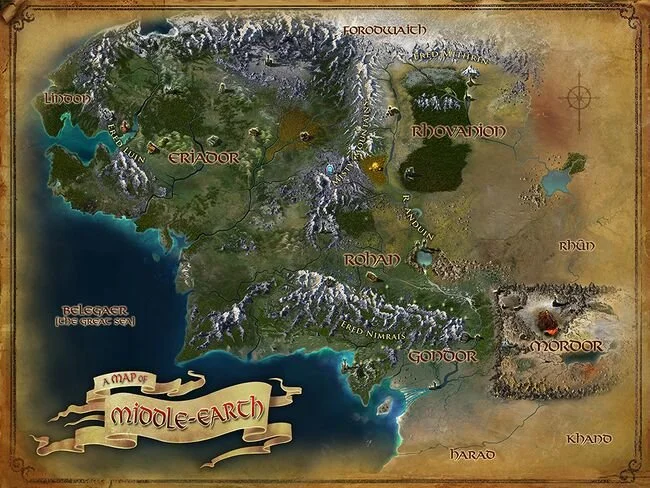
The Lord of the Rings Online was my first major MMORPG. I started playing in late 2008 and quickly discovered that there was a necessity to become familiar with the game world. Although the game provides quick travel options they were not ubiquitous at that point and often a player would simply travel on foot to travel costs down and to take the most direct route. Back in 2008 you could not own a mount until level 30. Hence I began “learning the maps” in the game and to this day still remember how to travel from one side of Moria, to another. The maps in the base game remain clear in my mind as they were so well trodden. Not so those in the regions. There are far more stables with fast mounts present in the game now and so convenience trumps any requirement to become so familiar with newly added zones. Nowadays Standing Stone Games designs new zones that tend to funnel players through them from quest hub to quest hub.
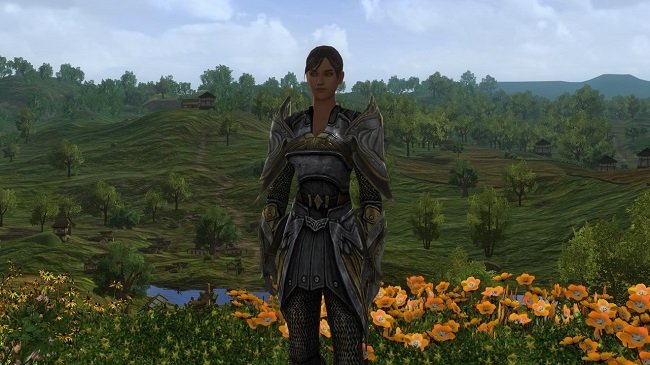
There was a perennial question being discussed over at Massively Overpowered recently. Justin Olivetti asked “why do you play MMOs solo” and as you would expect, there was a wide variety of answers. I have written about this myself in the past, as when I first started playing MMOs, I was very enamoured by the social element and therefore very disposed towards group content. However, that experience between 2008 and 2011, when I played The Lord of the Rings Online most days and dedicated Friday and Saturday nights to raiding, was very much down to circumstances. I had the time and inclination to spend hours online. That is something that I don’t have now. Plus the novelty of the social element has worn a little thin over the years. Nowadays, I do not have the luxury of waiting for a raid group to assemble, nor do I have the tolerance for the inevitable delays that always stem from any kind of human interaction.
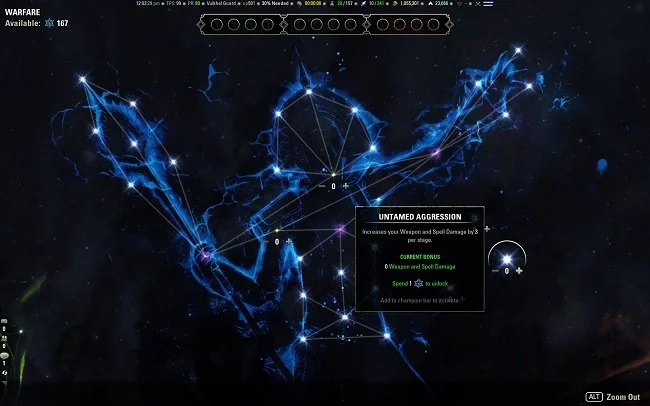
I’m sure I’ve mentioned this issue before in previous video game related posts. But I don’t think I’ve devoted an entire article to the matter, which is what I’m going to do today. So to provide some context, I logged into The Elder Scrolls Online today as I’m fast approaching that point in the year where I spend a few months subscribing to the game. Due to some recent patch, once again all my Champion Points have been refunded. Judging by the change in graphics, it may be that the entire Champion Point system has been updated. Whatever the reason, I have to re-allocate 501points into three skill trees. I wasn’t au fait with the last system, so I followed a build I found online. Now that it has changed, I’ll have to find a new one and copy it. Until I do, my character will be gimped. Shame the game doesn’t offer a selection of generic builds that can be easily implemented at the press of a button.
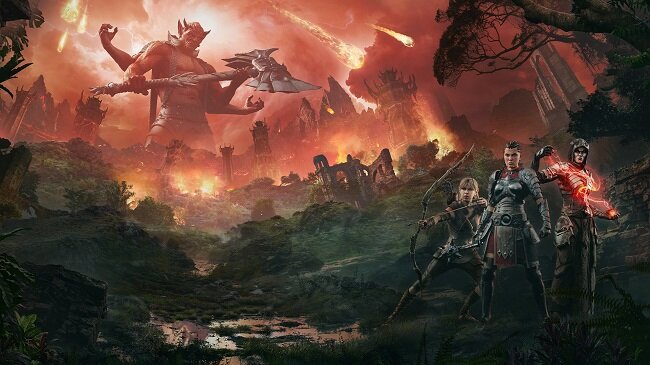
The last installment of A Month in Gaming was at the end of April. I have decided to update this recurring post less often to ensure that I have more to write about than just cataloguing my generic activities in The Lord of the Rings Online and Star Trek Online. The only downside of such an approach is that it invalidates the title but that can’t be helped. Fortunately, I have done more than usual over the last two months. My daily schedule has changed temporarily and I now have a little more leisure time available. Hence I’ve dabbled with several new games as well as using my Nintendo Switch more often. I also took part in a “tag team” playthrough of XCOM 2, which was a very interesting experience. And I finally took the time to go through all my games libraries on the various different platforms to catalogue exactly what I have. I found a few hidden gems but the majority is just “filler” that you find in most video game bundles.
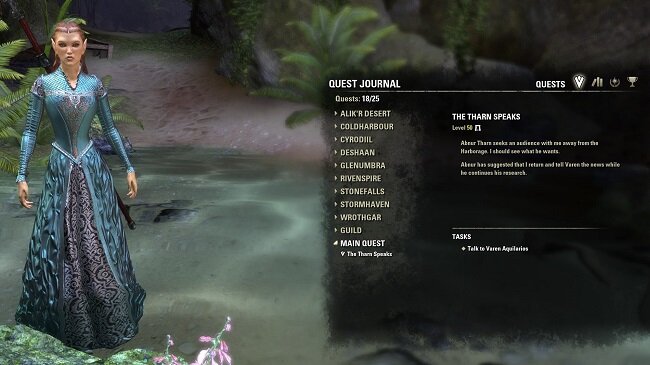
The other day, I was undertaking a daily mission for the Undaunted in The Elder Scrolls Online. I do these to level my companion’s associated skills line. The mission required me to go to a particular delve, set some soul traps and defeat the boss. Nothing unusual there, so off I went. Whenever I go into a delve in ESO, I usually do the quest associated with it. It provides a story and some additional experience points. Thus I arrived in the vicinity of the delve in question and found a note not far away. I read it and accepted the quest assuming it to be the one associated with the delve. To cut a long and confusing story short, it turns out it wasn’t. I discovered this about 20 minutes later when I found myself running around, confused with three separate lots of quest markers on my in-game map. Not for the first time I found myself pondering “where am I and what am I doing”.
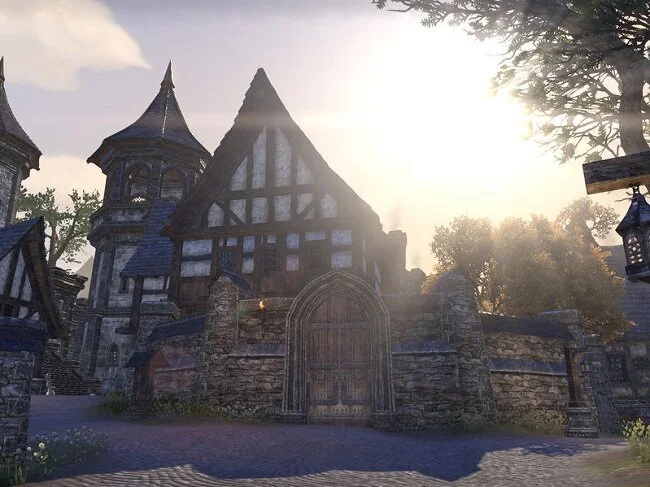
This post is not intended as a player housing guide. There are plenty of those available already. Instead, it is my personal musings on the various factors that have determined my choice of player house in The Elder Scrolls Online. In fact, at the time of writing, I have not yet purchased the house in question. It is dependent not only on a large sum of in-game gold but also a substantial achievement. The house in question is Gardner House in Wayrest. As it is a large player house it costs 1,015,000 gold. Alternatively, it can be bought for 5,700 Crowns, unfurnished. If you want it furnished it will cost 7,100 Crowns. I shall not be buying this property with Crowns as it works out at about £36 or so. I think that price is a little exorbitant especially in light of what I want the house for.
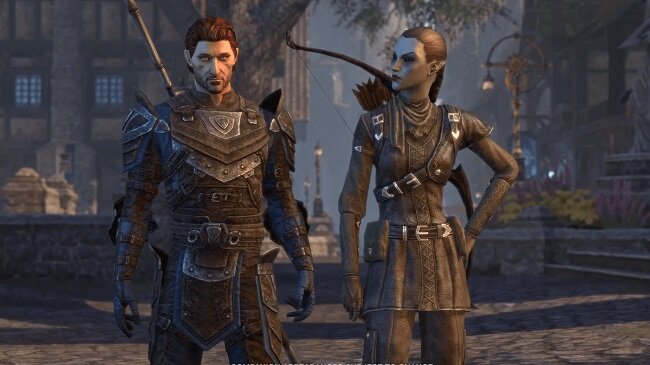
The Blackwood expansion for The Elder Scrolls Online launched a little over a fortnight ago. During that time I have become accustomed to having an AI companion. Not only are they an enjoyable new addition to the MMO, they also have quite a significant impact upon PVE gameplay. Both Mirri Elendis and Bastian Hallix can provide robust support and cover a variety of roles. This is down to the flexibility of the skills system associated with companions. Gear requirements are simpler and a lot easier to manage compared to that of your main character. Levelling is driven by XP gained from combat. Thus, if you go questing with either one of your companions they will level accordingly. They also have personal quests associated with them, ensuring that both companions have an appropriate backstory. The rapport system means that it is prudent to be nice to your AI chum or they’ll leave you for a time.
Justin Olivetti posed an honest question on Massively Overpowered yesterday. “Do you have any clue what’s going on in your MMO’s storyline?” he asked and I must admit that my answer varies greatly according to what I’m playing. Yet before I give a more comprehensive response, let me make clear that one of the aspects of the MMO genre that I enjoy the most is its penchant for complex and sprawling narratives. Both The Lord of the Rings Online and Star Trek Online are based upon intellectual properties with in-depth lore and an established canon. I was also drawn to the RPG Skyrim due to its enigmatic story which linked into a much wider history. It was one of the reasons I started playing The Elder Scrolls Online, as every quest seems to have a story that is connected to another. My enjoyment of these dense plots found in the MMO genre stems from my love of reading as a child.
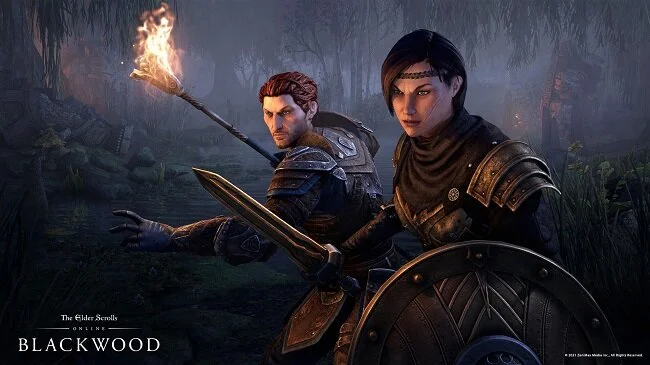
Last night, I finally had sufficient time to log into The Elder Scrolls Online and check out the new Blackwood expansion. The plan was to go straight to the new zone and complete the relevant quests to obtain the two companions that have been added to the game. Unfortunately, life seldom goes to plan as Robert Burns alluded to in his famous quotation. As I haven’t played ESO for a while, I’ve missed several major game updates. Consequently all my champion points have been reset, along with all my skills. So, I had to spend some time trying to remember how my Dragonknight was previously set up. I checked a few screenshots to see what skills were on the hotbars but as they don’t display the name, plus the icons change after morphing a skill, it was tricky trying to reverse engineer my prior build. Eventually I just winged it and managed to blag my way through the two quests.
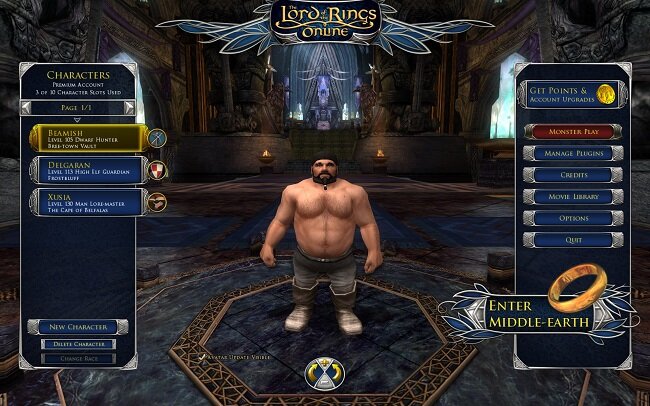
There are many factors that can add to an MMORPGs replayability. Multiple races, classes and factions can all potentially offer a new experience to the player. Some games even have unique stories associated with different types of characters, ensuring that rolling a new alt means that the player doesn’t repeat material they’ve already completed. Many gamers enjoy this aspect of the genre and will experiment with different builds, resulting in a character selection screen filled with numerous alts in various states of progress. However, irrespective of whether you get to experience a new story or if you indeed like the new character you’ve created, there comes a point when you look at your new alts progression and reflect upon the long, long journey to level cap. It is at this point that many alts fall by the wayside. The aforementioned character selection screen is often populated with unfulfilled potential.
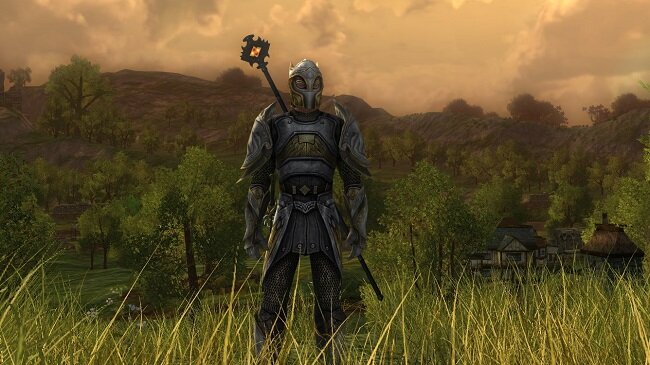
If I may quote myself “The MMO genre is rife with its own set of tropes; recurring themes and motifs that have become established and ubiquitous. All of which are ideal material for a hastily produced, lazily conceived, recurring blog post”. This time round, I would like to discuss the following. The Hero, the Chosen One, the Übermensch. As that is the role that we so often are assigned in this genre. Developers broadly assume that most players want a power fantasy and precious little else is on offer. Hence we find ourselves in a story in which we are destined to do great deeds in a virtual world, whether we wish to or not. I can see the superficial appeal of such a conceit. Most of us are not such overachievers in real life. So a game in which we get to do stuff to the world, instead of the world doing stuff to us has an inherent allure. But like most MMO tropes, unless it is implemented with some panache and creativity, it quickly becomes a tiresome cliche.
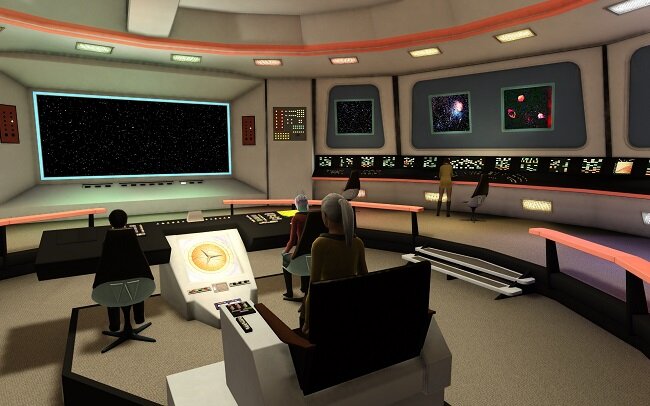
Last year I wrote a post about several “quality-of-life mechanics” found in MMOs. Systems and functionality that just make a game more manageable or convenient. Despite having many features in common, MMOs are far from identical in their interface and controls. If you’re a genre aficionado, then you can usually bluff your way through a new game and decipher how to play it. But for new players, often just trying to figure out how to do a simple thing, like find your skill points, can be an uphill struggle. However, every now and then, you’ll come across some simple functionality in a game that is useful and makes a task much easier. So I have collated another five “quality-of-life mechanics” that I feel are significant and beneficial to the player. Some are very minor but that does not diminish their value. Sometimes, less can indeed be more.
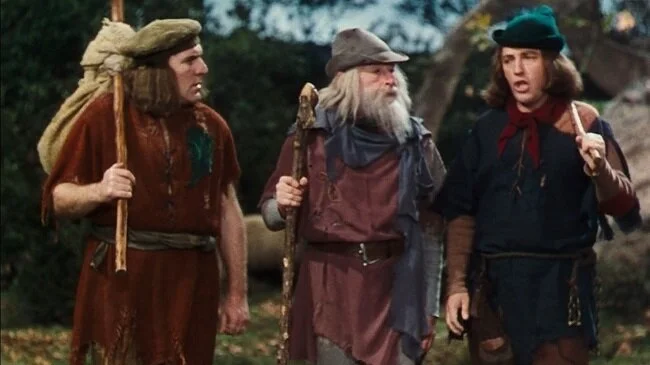
As I mentioned recently in my monthly gaming roundup, I’ve currently stopped playing the three MMORPGs that are my usual gaming mainstay. Namely The Lord of the Rings Online, The Elder Scrolls Online and Star Trek Online. It’s something that I do from time to time when I’m tired of the repetition this genre offers. At present none of these titles has anything on offer that motivates me to play them enthusiastically. Especially LOTRO. I find weddings tedious and self indulgent in real life, so I’m hardly going to get “excited” about a virtual one set in Middle-earth. However, that’s not to say that I’ve lost interest in the MMO genre. I’m merely temporarily burned out at present. I find that after a few months or so, either new content is released that lures me back to these games or I tire of what I’ve been playing in their stead. It’s a cyclical process that I go through from time to time and nothing to worry about.
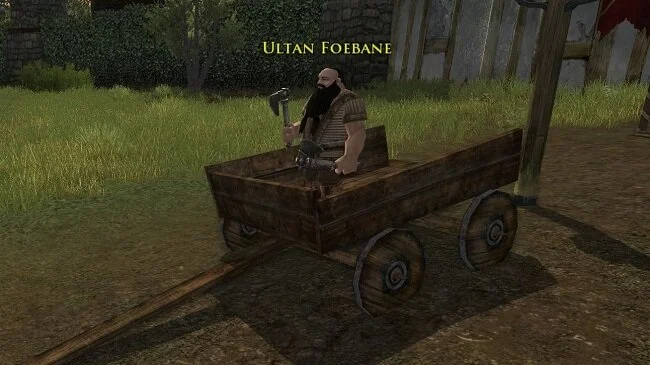
I stopped subscribing to The Lord of the Rings Online in June. I’ve always had a very cyclical relationship with this MMO and at present I feel I need a break from the games somewhat linear formula. Plus the new content scheduled for release centred around the wedding of Aragorn and Arwen doesn’t exactly sound enthralling. So I’ve left my primary character in Langflood and will return to the game later in the year when I feel the need to catch up with content. I have also abandoned the ongoing events in Star Trek Online as they’re getting too repetitive. I would like to see a new longterm story arc rather than just a continuous cycle of short term events and repeatable content. I don’t mind working towards a goal but it has to be something I want and the rewards offered in this MMO are getting a little too generic for my liking. I shall return to the game at some point as I’m a lifetime account holder and I’m curious to see how developer’s Cryptic overhauls the Klingon story arc.

Whenever you use a skill on your hotbar in The Elder Scrolls Online, there is an associated animation as it is inducted and utilised. These animations may vary in length from one to several seconds depending upon their nature. Although these animations add to the ambience of the game, they do come with a direct consequence. The player has to wait for the animation of one skill to complete before they can use another. For those seeking to optimise their performance or DPS output, these delays are an impediment. However, they can be negated through animation cancelling and weaving. Animation cancelling is as it states the stopping of a skill related animated sequence by the use of a follow up action such as bash/tap block/dodgeroll. Weaving is slightly different, in so far as instead of stopping the inducted animation immediately, it allows for the process to be cut short as another animation is started. Typically this is done by using a light attack and then immediately using a skill.

I managed to find a very good deal on the Digital Upgrade version of Greymoor for The Elder Scrolls Online, so I bought it. The key included a pre-order bonus as well as a few other “trinkets and baubles” which clinched the deal. I wasn’t planning on returning to ESO this month plus I still have a bee in my bonnet about playing through the game in narrative order. However, after speaking to friends about the new expansion, I was curious about the new Harrowstorm events that occur in the new zone of Western Skyrim. So I logged into the game and after the obligatory “let’s spend 30 minutes fixing broken addons”, headed over to Solitude and waited for the next Harrowstorm to appear. As ever, Zone Chat is invaluable for determining what is happening and where, so it wasn’t long before I was riding headlong towards the Black Morass Ritual Site ready for my first Harrowstorm.
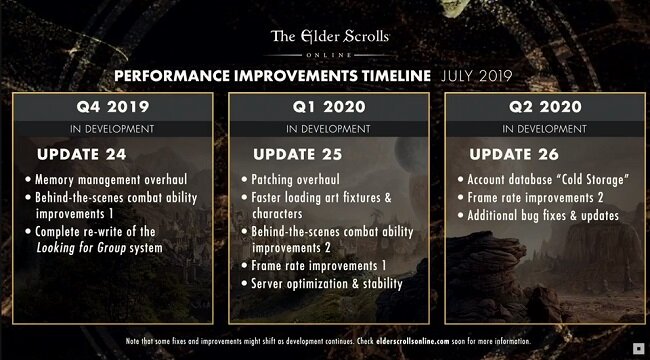
ZeniMax are allegedly addressing some major performance issues with the forthcoming Update 25 for The Elder Scrolls Online. If this latest patch improves loading times, the game’s overall performance and makes updating the client faster, then it will be well received by players. However, Update 25 requires players to reinstall the entire game client due to technical reasons. Furthermore, the patch is not going to be available prior to release on Monday February 24th, so player’s cannot download the necessary files in advance. Unfortunately, as soon as the patch server comes online, all players will have to reinstall the full ESO client and wait accordingly. Considering the disparity between internet connections in the US and Europe, player experience will vary greatly. Some will download the client in hours where others will have to simply leave their PC running and wait all day. Considering the popularity of ESO and the estimated size of its player base, I wouldn’t be surprised if there are queues or connectivity issues.

Over the years I’ve played numerous MMOs (to varying degrees of success). As a genre there are certain game mechanics that are standard and common to most games. Initially during the “golden age” of the MMORPG, there was a focus on collaborative team player. This meant that successfully undertaking group content required a spectrum of players in specific roles. This particular mechanic has diminished over the years but the genre still has numerous common tropes. Quest hubs, reputation factions, gear grinds and vertical levelling are just some that spring to mind. However, many developers in this field attempt to polish and refine these “default” systems, often with interesting results. So I thought I’d cite some specific examples of what I call “quality-of-life mechanics”. Frequently these are bog standard facets common to the MMO genre, that have been polished and refined in a particular game. Small things that just make a game more manageable and provoke a positive reaction as well.
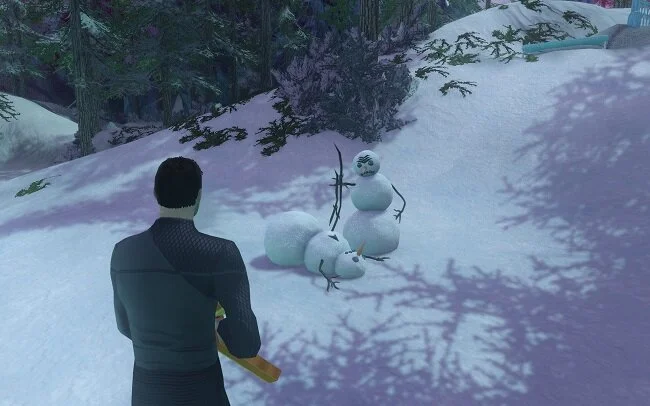
Life is often cyclical, if you don’t believe me go watch The Lion King. I started 2018 playing The Lord of the Rings Online and by writing a post about how gamers collectively seem to repeat the same mistakes. And as the year and indeed the decade ends, I find myself once again playing the Yule Festival in LOTRO and reflecting upon how some games that garnered criticism over their egregious business models, have ended up as huge hits. It would appear that gamers are their own worst enemy. I shall leave the psychological analysis of paradox to others. From my perspective, irrespective of the iniquities of the video game industry and certain quarters of the gaming community, it has been a good year, gaming wise. I have enjoyed my time playing MMOs such as Star Trek Online, The Elder Scrolls Online and the aforementioned LOTRO. These and other titles have entertained me, provided me with an opportunity to unwind as well as affording me some much-needed social interaction. I particularly enjoy Wednesday evenings when I log into my Discord server and then chat and play collaboratively with longstanding gaming friends.
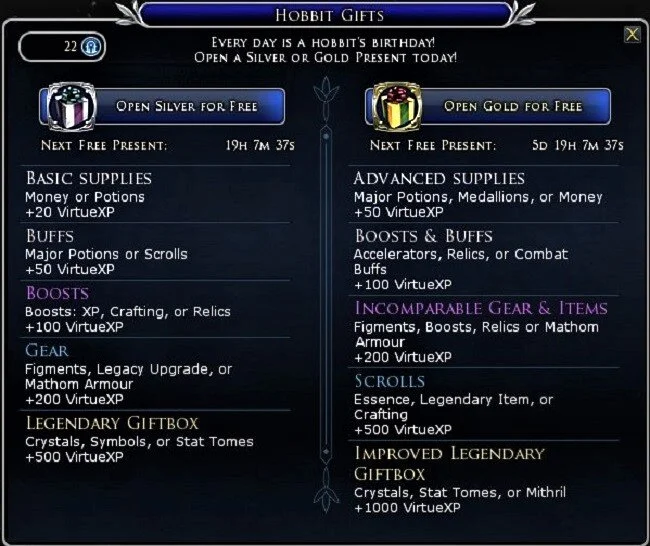
A major challenge for any MMO is to keep players logging in to the game. Obviously, regularly adding content and ensuring that there are sufficient quests, activities and tasks for players to undertake is essential. However, experience has shown that no matter how much content developers add to an MMORPG, players will always veraciously consume it and want more. Hence you need an additional “carrot on a stick”. Something that get’s player sufficiently interested to log into a game, even when they don’t have anything especially compelling to do. Login incentives are designed to do exactly that. They offer of some bauble or trinket that motivates you to log into a game once a day. Hopefully once you login, you may then find something to occupy yourself, either on your own or with fellow guild members. And of course the player who is actively playing may well even purchase something from the in-game store. At the very least, a successful login incentive contributes towards active player statistics. If those figures are presented in the right fashion on paper, they can bolster a declining population.
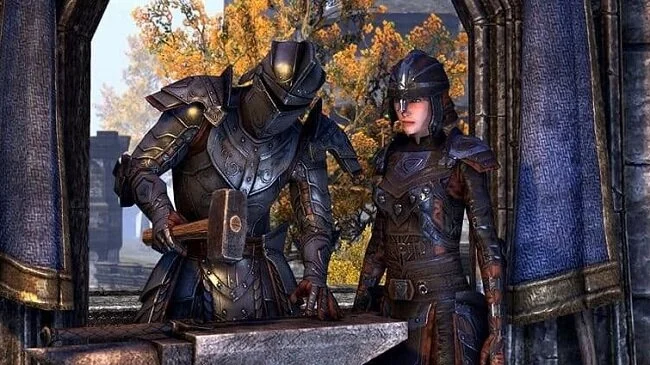
I was initially going to call this post “crafting can fuck right off” but I felt that was a somewhat bellicose opening gambit and a little hyperbolic. So I’ve toned it down to “the esoteric nature of crafting in MMORPGS”. Now to begin with, I tend not to craft when playing MMORPGs. The effort to reward ratio is often insufficient and I have yet to find a crafting system that is engaging and fun. However, for me the biggest sin that crafting can commit is being deliberately arcane and obtuse “with malice of forethought”, if I may invoke legal analogy. Don’t get me wrong, I have no problem with game systems and mechanics being complicated. Intricacy can be both intriguing and rewarding if presented correctly. However, all too often game developers cross over the line, stepping from “complexity” to “fucking annoying”. For example some card games such as Poker can have complex rules but mastering them transforms the proceedings from random chance into a game of skill. But at the other end of the spectrum there’s Fizzbin, which was invented purely to be frustrating due to its arcane nature. I frequently find that crafting in MMOs is just like Fizzbin. Except they’re not amusing or ironic, just tedious and irritating.
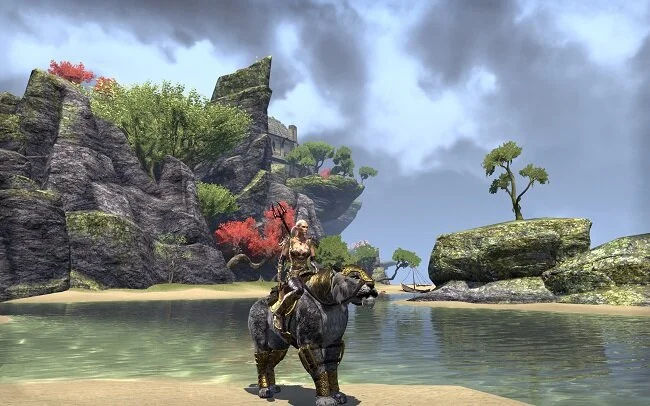
As my first post for International Picture Posting Month, I have decided to share some pictures and thoughts on the MMORPG, The Elder Scrolls Online. Out of the three games from this genre that I currently play, it’s the one that I’m currently enjoying the most. It has plenty of content to play through, the virtual world is immersive and the stories, characters and lore are very detailed and satisfying. As a more recent MMO, the game engine is robust and the visuals are far from dated. The game mechanics are multi-layered but combat is straightforward. There is no obvious skills bloat as you choose what you want on your hotbar. I also greatly enjoy the ambient music and recurring themes that play throughout the game. ESO is both solo and group friendly. You can also greatly augment your UI and the way you interact with the various systems, through the use of addons if you like. Alternatively, if you feel bold enough, then you can go with the default layout. From my perspective, ESO offers a great deal and ticks many of the boxes I favour. Yes it can have its foibles but name me an MMO that doesn’t?
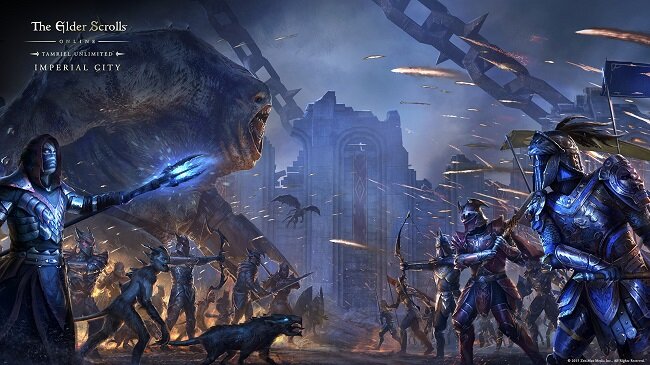
I raised the question in a previous post as to what’s the best way to follow the various stories in The Elder Scrolls Online in an orderly, coherent fashion. After some further research, it would appear that the most practical solution is to play through all the games DLC and chapters in release order. Hence, after finishing the main and faction storylines (in my case the Daggerfall Covenant), the next place to go is The Imperial City. Now I was under the impression that Cyrodiil was just a pure PVP zone but it would appear that there are 8 PVE quests that have a narrative arc. I was most pleased to learn this as I don’t like to miss out on content, especially if it sheds light on the lore and advances existing plot and themes. However, the problem with this series of quests is that despite being PVE content that requires you to kill Daedra mobs, you are still operating within an PVP zone. So you’re at risk of getting picked off by other players of differing factions while undertaking these quests.

Whenever I start a new MMO I tend to research the various classes and make an informed decision about which one to choose as my primary character. This policy has worked out well over the years and therefore compared to other players, I don’t have multiple alts across numerous games. That’s not to say that I’m averse to creating a new character, I simply need a good reason to do so. When I do, its usually because there’s an option to experience a different story. Hence, I currently have three alts in The Elder Scrolls Online. Last night I reached the current level cap of 50 with my Imperial Dragonknight, having recently completed the Daggerfall Covenant storyline. I have now experienced all three faction stories (which I have enjoyed) and more importantly, have learned what is the best way for me to progress through the game. ESO offers players the chance to play the MMO in a manner that suits them. If you want to simply travel Tamriel and do things as you go along, then you may. It’s a very flexible in this respect. But if you want to play in a more structured way, it can be a little confusing navigating a linear path. So here are a few tips I’ve learned the hard way.
When I was a child, I quickly learned never to say within earshot of my parents that I was bored. It was quickly met with a response along the lines of “an intelligent mind is never bored” or more worryingly “if you’ve got nothing to do, I’ll find you something” which meant a chore or Herculean task. Being a child of the seventies and due to my parents fundamentalist approach to declarations of boredom, I quickly discovered numerous ways to occupy myself. The default solution was a book or comic. I always liked reading as a child and had plenty of books to choose from. I also had numerous of comics as an alternative to a hefty tome. I would also draw and paint. My father use to work during the summer holidays as a design draftsman and as a result, we always had plenty of paper in our house. Then of course there were toys and such like. Hence I learned the art of keeping myself busy.