
Have MMOs Made Me Antisocial?
I started playing my first MMO in late 2008. Until then it was the one genre that I had never tried. I initially considered buying World of Warcraft but when I found out there was a virtual version of Middle-Earth I chose to purchase The Lord of the Rings Online instead. Right from the outset I was hooked. My working pattern and domestic arrangements afforded me plenty of time to invest into this game and I did so willingly.
I started playing my first MMO in late 2008. Until then it was the one genre that I had never tried. I initially considered buying World of Warcraft but when I found out there was a virtual version of Middle-Earth I chose to purchase The Lord of the Rings Online instead. Right from the outset I was hooked. My working pattern and domestic arrangements afforded me plenty of time to invest into this game and I did so willingly.
I can remember one particular evening when I grouped up with two other players who were all attempting the same quest as me. We chatted and got on well together. After successfully clearing our quests we decided to meet up again the following night. Needless to say we continued to group together for the next year or so. At this time the majority of LOTRO’s content required people to play collaboratively. It was not an alien concept but a simple fact of life. The prevailing philosophy of the time was that MMO were all about grouping. The key to advancement was teamwork.
At the time I found that most people were friendly and approachable, so levelling through the game was very much a shared experience. Joining a kinship only enhanced this further. It was also nice to log on to the game, say “hi” to people in kin chat and shoot the breeze. Between November 2008 and December 2009 was one of the most pleasant times I’ve spent gaming. There was always something to do and someone to help. I didn’t see LOTRO as a time sink but as a positive leisure activity.
After the release of Siege of Mirkwood in December 2009, something started to change for me. This was not only due to the LOTRO expansion becoming more solo friendly but also because I started to play other MMOs. In early 2010 I managed to progress through Star Trek Online without the need to belong to a guild. Grouping was done automatically and I noticed for the first time that there was no necessity to play collaboratively in a traditional sense. The chat channel was mainly a platform for flame wars with hardcore fans debating the finer points of the franchise. So I played on my own, ignoring others players and was happy to do so.
And so the rot set in. When LOTRO went free to play in October 2010, it embarked on a radical redevelopment of material. Pursuing the free market and the casual player meant ensuring that content was accessible in easy bite size chunks. Turbine then set about making all prior zones soloable over the next 18 months. From my perspective, people continued to play but unless it involved endgame raiding, grouping became less and less common. Even the kinship I was in became more solo orientated. The common link was the group chat and we still ran instances but most of the time everyone seemed to be doing their own thing.
The benefits of solo orientated gameplay are the same nowadays as they were five years ago. There’s no time wasted organising a group, ensuring that everyone is adequately equipped and briefed; nor is there any dependency on other people’s performance. You simply do what you want, when you want. As a result, expectations increase and tolerance decreases. But there are also some negative side effects. Because you do not need anyone else, it can impact upon your level of your involvement within your guild. There may be a decline in communication. There may also be a decrease in the willingness to help out. Requests are no longer be greeted by multiple volunteers. Everyone is too busy doing their own thing. Altruism is an inconvenience.
The automated grouping of players via dynamic content that we see in Guild Wars 2 and Rift, is easy and seamless. It is also devoid of any meaningful social interaction. Players can pursue their own individual goals and simply tap into the benefits of group participation, as and when they want. When done they can go about their business, without saying a word. It is a curious paradox that sees a server full of people, playing a social game, alone.
Now this situation does not affect everyone, nor am I stating that it is the default position of all players. RP servers or guild based around hardcore raiding, fly in the face of this social decline. I am sure both such parties would strongly argue that they still maintain very high levels of social interaction. Yet I don’t think they represent the majority of the MMO population. Such strong team based dynamics only serve specific niche groups. I also believe that the F2P business model has also contributed to general social decline, with the percentage increase of "problematic" players that join the community. That has a big impact upon how we all interact with each other.
When this issue of social decline is raised, it often provokes emotive and judgemental responses. The gaming genre is steeped in nostalgia. Rightly or wrongly, such perspectives seldom have any impact upon business decisions. Game developers want to keep players engaged and using their products. Should customers be denied access to content and the opportunity to advance due to subjective notions of social interaction? Well the logical answer is no. However this move towards a player base that is following its own personal path, is not without flaws. We often see in-game an increasing amount of people who seem ill equipped to interact socially with others, just as we do in real life. Tolerance, consideration, and patience are abstract concepts to some. Social commentators often talk about the decline in the sense of community in the real world. Do also MMOs reflect this?
I personally have contributed to this shift in MMO culture, especially so with LOTRO. I do tend to focus a lot more on my own gaming needs nowadays, rather than with others in my kin. I argue that I've played my part and done my share in the past. However I think the reality is that I no longer have a dependency on others, so the notion of community spirit is diminished. I’m not saying that this is a good thing and I do have pangs of guilt occasionally and endeavour to be helpful. Ultimately, all kins have givers and takers. I've just moved my position between the two ends of the spectrum in recent years, as have many others.
This beggars the question, was the social heyday of MMO's really ever driven by altruism or purely by necessity? Is this decline in the social aspect of the genre inevitable, or can it be stemmed? I cannot answer these questions and only the future will tell. I do on occasions bump into people in-game who are very civil and helpful. LOTRO does to a degree still seems to be a good example of this, although its crown has slipped in recent years. Yet because group content has been watered down within many games or relegated to an afterthought with many new products, the incentive to communicate and collaborate is greatly reduced.
Whether this all stems from developers just chasing a buck or whether this is a wider reflection of contemporary human nature, I'll let you decide. I do think that MMOs and even the internet itself have lost their capacity to impress. Simply being surrounded by other people online no longer gets the “wow” reaction it did a decade ago. We’re also sadly accepting of the fact that social platforms tend be a race to the bottom these days. It is assumed by default that all online communities will have a percentage of assholes. And then there is the ascendancy of the cult of the individual and “me” culture; these to have impacted upon the concept of social gaming.
For me my personal MMO journey has been a question of time and place. I wanted to be social when I started playing this genre and had the resources to do so. If a new MMO was released tomorrow that had old school grouping mechanics and time requirements, I know for a fact I would not play it. It would be incompatible with my current lifestyle and mindset. Perhaps age is also a factor in this conundrum; the idealism of youth versus the pragmatism of old age.
So is there a conclusion to this discussion? I’m not sure there’s a definitive one. Overall it seems a little unrealistic to blame the developers solely for the decline in social gaming. I think if we’re honest we have to concede that we actively contributed to this situation ourselves. When the move towards solo play started did we complain and lobby as much as we could have? Perhaps the golden age of collaborative play is just a myth. We grouped because we had no choice. Can the situation change? Yes but only if we make it financially viable to do so.
Star Trek Online: New Dawn
Tuesday saw the release of the eleventh season of Star Trek Online. New Dawn includes not only the latest feature episode Sunrise but also the new admiralty system, a revamp of the Cardassian story arc along with a Badlands battlezone for level sixty players and above. There is also a new Terran Empire rep faction and associated rewards. Now it probably hasn’t escaped anyone’s notice that Cryptic are providing more of the same. However it’s a tried and tested formula so I guess they cannot be blamed for adopting a policy of “if it ain’t broke, don’t fix it”.
Tuesday saw the release of the eleventh season of Star Trek Online. New Dawn includes not only the latest feature episode Sunrise but also the new admiralty system, a revamp of the Cardassian story arc along with a Badlands battlezone for level sixty players and above. There is also a new Terran Empire rep faction and associated rewards. Now it probably hasn’t escaped anyone’s notice that Cryptic are providing more of the same. However it’s a tried and tested formula so I guess they cannot be blamed for adopting a policy of “if it ain’t broke, don’t fix it”.
After my recent disappointment with the Guild Wars 2 expansion Heart of Thorns, it’s been pleasant to return to the familiar routine of STO. After the conclusion of the Iconian war at the end of the last season, a new storyline based around exploration and first contact is a welcome change of pace. That’s not to say there isn’t any combat involved. It would seem that the Tholians are up to something in this latest episode and once again the plot relies on temporal meddling. As ever the narrative draws upon characters and plot devices from a specific episode of Star Trek: The Next Generation. But this is one of the game’s greatest strengths.
So having played through Sunrise, which I found to be totally agreeable, I decided to check out the new admiralty system. It didn’t take long for me to regret having deleted all the various ships I acquired while levelling. As a result I only have five vessels to use on my primary federation character. Naturally the various low and intermediate level ships that have been languishing on the exchange for months have all now massively increased in value. The system itself which is very similar to the duty officer system, is adequately entertaining but the cool down on missions seems somewhat long.
Although I am currently sharing my time between several MMOs, STO still seems to be the least problematic and trying of them all. It a curious thing that my relationship with this genre has reached a point where I even use such terms. However despite not being the most polished of MMOs, STO still manages to satisfy and engage. The IP is a major contributory factor and the game is extremely functional. Too many games creak under the weight of their own complexity. I suspect that STO will remain installed on my PC for the immediate future, whereas certain other titles may well have out lived there usefulness.
Heart of Thorns
In recent years I have made it my policy not to participate in beta testing of major new MMOs, nor to immerse myself in their marketing leading up to release. I don’t want to risk getting burnt out or build up too many unrealistic or erroneous expectations. Overall I want there to be an element of surprise when I finally around to playing a new product. Naturally I applied this philosophy to the Guild Wars 2 expansion Heart of Thorns and have made it my business to ignore a lot of the press, live streams and hype over the last quarter. So when I finally logged in today I didn’t really know what to expect. On mature reflection this was a mistake.
In recent years I have made it my policy not to participate in beta testing of major new MMOs, nor to immerse myself in their marketing leading up to release. I don’t want to risk getting burnt out or build up too many unrealistic or erroneous expectations. Overall I want there to be an element of surprise when I finally around to playing a new product. Naturally I applied this philosophy to the Guild Wars 2 expansion Heart of Thorns and have made it my business to ignore a lot of the press, live streams and hype over the last quarter. So when I finally logged in today I didn’t really know what to expect. On mature reflection this was a mistake.
The first thing that struck me about Heart of Thorns was how non-specific the quest tracker was in telling me where to go to access the expansion’s prologue. I needed to visit an area called The Silverwastes and had no idea where to go. I mistakenly assumed it was via the region of Dry Top which was added to the game with The Living Story Season 2. It took an hour to discover my mistake. I finally tabbed out of the game and did a Google search only to discover there was a portal in Fort Vandal. I always feel that having to leave a game to find necessary information is a major design flaw.
On arriving in The Silverwastes I happened upon a zerg that was going to the area I required. I was so busy trying to keep up that I failed to pay as much attention to the world around me as I should have. So it wasn’t until I reached the Verdant Brink region that I realised that Heart of Thorns is based heavily around a vertical gaming environment. This means that there is frequently no direct path to locations on the map. Furthermore many features essential to the game such as hero points are placed in elevated areas. Thus the game once again makes use of jumping mechanics as well as the newly introduced gliding skill.
I loathe jumping as a gaming mechanic. I lack the manual dexterity required to undertake it as well as the patience to persevere when I fail. Simply put if I had known in advance that this was a major part of Heart of Thorns I wouldn’t have purchased it. I play games for fun and this does not constitute as such by my yardstick. This is the exact same reason why I never finished any of the second season of The Living Story. That also had a dependency upon power ups to conduct jumps, slides and rolls to access specific areas. It is the reason why two outstanding hero points remain beyond my reach to this day.
Needless to say my interest in Heart of Thorns waned massively after discovering the nature of the expansion. I managed to unlock the gliding skill but wasn’t very impressed by that either. Until further upgrades are unlocked it remains nothing more than a glorified drogue shoot. As for the actual plot of Heart of Thorns I have never been a Guild wars 2 lore aficionado. I therefore have no clue as to what is going on and little investment in the characters that I interact with. Therefore I doubt if I Guild Wars 2 will still be on my PC by Christmas. However I have no one but myself to blame for this situation, having fallen victim of my own gaming practises.
The Witcher 3: Wild Hunt and Humour
The Witcher 3: Wild Hunt is not a game that strikes you as being light hearted at first glance. The plot is dour and brooding, set in a world of human (and non-human) misery and suffering. In many respects this is one of the game’s greatest assets because it’s all so worryingly plausible. The rich and powerful pursue their own goals, heedless of the cost to the rest the kingdom. Those at the very lowest strata of society live a precarious existence. Despite its fantasy setting the world of the Witcher is not that different from our own.
The Witcher 3: Wild Hunt is not a game that strikes you as being light hearted at first glance. The plot is dour and brooding, set in a world of human (and non-human) misery and suffering. In many respects this is one of the game’s greatest assets because it’s all so worryingly plausible. The rich and powerful pursue their own goals, heedless of the cost to the rest the kingdom. Those at the very lowest strata of society live a precarious existence. Despite its fantasy setting the world of the Witcher is not that different from our own.
However despite the overall tone of The Witcher 3: Wild Hunt, there are instances of humour to be found. Often these are discretely integrated in to the game via snatches of incidental dialogue, cryptic entries in the games bestiary or via the village notice boards. As ever with these sorts of things, the writers reference popular culture. However in this instance, CD Projekt RED proves to be more scholarly than other developers. Many of the quips, asides and homages refer to classical literature and scientific theory.
So here are four examples that I’ve found so far during my play though. I’m sure there are many more. All raised a wry smile when discovered and I now make it my business to trawl through all aspects of the game in pursuit of further hidden gems. Its embellishments such as these that add further depth and character to The Witcher 3: Wild Hunt. If only other developers took such time and care as CD Projekt RED.
Gaming Communities
Fans are far more than just customers. Sadly not all of the gaming industry understands or more importantly appreciates this distinction. Consider this analogy; I am a customer of Vodafone. I use their services for a monthly fee and that is the extent of my relationship with them. I do not write about my experiences using their products, nor do I create guides regarding their use. Neither do I arrange social events around their services. Fans conversely do all these things for the games that they love. Furthermore they do not do these things solely for their own benefit. There is a lot of ultraism in fandom. It often contributes towards a vibrant community which is a great marketing and promotional asset for any games developer. Being free, it also has the best price.
Fans are far more than just customers. Sadly not all of the gaming industry understands or more importantly appreciates this distinction. Consider this analogy; I am a customer of Vodafone. I use their services for a monthly fee and that is the extent of my relationship with them. I do not write about my experiences using their products, nor do I create guides regarding their use. Neither do I arrange social events around their services. Fans conversely do all these things for the games that they love. Furthermore they do not do these things solely for their own benefit. There is a lot of ultraism in fandom. It often contributes towards a vibrant community which is a great marketing and promotional asset for any games developer. Being free, it also has the best price.
Communities often arise organically, with fans creating websites, podcasts or live streams. Bridges are built with other likeminded individuals and informal networks develop. Cross promotion and collaboration stems from such affiliations. Often specific groups or individuals gain prominence within these social groups, through their own hard work, dedication and content creation. More often than not these figureheads have not actively sought such a position. It simply occurs through the dynamics of human interaction.
Now this raises some interesting questions. Do such high profile individuals or groups have a burden of responsibility? As so called digital ambassadors is there a need for greater self-regulation? I believe there is to a degree. Creating guides, sharing experiences or collating data are benign and neutral undertakings. Providing news or opinion is far more complex and does require responsibility and self-moderation. However there is also a reciprocal requirement that those who read specific sites or follow certain individuals should exercise their common sense. It is a mistake to put people on pedestals.
In the past gaming communities have usually evolved independently of the commercial entities that run the games. Many resources reside outside of the official forums. For more recent titles such as Guild Wars 2, this process has been more centralised under the auspices of the developers. Information and content created by players but it is more often than not it is found within the official forums for that title. I may be wrong but I have never been aware of either SWTOR or Guild Wars 2 having the same sort of independent community as such titles as LOTRO or WoW. Fan based resources can be a great asset but when they reside within the purview of the developers or publishers then there is scope for problems.
In recent years many niche areas of fandom have grown in appeal. This usually happens when an activity or pastime gains mainstream attention and becomes more widely accessible. Cosplay for example is something that in recent years has become increasingly popular. It is no longer perceived as the prerogative of a small niche group and is beginning to become quite a major marketing and promotional tool. Some perceive this process as democratisation, where others see something they love being usurped by those that simply wish to exploit it for financial gain. Is the community simply growing or is it being reinvented at the expense of some and the advantage of others?
Fandoms and the resulting communities can be socially complex and highly fluid. They also seem to have distinct life cycles. With regard to gaming there most certainly is an expiry date for most communities. The natural attrition we have seen in the case of LOTRO and its fan base is a perfectly normal thing, linked to the games lifespan and individuals ongoing engagement. However during a community’s lifecycle, many players benefit from the services that are provided, via guides, podcasts and events. However it should be noted that the opposite can also occur. Dedication and enthusiasm can turn to bitterness and distain. Some forums and blogs maintain a very adversarial relationship with the former object of their affection.
Involvement in a community has its ups and downs and can be very hard work. However the rewards and the pleasure that it brings can outweigh any negatives. So I advocate involvement and participation for those who can. This can take all manner of forms. It is not mandatory that all blog, podcast or live stream. Just reading, supporting and expressing an opinion is a positive contribution. It is also prudent to temper ones emotional investment in such communities as nothing lasts indefinitely. Fan sites and podcasts come and go, as do the games, TV shows and source material that drive them.
Classic Game Themes: Pirates of the Flying Fortress
Over the past few years I have been regularly writing about Classic Movie Themes and posting specific music cues that I particularly enjoy. Often the term “classic” is not necessarily applicable and it may be more appropriate to simply label them personal favourites. However “classic” is a better fit for headlines and search engines, so I shall continue to use that title. I’ve subsequently decided to post music from the games soundtracks that I feel are of note. The gaming industry has a multitude of talented composers and musicians who enhance games and bring virtual worlds to life with their ambient music and scores.
Over the past few years I have been regularly writing about Classic Movie Themes and posting specific music cues that I particularly enjoy. Often the term “classic” is not necessarily applicable and it may be more appropriate to simply label them personal favourites. However “classic” is a better fit for headlines and search engines, so I shall continue to use that title. I’ve subsequently decided to post music from the games soundtracks that I feel are of note. The gaming industry has a multitude of talented composers and musicians who enhance games and bring virtual worlds to life with their ambient music and scores.
Pirates of the Flying Fortress is a curious expansion pack, in so far that it’s actually an improvement on the original game, Two Worlds II. The game includes a simple sailing mechanic that adds an extremely enjoyable dimension to the proceedings. Furthermore it is accompanied by a appropriately nautical theme by Borislav “Glorian” Slavov and Victor Stoyanov, which adds an ambient seafaring undercurrent while navigating between islands and archipelagos featured in the game. The scores for both main game and expansion are strong and subtly different from traditional game soundtracks, favouring ambient pieces instead of reoccurring leitmotifs.
Pirates of the Flying Fortress is clever example of understated, low-key game composing. The music seamlessly fits with the narrative and provides an aural enhancement, rather than directly reflecting ongoing events with specific themes. There is an emphasis upon ambient ethnic or folk related tracks which add greatly to the atmosphere. There is also a broad range of instrumentation used to craft the soundcape. It’s a robust soundtrack in the context of the game. However some cues such as “Sails and Journeys” do have a pleasing quality to them that works outside of the game.
Uninstalling Games
I’ve recently started reclaiming space on my hard drive and have subsequently started a gaming purge. Contemporary games are often very large and it doesn’t take long for a few titles to monopolise your storage capacity. As fickle gamers we can fall out of love with a game very quickly making these large client installations redundant. It’s a curious thing but the entire process of removing a game from your PC is quite therapeutic. It can be similar to bidding a fond farewell to a dear friend, or wiping some offending matter from the sole of your shoe. It all comes down to how you feel about the game in question.
I’ve recently started reclaiming space on my hard drive and have subsequently started a gaming purge. Contemporary games are often very large and it doesn’t take long for a few titles to monopolise your storage capacity. As fickle gamers we can fall out of love with a game very quickly making these large client installations redundant. It’s a curious thing but the entire process of removing a game from your PC is quite therapeutic. It can be similar to bidding a fond farewell to a dear friend, or wiping some offending matter from the sole of your shoe. It all comes down to how you feel about the game in question.
At present I have seventy eight games linked to my Steam account and a further dozen that run independently or via other platforms such as origin or Uplay. Yet out of those one hundred titles I currently have just seven installed. The only one that I’m actively playing at present is The Witcher 3: Wild Hunt, although I do check in once a week with LOTRO, STO and Guild Wars 2. It seems quite ironic that despite having a substantial collection of content to draw upon, very little of it is actually being used. I’ll probably never play at least half of the games that I have.
I guess this cavalier attitude reflects a broader change in gaming. Apart from pre-ordering and earlier adoption, gaming is no longer the premium priced pastime that it use to be. The vast majority of my gaming library is made up of titles that have been bought as discount bundles. Pricing does affect how a product is perceived and cheap games do smack of disposable items. A £75 pound investment usually garners some perseverance. A £2 pound game that fails to engage is given short thrift. My Steam library is somewhat akin to my sock draw, populated mainly by cheap and easily replaceable items.
I’ve reclaimed about two hundred gigabytes of disk space by uninstalling these games. As I stated earlier this has been more of a psychological exercise in “house cleaning” rather than a genuine search for more storage. It’s not as if hard drives are especially expensive these days. What remains to be seen is whether I replace these games with other discount titles that I won’t play over the remainder of the year. I suspect that I’ll be conducting this process again in spring.
MMO Loyalty
I was toying with the idea logging in to The Secret World today. There’s been a lot of internet chatter about the game of late, mainly due to Funcom’s ongoing woes. I was smitten with a mixture of nostalgia regarding the game, especially the quality of its storytelling. Just for a fraction of a second I felt bad for not having played for a long time and even considered my current liking for other MMOs to be disloyal. However I quickly realised that such thinking is nonsensical and was reminded of the old adage about time being a finite quantity. The fact remains that you cannot play everything you’d like to. However I’m sure I’m not alone in having such thoughts and it got me thinking about the entire subject of MMO loyalty.
I was toying with the idea logging in to The Secret World today. There’s been a lot of internet chatter about the game of late, mainly due to Funcom’s ongoing woes. I was smitten with a mixture of nostalgia regarding the game, especially the quality of its storytelling. Just for a fraction of a second I felt bad for not having played for a long time and even considered my current liking for other MMOs to be disloyal. However I quickly realised that such thinking is nonsensical and was reminded of the old adage about time being a finite quantity. The fact remains that you cannot play everything you’d like to. However I’m sure I’m not alone in having such thoughts and it got me thinking about the entire subject of MMO loyalty.
As gamers we do have a very curious relationship with the object of our affection. Despite games being consumer products, they’re seldom seen in such terms. Many prefer to imbue them with a greater sense of meaning than they actually have or develop a curious adulation of those involved in their creation. Because so many players are invested in wider activities associated with MMOs, there is a tendency to see the game as the source of these social interactions rather than just a conduit. However it cannot be denied that the very nature of MMOs brings people together. Guilds are the source of many a friendship so it is only natural that such feelings as loyalty will manifest themselves.
Such things as subscriptions and owning a life time account certainly influence ones desire to play a specific MMO. In the past I’ve frequently kept playing games that I was no longer fully invested in, mainly because I felt an economic compulsion to do so. “I’ve paid for this, so I want my monies worth” is still a common refrain. The spending of money has a curious effect upon player perspectives, often keeping an individual doing something they no longer enjoy, just for the sake of some misplaced sense of fiscal prudence. One of the positive aspects of the free to play business model is that it can free us from this mindset if we so choose.
Then of course there are the twin blinkers of nostalgia and “the grass is always greener”; two of the strongest imperatives that drive gamers. I’ve lost track of how many times I’ve re-installed a game that I have previously abandoned purely because of the fond memories I associate with it. I returned to Rift recently to find that nothing had really changed since I last played it. There was plenty of new content but the mechanics were still the same. I’m not exactly sure what it was I expected to find, which segues nicely in to the “the grass is always greener” concept. I guess we all vaguely hope that the things we previously didn’t like have miraculously changed.
Although I’m not suggesting that we universally abandon all notions of MMO loyalty, I would certainly advocate tempering it. One of the things I’ve become more comfortable with as I’ve got older, is that it’s fine to stop doing something I’m not enjoying. If I don’t like a movie or a TV show, then I stop watching it. If a book is not sufficiently engaging me or I don’t care for the direction the plot is taking then I put it down. I never use to be able to do that. I guess that’s down to the traditional social conditioning that still prevails in Western culture. “Start what you finish” and “don’t be a quitter” being the usual mantras that get bandied about. However gaming is about leisure time and fun, not obligation or loyalty. If you are going to do something, then do it for the right reasons. If you have lost sight of why you’re doing something, then maybe it’s time to stop.
Gaming and Unemployment
During my working life the job market has changed substantially. The concept of a job for life has been seriously eroded as has the sense of job stability. At present in the UK it is still very much an “employers market” and recruitment is definitely conducted on their terms. Periods of unemployment have therefore become increasingly common in comparison to my parent’s generation. I personally have endured times when contracts where not forthcoming and recollect 2009 and 2010 being particularly tough years. Although looking for work fills a lot of the time when unemployed, there is still a substantial void to fill. Unemployment also leaves you without a daily routine and clearly any defined goal to achieve. It is therefore not surprising that so many people fill these gaps by turning to gaming.
During my working life the job market has changed substantially. The concept of a job for life has been seriously eroded as has the sense of job stability. At present in the UK it is still very much an “employers market” and recruitment is definitely conducted on their terms. Periods of unemployment have therefore become increasingly common in comparison to my parent’s generation. I personally have endured times when contracts where not forthcoming and recollect 2009 and 2010 being particularly tough years. Although looking for work fills a lot of the time when unemployed, there is still a substantial void to fill. Unemployment also leaves you without a daily routine and clearly any defined goal to achieve. It is therefore not surprising that so many people fill these gaps by turning to gaming.
This post is not about those who do not to work and simply spend their time gaming through personal choice. Such people are a minority and should not define the debate over unemployment. Unemployment per se is a subject that has been hijacked in recent years and is now about blame, judgement and shame. The discussion needs to be far more intellectually and emotionally sophisticated than that. I am more interested in exploring how many who are out of work, after searching diligently for gainful employment, still find that they have a lot of time to fill without the daily routine of a job. It is worth considering exactly how much impact your job has upon your daily life, beyond the obvious fact that it pays the bills.
Over the years I’ve became aware how many writers, podcasters and live streamers mention that they are between jobs and that gaming has become a major aspect of their lifestyle as a result. Setting aside crass knee-jerk arguments such as “why are you wasting your time gaming, when you don’t have a job”, it has made me consider exactly what is the allure gaming during periods of unemployment and the potential benefits. Naturally I’ve drawn upon my own experiences of periods of unemployment and reflected upon how I spent my own time when not looking for work. I believe my conclusions are far from unique to me.
Gaming, especially MMOs, offer an interactive experience that is centred on goals and achievements. If you then take this a stage further and you blog, podcast or livestream about your gaming, then you have a further set of tasks to manage such as writing, publishing and communicating. It doesn’t take a rocket scientist to conclude that the games are supplying a degree of personal fulfilment, structure and self-discipline, in lieu of that gained from employment. This is a positive thing because unemployment has a terrible habit of leeching away self-worth and motivation. Gaming can offer challenges and impose a sense of order upon the day, similar to that of the working environment.
Being unemployed definitely has a tangible impact upon your social life. This often goes beyond the lack of money. The stigma of being jobless can also have an effect on friendships. It is not uncommon to find that after a lengthy period of unemployment that friends have either drifted away or actively ditched you, leaving you isolated. Gaming can offer a vital social lifeline and provide interaction, inclusion and an opportunity for genuine new friendships. Unemployed people sometimes find themselves exclusively in the company of others in a similar position. Although this can be supportive, it can also foster and reinforce a sense of negativity and despair. Therefore cultivating new friendships online via gaming can be a very positive and beneficial experience.
Many of the spinoff activities from gaming such as blogging, podcasting and livestreaming present a valuable opportunity in self-improvement. They can lead to learning new technical and writing skills, many of which are transferrable. Maintaining a forum or guild requires a lot of man management and “soft” skills. These can potentially be placed on a resume to illustrate the constructive use of time during a period without work. However there’s been a propensity of late towards inflated claims about gaming. Some seem to think that gamers are lateral thinking, problem solving savants. This is patently not the case as some time spent on a forums or world chat will succinctly verify. However this is not to say that gaming and its wider associated culture does not offer any positive benefits that can’t be quantified.
Now there are dangers associated with gaming during periods of unemployment. For some there is the risk that gaming itself becomes a surrogate job, in so far that it becomes the driving factor of the day. Patently this is not a good thing if it keeps you from finding the gainful employment you require. Having lots of spare time can lead to over indulgence. The structured hours that comes with most jobs bring simply cannot compete with this. Giving up ones indulgences can be hard to do and some people cannot or will not do it. Yet I feel such cases are a minority and most responsible gamers understand the restrictions and trade-off’s that employment demands.
Gaming is a useful support tool to the long term unemployed. It can be argued that the same benefits are applicable to several other groups of society; the disabled, the introverted and the agoraphobic. It also has the benefit of being an economical pastime, with F2P games offering a variety of options at no cost. As long as gaming not impeded the actual search for a job, then I believe it can be a positive force and influence during what is usually a very difficult period of someone’s life. However convincing an employer of such is another matter and prejudice and entrenched views are still common place. Therefore I would recommend exercising caution as to what you do and do not state in your resume.
MMO Economies
One of the greatest assets of Star Trek Online is its single shard server technology. Not only does this foster a great sense of community but it provides several logistical benefits. The most practical of these is the in-game auction house known as the Exchange, which due to the games server structure offers a universal and comprehensive market place. If it can be sold within the game then it’s usually available on the Exchange. Like any market it is driven by supply and demand and fluctuates accordingly. The Delta Recruitment event in May saw a rise in both the availability and price of low level items. The recent announcement regarding the Admiralty system has seen the prices of Mirror Universe ships increase tenfold.
One of the greatest assets of Star Trek Online is its single shard server technology. Not only does this foster a great sense of community but it provides several logistical benefits. The most practical of these is the in-game auction house known as the Exchange, which due to the games server structure offers a universal and comprehensive market place. If it can be sold within the game then it’s usually available on the Exchange. Like any market it is driven by supply and demand and fluctuates accordingly. The Delta Recruitment event in May saw a rise in both the availability and price of low level items. The recent announcement regarding the Admiralty system has seen the prices of Mirror Universe ships increase tenfold.
Although Guild Wars 2 launched with regional and game specific servers, the Black Lion Trading Company has always been across all worlds, providing yet another well stocked virtual market place. One of the most convenient touches that ArenaNet added to the game is the ability to access the auction house anywhere in Tyria. If a player is not near a Black Lion Trader NPC then the auction house can be simply be reached via the GUI. There is a minor caveat that transactions carried out this way require you to collect your gold direct from the nearest Black Lion Trader. However the game regularly drops tokens that can summon a Black Lion Trader directly to your location, therefore bypassing this minor inconvenience.
This progressive approach to auction houses and in-game economy is sorely missed when playing older titles such as LOTRO. The auction house system is server specific and very much reflects the current state of the game population. It is not unusual to find the auction house bereft of any significant gear at lower levels. Those that regularly play through old content either recycle gear or craft what they need as they proceed through the game. Therefore casual players will often find themselves reliant on quest rewards for their gear requirements. There are alternative options such as bartering skirmish tokens but farming such currency may not be deemed as casual friendly. Hopefully the ongoing server consolidations will result in more robust in-game economies.
Despite not being a World of Warcraft player I do envy the fact that the games auction house can be accessed remotely via mobile devices. Engaging players when they are out of game is a wise policy. Accessing the economy via an app keeps gamers involved and has obvious practical benefit. I have often played various MMO’s economies as a game in itself. When LOTRO use to have a thriving raiding culture I would often stockpile potions and other useful items, only to sell them at a higher price late on a Friday and Saturday evening, when they were in great demand. Lock boxes in STO have also proven to be a good long term investment. Remote access to both these markets would be beneficial.
I’ve often found gaming economies compelling because of the interesting effect upon the player base. It is fascinating to see different people’s reactions to the auction house system. As ever with gaming many players bring their own moral and ethical baggage along with them when they enter virtual worlds. I have been upbraided in the past by other LOTRO players for the item speculation I described earlier. I have also seen arguments start in MMOs over undercutting item prices on auction house. There are even some players who balk at the notion of selling crafted gear and loot drops, wishing to impose their own in-game work ethic upon others.
Auction houses can also be a useful barometer as to the health of a game. An active player population usually means a buoyant economy with essential items being readily available. Ageing MMOs tend to suffer from a lack of resources being traded. In such cases the only real solutions are to either consolidate servers to increase populations or to adjust the auction mechanics to allow cross server access. The latter is often too complex and expensive to implement. Bearing all this in mind, if I do decide to try any new MMOs in future, they’ll need to have a robust and accessible economy to secure my custom.
LOTRO Update 17 Beta
Since the launch of Update 16 in May this year, I and many other LOTRO players have been standing on the cliffs of South Ithilien, looking across the River Anduin to Minas Tirith. It’s been a long and hard journey over the last eight years but finally players will be able to visit that iconic city in Update 17. At present a beta build is available on the Bullroarer test server, so I spent several hours over the weekend exploring the Pelennor Fields and the surrounding area known as Old Anorien. The city itself has numerous placeholder NPCs and it is clear that some textures and additional details are missing from the environment. However the essential layout and design of Minas Tirith is obviously set and as ever Turbine have done an interesting job interpreting Tolkien’s source text.
Since the launch of Update 16 in May this year, I and many other LOTRO players have been standing on the cliffs of South Ithilien, looking across the River Anduin to Minas Tirith. It’s been a long and hard journey over the last eight years but finally players will be able to visit that iconic city in Update 17. At present a beta build is available on the Bullroarer test server, so I spent several hours over the weekend exploring the Pelennor Fields and the surrounding area known as Old Anorien. The city itself has numerous placeholder NPCs and it is clear that some textures and additional details are missing from the environment. However the essential layout and design of Minas Tirith is obviously set and as ever Turbine have done an interesting job interpreting Tolkien’s source text.
The Tower of the Guard is accessed by a breach in the Rammas Echor at Harland. As I initially rode across the Pelennor Fields, I was at first impressed with the design and imposing nature of the White City. However upon reflection I think my reaction was mainly due to the iconic nature of Minas Tirith and its size. Once I entered the main gate it became very clear that Turbine have used standard Gondorian assets. I appreciate that there is an architectural style to be maintained but the streets are identical to those of Pelargir and Dol Amroth and devoid of anything distinctive. The same statues, Swan Wing embellishment and Númenórean faces adorn all structures. After a short time Minas Tirith becomes terribly familiar.
The journey through winding streets and the seven levels to the citadel becomes tiresome once the novelty of its initial completion wears off. I sincerely hope Turbine includes a quick travel system of some kind, especially in light of their penchant for fetch quests. The court yard of the fountain and white tree is adequate but the terrace set on top of the bastion of stone is somewhat bare and lacklustre. I took some comfort in riding off the edge but sadly there was no deed for such a foolhardy act as there has been in the past. Perhaps further embellishments will be added to Minas Tirith during the course of the beta testing. As is stands it’s more monumental than functional.
North of The Pelennor Fields is the region of Talath Anor. This includes the settlement of Crithost and Cair Andos. Again these areas are far from unique and are simply adequate. There are both roaming Orcs and mounted foes scattered throughout the new area. Stables are few and far between as are resurrection circles. At the Northern point on the map is the ubiquitous blocked bridge which leads to The Beacon Marches. It if from this direction the Rohirrim rode to Gondor’s aid.
Turbine have established a pattern since they moved away from paid expansions to free updates and Old Anorien seems to very much stick to it. I do not doubt there will be yet more rep factions and more daily repeatables. Minas Tirith will also feature more Epic Battles which doesn’t fill me with delight. Yet this sort of content seems to be keeping the faithful engaged and frankly I don’t think Turbine have the resources or the will do anything radically different at this stage in the games lifecycle. In a nutshell LOTRO’s future is simply more of the same. Content will meet a standard but nothing more. Therefore players will have to content themselves with variations on a theme. Those seeking more will have to rely upon emergent gameplay.
LOTRO World Transfers
This evening I successfully transferred my two primary LOTRO characters from Gilrain server to Laurelin. The process was intuitive and took about an hour in total. Considering this was mid-evening and therefore UK gaming primetime, I thought this to be an acceptable timeframe. I had no issues with any of the contents of my personal bags or vault and was refunded all the rent that I had paid in advance for my house. I took the opportunity brought about by the move to downsize to a smaller in-game property. I was please to find that the migration of my kinship was proceeding well with many other familiar faces arriving on Laurelin during the course of the evening. So from my point of view this migration was far from a difficult experience.
This evening I successfully transferred my two primary LOTRO characters from Gilrain server to Laurelin. The process was intuitive and took about an hour in total. Considering this was mid-evening and therefore UK gaming primetime, I thought this to be an acceptable timeframe. I had no issues with any of the contents of my personal bags or vault and was refunded all the rent that I had paid in advance for my house. I took the opportunity brought about by the move to downsize to a smaller in-game property. I was please to find that the migration of my kinship was proceeding well with many other familiar faces arriving on Laurelin during the course of the evening. So from my point of view this migration was far from a difficult experience.
The world transfers are a necessity and I have had no issue reconciling myself to this. I not an unduly sentimental person, so leaving Gilrain was simply a matter of logistics for me. Laurelin despite being an English RP server seems like a suitable home for my kinship. We mainly tend to have lore friendly names and are mindful of the needs of those who role play. I think we should have no issue settling in to our new virtual home. The benefits of a server with a higher population are already abundant. There is a healthy economy on Laurelin and prices seem to be far more reasonable than usual. It would appear the community is resistant to the concept of hyperinflation. The various chat channels throughout the game seem active and the atmosphere is far from unfriendly.
However despite my broadly positive experience, I have found threads on both the official and unofficial LOTRO forums that refer to alleged complaints about the influx of new players to Laurelin. There are also criticisms from those who have had to rename their characters due to RP TOS violations. Having spent some time in world chat and talking with both new and established denizens of Laurelin, it would seem that there are just a handful of individuals that are unhappy with the status quo. Some may be justified in their protestations, others not so. Either way it is not accurate reflection of the overall community on the server who seem to be adapting to the influx of new players.
As I get older I do find this predilection for drama from certain quarters rather tedious and it actively contributes to me further distancing from the gaming community. As for LOTRO its future seems to be somewhat unsurprising. The recent Player Council leak confirms that we shall continue to get more of the same and that there are no real surprises or radical changes to come in the immediate future. Therefore I am happy to play new content as and when it is released and to take pleasure in what the game can currently provide, rather than focus on what could be. LOTRO is in its autumn years and a more existential approach to the game seems prudent.
The Enduring Appeal of Mario Kart
One of the best games I have ever played is Super Mario Kart. It simply embodies all those elements that make Nintendo titles so great. It is a polished product with a cheerful aesthetic that is eminently playable. It has exactly the right balance between skill and random chance resulting in a fun and compelling game. No two races are ever the same. It is one of the few titles that I have literally played all night with friends. I still smart over the “incident” where someone stole my feather just as I was about to jump across the shortcut on the Ghost Valley 1 track (this will make perfect sense to those who have played the game).
One of the best games I have ever played is Super Mario Kart. It simply embodies all those elements that make Nintendo titles so great. It is a polished product with a cheerful aesthetic that is eminently playable. It has exactly the right balance between skill and random chance resulting in a fun and compelling game. No two races are ever the same. It is one of the few titles that I have literally played all night with friends. I still smart over the “incident” where someone stole my feather just as I was about to jump across the shortcut on the Ghost Valley 1 track (this will make perfect sense to those who have played the game).
Due to the game’s inherent appeal, there has been a further seven incarnations of Mario Kart. All have proven to be bestsellers. Despite Nintendo’s ongoing financial difficulties, last year’s release of Mario Kart 8 was a welcome shot in the arm for the ailing games company. Sales have reached 2 million copies in the US alone since its May release. The title has also been beneficial for sales of the ailing Wii U, a console that until recently had been effectively written off by many in the gaming industry. Furthermore Mario Kart 8 attracted “strongest review scores in franchise history,” according to the company.
So what exactly are the reasons behind the enduring appeal of Mario Kart? Obviously the accessible and well-conceived game mechanics are a big factor. Each new version of the game maintains the balance between refining old ideas while introducing fresh new ones. The pleasant graphics with their stylised cartoon aesthetic along with the playful soundtrack broadens its appeal to all age groups. The game also lacks the male-centric philosophy that is associated with so many driving and racing franchises. Perhaps the most important quality present in all versions of Mario Kart is the “fun factor”. It’s something Nintendo has always inherently. It’s the reason why I still play Super Mario Kart today, via an emulator on my PC and tablet.
Gold Sellers
Having returned to several MMOs recently, I have been surprised to see that gold selling is still quite common place. Purveyors of these and other dubious services still regularly spam the in-game chat channels of games such as Star Trek Online and Guild Wars 2. I would hazard a guess that games based on single server environments amplify the hawking of such wares. I have not seen such messages on the Gilrain server where I play LOTRO for several years. However it is clear that gold selling is still a “thing” within this genre, irrespective of my surprise.
Having returned to several MMOs recently, I have been surprised to see that gold selling is still quite common place. Purveyors of these and other dubious services still regularly spam the in-game chat channels of games such as Star Trek Online and Guild Wars 2. I would hazard a guess that games based on single server environments amplify the hawking of such wares. I have not seen such messages on the Gilrain server where I play LOTRO for several years. However it is clear that gold selling is still a “thing” within this genre, irrespective of my surprise.
One of the commonest issues facing a new player of MMO, is a shortfall of in-game gold. There are game mechanics in place in most games of this genre that allow you to legitimately amass a sizeable personal fortune but they require time. Therein lies the problem. Long term players at endgame frequently have a substantial supply of gold that ceases to have any major benefit for them. Gold is often most required midway through the levelling process. Having recently returned to both STO and Guild Wars 2, I’ve found that I am spending the respective in-game currency on upgraded gear as fast as I earn it.
Now this is exactly the sort of scenario that could potentially encourage some players to use the services of a gold seller. Let us not waste time on any moral debates about such vendors; that is another blog post all together. I and many other people have used gold sellers in the past as a convenient means to an end. However with the advent of free to play games and the common practise of using multiple in-game currencies, surely the financial benefits of using gold sellers has fallen by the wayside? Simply put, are such services value for money?
Let us use STO as an example. Perfect World sells Zen for use in the C-Store, where players can by ships, commodities, buffs and boost and all the usual trinkets and baubles you find in a MMO. Recently I bought 5300 Zen for £32 (€45, $49). I then spent 5250 Zen buying 46 lock box keys (4 x pack of 10 and 6 individual keys). At the time keys were selling on the in-game exchange for 2.6 million Energy Credits. Within one hour of posting the keys they had all sold for a total of119,600,00 Energy Credits. This may sound like a lot but high end items can sell for 10 to 15 million Energy Credits or more. However if spent prudently this is a reasonable war chest for a new player.
So to summarise, I effectively spent £32 for nearly 120 million energy credits, using legitimate game processes. However a Google search not only yields the names of the most popular gold sellers online but also lists a gold selling comparison site. MMOBux provides quite a comprehensive service, with reviews of gold sellers and price tracking. It’s both mind boggling and yet perfectly logical that site such as this should exist. Using the comparison site I determined at the time that MMOGA could source 120 million Energy Credits for £27 where Koala Credits could supply the required amount for £93.
It would appear that it is more cost effective and safer to buy in-game currency in STO via Perfect World, rather than take your chances with these third party vendors. It’s a similar story with Guild Wars 2 as they allows players to purchase gems and convert them directly in-game into gold, via a server wide exchange mechanism. At present you can safely buy in-game, 2800 gems for £30 and convert them to 532 gold. Again the third party gold sellers cannot really undercut the official tariff and therefore can only offer an equivalent price.
So based on these two examples, why is gold selling still a “thing” in the MMO genre? Why would anyone be willing to risk losing their currency order, just for a negligible saving (and assuming there is one)? It’s an interesting question because obviously people still use these dubious services as my Google search showed. I think like most questions the answer is complex rather than binary. I get the impression that a lot of players haven’t stopped and done the maths, so don’t realise they can get in-game gold legitimately and without risk. I also think that gold selling advertising is a bit like supermarket special offers. When you actually crunch the numbers there isn't actually a deal to be had but you are distinctly given the impression that there is one. Also third party gold sellers probably don’t care too much about whether the customer is actually the owner of the credit card being used.
As there is no significant advantage to buying gold from third party outlets, you would think that players would prefer to use the legitimate services associated with many games. MMOs have operating costs so spending money directly via the developers helps support the game and its future growth. Gold sellers drain money from this revenue stream which is ultimately damaging, not only for the game but for the player as well. All things considered there shouldn't really be any reason why gold selling is still a “thing” in 2015. Perhaps if more players took time out to consider the matter, such services would become obsolete.
Hidden & Dangerous 2
Hidden & Dangerous 2 was released in 2003, one of many WWII based tactical shooters that were a popular genre at the time. It was an indirect sequel to Hidden & Dangerous from 1999, which had met with moderate success. The game was developed by the Czech company Illusion Softworks and published by Gathering of Developers and Take-Two Interactive. Hidden & Dangerous 2 featured single player campaigns set around Europe and North Africa, as well as the option for online multiplay hosted via player created servers.
Hidden & Dangerous 2 was released in 2003, one of many WWII based tactical shooters that were a popular genre at the time. It was an indirect sequel to Hidden & Dangerous from 1999, which had met with moderate success. The game was developed by the Czech company Illusion Softworks and published by Gathering of Developers and Take-Two Interactive. Hidden & Dangerous 2 featured single player campaigns set around Europe and North Africa, as well as the option for online multiplay hosted via player created servers.
The game strived to be more than just a standard shooter and endeavoured to promote the tactical aspect of gameplay. The game fared well in the UK and built quite a cult following. Unfortunately it did not fare so well in the North American market. Despite receiving above-average reviews, partly because of the popularity of similar games, it failed to find an audience. It can be argued that the lack of any major US protagonists and the focus on European theatres of war were contributory factors. The game was plagued by bugs that persisted throughout its lifespan despite successive and often large patches.
Gameplay focuses upon a four man British Special Air Service team conducting a wide variety of operations behind enemy lines. This included such locations as France, Libya and Norway. The final mission was set in Czechoslovakia during the last days of the war, ending in a skirmish with the Soviet Red Army over German secret documents. An additional expansion pack with extra mission, “Sabre Squadron” was released a year later. This added co-operative online game play and new weapons to the game. Hidden & Dangerous 2 was a minor milestone in its genre at the time, due to realistic tactical approach and immersive environments. Weapon and vehicle physics were plausible and fairly accurate; more so than most games at the time of a similar genre.
This was one of the first video games that I bought that I became heavily involved with. I joined a clan, the “Devil’s Bridge Veterans” and hosted two dedicated multiplayer servers with custom weapon inventories. What I liked about the Hidden & Dangerous 2 was its British perspective and the involvement of the SAS. It also focused on several theatres of war that were seldom explored, such as Burma and Czechoslovakia. I enjoyed the diversity of missions and way you could switch between 1st and 3rd person views. The game featured a magnificent orchestral score by Michal Szlavik and Martin Benes at a time when a lot of competitors where still relying on electronic soundtracks.
I re-installed Hidden & Dangerous 2 on my PC a few years ago. It performed well under Windows 7 64 bit and the only drawback was the lack of support for 16 x 9 ratio resulting in a stretched image. Despite dated graphics the tactical elements were still engaging and the game still offers more than just an average point and shoots experience. There were still dedicated servers hosting co-op and death match games, last time I checked in 2011. Furthermore there are still websites resources for this game if you’re prepared to look.
Hidden & Dangerous 2 was a classic example of game that although it never became truly big, did gain a specific cult following. Its developers Illusion Softworks are now part of 2K Games. It is interesting to note that one of their other franchises, Mafia, is still in existence with a third instalment scheduled for a release in early 2016. Perhaps there is still a possibility Hidden & Dangerous 3 may be made and that the WWII tactical shooter genre will make a return.
Dirty Harry - The Video Game
"Dirty Harry" Callahan first appeared in a video game in 1990 on the NES. Developed by Grey Matter Inc and published by Mindscape the game titled “Dirty Harry” was a simple side scroller, featuring arbitrary platforms, shooting and fist fight mechanics. Apart from its basic vigilante cop narrative and some digitised soundbites from the films, there was very little to link it to the source material. Overall this was hardly a fitting debut for the character that has defined Clint Eastwood’s career and spawned five motion pictures. Beyond a brief appearance on a themed pin ball machine in 1995, Harry Callahan has remained conspicuously absent from the video games genre.
"Dirty Harry" Callahan first appeared in a video game in 1990 on the NES. Developed by Grey Matter Inc and published by Mindscape the game titled “Dirty Harry” was a simple side scroller, featuring arbitrary platforms, shooting and fist fight mechanics. Apart from its basic vigilante cop narrative and some digitised soundbites from the films, there was very little to link it to the source material. Overall this was hardly a fitting debut for the character that has defined Clint Eastwood’s career and spawned five motion pictures. Beyond a brief appearance on a themed pin ball machine in 1995, Harry Callahan has remained conspicuously absent from the video games genre.
Due to the success of the Grand Theft Auto franchise a decade and a half later, several game studios looked to classic crime cinema for inspiration developing a competing product. As a result movies such as The Godfather, The Warriors and Scarface were adapted as video games with mixed success. All boasted voice acting by original cast members and where based upon the visual aesthetic of the source material. It was about this time that Warner Interactive announced that it too would be producing a comparable game, based upon the iconic Dirty Harry franchise.
"Dirty Harry helped define a genre and introduced the world to a character who has since become a cultural icon, so bringing Clint Eastwood's authentic Dirty Harry character to this next generation of consoles provides exciting promise for game playing audiences everywhere". Jason Hall, Senior Vice President of Warner Bros. Interactive Entertainment.
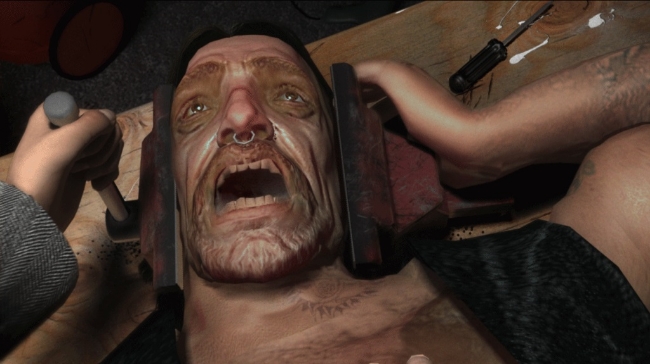
Simply titled Dirty Harry the game was to be developed by The Collective Inc in association with Clint Eastwood’s Malpaso production company. The premise of the game was to continue the story of loose-cannon police detective “Dirty Harry” Callahan as he sought to clean up the streets of San Francisco. The story was set immediately after the “Scorpio” case, as featured in the original movie and prior to events featured in the sequel Magnum Force. Clint Eastwood was to reprise his role as Harry Callahan, lending his voice and likeness as well as providing consultancy services and creative input. The game was scheduled to be released in 2007 on multiple platforms.
Sadly despite the project being nearly 70% completed, the game never saw the light of day. Allegedly senior management at Warner Bros. Interactive Entertainment were not happy with the work that had been completed and were worried about potential harm to the “brand”. It has been claimed, although never officially confirmed, that the project was then transferred to two further studios for redevelopment; namely TimeGate studios and Monolith Productions. However the cost of replacing the game engine and adding additional content such a co-op multiplay was prohibitive. The game’s launch was further delayed and eventually vanished from the publishers marketing and press releases. It has been implied by those involved with the project that the main reason for Dirty Harry’s demise was that it simply wasn’t that good.
Apart from some screen captures taken from preliminary builds and a promotional trailer, not much remains in the public domain of Dirty Harry. It should be noted that the trailer that is still available on You Tube does not actually show any footage from the game itself. It was animated by a production house, using the concept artwork to simulate the completed product. It’s a shame in many respects because the game seemed to have an authentic seventies feel to it. Certainly Dirty Harry boasted an impressive voice cast with the likes of Lawrence Fishburne, Lucy Liu and Gene Hackman, joining Clint Eastwood. Sadly Dirty Harry is now just another title on an ever growing list of games that “could have been”. Perhaps that is for the best because a franchise such as this deserves a truly great game and not a one that “knows its limitations” to quote Harry Callahan.
Air Warrior
It was about mid 1996 when I first got internet access. At the time the UK market had a multitude of small ISPs but it took the likes of AOL and CompuServe to make the worldwide web truly accessible to the general public. Like many others I had an AOL account mainly because it was easy to configure and use. There was no complexity to setting up the service and so it wasn’t long before I was monopolising the telephone line and running up epic phone bills. The early days of the internet were an exciting time. This was the age of modems, the Netscape vs Internet Explorer browser war and IRC flame wars. It had a hint of living on the frontier about it.
It was about mid 1996 when I first got internet access. At the time the UK market had a multitude of small ISPs but it took the likes of AOL and CompuServe to make the worldwide web truly accessible to the general public. Like many others I had an AOL account mainly because it was easy to configure and use. There was no complexity to setting up the service and so it wasn't long before I was monopolising the telephone line and running up epic phone bills. The early days of the internet were an exciting time. This was the age of modems, the Netscape vs Internet Explorer browser war and IRC flame wars. It had a hint of living on the frontier about it.
Now I was a dyed-in-the-wool PC gamer by this time so when I was presented with the opportunity to play online along with hundreds of other people I jumped at the chance. AOL was in business partnership with games developer Kesmai at the time and had recently included their multiplayer on-line air-combat simulator, Air Warrior as part of their internet services. I can remember now how it took numerous hours to download the game client and that I then copied it to dozens of floppy disks to save my friends the pain of a similar ordeal. I was so enthusiastic that I even bought an analogue joystick and spent hours calibrating it.
Air Warrior offered an extensive collection of World War II planes that you could fly in multiplayer dogfights with up to 100 pilots at the same time. The combat was set in both the European and Pacific theatres of war. There were also single player missions which were invaluable for honing your skill as a pilot. Each aircraft had individual flight models, cockpits and unique features. The game used flat polygon graphics and supported a maximum resolution of 1024 x 768. Air Warrior was surprisingly complex and not a simplistic as some arcade air combat shooters. It was also highly addictive, especially when playing with friends.
Gameplay centred on trying to destroy the enemy factions’ airfields, thus requiring the use of both fighters and bombers. For players who were not so adept with one-on-one aerial combat, you could choose to man one of the various gun turrets on the bombers. The tail gunner on the B-17 being the most coveted position. Dropping your stick of bombs via the bombsight was also immense fun and quite a skill in itself. It was always immensely satisfying to change camera positions after dropping your payload and watching the explosions several seconds later.
Like many online games if you were prepared to take the time and experiment, you could achieve some interesting results. For example Air Warrior also offered tanks and trucks as well as planes. The Flakpanzer was a mobile AA vehicle that was designed to be deployed around your team’s airfield to provide ground-to-air support. However I discovered that it was possible to drive across the entire game map to the enemies’ airfields and that if you took a scenic route; you were seldom spotted from the air. I use to spawn camp the main runway and destroy enemy aircraft as they materialised. This could continue for ten or even fifteen minutes before they realised exactly what was happening and take countermeasures.
Air Warrior was my first multiplayer online game. Although it wasn’t a MMO as such, it shared many similarities. I enjoyed it immensely and for a twelve month period played it frequently. It’s odd that when I inevitably drifted away, I didn't return to multiplayer gaming until 2003 when I started playing Hidden and Dangerous 2. As for MMOs, I bypassed most of the classic titles apart from a brief trial of Star Wars Galaxies and didn't really explore the genre until 2008 when I started playing LOTRO. In many respects it was my fond memories of Air Warrior that inspired me to buy the double pack of Shadow of Angmar and Mines of Moria.
Subtitles
My hearing is fairly robust for a man of my age. I also pride myself on my ability to concentrate. Yet despite the benefits of both those attributes, I still often find myself struggling to keep up with the dialogue and plot of many a game, TV show or movie. It’s something that is not unique to me and seems to be part of a growing phenomenon. Take last year’s science fiction blockbuster Interstellar. Amongst the critical praise there was a lot of grumbling over the mixing of ambient sound effects and the movies score drowning out dialogue. Similar complaints have been levelled at a lot of contemporary TV shows.
My hearing is fairly robust for a man of my age. I also pride myself on my ability to concentrate. Yet despite the benefits of both those attributes, I still often find myself struggling to keep up with the dialogue and plot of many a game, TV show or movie. It’s something that is not unique to me and seems to be part of a growing phenomenon. Take last year’s science fiction blockbuster Interstellar. Amongst the critical praise there was a lot of grumbling over the mixing of ambient sound effects and the movies score drowning out dialogue. Similar complaints have been levelled at a lot of contemporary TV shows.
This problem frequently manifests itself in video games, although it is more often than not due to overlapping dialogue. All too often I’ve been playing a game in which an essential piece of narrative from a key NPC is competing against the ambient dialogue from background characters. As someone who enjoys a good story and likes to absorb as much details as possible, this problem can be quite frustrating. Hence I’ve recently started enabling all subtitle options on games, TV shows and movies by default. It was a little disconcerting initially but it’s something I have adapted to quite quickly.
Subtitles apart from reflecting the main dialogue, often have the benefit of providing a lot more detail. Audio descriptions of sound effects, as well as secondary dialogue and other background noise can prove to be most illuminating. When watching the movie Right at Your Door, the subtitles displayed all the details of the radio and TV broadcasts that were playing in the background. This greatly enhanced the plot and provided some invaluable narrative detail. Subtitles are also a great way of obtaining an accurate quote and resolving the esoteric spelling of certain words and character names.
I find subtitles in gaming to be increasingly useful. Unlike a movie you cannot easily rewind a cutscene or the bestowal dialogue for a quest. If like me you find the story one of the main selling points of a game then you don’t really like to miss any of the plot. Also games don’t always have the best voice acting and subtitles allow you a means of penetrating poor accents and poorly expressed dialogue. Therefore having an additional tier of information is useful. It can also provide some amusement when the text is misspelt or has not been updated and is merely place-holder content.
However subtitles are not for everyone. Some people find onscreen text very distracting and a major impediment to their enjoyment of the game or movie. Plot and dialogue are also not important to all gamers, many of whom simply want to get to the action, rather than waste time upon a story that is superfluous to them. Therefore it very much is a question of taste and mercifully subtitles are more often than not optional. For me I consider them to be a great asset and an enhancement to my entertainment. They also play a great part in making many leisure activities far more accessible and inclusional. As a result I find their absence from certain mediums an inconvenience.
Gaming and Lore
Lore: A body of traditions and knowledge on a subject or held by a particular group, typically passed from person to person by word of mouth. Synonyms: mythology, myths, legends, stories, traditions, folklore, culture, beliefs, sayings, superstitions, fantasy, oral tradition.
Certain genres of games love to steep themselves in faux lore. Then there are titles based upon existing intellectual properties that have a wealth of material to draw upon. Either way it would seem that such content is very popular among gamers. Perhaps it has something to do with how an in-depth sense of history can bring a virtual world to life. Or maybe it’s more about being human and our compulsion to share stories. Regardless of the armchair psychology, the bottom line is lore can be a major selling point for a game.
Lore: A body of traditions and knowledge on a subject or held by a particular group, typically passed from person to person by word of mouth. Synonyms: mythology, myths, legends, stories, traditions, folklore, culture, beliefs, sayings, superstitions, fantasy, oral tradition.
Certain genres of games love to steep themselves in faux lore. Then there are titles based upon existing intellectual properties that have a wealth of material to draw upon. Either way it would seem that such content is very popular among gamers. Perhaps it has something to do with how an in-depth sense of history can bring a virtual world to life. Or maybe it’s more about being human and our compulsion to share stories. Regardless of the armchair psychology, the bottom line is lore can be a major selling point for a game.
Personally I like strong narratives in the games, whether it’s based on an established franchises such as Star Wars, Star Trek or Middle-earth, or wholly original like The Elder Scrolls. When questing in a MMO or single player RPG, I like to know why I have to vanquish the Nibble-pibblies, rather than just blithely go and exterminate them. Ultimately it comes down to the old literary device of “investment”. Providing a back story makes the player more likely to empathise with the characters and the narrative. This contributes to the sense of immersion, which for many is a key aspect of gaming.
The Lord of the Rings Online is a text book example of an MMO whose lore is integral to its popularity. In some respects it is quite unique beast in so far that it’s IP has the capacity to attract non-gamers. The game developer’s Turbine have always managed to work within the confines of the established lore and create stories that although are not canonical, are inventive, measured and engaging. LOTRO is one of the games that I always ensure that I read all bestowal and dialogue text. I am interested in how the in-game characters link to existing plot elements from Tolkien’s source text.
Sadly not every game is successful at creating a vibrant and involved lore. The fantasy genre can often be extremely generic, self-plagiarising and even arbitrary. Where the lore in Skyrim prompted me to conduct further research outside of the game, due to its depth and sophistication, the storyline of Arcania Gothic 4 was lost on me. The latter game seemed to have a very inconsistent narrative that had precious little new to offer. Thus by the time I completed the RPG after thirty hours plus of gameplay, I was left confused as to the meaning of the ending and ill disposed towards installing the expansion.
Lore can also find itself at odds with pre-established material when it pertains to popular IPs. Both Star Wars: The Old Republic and Star Trek Online have complex and well written storylines that were designed to work in harmony with existing content. Sadly both are officially non-canonical, marginalising the hard work of the writers. This is especially galling for Star Trek fans as there is not any official new material being created at present, outside of the recent movies which are set in an alternate timeline.
Earlier this year I attempted to complete Dragon Age: Inquisition. Having not played through the previous two games in the series, I was not au fait with the lore and as a result struggled to keep abreast of the wider story. Although I enjoyed the fully voice acted character interactions I couldn’t apply myself to the various codex entries that regularly appeared. Despite having an impressive legendarium I was far more concerned with trying to master the various game mechanics. As a result the lore actively became a distraction rather than an embellishment.
As ever with gaming there are always opposite points of view and the matter of lore is no different. I know many a player who will happily skip cutscenes, ignore bestowal dialogue and are not in the least bit interested in the prevailing back story of the virtual world they inhabit. If that is their chosen play style then so be it. There is no right or wrong way to play a game, despite what some may tell you. There are players who are more interested in the task in hand, rather than the motivation for it. As long as they are having fun, then that is all that matters. However for me, lore still counts as an integral part of my game enjoyment and I shall continue to seek it out in the titles I play.
The Cost to Fun Ratio
In January I bought a Codemasters gaming bundle for the sum of £2.79 which contained ten titles. One of them was the action RPG Rise of the Argonauts, initially released in 2008. The game’s setting in the world of Greek mythology was its main appeal. A little research showed that the game had a distinctly average score and offered nothing new. I completed the entire story over the period of a week in about sixteen hours or so. It was broadly entertaining, although nothing special, apart from not being in the usual fantasy setting. The word “adequate” springs to mind.
In January I bought a Codemasters gaming bundle for the sum of £2.79 which contained ten titles. One of them was the action RPG Rise of the Argonauts, initially released in 2008. The game’s setting in the world of Greek mythology was its main appeal. A little research showed that the game had a distinctly average score and offered nothing new. I completed the entire story over the period of a week in about sixteen hours or so. It was broadly entertaining, although nothing special, apart from not being in the usual fantasy setting. The word “adequate” springs to mind. Here’s a reminder of the dictionary definition.
Adequate (adjective). Satisfactory or acceptable in quality or quantity.
Rise of the Argonauts has an enjoyable story, which apart from drawing upon famous characters, has no real basis in established mythology. Yet the original plot serves its purpose and includes some enjoyable characters and good voice acting. I liked Pan especially, mainly due to his banter and quips. Combat is based around hit chains and unlocking bonus skills. There are the usual dialogue trees with their arbitrary choices and optional side quests. However if this game were compared with a more recent title such as The Witcher 3: Wild Hunt, it is simply not quite of the same calibre. However I still enjoyed Rise of the Argonauts and felt that my time had been well spent.
This raises the question how much does a games price have upon the level of enjoyment you gain from it? Is there such a thing as the cost to fun ratio? If I had spent £40 or more on Rise of the Argonauts would I have been so forgiving of its generic game mechanics or distinctly average storyline? Would I have felt that its sixteen hours plus running time was good value for money? Would I have finished the game with quite the same sense of satisfaction? I believe that my opinion on these points would be somewhat different.
In the past I have equated the difference between good and average games as being similar to comparing a fine restaurant and a fast food outlet. Both can be enjoyable experiences but they satisfy different needs. The money that you spend determines some interesting differences between meals, such as presentation, the overall quality of the constituent parts and that most nebulous of terms, the customer experience. Fast food chains use their generic nature as an actual selling point. You can get an identical meal at any of their outlets. The expensive restaurant is trying to sell a more unique experience with the bespoke creations of its gourmet chef. These points can be applicable to games.
Another important aspect to consider is the expectation that comes with the purchase of any game. This most certainly does vary and there’s a great deal of research out there on this very matter. When you stump up £70 for a triple A title along with a season pass, you do so expecting to have your socks well and truly blown off. It’s the same if you go and see a major band or musical artists perform an arena concert or buy a top of the range electrical device. Purchases of this nature come with perceived expectations and practical obligations. Conversely, games bought as part of a bundle is not subject to the same criteria. If it amuses for an evening then it’s justified its cost. If not then it was hardly a major financial loss.
I can’t really say whether this perceived difference in the quality “fun” is real or simply an illusion, born of snobbery and clever marketing. I do think there is some truth regarding cost influencing expectation. From my own perspective, I’ve had more consistent enjoyment of late from games I’ve bought from bundles than those I’ve purchased upon releases. Out of the five premium games I bought upon launch last year, three were abandoned for various reasons. Yet many of the titles I bought at a discount were played to completion. So perhaps for me at least I am influenced by the cost to fun ratio.
Is there a similar parallel in other industries? Are other products subject to the same scrutiny? For example consider the difference between an inexpensive bottle of wine and one of a fine and rare vintage. Both can be the basis of a good evening, have a similar affect as far as consuming alcohol but have entirely different price implications. Returning to a gaming example I enjoyed Skyrim immensely but I bought it in 2013 at the retail half price with all the DLC included. Would I have enjoyed it just as much if I had purchased it at launch eighteen months earlier?