
Caring for the Elderly Part 12
Long-term care can often end with a bereavement; which is a complex subject in itself. I will not be discussing grief in this post, as that is an immensely personal and subjective experience that we deal with in our own way. Instead, I would like to talk about the administrative and logistical problems that arise after someone has died and use my own recent experiences as an example. My Father died on Wednesday 16th September. He had a series of strokes in 2016 which left him disabled. Over the last four years his level of health has slowly deteriorated and his quality of life has subsequently diminished. This year saw a noticeable change not only in his well being but overall attitude. His stoical outlook finally faded and he lost all interest in life. He fell ill in mid August with Sepsis and then developed a lung infection. When I saw him last on Friday 4th September he told me he was tired and wanted “an end to it all”. Six days later he asked the Senior Doctor on the ward to stop treatment, which wasn’t working anyway. He died a week later on Wednesday 16th September. He was 91.
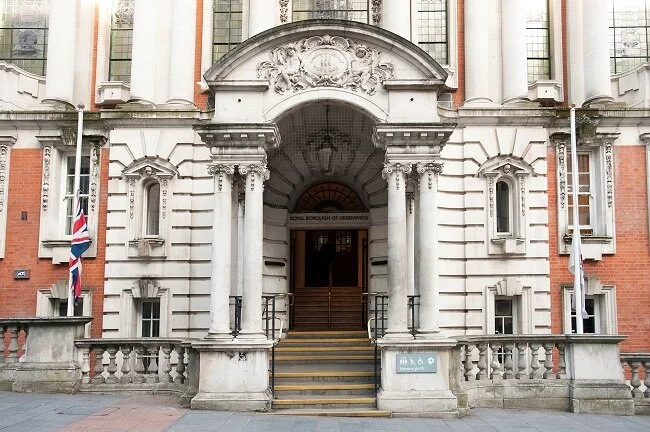
Greenwich Town Hall
Long-term care can often end with a bereavement; which is a complex subject in itself. I will not be discussing grief in this post, as that is an immensely personal and subjective experience that we deal with in our own way. Instead, I would like to talk about the administrative and logistical problems that arise after someone has died and use my own recent experiences as an example. My Father died on Wednesday 16th September. He had a series of strokes in 2016 which left him disabled. Over the last four years his level of health has slowly deteriorated and his quality of life has subsequently diminished. This year saw a noticeable change not only in his well being but overall attitude. His stoical outlook finally faded and he lost all interest in life. He fell ill in mid August with Sepsis and then developed a lung infection. When I saw him last on Friday 4th September he told me he was tired and wanted “an end to it all”. Six days later he asked the Senior Doctor on the ward to stop treatment, which wasn’t working anyway. He died a week later on Wednesday 16th September. He was 91.
In the UK the first and most important administrative task that needs to be done after a bereavement is to register the death of the deceased. Because my father died in Queen Elizabeth Hospital and not at home, his death had to be registered with Royal Borough of Greenwich and not Bexley where he lived. The Medical Examiner discussed my Father’s care with the Doctor who was responsible for his medical treatment and then called me to explain what cause of death they would be putting on the death certificate was Aspiration Pneumonia. They then notified the Registrar who set up a telephone interview with me. Traditional face to face meetings are suspended due to COVID-19. This phone call took place two day later. I went through some personal details that are required when registering a death. These are similar to those that are entered on a Marriage Certificate. I ordered 5 copies of my Father’s Death Certificate for administrative purposes. There was a fee for these. The registrar then gave me a code for the “Tell Us Once” website. This is a government online portal that confirms the details shown on the Death Certificate and notifies all relevant departments, such as tax, state pension etc.
What has become apparent during the course of my administrative endeavours is that it’s somewhat easier dealing with a bereavement if there’s a surviving spouse or partner. There is not always an immediate requirement for Probate in certain circumstances and fortunately my Mother meets these criteria. Therefore, the two most important administrative tasks currently outstanding are transferring my Father’s Teacher Pension to my Mother, along with having the deeds to the house put in her name. Both of these are common changes of circumstances and are well documented on their respective websites. The transfer of the pension requires the completion of a form and copies of my parents Marriage Certificate and my Father’s Death certificate. The house deeds are all managed via the Land Registry. This task is a little more complex but again due to the pandemic is now handled via the post, which means I don’t have to travel to the regional office in Croydon. I recently found a lot of paperwork pertaining to my parents paying off their mortgage in 1986, so I should have everything necessary. If I don’t the Land Registry can provide duplicates. Again there will be fees involved but nothing too expensive (although that is a relative term).
After the aforementioned tasks are completed, there are a few more outstanding changes of circumstance to be made but these are less complex. The UK has an ageing population and therefore bereavements are a common occurrence. Hence a lot of companies have a dedicated phone line and protocols in place to deal with such circumstances. So transferring account ownership of utility services such as gas, electricity, water, internet access along with Council Tax is relatively simple. Claiming the life insurance policy that my Mother had for my Father also appears to be straightforward and only requires the completion of a form along with a copy of the Death Certificate. My parents shared a joint bank account from which all major household bills are paid. The only change required here is to take my Father’s name off the account. His personal account is now “frozen” and will be closed. The assets will be paid to my Mother. All of which are within the tax threshold so there’s no dealings with HMRC.
Eltham Chapel
The only other administrative and logistical matter arising from my Father’s death is his funeral. Like most of the UK population, my Father will be cremated. At present Government Guidelines allow up to 30 people to attend the service, however, there is a major caveat regarding this depending upon the capacity of the Crematorium. Social distancing has to be observed. As of writing this post I haven’t yet been to the Funeral Directors, although I have an appointment for Monday. It will be interesting to see what size restrictions there will be if any. There will only be about 10 people well enough to come to my Father’s funeral anyway. Both my Mother and Sister will not be able to attend due to ill health. I’m also curious to see if Co-op Funeralcare (who I have contracted to deal with proceedings) offer more contemporary services. My Father stipulated that he didn’t want any floral tributes so I wonder if the funeral directors will set up a “JustGiving” page for charitable donations or whether that falls to me?
Once all the above has been carried out then all the major administrative tasks arising from My father’s death will have been done. Then there’s the more difficult task of going through his personal effects and deciding what to do with them all. This is another one of those situations where there isn’t a standard solution. For some people, this part of a bereavement is the most difficult to deal with, as it brings to mind so many personal memories. However, I am not overly sentimental about such things and my parents' house is cluttered and needs to be clear out. This will create space so I can make some home improvements. Hopefully this will help me make my Mother’s daily life better. Dealing with all these administrative issues is a very curious experience. I have experienced it once before when my Father-in-law died, so I was somewhat prepared this time. As bank accounts are closed and my Father’s details are erased from various companies and public bodies, it does bring home the fact that life goes on, regardless of an individual or a family's grief. But these tasks, painful as they may appear, have to be done. Ignoring them only makes a difficult situation worse.
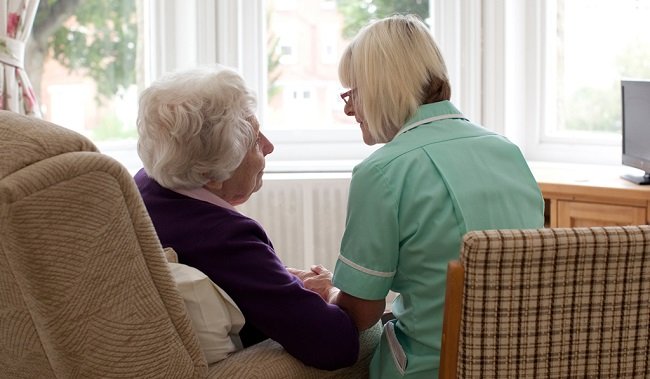
Last December, my 91 year old Mother suffered a rapid mental decline and was hospitalised. We have subsequently learned that this is potentially due to another stroke. Whatever the exact medical reasons, my Mother has been left bed bound, unable to feed herself and in a state of mental confusion and distress. When she was discharged home in mid January it quickly became clear that the four care visits that were scheduled each day were not sufficient for her needs, despite the staff doing their best and my Sister and I providing additional support. Matters were further compounded by personal ill health and other external factors. My Sister has worked from home for the last two years but has now started a staged return to the office. As we felt would no longer be able to cope we turned to both Social Services and the local Mental health Team for any assistance that they could provide.

In this latest post I wish to discuss hospital admissions and how they can become a regular occurrence when caring for the elderly. Being immobile, losing agency with respect to one’s personal hygiene and being dependent on medical equipment can lead to health related problems, irrespective of good home care. For example, my late Father had limited mobility and spent most of his day sitting. Hence, he used a memory foam cushion to protest against pressure sores. He also slept in a hospital bed equipped with an air mattress for similar reasons. Despite having attentive carers twice a day, he was subject to regular skin complaints due to his diet (he was fed via a PEG tube) and lack of sunlight. Perhaps the biggest source of problems came from being catheterised. Despite scrupulous cleanliness he would still regularly contract urinary tract infections. As a result hospital admissions were frequent.
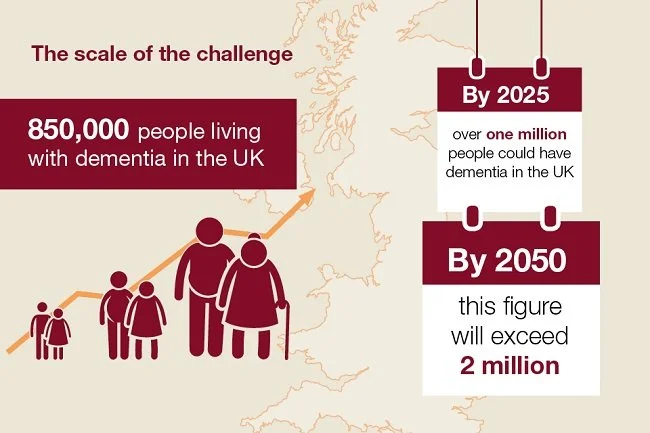
It has been over a year since I’ve written about this subject. The last post was about my late Father’s funeral. Since then life has gone on and my Mother’s ongoing care has become a fixed and somewhat uneventful regime. There are benefits to be gained from such a routine as it offers stability and certainty for both the carer and person being cared for. However, recently there has been a significant change in the status quo that warrants writing about. As always, my desire is to share some points and present my personal experiences in the hope that they may prove useful and informative to those in a similar situation or who may be just embarking upon their caring journey. The main subject of this post is a difficult one and something that is very hard to come to terms with. It is dementia. A medical condition that affects 1 in 6 people over the age of 80 in the UK.
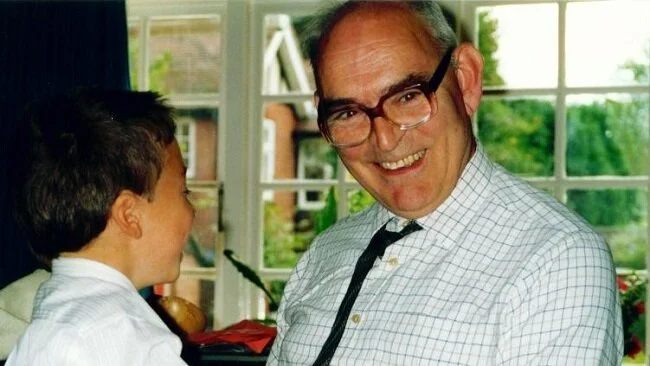
Yesterday, Saturday 17th July, was my late Father’s birthday. He would have been 92. As my granddaughters were staying over the day was upbeat, boisterous and fun due to their exuberance. Today as the bungalow returns to its normal levels of noise and excitement, I have spent some time quietly reflecting upon the nature of bereavement. When my father died last September I was focused upon the practicalities of arranging a funeral during a pandemic, ensuring that his estate was processed and that all possible provisions were made for my disabled 90 year old Mother. These things have now been done and it is only recently that I have had the time to process my own grief. The first Father’s Day (20th June in the UK) without him was naturally a milestone and his birthday has proven similarly so. However, today’s introspection has been beneficial and hence I felt the desire to write about him and share some thoughts on the nature of bereavement.

The funeral service for my late Father was held today. As ever I would like to collate my thoughts and present them here in the hope that I may be able to assist someone else who is currently dealing with a bereavement. Funerals can be challenging at any time but are further complicated at the moment due to the various restrictions imposed due to the global COVID-19 pandemic. However, there is still scope to give a loved one a fitting send off. You just have to be a little more creative about it and try to be understanding of the current regulations regarding social gatherings. Despite my concerns today’s service at our local Borough crematorium went well, if such a term is appropriate. I feel that my Father was honoured appropriately and that his family and friends were able to pay their respects and celebrate his life in a manner that he would approve of.
Long-term care can often end with a bereavement; which is a complex subject in itself. I will not be discussing grief in this post, as that is an immensely personal and subjective experience that we deal with in our own way. Instead, I would like to talk about the administrative and logistical problems that arise after someone has died and use my own recent experiences as an example. My Father died on Wednesday 16th September. He had a series of strokes in 2016 which left him disabled. Over the last four years his level of health has slowly deteriorated and his quality of life has subsequently diminished. This year saw a noticeable change not only in his well being but overall attitude. His stoical outlook finally faded and he lost all interest in life. He fell ill in mid August with Sepsis and then developed a lung infection. When I saw him last on Friday 4th September he told me he was tired and wanted “an end to it all”. Six days later he asked the Senior Doctor on the ward to stop treatment, which wasn’t working anyway. He died a week later on Wednesday 16th September. He was 91.
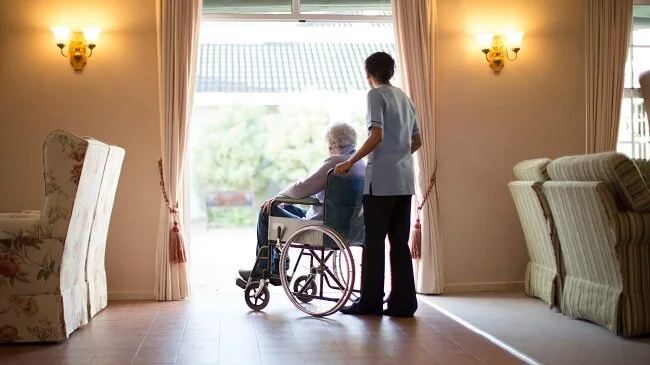
I last wrote a post about “caring for the elderly” in February. There have been significant changes in my family's fortunes since then and like anyone in a caring situation, the lockdown has had a major impact and sadly not for the good. As ever, I choose to recount my own experiences in the hope that they may be of some use to others who are in a similar situation. So to begin with, my Mother went into Respite Care just as the pandemic was hitting the UK and the lockdown was being implemented. Hence her stay in a nursing home was not the best experience. All the additional social activities usually on offer were suspended so all she effectively did was swap one sick room for another. She came back home just as my sister moved from working in London to working from home. Hence from March onwards both her and I have been caring for both my disabled parents on a daily basis. However, my sister has had to hold down a job at the same time.

My Mother, who has had limited mobility for a decade, fell and broke her arm just before Christmas. She subsequently spent nine weeks at a specialist rehabilitation unit at our local hospital. During that time she had surgery on her arm to repair the fracture and extensive physiotherapy to try and increase her mobility. She was discharged at the beginning of February with a support package in place to facilitate her return home. Sadly, despite physiotherapy, she is immobile as the day she was admitted. Until she sees the Consultant at the Fracture Clinic and is told if her arm can bear weight, she is not allowed to do anything for herself. Hence she is currently having four home visits a day from two carers and is confined to her bedroom. The carers help her get washed, dressed and use the commode in her room. Naturally, the current situation and the inability to do anything for herself, along with the uncertainty of her long term recovery and future, is causing a great deal of anxiety not only for my Mother but the rest of the family as well. At present we have a 3 week wait before she gets to see the consultant.
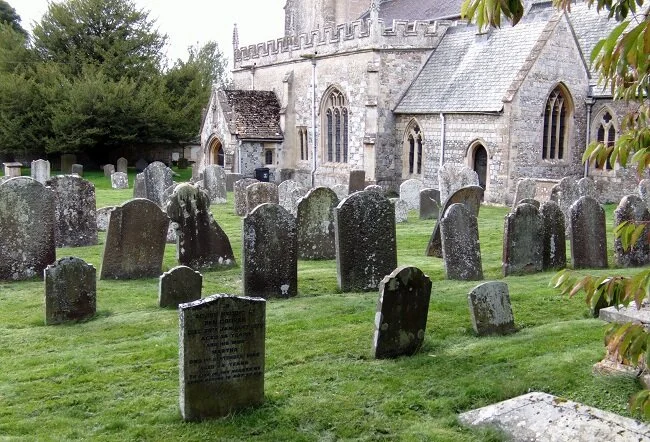
I always try to write the posts in this series in way that proves useful to others who are facing a similar experience. Caring, old age, illness and our own mortality are all matters that will cross our path sooner or later. This time I shall be addressing a subject that many of us tread carefully around. Some people will not countenance discussing it in any way, shape or form as it makes us uncomfortable or even scared. In Western culture death is often the elephant in the room; a topic that should not be avoided but frequently is, due to etiquette and other curious societal foibles. Hence, we use phrase like “passed” or “gone” instead of dead and we often invoke religious based platitudes, regardless of whether we have any particular faith or not. Simply put, our response to the inevitability of our own demise and that of those who we love is ambiguous to say the least. I hope in the years to come we grow up in this respect and find a comfortable means of making death socially acceptable to discuss and plan for.

I started writing this series of blog posts when I first became a carer back in 2016. The idea has always been to use my personal experiences as a point of reference for others. That is the main reason for this latest update. The things that are currently happening to me and my nearest and dearest may happen to you and yours. Over the last three years a lot has changed in my family’s collective life. Both my parents have gone from living relatively independently and managing their own affairs, to becoming disabled with long term degenerative medical conditions. Both are now housebound and require assistance with basic tasks such as washing and dressing, due to reduce mobility and frailty. My Father has been nil by mouth for three years and requires district nurse visits twice a day to deal with his medicine and catheter. My Sister has altered her working hours so she has more time available in the morning before she goes to work. I have given up work to become a fulltime carer. Between us the days is covered. The latest major change has been applying for power of attorney, which I wrote about in my previous post.

Since spring 2016, I have been running my parent’s domestic affairs. Due increasing ill health, neither can visit a bank, conduct business phone calls or deal with administrative paperwork such as utility bills, insurance policies and hospital appointments. However, there are limits on what I can and cannot do. Cheques and legal documents need signatures. UK data protection legislation often prohibits phone conversations with anyone other than the account holder. Hence despite being able to broadly deal with most things that come up, I sometimes have to involve my parents. This mean conversations on speaker phones which are difficult when both my parents have substantial hearing loss. So after some discussion with both of my parents, I have decided to pursue the power of attorney. At present this is specifically for my Father, as most bills and invoices are in his name.
Once again, I find myself writing about this subject in the hope that it will encourage others to reflect upon the nature of old age, illness and the consequences that arise from them. There is still a prevailing culture of not discussing and sometimes not even thinking about such matters, but both are an absolute certainty in everyone’s life. All too often people find themselves in extremely difficult situations brought about by such events and the difficulty and emotional trauma is increased due to there being no plan in place or provision to address matters. Therefore, I strongly advocate the following. Some may seem like very obvious points, but recent conversations I’ve had with other carers and people in similar situations, has shown that many people have not made even the most basic of provisions in this regard.
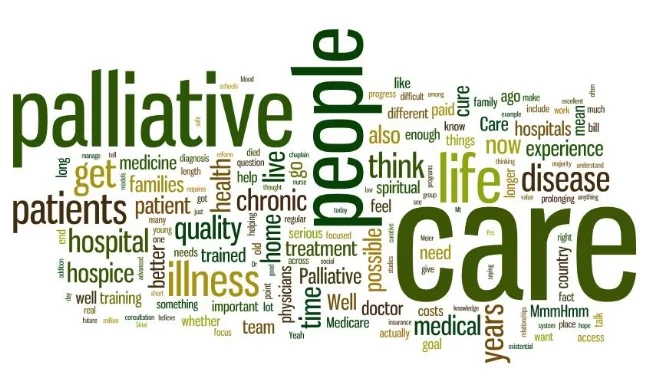
At the end of July, my Father went into Respite Care for two weeks. He was placed in a local private nursing home, via borough social services. The placement was intended to provide him a change of scenery and give the rest of the family with a short break from the ongoing caring requirements. Sadly, things did not work out well. After seven days away from home, my Father became ill and after three trips to A&E (over a period of four days), he was finally admitted to hospital with Aspiration Pneumonia. He was deemed to be at extreme risk by the medical staff and we were told at one point to “prepare for the worse”. However, despite being seriously ill, he recovered and much to everyone’s surprise was discharged and returned home after ten days. Sadly, his already impaired state of health has been further diminished. Three weeks on it is becoming clear that it is unlikely that he will return to the level of ability that he had at the start of July. His health and the quality of his life has been further reduced. Subsequently, the various healthcare professionals that deal with my Father have now started using the term palliative care.

There comes a stage in most people’s life when they start reflecting upon their own mortality. Both my parents have survived two strokes each and are now in the late eighties. At this point in their lives healthcare has moved on from correcting or remedying problems, to instead being more about holding the line and maintaining the status quo. A safe home along with an orderly daily routine provides a stable environment, which broadly allows them both to maintain an adequate degree of independent living. However, both are very aware that their faculties and overall health are gradually diminishing. Neither are naïve or foolish enough to deny this and in recent months have been quite candid about what the future will entail. Simply put both my parents are aware that they are currently “running the last lap”, to use one of their phrases.

I have written in the past about caring for the elderly. I have approached the subject from a personal perspective, as a carer with two disabled octogenarian parents, as well as considering the broader needs of a society with an ageing population. As it has been two years since I formally became a carer to both my parents, I thought I’d share my experiences on the many challenges that my family has faced over the last twenty-four months. I find doing so beneficial and maybe my anecdotes may be of value to others in a similar situation. As I’ve said in my original post, caring for a loved one is something we all potentially face at some point in our lives, and with an ageing population it becomes statistically more likely each year.
In a previous post, written last summer, I mentioned my caring commitments and reflected upon the realities of being a carer. Since then my family’s circumstances have changed considerably and subsequently so have my own. In the UK, social care has become a major political issue and was a key area of debate for all parties in the recent election campaign. Although the UK has an aging population, then NHS broadly manages to deal with its needs. It is the social care that so often follows time spent in hospital, that causes a bottleneck. Too often, the local authorities struggle to find carers and have them in place when requested. This means that many patients are unable to be discharged and have to remain in hospital. Caring is a profession that seems to be greatly lauded and esteemed by politicians in principle but the reality is far different. Overall it is often a poorly paid job, with little or no employments rights or benefits.
The UK population grew by half a million last year to 65.1 million, according to figures from the Office for National Statistics. Of that number 10% are over 75 years old. At present there are 6.5 million carers in the UK, many of whom are coping with an aging parent(s). As healthcare in the UK improves overall life expectancy, the population is rapidly aging which means that every year over 2.1 million adults become carers (although almost as many people find that their caring responsibilities come to an end). This turnover means that most families in the UK face this issue at some time and 3 in 5 people will become carers during their lives.
Thoughts on Blogging Part 12
Due to the ongoing Global Pandemic, many people are now finding themselves working from home or having to stay in for health or childcare reasons. Hence there has been a marked increase in online leisure activities. Steam has been hit by a record number of concurrent users and Netflix and Amazon prime have both seen an increased demand upon their respective streaming services. If you’re not commuting then you are freeing up a substantial amount of hours each week. This potential abundance of “free time” along with a practical need to channel your energy into something to prevent yourself from going “stir crazy”, presents some interesting opportunities. Many people who have previously expressed an interest in writing and content creation now have the leeway to do so. Naturally, as a writing enthusiast and a long time blogger, I am happy to encourage such activities.
Due to the ongoing Global Pandemic, many people are now finding themselves working from home or having to stay in for health or childcare reasons. Hence there has been a marked increase in online leisure activities. Steam has been hit by a record number of concurrent users and Netflix and Amazon prime have both seen an increased demand upon their respective streaming services. If you’re not commuting then you are freeing up a substantial amount of hours each week. This potential abundance of “free time” along with a practical need to channel your energy into something to prevent yourself from going “stir crazy”, presents some interesting opportunities. Many people who have previously expressed an interest in writing and content creation now have the leeway to do so. Naturally, as a writing enthusiast and a long time blogger, I am happy to encourage such activities.
I have been part of a wider content creating community for over a decade now and it struck me as soon as this situation developed that a lot of people were going to find themselves quarantined at home with time on their hands. Leisure time is usually a premium commodity these days but I suspect that a lot of people will not be prepared for such a rapid change in fortune. Plus having to work at home, possibly cheek by jowl with your entire family, is going to require some sort of “safety valve” to release the stress such confinement inevitably brings. So in many respects now is an ideal time to start a new hobby. If it is pursued in a measured way then writing, podcasting, live streaming or creating videos may well provide not only a pleasurable leisure activity but also a means to interact and communicate with others. Something that we have taken for granted up until now.
“Sod off and go and do something constructive, instead of continuously bothering me, you sweaty galloot”
For the sake of my example I shall focus upon writing but obviously the points I hope to make are applicable to other forms of content creation. Writing your thoughts down regarding any subject provides a sense of focus. Often when we marshall our thoughts it leads to a clearer understanding of a subject. It is also a process that we can control 100%. Such things are good for your mental wellbeing while we’re all in lockdown. If you start a blog and write regularly, having a schedule provides a clear routine. Structure is beneficial when in self isolation. Plus writing more often will improve your literacy skills. And then there is pleasure to be found in sharing your words with others, building an audience and becoming part of a social community. No matter how niche your chosen subject may be, there’s always an audience to be found. It is often this interaction that is the most rewarding aspect of writing and it subsequently fuels your creativity and desire to continue.
So if you’ve always toyed with the idea of blogging about your favourite games, movies or your cats, then why not grab yourself a free account over at wordpress.com and give it a go. Alternatively maybe you’ve always wanted to do some live streaming? Well now’s the time to do it. It’s not that hard to figure out. Even I’ve managed it. The same goes for YouTube. The barriers to entry are very low and there’s a wealth of online help available to get you started. It would be great to get a positive from a negative and see a resurgence in all kinds of content creation during these difficult times. And if you still need a nudge or the safety net of a community that you can draw upon for advice and guidance, then I wouldn’t be surprised if you see a lot of online communities rally and offer a helping hand. Don’t pass up on a golden opportunity. What would you prefer? To look back on 2020 as the year you were terminally bored while you holed up for 3 to 4 months. Or for it to be the year you started a new hobby that got you through a difficult period? The choice is yours.

It is obligatory to start these sorts of posts by reiterating the standard mantra that you should not be driven by your websites stats and that the data they contain can be unreliable. Although a sound philosophy in principle, it is actually more nuanced than that. Such data can be useful for growth if used wisely. I have never been coy about trying to increase my readership. For me it seems an integral aspect of blogging. Over the course of 2026, the traffic to Contains Moderate Peril has doubled. A lot of that is down to curious spikes in visits which seems to be AI scraping the entire site. Setting aside these anomalies, more people are reading posts and a lot are doing so via the site’s RSS feed. All of which is fine by me as growing the audience for this blog was a goal for this year, I am quite pleased by this development and the ongoing progress. I hope it continues.
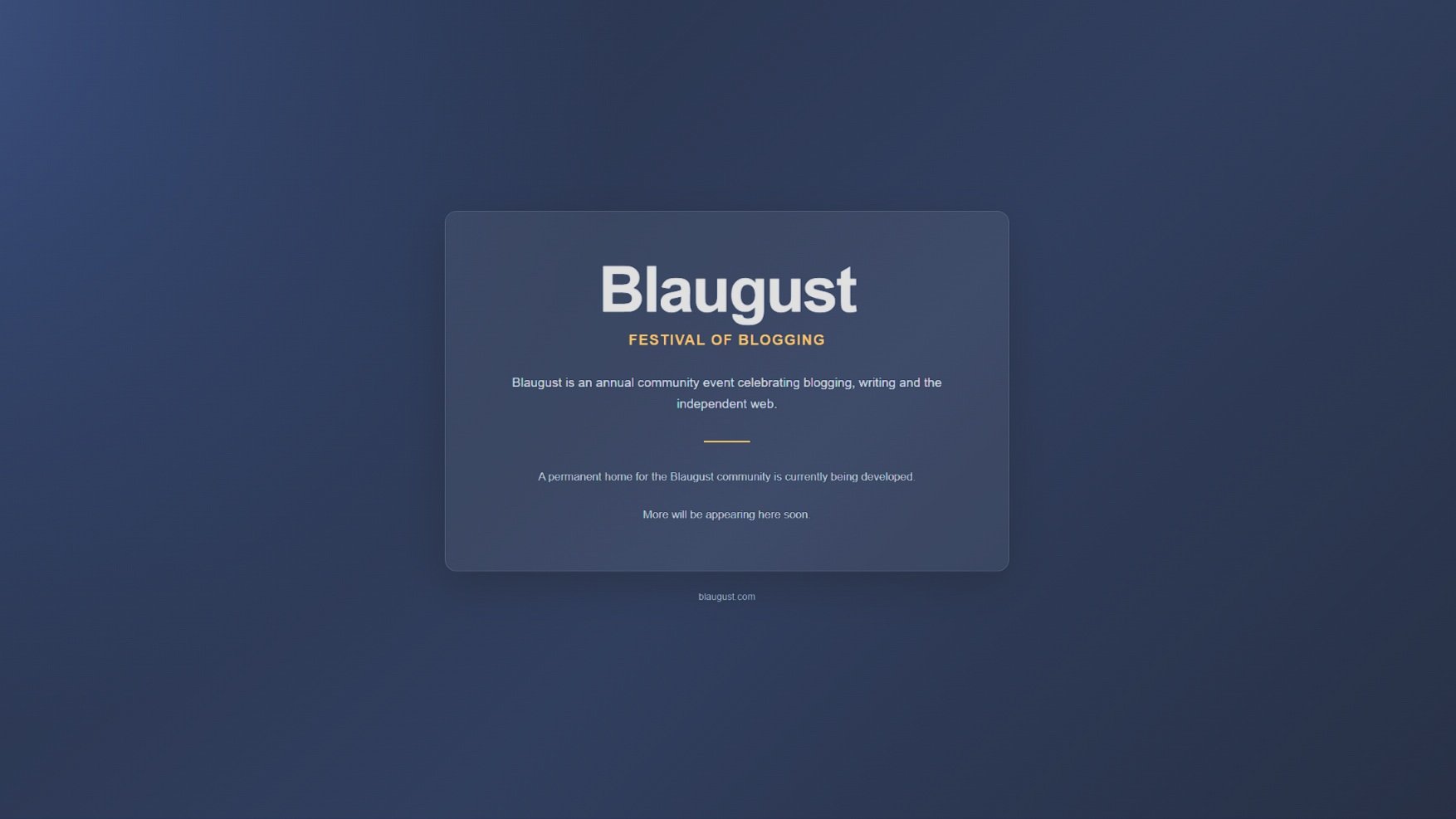
There is a subtle difference between being rash and being proactive. Being rash means acting too fast without thinking about the results, while being proactive is a question of acting early with careful planning. Why have I mentioned this? Well prima facie information indicates that recent Blaugust participants are interested in an “official” online presence for the annual festival of blogging, other than that existing Discord server. That seems perfectly reasonable to me. Not everyone likes using Discord and I do worry that they may reduce its free functionality at some point in the future. With regard to there being a Blaugust platform of some kind, there is a consensus that it doesn’t need to be some sort of sprawling commercially hosted website running on Wix or such like. Those sorts of site require funding, a degree of admin and possibly private data management. It also a bit too “corporate” if you like. Hence the logical compromise is to have a static site. Let it suffice to say, that has been done.
Judging by the posts I’ve read, it would appear that Blaugust 2026: Festival of Blogging has been well received by those who participated in it. That is most satisfying to know, especially in light of the fact that this is the first year the event has been run without our founder who sadly past away in July. It has also become clear that Blaugust is reaching a far wider and diverse audience and most definitely is no longer the exclusive province of bloggers from one particular community. There has been healthy discussions on our Discord server about whether this year event needs to adapt to accommodate the modern blogosphere. Questions such as whether or not there needs to be a dedicated Blaugust website have been raised and explored. Should every site participating have an RSS feed? How, if required, should comments be handled. Inevitably, the subject of the use of AI in blogging still remains a controversial issue.
After a very productive month of writing, we come to the final Blaugust 2026 Group Project writing prompt. It is titled lessons learned and is usually a chance to reflect on the festival and whether or not it has been to one’s satisfaction. Have you achieved your goals? What have you gained from the experience? Those sorts of things. It also poses two further questions; “What is the best piece of advice you’ve ever been given?” and “what’s the best advice you’ve ever given to someone else?” for your consideration. I’ll address the questions shortly. Firstly let’s mull over this years event and assess how it’s gone.
It was my blogging anniversary on the 16th August. I’ve been writing and sharing my post online for 19 years, via various different websites and blogs. This current iteration of Contains Moderate Peril has been around since August 2015. To date it has 2,171 posts including this one. Quantity does not necessarily equate to quality but there are some articles I am proud of and feel that they make their point effectively.
This week’s Blaugust 2026 Group Project writing prompt is an important topic. Namely, staying motivated. I prepared a fairly lengthy post with some advice and ideas to keep people focused and writing. Then I checked it against the post I wrote last year and the year before that, going back to blogging events from 2012. All of these posts broadly said the same thing, so I decided to scrap what I had composed for today and to go with a simpler approach. I shall answer the questions Krikket posed for this writing prompt. Fellow blogger Bhagpuss has also done so and as ever, his thoughts are interesting and well expressed. Here are my answers.

Once again, I have stumbled across an interesting debate that has provided me with an opportunity to write a blog post. Over on the Blaugust Discord Server, I read a comment from AgingGamer regarding RSS feeds and their significance with regard to blogging. This in turn referred me to a post by fyr (don’t you love all these nom de plumes) who wrote at depth about the ongoing community debate about the use of RSS/Atom feeds. The article explored the importance of such feeds with regard to reaching readers and providing accessibility to the disabled. All of which provided me with a great deal of food for thought. Mainly because I use a mainstream website service provider for my online endeavours, so RSS is by default built. I’ve never really considered not having such a facility at my disposal. But the rise in the IndieWeb scene challenges this assumption.

I have written two blog posts today that I have subsequently abandoned. The first was gaming related but when I was about halfway through writing it, I felt like I was covering old ground and just repeating myself. It was also regarding an issue that can’t really be fixed. Namely, how do you ensure that matchmaking in PVP games is done equitably. As there is no solution to this issue at present, or at least not one that all parties can agree on, I decided to ditch it. Similarly a post I was working on about what becomes of my blog if anything happens to me was curtailed. In light of recent events in our community it seemed inappropriate. However, as a result of binning two blog posts, I new idea occurred to me. Do my fellow bloggers self-edit and curtail what they write about? Is your blog totally unfiltered or do you apply a set of rules that determine what content is deemed acceptable?
It is time for the next Blaugust 2026 Group Project writing prompt. This one comes with two lines of enquiry. The first is an opportunity to “introduce yourself”. Over the years, I have written several introductory posts for previous Blaugust events. Rather than repeat myself I’ll just link to the last one, which was posted in August 2023. I haven’t radically charged since then apart from my hair going whiter. The next part of the prompt poses a far more intriguing question. “If you could have one magical power or super power, what would you choose and what would you use it for?”, which offers much for consideration. Having given this proposition much thought here is my response.

A decade ago I wrote a post about blogrolls and the practical and social issues surrounding them. At the time, the version of Squarespace I was using didn’t easily support such things or at least wasn’t able to do so in a manner I liked, so I didn’t have one. Ten years later Squarespace as a hosting platform has far greater functionality, hence I recently decided to add a blogroll. That was in March this year. However it just wasn’t really fit for purpose. So I decided to revise it a few days ago and rather than just have a traditional list of blogs in a side column, I ended up producing a more comprehensive blog directory, which list two hundred plus sites alpha-numerically. I’ve been tinkering with it on and off and I am now finally happy with it. The latest update reflects the international nature of the Blaugust: Festival of Blogging and the fact that we have many blogs written in their native language. Translating text is now an integral function of web browsers, so I see no reason why these blogs should be excluded.
Today’s post is part of the Blaugust 2026 Group project, which features a series of writing prompts set for specific dates throughout the month. The idea being that everyone who wishes to participate can write about the same subject, riff off each other’s posts and enjoy a shared experience. In many respect having a common writing prompt levels the playing field and provides a sense of common purpose among those who take part. Today’s group project prompt asks the question “tell us all about your very first blog”. An unambiguous and interesting question that will hopefully prove enjoyable to write about and informative to others.

I have been writing online for nearly two decades. I don’t claim to be good or accomplished but what I can say with certainty is that the more often you write, the easier it becomes. For those who are new to writing a blog and the Blaugust Festival of Blogging, possibly the biggest hurdle that you now have to get over, is writing your first post of the month. You spent the lead up to this event sorting out your blog templates, fine tuning the backend and possibly banking some ideas. Or you may have decided to just wing it and make it all up as you go along. Both are perfectly valid approaches. However, there is one thing left to do that cannot be put off, avoided or danced around. Writing. At some point you’ve got to do it. Or bail on the event. The proverbial “shit or get off the pot”.
If you take a cursory look at a calendar you will see that the month of July is fast coming to an end. That means that Blaugust 2026 Festival of Blogging starts in a few days time! If you’re participating, or thinking of doing so, the next few days present a golden opportunity to do some practical organising and basic preparation. You don’t have to if you don’t want to. Feel free to just do things as they come, so to speak, if that’s your approach. However, for most of us, it helps if we have some kind of plan in place and make some arrangements in advance. I personally prefer this approach and like to have some ideas for blog posts in the bank. It is also useful to have “options” if something doesn’t go to plan. For those who are new to Blaugust, here are a few ideas regarding preparation that may be of use to you. As ever, your personal mileage may vary and ultimately you are best off adopting a strategy that suits your writing style and personal schedule.

Prior to last year’s Blaugust: Festival of Blogging, I upgraded Contains Moderate Peril to the latest version of Squarespace. There are still some aspects of the site that need fine tuning but overall, I am happy with the appearance of my blog and its respective functionality. With this year’s writing event fast approach, I decided to tackle over the last few days, some of those finer points that need tweaking. I have wanted a post counter on the site for a long time but unfortunately there is no native Squarespace widget for this basic function. I also felt the need to upgrade the blogroll, as the current one didn’t support RSS feeds from certain sites (e.g. Google Blogger) and was dependent upon a third party service, Elfsight, which wasn’t ideal. Both of these issues have now been addressed and I am pleased with the results. There is now a post counter on the Blog Archive page, which seems a logical place to have it and the Blogroll is now far more comprehensive.

Next month the annual Blaugust: Festival of Blogging begins. Roundabout this time each year, I try to write a promotional post to raise awareness of the event and encourage potential participants. However, as I’ve done this quite a few times before, each year it is becomes increasingly difficult to present the essential facts about Blaugust: Festival of Blogging in an interesting fashion. There’s nothing worse than writing a post and feeling that you’re just covering old ground. So, this year, I thought I’d try something different and present the most important information about this annual event, as if it were a conversation between myself and an interested passer by. Feel free to attribute novelty voices for each party in your own head, while you read this. If it helps, try imagining that this discussion is happening between two celebrities or such like. Both may be wearing exotic hats but I digress. On with the scenario.

I read a blog post by Void recently, about finding a new internet home. He wrote about how he and many others have had to pick up their “digital roots” and migrate multiple times over the years, from one platform to another. It is a position I can sympathise with as I have done likewise. Hence I like the idea of having a place online where I hangout by default. My own blog is an anchor for me but it is not quite the same thing as a platform or online portal where I can find all my friends and colleagues, share content and shoot the breeze. It’s a curious thing, because as I typed that last sentence it struck how such a sentiment may seem alien to others. There may well be people who like to have a finger in multiple pies and who are happy to frequent and flit between various social media apps, Discord servers and subreddits. I prefer to focus my efforts on a single instance. A place that suits my requirements, allows me to put down roots and become part of the furniture. Like a virtual Diogenes Club.

Everyday, once I’m up, I sit at my desk in my office, fire up my PC and log into Feedly. I have various RSS feeds grouped by category, which I slowly trawl through and read anything that catches my eye. I have one curated feed named “Blaugust” named after the yearly festival of blogging event. It has over 250 blogs listed, many of which are former participants. Most of these regularly post. Hence there’s a lot to get through and so I don’t read all of them. However there are a few that I always checkout. Mainly because they’re the personal musings of some of our writing community’s oldest and most prodigious members. The sorts of guys and gals who are part of the furniture. They’ve always been there and it feels like they always will. Posting their thoughts, sharing their enthusiasm and spreading the love, so to speak. One of these blogs, is Tales of the Aggronaut. written by Belghast.

On Friday 26th June, I had another random spike in internet traffic to Contains Moderate Peril. The statistical package that comes with my Squarespace account recorded over 13k visits in less than 24 hours, which is not typical (although I wish it was). However, all of these visits to my blog arrived via the default homepage and spent between 1 and 2 minutes there. Hence, it was obvious that this was not human traffic, as there was no evidence of any searches being made of content that is available on my site, nor of the “visitors” clicking on any of the links on the top menu and viewing other posts. This was undoubtedly AI traffic arriving at the designated homepage and simply parsing the site. I had a similar spate of this sort of web traffic last November. The only difference on that occasion is that the traffic all came from China. This time round it hailed from the US. I suspect that this is something that will happen more often as companies set their AI loose on the net for what is effectively training.
I recently watched a video on Patreon by someone who I actively support as a “content creator” and whose work I enjoy. I shall provide no more detail regarding their identity because they may not want their work referenced with regard to what I am going to say. During the course of their video they briefly referenced the work put into promoting a podcast they are currently producing and the relatively low audience that it has garnered so far. The comments were an aside and most certainly not said with any sense of self-pity. They were simply a statement of fact. Furthermore, I suspect they are far from unique and similar sentiments have been expressed in one way or another by anyone who has created something the published it online, only for it to be lost among the greater white noise” of the wider internet.
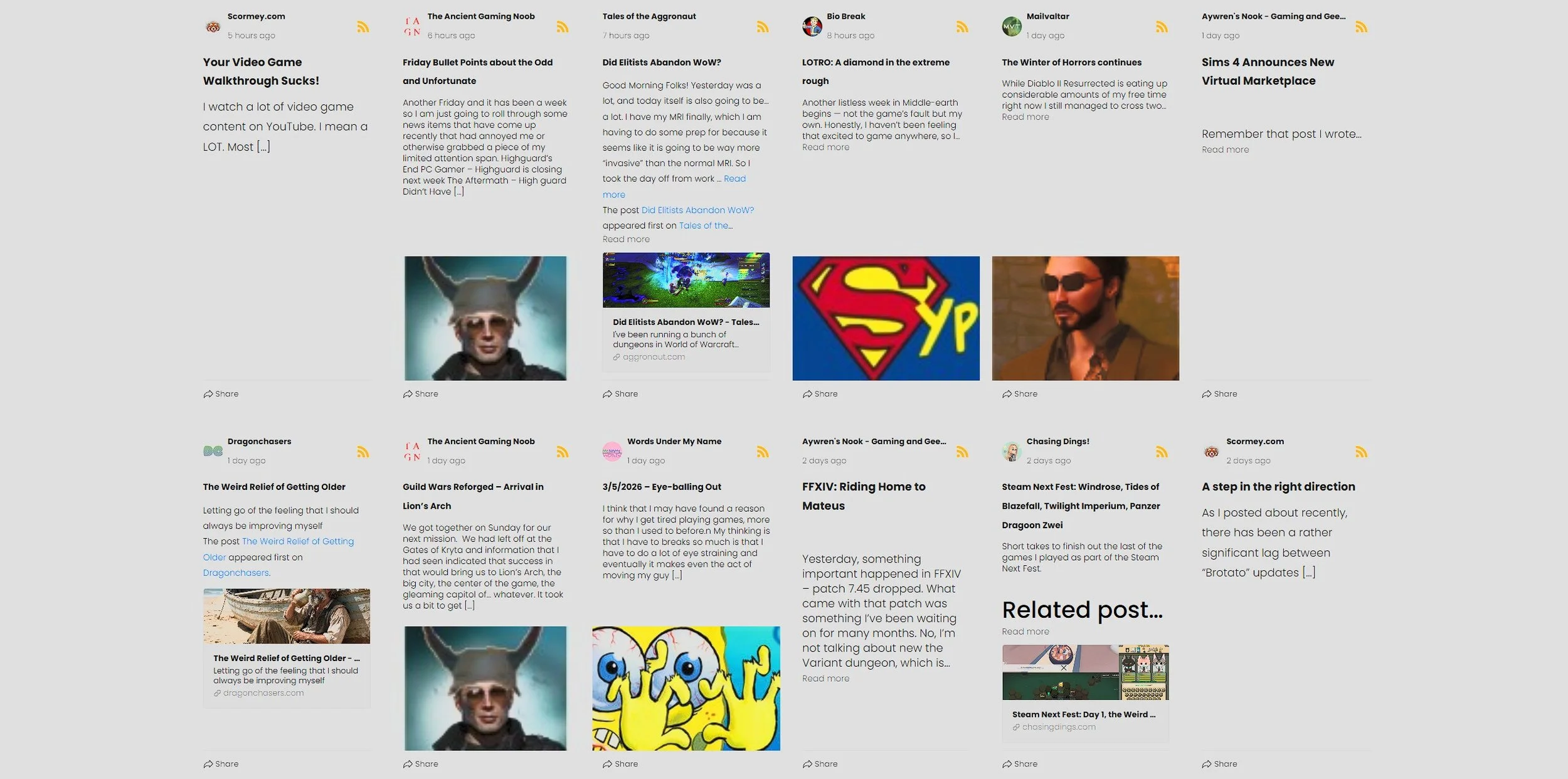
When I first started blogging way back in 2007, I maintained a blogroll of all my colleagues and peers’ websites. At the time this was a common practice and a way to support an expanding community. I considered this such an important aspect of the blogging scene at the time, I created a website to aggregate posts from video game blogs, called The Gaming Blog Nexus. It ran for two years and proved quite useful. However, it was tricky to administer and would frequently break as a lot of the back end widgets and plugins were created and maintained by “gifted amateurs”. I eventually shut it down due to the operating costs. When I moved my own website, Contains Moderate Peril, to Squarespace in 2015 I intended to start maintaining a blogroll once again. However, at that time there was no native support for such a thing on the platform. Hence for the last ten years, I have not had a blogroll on my website, which hasn’t sat well with me.

I was speaking to someone recently about hobbies (fortunately it wasn’t Simon Quinlank) and I mentioned that I have maintained a blog for over a 19 years. When I talked about the ongoing cost they were most surprised, as they had assumed that blogging was something that could be done for free. I guess we’ve become so accustomed to the provision of free online services such as email, that this a reasonable assumption. I pointed out that although it is indeed possible to blog for free using Blogger, it was not the optimal approach, especially if you want to maintain some degree of control over your writing. Naturally, the next question they asked was how much do I spend and I gave them a ballpark figure. All of which reminded me that I wrote a post on this very subject a few years ago. So I’ve decided to revisit the subject and see how much it currently costs to maintain Contains Moderate Peril.

Today I started the slow process of auditing every post that has been published on Contains Moderate Peril since 1st August 2016. The goal is to correct any obvious typos and replace all existing images with larger ones. The Squarespace software upgrade I applied to the website at the end of last year has finally allowed me to establish a standard format that I am happy with. Hence the ongoing audit is the perfect opportunity to apply these style rules to all posts. There are also some technical issues and matters regarding functionality that need to be addressed. I need to determine how to embed YouTube videos in such a way that they automatically scale to fit whatever device is viewing them. Another area which needs improving is the website search facility. This needs refinement so that enquiries can be more specific. Older posts also need to be more accessible, although I am still researching how best to achieve this.

It’s nearly two and half months since the Blaugust: Festival of Blogging event ended. During that time I’ve maintained a fairly regular writing schedule and I post every two days or so. Furthermore, I finally dragged my blog template, kicking and screaming, into the modern era. I tweaked a few pages and updated the content of the “about” page. The next task is to start going through all previous posts and replacing older, low resolution images with larger, more appropriate ones. This process also presents an opportunity to ensure that all posts follow a uniform style. IE Are appropriately categorised, have links to related posts at the bottom and are SEO optimised. This will be a lengthy task so I think the best approach will be to tackle two or three posts a day. Hopefully this will raise the profile of older content, which generates the lion’s hare of traffic to this site.
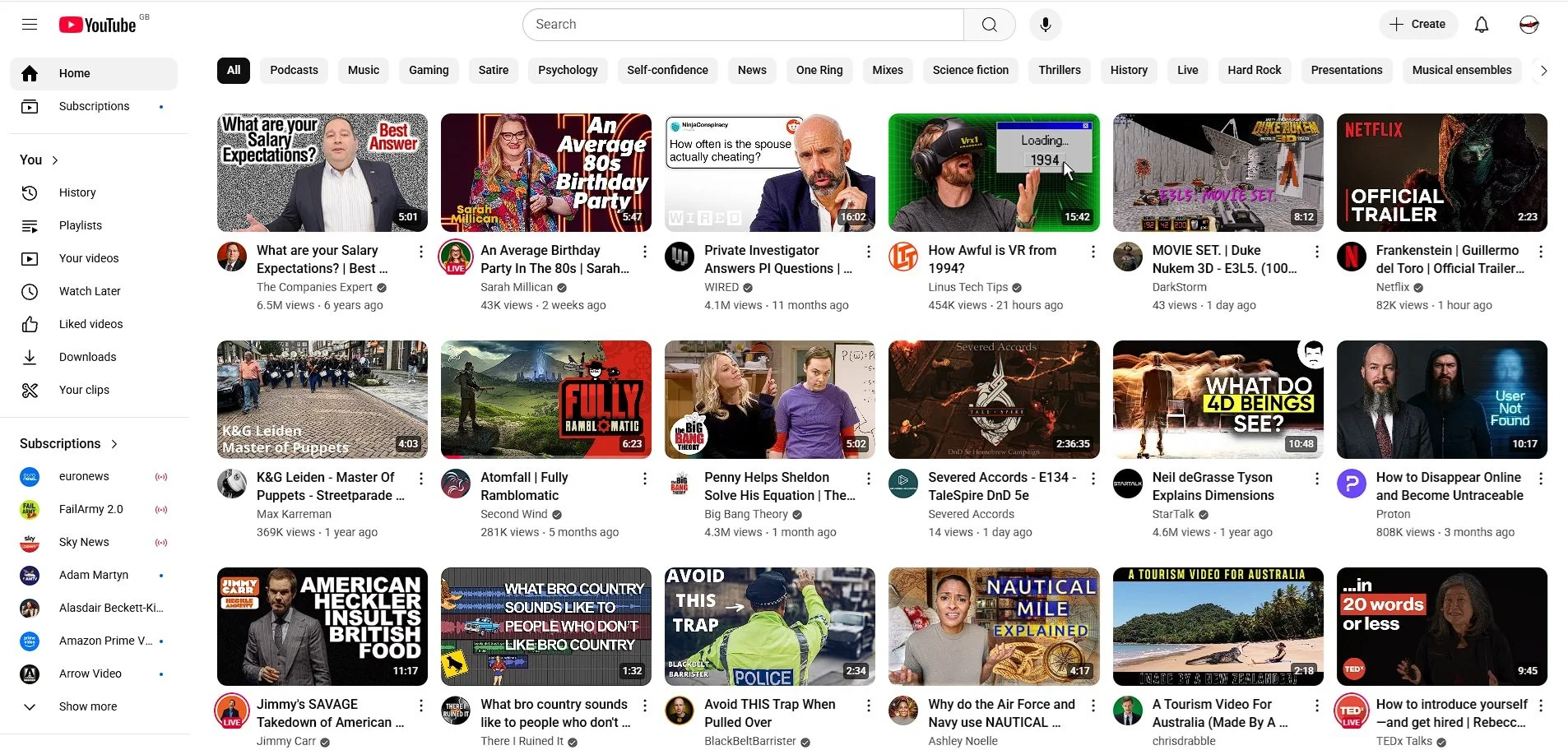
I use a browser extension called Control Panel for YouTube, which allows me to determine who many videos are displayed on my YouTube homepage and to filter the content that is shown. At present it is configured to display rows of six. Something that I have noticed of late, is the amount of videos with hyperbolic titles and thumbnail images created by AI. Both of which are design choices made to increase engagement. Clickbait titles are contrived to meet current SEO optimisation criteria and as such feature more and more in search results. The fact that they frequently have no relation to the subject I am researching, seems to be neither here nor there. The same issues arise with regard to AI generated images, which again frequently have no bearing on the matter. The fact that more and more content creators do this, infers that it works and is now an essential part of the process you must follow to be seen and featured in search results.

In the last post in this series, I specified the need for a plan with regard to upgrading my blog. Well a plan has emerged, been refined and has now been formally adopted. Rather than migrate Contains Moderate Peril to a new platform and effectively have to rebuild all the content, I am going to upgrade my existing presence on Squarespace. This decision was made for two reasons. Time and money. Migrating to a new platform will take a lot of time and incur additional costs. Upgrading the existing website will take less time and has no cost implications. That is not to say that it will be easy. It has become abundantly clear that the upgrade process will break stuff and that all published posts will have to be manually repaired. Hence my choice boils down to the lesser of two evils.
This year’s Blaugust: Festival of Blogging has reached an end and it would appear that this event has been well received by those who have participated in it. I believe that there were 168 bloggers taking part this year, many of whom have not participated before. Some were new to blogging, where others simply wished to see if they could increase their writing output. As ever there was a wide variety of blog styles and subject matters and it has been most interesting to read new posts every day. I have attempted to leave comments and positive feedback where I can and I hope that some of these new blogs that I’ve discovered continue to write. Well done to everyone who took part. I hope it has been an enjoyable and informative process and that you have learned from it. I know that at least one blogger has determined that writing online is not for them, which is a valuable lesson.
There is currently a group writing prompt available as part of this year’s Blaugust: Festival of Blogging which has piqued my interest. It asks the question “what is the oldest draft post you have” and suggests that it is revived in some manner. I have dozens of draft posts in a folder in my Google Drive. Many are film reviews or film related. The oldest of which dates back to summer 2010. Rather than write a straight forward review of Blake Edwards 1968 comedy The Party, I rather foolishly thought at the time that I’d tackle the issue of whether the film is sufficiently racist to make it beyond the pale. Let it suffice to say that I quickly found myself bogged down in the complexities of the subject and thus never completed the blog post.

I’ve participated in every previous Blaugust: Festival of Blogging event. Prior to that I was involved in the Newbie Blogger Initiative or NBI as it was affectionately known. I have therefore written quite a lot of blogging advice and suggestions over the years. If anyone feels disposed to do so, you can access them all by clicking on the “blogging” option on the top menu of this blog. However, it is important to remember that a lot of the ideas I have advocated and written about over the years are purely subjective. Not all advice or guidance works for everyone. People have different ideas about blogging, different approaches to it and different aspirations. This year has highlighted some quite distinct differences among bloggers which has been most illuminating.
Today is my blogging anniversary. I have been writing online consistently for 18 years. My earliest blogs no longer exist, although they can be found via the Internet Archive Wayback Machine. My first blog was a Lord of the Rings Online fansite called Misadventures in LOTRO. After a while this morphed into a wider gaming website; Misadventures in Gaming. However, I soon discovered that I wanted to write about more than just video games, so I decided to start from scratch and created Contains Moderate Peril in February 2010. This blog endured and has been my main online presence ever since. It has moved several times for various reasons. For a while I had a sponsor, as well as a reasonably sized audience and had dreams of making money from my writing and podcast. But it wasn’t to be and now I just write primarily for my own peace of mind and amusement.
My Mother moved into a care home on April 7th this year. Her health was already very poor due to her age (91). She was bed bound, partially sighted, suffering from increasing hearing loss and unable to feed herself. Rapid onset dementia meant that her behaviour had become erratic and she was a danger to herself. Hence her caring needs could no longer be safely managed within a home environment. Fortunately the care home proved a good choice. For the past four months they have provided outstanding care and have treated my Mother with dignity, respect and genuine kindness. Sadly, during that time my Mother had several bouts of illness that saw her hospitalised four times. Eventually a PEACE plan (Proactive Elderly Advanced Care) was set up allowing treatment to be managed by the care home and local GP. Since July my Mother has enjoyed a stable environment and continuity of care.