
The Silmarillion Movie
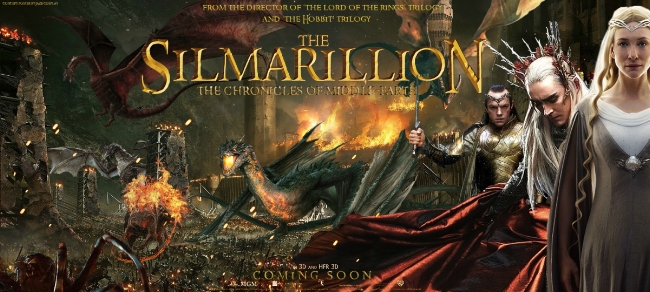
When Peter Jackson finished filming The Hobbit trilogy, there was some idle speculation by fans as to the possibility of a movie adaptation of The Silmarillion. It was meant mainly as a talking point, rather than a serious proposition and there certainly was an enthusiastic response from some quarters. Three years on, the fantasy genre is still a commercially successful genre both at Cinemas and on TV. Furthermore, production studios are regularly looking to existing literary properties that they can convert into viable long term franchises. Bearing all this in mind, is it possible that Tolkien’s complex mythopoeic work could be adapted for either the big or little screen?
When Peter Jackson finished filming The Hobbit trilogy, there was some idle speculation by fans as to the possibility of a movie adaptation of The Silmarillion. It was meant mainly as a talking point, rather than a serious proposition and there certainly was an enthusiastic response from some quarters. Three years on, the fantasy genre is still a commercially successful genre both at Cinemas and on TV. Furthermore, production studios are regularly looking to existing literary properties that they can convert into viable long term franchises. Bearing all this in mind, is it possible that Tolkien’s complex mythopoeic work could be adapted for either the big or little screen?
Although it is theoretically possible to make either a movie of TV show from the source material, the likelihood of such a project coming to pass is very remote. Hollywood studios are very risk averse, especially towards material that cannot be easily defined and pitched at the broadest demographic. Even if The Silmarillion were to be championed by a major director, there is no guarantee that such a project would be immediately green lit. Hollywood heavy weights such as Steven Spielberg and Martin Scorsese have fallen foul of this policy recently. However, if a Silmarillion adaptation could secure financing, let us consider some of the other potential obstacles that would have to be addressed before the project could move forward.
First, there is the fundamental issue of the rights to The Silmarillion, which are not included in those currently held by Middle-earth Enterprises. I think the Tolkien estate would move heaven and earth to block such a project from progressing, as Christopher Tolkien has made his views very clear on the existing movie adaptations of his father's work. He abhors what he sees as the Disneyfication of the source material. Therefore, this is an issue that cannot be addressed during his lifetime. Whether the heirs to the estate would think differently remains to be seen.
Then there is the source text of The Silmarillion itself, which would be would be extremely difficult to adapt and market to a mainstream audience. It would require considerable restructuring and frankly a lot of dumbing down to make an accessible narrative. It is episodic by nature with an excess of characters and explores a great deal of abstract concepts. There are certainly passages of the text that would make epic set pieces but overall the narrative does not support the traditional three act story arc that cinema prefers.
This then raises the question, rather than a series of movies, would a high budget cable show such as Game of Thrones, be a more suitable medium to showcase The Silmarillion. Either way, a live action adaptation would require a prodigious budget. Considering the philosophical and theological elements to the text, perhaps live action is not the best approach to adapting the work. Would the medium of animation be more appropriate? By this I do not mean mainstream CGI but something more traditional such as cel animation or perhaps some experimental stop motion method?
Then there is the risk that any adaptation may be usurped and extrapolated into something very different from Tolkien’s vision. Tolkien was a devout Catholic although this is not immediately obvious in his works. He also deplored the use of allegory as a literary device. There is a chance that whoever adapts The Silmarillion could colour it with their own personal religious, moral and philosophical baggage and make it into something that it is not. I would hate to see something as cerebral as this book, distilled into a clumsy and misplaced metaphor to be championed by the wrong sort of Christian institutions. The Silmarillion deserves better than that.
If we still consider such a project in movie terms, then it would require director of immense cinematic skill and vision. Peter Jackson, although visually talented, is not the film maker he was a decade or two ago. He is too big a name, too commercial and now appears to exhibit a degree of self-indulgence that often comes when directors become celebrities. Personally, I think his better work is now behind him. A true visionary would be required for The Silmarillion movie but these are a scarce commodity these days. Kubrick, Kurosawa and their like are long dead, so who exactly does that leave? Guillermo del Toro, Bong Joon-ho or Alfonso Cuarón?
As you can see, these are just a few potential problems that would plague such a project. Furthermore, it can be cogently argued that just because you can do something, it doesn't mean that you should. The Silmarillion may well be unfilmable in any meaningful way and to attempt to do so may well be disrespectful to the source text. Unfortunately, film makers and especially their financiers seldom understand such concepts and often end up debasing great literary works in pursuit of the lowest common denominator and box office gold. The Silmarillion was intended by its author to be a book and nothing more. Does it really need to exist in any other way?
The Songs of Middle-earth: Part One
Tolkien's use of song and verse are an integral part of his writings. I am not musically talented myself, nor am I a scholar of song structure but I appreciate how he uses them for plot exposition and character development. In The Lord of the Rings, the medium of song is also used as a means of conveying the enormity of Middle Earth and the wealth of history therein. They give us a sense of the realms lore and heritage, stretching back over millennia. The respective sophistication of each song also reflects the culture that created them. Songs from The Shire are rustic and quaint. The songs of Men are bombastic and bold. Whereas Elven music is often melancholy and complex.
Tolkien's use of song and verse are an integral part of his writings. I am not musically talented myself, nor am I a scholar of song structure but I appreciate how he uses them for plot exposition and character development. In The Lord of the Rings, the medium of song is also used as a means of conveying the enormity of Middle Earth and the wealth of history therein. They give us a sense of the realms lore and heritage, stretching back over millennia. The respective sophistication of each song also reflects the culture that created them. Songs from The Shire are rustic and quaint. The songs of Men are bombastic and bold. Whereas Elven music is often melancholy and complex.
Norse and Anglo-Saxon Mythology were immensely important and influential on Tolkien. Thus, many of his songs are in the idiom of Norse poetry. He often uses literary devices such as the pitch of repeating vowel sounds (assonance) as well as the resonance of repeating consonant sounds (both in alliteration and in consonance). Tolkien himself sanctioned composer Donald Swann (of Flanders and Swann fame) to set some of his work to music and it met with his approval. Yet there are no definitive musical versions. This leaves a great deal of scope for artists from all musical disciplines to interpret his work.
A Google search will provide you with a wealth of artists that have attempted to bring Tolkien’s songs to life. From Rick Wakeman, Daniel McCarthy to Sir Christopher Lee. I have selected a few of examples of these for your consideration. Some are the exact songs as they were written by the Professor himself, with accompanying music. Others have been cleverly adapted or abridged. I have even included some material that was simply inspired by Professor Tolkien's work.
The BBC radio adaptation of The Lord of the Rings in 1981 was a milestone in radio drama. Composer Stephen Oliver made an immeasurable contribution to the production with his intelligent and musically literate expressions of Tolkien's written work. O Elbereth Gilthoniel is a paean in reverence of the star Queen. Oliver cleverly adapts the Sindarin text into a beautiful and expressive song, sung in the style of a madrigal. It is a bold interpretation yet it works superbly, reflecting the artistic dignity of the Elves.
A Elbereth Gilthoniel
silivren penna míriel
o menel aglar elenath!
Na-chaered palan-díriel
o galadhremmin ennorath,
Fanuilos, le linnathon
nef aear, sí nef aearon!
A Elbereth Gilthoniel
o menel palan-diriel,
le nallon sí di'nguruthos!
A tiro nin, Fanuilos!
O Elbereth Starkindler,
white-glittering, slanting down sparkling like a jewel,
the glory of the starry host!
Having gazed far away
from the tree-woven lands of Middle-earth,
to thee, Everwhite, I will sing,
on this side of the Sea, here on this side of the Ocean!
O Elbereth Starkindler,
from heaven gazing afar,
to thee I cry now beneath the shadow of death!
O look towards me, Everwhite!
Now this may be a controversial choice, coming from the 1977 animated version of The Hobbit. It is not a film held in high regard. In the Valley, Ha! Ha! written by Jules Bass and performed by Glenn Yarbrough is based upon the song the Elves sing as the Dwarves, Gandalf and Bilbo ride down into the Valley of Rivendell for the first time. The musical arrangement is very much a product of the seventies and the warbling voice of Mr. Yarbrough is not to everyone's liking. Yet it catches the light-hearted spirit of the source text very well and it is worryingly hummable. I have warmed to it in recent years and consider it a good example of less being more.
O! What are you doing,
And where are you going?
Your ponies need shoeing!
The River is flowing!
O! Tra-la-la-lally
Here down in the valley!
Ha ha!
O! Where are you going,
With beards all a-wagging?
No knowing, no knowing
What brings Mister Baggins,
And Balin and Dwalin
In June in the valley
Ha ha!
O! Will you be staying,
Or will you be flying?
Your ponies are straying!
The daylight is dying!
To fly would be folly,
To stay would be jolly!
O! Tril-lil-lil-lolly
Ha ha!
O! What are you doing,
And where are you going?
Your ponies need shoeing!
The River is flowing!
O! Tra-la-la-lally
Here down in the valley!
Ha ha!
Mithrandir by Leonard Rosenman with lyrics by Mark Fleischer, comes from the 1978 animated version of The Lord of the Rings. The score by veteran composer Rosenman is not considered to be a particularly innovative piece of work but it is both functional and adequate. Director Ralph Bakshi found it clichéd and wanted a soundtrack by led Zeppelin. The song is somewhat traditional in its style, starting with elements of a holiday choir and ending in a Miklos Rozsa style biblical idiom. Yet despite its clumsy implementation the lyrics are a curiously accurate summation of Gandalf's character. The song is sung in Lothlorien as a lament to the Grey Pilgrim and is moving in a rather honest and simple fashion.
Let the night never cease to call you
Let the day nevermore be the same
Though you've gone where we cannot find you
In each heart you have set your name
Mithrandir far you wander
And long may your name be sung
Through kingdoms of starlight
And realms of the sun
Mithrandir though you're hidden
We're still guided by your light
You're walking beside us
A friend in the night
We were lost when the dark descended
And the light gathered into a storm
You appeared like a sunlit morning
At the winds of a world at war
Mithrandir far you wander
And long may your name be sung
Through kingdoms of starlight
And realms of the sun
Mithrandir though you're hidden
We're still guided by your light
You're walking beside us
A friend in the night
Mithrandir rising through the shadow
Like a star shining deep in its home
You will dwell in our hearts forever
Nevermore will we stand alone




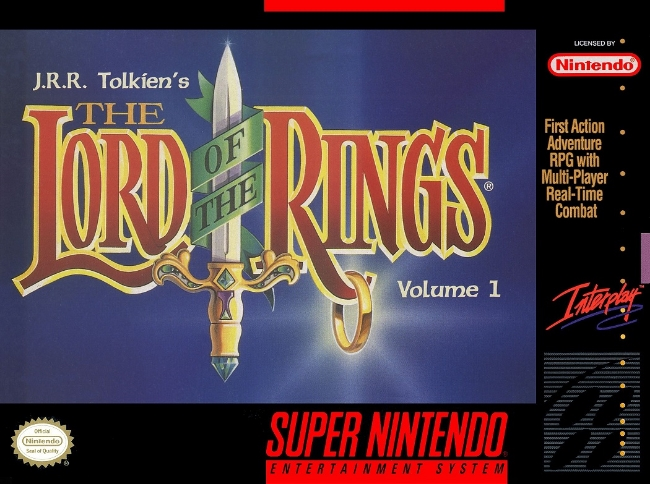
J.R.R. Tolkien's The Lord Of The Rings Volume 1
In a fit of nostalgia I recently found myself perusing several retro gaming websites, pondering on some of the titles that I use to play on the Super Nintendo Entertainment. During the early nineties when this platform was my primary source of gaming I use to meticulously research new titles before purchasing. This was the pre-internet age and console cartridges came at a premium price, so you did not want to waste valuable money on a poor game. Magazines featuring previews and in-depth reviews were the main source of information. The other would be your local gaming boutique where you could hang out and discuss such matters with fellow gamers. Broadly this system worked and I enjoyed most of the games I played on the SNES.
In a fit of nostalgia I recently found myself perusing several retro gaming websites, pondering on some of the titles that I use to play on the Super Nintendo Entertainment. During the early nineties when this platform was my primary source of gaming I use to meticulously research new titles before purchasing. This was the pre-internet age and console cartridges came at a premium price, so you did not want to waste valuable money on a poor game. Magazines featuring previews and in-depth reviews were the main source of information. The other would be your local gaming boutique where you could hang out and discuss such matters with fellow gamers. Broadly this system worked and I enjoyed most of the games I played on the SNES.
However one title bypassed this screening process. It did so because I allowed my love of a particular intellectual property to cloud my vision. I refer to Interplay's J.R.R. Tolkien's The Lord of the Rings Volume 1. This was an adventure game from 1994, loosely tied in with both the Tolkien’s books and the 1978 animated feature film. Certainly part of the games aesthetic was influenced by Ralph Bakshi’s movie and the game used the font and logo from that film. At the time my default sense of scepticism was not as finally honed as it is now, so I foolishly allowed my optimism and imagination to side step the facts. Thus I purchased the said game and in a short period of time discovered it was one of the worse titles based on a license created for the SNES.
As memory serves, J.R.R. Tolkien's The Lord of the Rings Volume 1 played more like a Zelda game and had very little to do with The Lord of the Rings in narrative terms. In fact the game showed a complete disregard to the lore. Within the confines of this game Bilbo gives the ring to Frodo at his leaving party and tells him to take it to Rivendell. Prior to the player actually embarking upon the said quest the game requires you to help Sam find his Gaffer's spectacles that have been lost in some local caves. These topographical features have fallen under the malevolent influence of Sauron (for some particular reason). Tedium ensues as the player pursues arbitrary task designed to extend a poorly designed games lifespan and plays through bland cookie cutter environments. I can distinctly remember naively hoping that matters would improve as the game progressed. Sadly they did not.
The game mechanics were very clunky, even by console standards of the console time. Characters would often get caught in the environment and the bulk of the quests were mainly of the "fetch multiple items" variety. The game graphics were far from original with many of the sprites and backgrounds sporting a generic look. Apart from some superficial attempts to make the main characters look vaguely like their counterparts from the movie, it was hard to see exactly how this was anything to do with Tolkien’s work. The game soundtrack was that tiresome Celtic style "Diddly Dee" nonsense that still seems to be de rigueur when developers try to interpret The Shire and other parts of Middle-earth. You could mash your controller endlessly in the vain hope of killing an enemy but more often than not, you’d simply die randomly for no discernible reason. The game also offered the facility to save access to completed levels via a serious of codes, but unfortunately unless you were a former employee of Bletchley Park, then the system was quite impenetrable.
Twenty two years on I still flinch while reflecting upon J.R.R. Tolkien's The Lord of the Rings Volume 1. It was and remains an excruciating game and insulting franchise cash in. Needless to say there was never a Part 2 as I believe there was a universal consensus that this was a shoddy product. It’s a curious thing that the platform that spawned Super Mario Kart, which is considered the embodiment quality design, also produced such nonsense as J.R.R. Tolkien's The Lord of the Rings Volume 1. Now in the age of console emulators there may well be a few Tolkien enthusiasts that want to check this game out of some sort of idle curiosity. I would strongly advise them not to. A quick visit to You Tube will demonstrate the folly of such a notion.
The Lord of the Rings - BBC Radio Adaptation (1981)
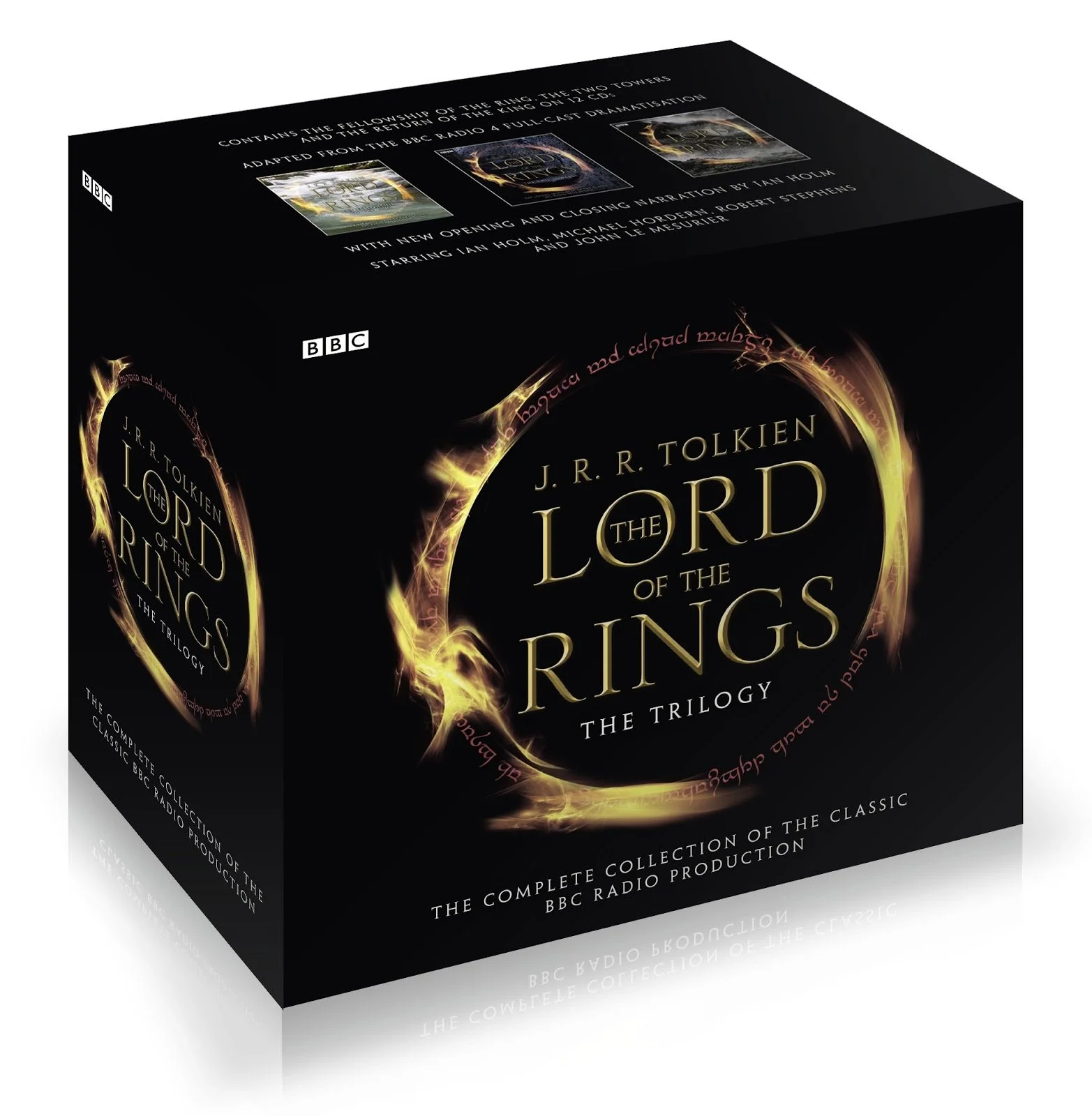
In 1981 BBC Radio 4 produced an ambitious adaptation of The Lord of the Rings, presenting Tolkien’s novel in twenty six, thirty minute episodes. As with all adaptations some material had to be removed, but overall the BBC production was not excessively abridged and followed the plot faithfully. The characterisations and dialogue were extremely well realised and music by composer Stephen Oliver was very much in the style and idiom of Tolkien. This was a production of the highest pedigree and a major event for the BBC at the time. The series was heavily promoted, receiving front page status in The Radio Times, the UK’s premier TV guide and bestselling magazine. Although initial reviews were varied, the series immediately gained a cult following with fans trading episodes recorded on cassette tape. Word of mouth and substantial listening figures soon lead to revised opinions from the press, along with the immortal slogan "Radio is Hobbit 4-ming".
In 1981 BBC Radio 4 produced an ambitious adaptation of The Lord of the Rings, presenting Tolkien’s novel in twenty six, thirty minute episodes. As with all adaptations some material had to be removed, but overall the BBC production was not excessively abridged and followed the plot faithfully. The characterisations and dialogue were extremely well realised and music by composer Stephen Oliver was very much in the style and idiom of Tolkien. This was a production of the highest pedigree and a major event for the BBC at the time. The series was heavily promoted, receiving front page status in The Radio Times, the UK’s premier TV guide and bestselling magazine. Although initial reviews were varied, the series immediately gained a cult following with fans trading episodes recorded on cassette tape. Word of mouth and substantial listening figures soon lead to revised opinions from the press, along with the immortal slogan "Radio is Hobbit 4-ming".
The trilogy was adapted for radio by the then novice writer Brian Sibley and veteran dramatist Michael Bakewell. It was directed by Jane Morgan and Penny Leicester, who were both experienced in radio dramas. The cast was made up of numerous fine British actors and voice artists such as Ian Holm as Frodo Baggins, John Le Mesurier as Bilbo Baggins and Sir Michael Horden as Gandalf. It also featured Robert Stephens as Aragorn and Peter Woodthorpe as Gollum. The adaptation excised a lot of the "excess fat" from the source text allowing the actors to concentrates on plot, character development and atmosphere. The attention to detail of this production was extremely high with Christopher Tolkien approving the scripts, leading to an authentic depiction of Middle Earth. Great care was taken with pronunciation of words and the delivery of dialogue spoken in Elvish and the Black Speech.
Upon its initial release each of the original twenty six episodes received two broadcasts per week, this remains standard practice for many BBC radio serials. After a successful first run the twenty six part series was subsequently edited into thirteen hour-long episodes, restoring some dialogue originally cut for timing, re-arranging some scenes for dramatic impact and adding linking narration and music cues. The re-edited version was released on both cassette tape and CD boxsets during the eighties and nineties and included bonus material such as the Stephen Oliver’s complete soundtrack for the series. It is this version of the BBC adaptation that has proven most popular and has been most commonly distributed and syndicated over the years.
In 2002 due to the commercial success of Peter Jackson's cinematic adaptations of The Lord of the Rings, the BBC re-issued a revised version of their 1981 series. This comprised of three CD sets corresponding to the three original book volumes (The Fellowship of the Ring, The Two Towers and The Return of the King). This version omitted the original episode divisions and included a new opening and closing narration recorded by Ian Holm. The re-edited version also included some additional music cues. However some fans felt that the re-arranging the material in this way actually spoilt the drama and the flow of the narrative. The original edit of the radio series was constructed so that the separate stories of Frodo and Sam ran in parallel to that of the rest of the Fellowship. It heightened the drama and afforded listeners a clearer understanding of the time line.
Tolkien's linear style proved to be a good fit for radio, with Sibley and Bakewell’s adaptation confidently staying true to the source text. Like Peter Jackson’s movies, some story elements have been cut, such as Tom Bombadil, along with the journey through the Old Forest and the Barrow Downs. However the Scouring of the Shire has been included, ensuring that Tolkien’s codicil is in place and therefore ending the tale correctly. One of the reasons this particular adaptation was so successful was due to the care and attention spent on the voice casting as well as the prudent use of music and song. Tolkien went to great pains to make both language and verse and integral part of Middle-earth and Sibley and Bakewell did not shy away from exploring this facet of the story. The BBC Radiophonic workshop also provided some pertinent sound effects and ambient sounds. As a result both the One Ring and the Nazgul have their own distinct audio characteristics.
Because the production elected to intercut the separate storylines to facilitate a more familiar style of narrative, there was a requirement to bridge a few expository gaps. Writers Brian Sibley and Michael Bakewell tackled this issue in an innovative fashion, adapting text from Tolkien’s later book Unfinished Tales which subsequently explained these literary grey areas. For example during the Nazgul’s quest for the One Ring, they visit Isengard and challenge Saruman over the whereabouts of The Shire. He advises them to pursue Gandalf. However as they follow Mithrandir’s trail they chance upon Grima Wormtongue, who is hurrying to Isengard with a message. It is he that gives up the location of the Shire upon threat of death. These narrative additions help with the flow of the story without breaking the lore.
This exceptional adaptation still remains accessible to both established Tolkien fans and those who have yet to read the trilogy. It is also a quintessential example of BBC Radio drama at its best. Although I enjoyed Peter Jackson’s movies upon their initial release, I feel that the BBC radio adaptation, despite being a different medium, is the better of the two. Peter Woodthorpe’s Gollum is a far more nuanced and sinister portrayal than Andy Serkis’s bi-polar performance. Also Jack May’s King Theoden is far more sympathetic and regal than Bernard Hill’s. Apart from reading the source text, this is the next best way to lose oneself in Tolkien’s classic story. It allows the listener to enjoy the outstanding vocal performances while conjuring up their own depictions of the characters in their mind’s eye. Where Peter Jackson’s movies are very much his interpretation of Middle-earth, the BBC radio adaptation of The Lord of the Rings is a far more faithful and nuanced dramatisation. Due to the medium of radio the strong story and characters are not overwhelmed or marginalised by spectacle.



The Lord of the Rings - The John Boorman Adaptation
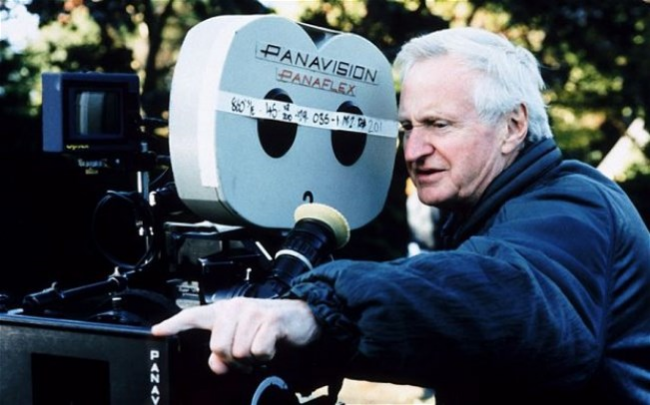
n 1969 JRR Tolkien finally sold the film and merchandising rights of The Lord of the Rings to United Artists for approximately £104,000. A year later the studio asked director John Boorman if he could make the books into a viable film. Boorman, an established director with a track record of being experimental, set about developing a screenplay with his long term collaborator, Rospo Pallenberg. What emerged was a one hundred and fifty minute script and possibly the most radical adaptation of Tolkien's work. Some of the ideas and concepts it contained were extremely innovative but others where simply too radical a divergence from the source text. I’ve collated a few of these for your consideration. If you are familiar with Boorman's 1973 film Zardoz, then you will note both similarities and re-occurring themes.
In 1969 JRR Tolkien finally sold the film and merchandising rights of The Lord of the Rings to United Artists for approximately £104,000. A year later the studio asked director John Boorman if he could make the books into a viable film. Boorman, an established director with a track record of being experimental, set about developing a screenplay with his long term collaborator, Rospo Pallenberg. What emerged was a one hundred and fifty minute script and possibly the most radical adaptation of Tolkien's work. Some of the ideas and concepts it contained were extremely innovative but others where simply too much of a divergence from the source text. I’ve collated a few of these for your consideration. If you are familiar with Boorman's 1973 film Zardoz, then you will note both similarities and re-occurring themes.
1.) After the destruction of the Ringwraiths at the Fords of Bruinen, Frodo is carried into the sparkling palace of Rivendell, where in a vast amphitheatre full of chanting Elves he is laid naked on a crystal table and covered with green leaves. A thirteen-year-old Arwen surgically removes the Morgul-blade fragment from his shoulder with a red-hot knife under the threatening axe of Gimli, while Gandalf dares Boromir to try to take the Ring.
2.) The narrative of "The Council of Elrond" was to be visually interpreted as a fantastic medieval masque representing the history of the Rings. It was to combine elements of Kabuki theatre, rock opera, and circus performance.
3.) At the gates of Moria, the fellowship bury Gimli in a hole, throw a cape on him and beat him to a state of utter exhaustion to retrieve his unconscious ancestral memory. This ancient knowledge allows Gimli to recollect the word for entering Moria and gain insights about the ancient dwarf kingdom.
4.) Also in the Moria sequence, the orcs are slumbering or in some kind suspended animation. The fellowship runs over them and the rhythm of their footsteps start up their hearts.
5.) There was a proposed wizard’s duel between Gandalf and Saruman. This was inspired by an African idea of how magicians duel with words. The script reads:
Gandalf: Saruman, I am the snake about to strike!
Saruman: I am the staff that crushes the snake!
Gandalf: I am the fire that burns the staff to ashes!
Saruman: I am the cloudburst that quenches the fire!
Gandalf: I am the well that traps the waters!
6.) Perhaps the most provocative changes occur by introducing a sexual element. Not necessarily in a exploitative way but more of a metaphor exploring the nature of power. For example, before gazing into Galadriel's mirror, Frodo must have sex with her. Aragon's battlefield healing of Eowyn becomes a sexual analogy of the healing power of the king.
Needless to say, executives at United Artist failed to understand Boorman's script. The project was shelved indefinitely. When Ralph Bakshi approached the studio in 1976 with a proposal of adapting Tolkien's work in to an animated film, the script had to be purchased to acquire full artistic control. Boorman allegedly received $3,000,000 for his script. When Boorman later made his big screen adaptation of the Arthurian legend Excalibur in 1981, many parallels where drawn with The Lord of the Rings. It has often been suggested that several ideas from his the unused Tolkien screenplay made it in to that movie.

The Lord of the Rings - The Mind's Eye Radio Adaptation (1979)
When discussing the various audio dramatizations of J. R. R. Tolkien's The Lord of the Rings, people often think of the BBC Radio adaptation by default. However it should be noted that it was not the first. An earlier version was made and broadcast in 1979 on US National Public Radio and was subsequently released as an audiobook. It was produced by The Mind's Eye, a company who were responsible for numerous adaptations of classic literature for radio at the time. The script written by Bernard Mayes is a somewhat abridged version of the book. The eleven hour running time focuses significantly on the dialogue, with much of the back history, lore and expositionary narration removed.
When discussing the various audio dramatizations of J. R. R. Tolkien's The Lord of the Rings, people often think of the BBC Radio adaptation by default. However it should be noted that it was not the first. An earlier version was made and broadcast in 1979 on US National Public Radio and was subsequently released as an audiobook. It was produced by The Mind's Eye, a company who were responsible for numerous adaptations of classic literature for radio at the time. The script written by Bernard Mayes is a somewhat abridged version of the book. The eleven hour running time focuses significantly on the dialogue, with much of the back history, lore and expositionary narration removed.
The production was very low budget, drawing upon local amateur actors and friends of the producer. There was extensive use of library music and homemade sound effects. Due to scheduling issues the cast often recorded their lines separately resulting in some curiously stilted exchanges of dialogue in key scenes. The voice cast also had to provide multiple character voices which at times causes a degree of confusion. It is also clear that none of the production were Tolkien scholars. The pronunciation of many names and places are often incorrect and the clumsy adaptation results in several plot holes and unresolved storylines.
However despite these flaws this production proved popular at the time of its broadcast. Its simplicity is actually quite a benefit, making this adaptation accessible for a younger audience or those with only a passing interest in Tolkien's work. It should also be noted that this production does not omit Tom Bombadil and presents his part of the story in quite an effective fashion. This production has been distributed by several audio book companies over the years and can even be found on "You Tube". Although purists may eschew The Mind’s Eye production for its obvious faults, there is still much to enjoy from this drama, if it is approached in the right fashion.
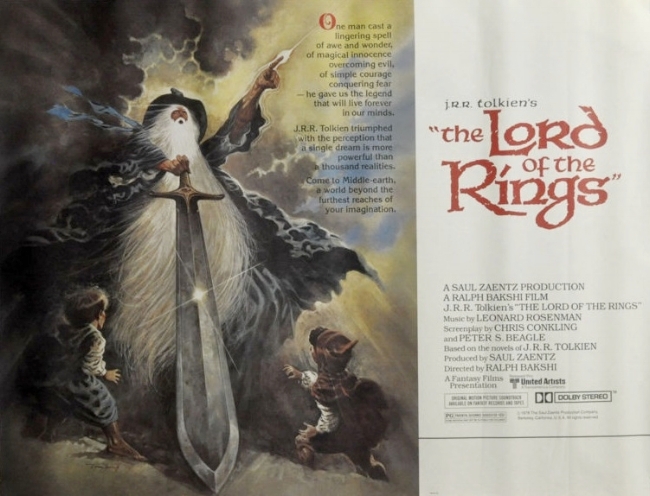
Sometime in August 1979, I was travelling with my father by train to London, when I first saw posters advertising the Ralph Bakshi animated version of J. R. R. Tolkien’s The Lord of the Rings. The film had been released in the US the previous November and I aware of its existence because I had read articles about it production in Starburst magazine. Even at the age of 11 I was interested in genre films and television, having been raised on Doctor Who and Ray Harryhausen’s back catalogue of fantasy movies. Furthermore, I was familiar with Tolkien’s first novel, The Hobbit, as my father had read it to me when I was younger. I was impressed by the poster in that way that only an 11 year old can be. Why was Gandalf do gigantic? Also the A rating was enigmatic. Most animated films were usually rated U. Yet despite my interest, I didn’t see The Lord of the Rings at the cinema during the summer holidays.