

Fans and Communities
Over the years I have been a participant in several fan based communities. These have ranged from running film clubs, to creating and publishing fanzines in the pre-internet days. More recently this has included running websites, blogging and creating podcasts. It’s a curious thing the way fandom is cyclical and one’s involvement with such communities seems to ebb and flow. It’s something I’ve been thinking about a lot of late. Several of the You Tube channels I enjoy have reduced their output or stopped due, to changes in advertising policy and monetisation. The Newbie Blogger Initiative failed to manifest itself this year and many of my immediate colleagues in blogging and podcasting have also begun to fade away or moved on to pastures new. The sad thing is, the true value of many community contributors is never really realised until after they’ve gone.
Over the years I have been a participant in several fan based communities. These have ranged from running film clubs, to creating and publishing fanzines in the pre-internet days. More recently this has included running websites, blogging and creating podcasts. It’s a curious thing the way fandom is cyclical and one’s involvement with such communities seems to ebb and flow. It’s something I’ve been thinking about a lot of late. Several of the You Tube channels I enjoy have reduced their output or stopped due, to changes in advertising policy and monetisation. The Newbie Blogger Initiative failed to manifest itself this year and many of my immediate colleagues in blogging and podcasting have also begun to fade away or moved on to pastures new. The sad thing is, the true value of many community contributors is never really realised until after they’ve gone.
So where to start regarding fans and communities? Well fans are far more than just mere customers. Sadly, not all of the gaming industry understands this or more importantly, appreciates it. The distinction is quite clear, though. I am a customer of Vodafone. I use their services for a monthly fee and that is the extent of my relationship with them. I do not write about my experiences using their products, nor do I create guides regarding their use. Neither do I arrange social events around their services. Fans conversely do a lot of these sort of thing and more for the games that they love. Furthermore, they are not the sole beneficiaries of such undertakings. A vibrant community is a great marketing and promotional asset for any games developer. Being free, it also has the best price.
Often the debates about community are applicable beyond gaming and relevant to wider social activities. Communities often arise organically, with fans creating a site and tweeting about what they enjoy. Soon bridges are built with other likeminded individuals and an informal network manifests itself. Often specific groups or individuals gain prominence within these social groups, through their own hard work and dedication to the things that they love. More often than not these figureheads have not actively sought such a position. It simply occurs through the dynamics of human interaction.
Now this raises some interesting questions. I read a reddit post recently in which someone thought that there was a burden of responsibility upon high profile community participants (IE popular You Tubers) or websites. To a degree, I believe that they are right, although I think it is very dependent upon what the said individual or site does within the community. Providing guides, sharing experiences or collating data is usually benign and neutral. Providing news or opinion is more complex and possibly does require a degree of responsibility and self-moderation. However, readers of specific sites or followers of certain individuals also have a duty to exercise their own common sense. It is a mistake to put people on pedestals.
Something I have mentioned before with regard to MMO communities is that in the past they have usually formed and grown outside of the influence of the commercial entities that run the games. For more recent titles such as SWTOR and especially Guild Wars 2, this process has been more centralised under the auspices of the developers. Both of those games have a wealth of information created by players but it is more often than not it is found within the official forums for that title. I may be wrong but I have never been aware of either SWTOR or Guild Wars 2 having the same sort of independent community as such titles as LOTRO or WoW. Communities can be a great asset but when it is not directly under any form of centralised control by the developers or publishers, then it can be a "problem". It will be interesting to observe what sort of online societies develops around future MMOs.
Moving away from gaming and looking at other areas of fandom, a common problem that occurs is the impact that increased public interest can have upon a community. This usually happens when an activity or pastime gains mainstream attention and becomes more widely accessible. Cosplay is something that in recent years has become increasingly popular. It is no longer perceived as the prerogative of a small niche group and is beginning to become quite a major marketing and promotional tool. Some perceive this process as democratisation, where others see something they love being usurped by those that simply wish to exploit it for financial gain. Is the community simply growing or is it being reinvented at the expense of some and the advantage of others?
Ultimately, fans, communities and their resulting social interaction are a complex and fluid situation. With regard to gaming there most certainly is an expiry date for most communities. The natural attrition we see as a game wanes in popularity is a perfectly normal thing, linked to factors such as lifespan and individuals ongoing engagement. Most fans directly or indirectly benefit from the services that arise from healthy communities. Although those that form the foundations of these communities seldom seek any praise it is often due. However, it is wise to note that the opposite can occur sometimes, when certain quarters turn bad and seek to disrupt, divide and destroy.
So where does Contains Moderate Peril fit into all this? Well I'm not entirely sure. I've always liked to maintain a tangential relationship to most traditional hierarchies, neither leading or following but simply contributing. Yet to my own surprise I've found myself involved pro-actively in several group projects in recent years, mainly because I wanted to see them succeed, not only for my benefit but for others. Some have proven to be an invaluable undertaking and have introduced myself and others to a wealth of new and talented writers. Furthermore, I put a lot more stock in the ideas, opinions and views of those who walk the walk, rather than the information that comes solely from a corporate PR department.
Involvement in any community has its ups and downs and can be very hard work. But the rewards and the pleasure that it brings by far outweigh any negatives in my view. So, I advocate involvement and participation. This can take all manner of forms and every little helps. You don't have to selflessly give up your time with big undertakings. Give what you can afford to give. Just reading, supporting and expressing an opinion is a positive contribution. Also, don't become too emotionally attached to things. Communities never stand still. Situations move on and change. As for those who become high profile, or go the extra mile; be reasonable when they decide to hang up their spurs. They’ve probably earned it.



Star Trek Continues
Fans are often a very creative and resourceful bunch. Star Trek fans especially so. At present, there’s a lack of new officially endorsed canonical content being produced. The movies set in the Kelvin Timeline are not universally embraced by Trekkies and usually take three years to produce. The new TV show Star Trek: Discovery has been subject to several production delays and still seems a long way off. So, the fans solution in recent years, has been to make their own original content. Hence there is a wealth of unofficial, independently made shows available online, set in various incarnations of the Star Trek universe. Although many of these productions are lovingly crafted and driven by passion, often they lack the professional polish of the genuine article. Frequently their weakness lies in the quality of the acting and writing. Then there is Star Trek Continues.
Fans are often a very creative and resourceful bunch. Star Trek fans especially so. At present, there’s a lack of new officially endorsed canonical content being produced. The movies set in the Kelvin Timeline are not universally embraced by all Trekkies and usually take three years to produce. The new TV show Star Trek: Discovery has been subject to several production delays and still seems a long way off. So, the fans solution in recent years, has been to make their own original content. Hence there is a wealth of unofficial, independently made shows available online, set in various incarnations of the Star Trek universe. Although many of these productions are lovingly crafted and driven by passion, often they lack the professional polish of the genuine article. Frequently their weakness lies in the quality of the acting and writing. Then there is Star Trek Continues.
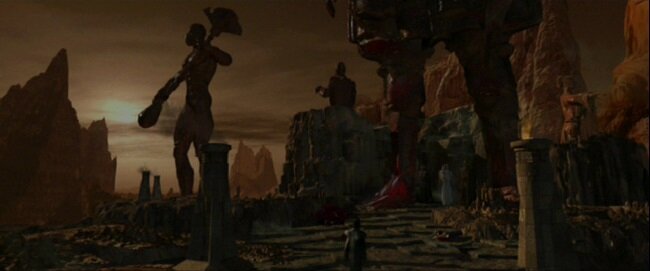
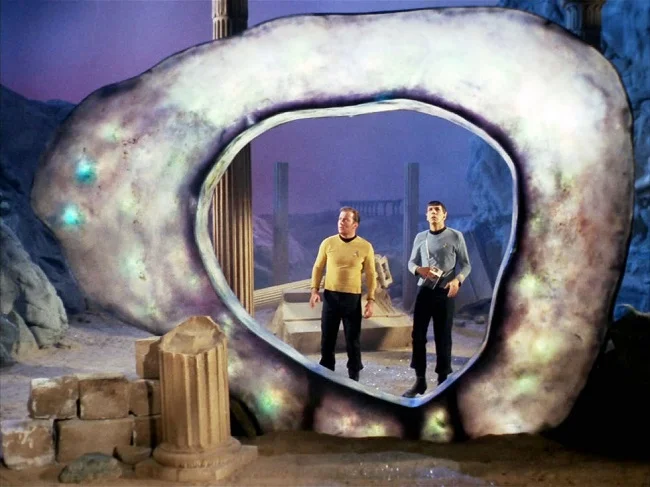
I discovered Star Trek Continues by accident a year ago, when I read a promotional piece regarding the Kickstarter campaign to fund a second season. This led me to the first three episodes that had been made last year, which are currently available online. After five minutes of watching the Pilgrim of Eternity, a direct sequel to the 1966 original episode Who Mourns for Adonais, I was hooked. So I subsequently binge viewed every other piece of video available on the You Tube channel, because I was staggered that a production of this quality had escaped my notice for so long.
Star Trek Continues is a highly-polished product, boasting a convincing recreation of the sets and costumes from the original show, as well as a talented cast. This includes James Doohan's son Chris Doohan as Scotty and Grant Imahara from Mythbusters as Sulu. Central to all the proceedings is Vic Mignogna, who plays James T. Kirk. Mignogna is an extremely talented voice actor and the driving force behind this project. He credibly channels his inner Bill Shatner, without over egging his performance or lapsing into an impression. The show also features actors such as Michael Forest (as Greek god Apollo) reprising their roles from the original series. There are also appearances from the likes of Jamie Bamber from Battlestar Galactica, ex Doctor Who Colin Baker and seventies cult actor Lou Ferrigno.
Star Trek Continues manages to not only recreate the aesthetic, style and ambience of the original Star Trek series, right the way down to the pacing, editing and soundtrack. It also successfully captures the sentiment of Gene Roddenberry's iconic show. The screenplays for each of these new episodes do seem to recreate that unique style and idiom of the original. In some respects, it's quite difficult to convey exactly what it is that they get right. Where so many other fan productions dangerous flirt with parody, Star Trek Continues seems to strike exactly the right tone. There’s humour, drama and a willingness to tackle topical social issues. Go see for yourself over on You Tube and all will become apparent.
Now in light of the recent court ruling against Axanar Productions Inc, whose fan films were deemed to be a copyright infringement, CBS and Paramount introduced very specific guidelines regarding the creation of future fan generated content. Many, including myself, thought this would curtail any future episodes of Star Trek Continues from being made. However, I was greatly surprised to see a new episode released recently. The blog on the Star Trek Continues website clarified the situation and states that the original schedule of thirteen episodes has been reduced to eleven. However, the format of the show remains the same despite the guidelines that CBS and Paramount have set for fan films. Star Trek Continues claims to have no “special” status with the copyright holders but they do seem to enjoy a cordial relationship with them. As a result, we can expect another three episodes of Star Trek Continues, which is an agreeable stopgap, until Star Trek: Discovery is released.




![Star Trek Discovery S01E01 The Vulcan Hello.mkv_snapshot_07.19_[2017.09.25_17.54.13].jpg](https://images.squarespace-cdn.com/content/v1/54e310f0e4b0f4a6ba3ac899/1506359625650-D976K1OBW47HSSSFN2S2/Star+Trek+Discovery+S01E01+The+Vulcan+Hello.mkv_snapshot_07.19_%5B2017.09.25_17.54.13%5D.jpg)

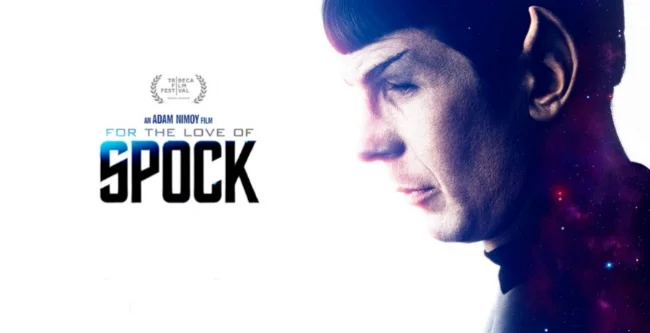
For the Love of Spock (2016)
Adam Nimoy doesn’t paint a rosy picture of family life in his documentary about his father. The novelty of fame and popular acclaim soon wore off with it’s never ending photoshoots and long working hours that kept his father from ever being home. Yet among the anecdotes in this greatly condensed biopic there evidence of a lot of love and professional respect. Far from being comprehensive For the Love of Spock focuses on the matters that interest fans the most. So the documentary explores Nimoy’s relationship with Gene Roddenberry, his subsequent casting in Star Trek, his post Trek stage career and his return to the fold with the big screen movies.
Adam Nimoy doesn’t paint a rosy picture of family life in his documentary about his father. The novelty of fame and popular acclaim soon wore off with it’s never ending photoshoots and long working hours that kept his father from ever being home. Yet among the anecdotes in this greatly condensed biopic there evidence of a lot of love and professional respect. Far from being comprehensive For the Love of Spock focuses on the matters that interest fans the most. So the documentary explores Nimoy’s relationship with Gene Roddenberry, his subsequent casting in Star Trek, his post Trek stage career and his return to the fold with the big screen movies.
Although the documentary references the autobiography I Am Not Spock, which explored Nimoy’s struggle with his own identify and his on screen persona, it is not especially thorough. The actor eventually wrote a second book titled, I Am Spock that revealed he’d reconciled both the man and the character, something the documentary is more interested in exploring. There is an allusion to conflict in later life between father and son, though the reasons for it are not elaborated on. Both struggled with substance abuse and Adam himself hints at the strain of being in his father’s formidable shadow. For the Love of Spock also acknowledges the existence of “The Ballad of Bilbo Baggins” but sees fit to delve no further.
Many stars of the original TV series are interviewed along the way, as well the astrophysicist Neil deGrasse Tyson and the cast of J. J. Abrams’s cinematic reboot. Leonard’s profound contributions to Star Trek TOS are dissected such as the phrase “Live long and prosper”, its accompanying hand gesture and the iconic Vulcan nerve pinch. Time is also spent on Nimoy’s exploration of Spock ongoing battle with his half-human emotions and how he wanted the character to grow. Leonard’s stage career, as well as his film directing is also acknowledged. Time is also spent reflecting Nimoy’s dualistic relationship with Paramount studios and his legal battles with them.
For the Love of Spock treads a fairly even path through the career of one of the most iconic actors of the twentieth century. It does not shy away from the human flaws of both Nimoy senior and junior. One can’t help feeling that there is more to say but because the production is a family affair then it is natural that a degree of privacy is maintained. The documentary wisely ends on the immense legacy of Leornard Nimoy and the enduring nature of his alter ego Spock. There is a positive message in the final summation and it is handled with dignity and quiet reflection. In many ways these are the traits that make Nimoy and Spock so appealing.
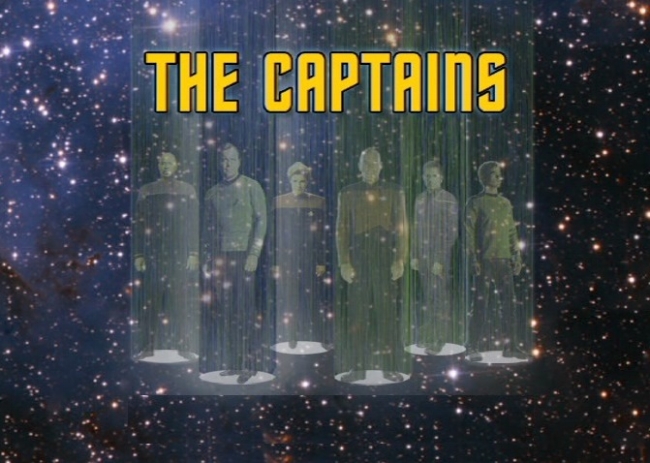
The Captains (2011)
The Captains is a curious beast. If you’re expecting a traditional documentary where Bill Shatner simply indulges in a standard Q & A with other actors that have portrayed captains within the Star Trek franchise, then you will be disappointed. The Captains is a horse of a different colour entirely. Throughout its ninety minute duration, this documentary veers from personal reflections on acting, muses upon the nature of fame and even touches upon contemplating one’s own mortality. It certainly wasn’t what I was expecting and was subsequently a far more rewarding experience.
The Captains is a curious beast. If you’re expecting a traditional documentary where Bill Shatner simply indulges in a standard Q & A with other actors that have portrayed captains within the Star Trek franchise, then you will be disappointed. The Captains is a horse of a different colour entirely. Throughout its ninety minute duration, this documentary veers from personal reflections on acting, muses upon the nature of fame and even touches upon contemplating one’s own mortality. It certainly wasn’t what I was expecting and was subsequently a far more rewarding experience.
Some viewers may see Mr Shatner as an egotistical one trick pony and this film as a colossal self-indulgence. I do not. I genuinely think that he is a passionate man who has wrestled with the pitfalls of international fame. He certainly is quite candid about times when his popular persona was a burden to him. Through the cross examining of his guests (and that is a very apt term at times) he highlights the parallels of what he has come to terms with. The documentary is somewhat erratic and eclectic yet through all its muddled musings does have points to make.
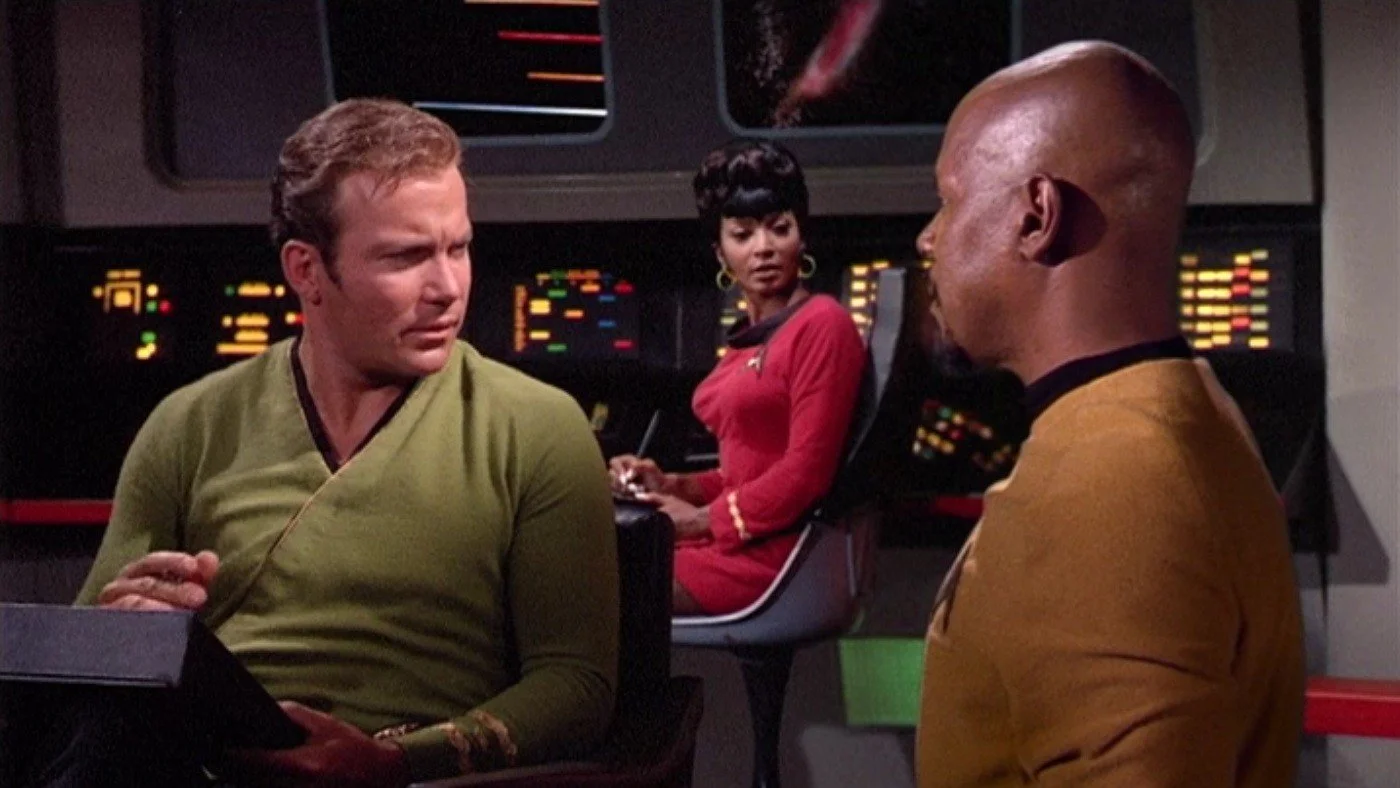
The interviewees are a curious bunch, to boot. If The Captains does anything, it is to highlight that an actors onscreen persona can often be radically different to their own. Kate Mulgrew discusses how the strong authoritative character she portrayed was the complete opposite of her in her family life. Avery Brooks could not be further from Benjamin Sisko if he tried. A talented pianist and an individual with a clear artistic temperament, his personal reflections are often extremely philosophical and on occasion impenetrable. Yet all of this contributes to the underlying narrative thrust of the documentary. Exactly what impact did being a “captain” have upon each actor.
The Captains is a little too long and languid for the casual viewer. A re-edit would certainly help make it more accessible such an audience. For hardcore Trekkies/Trekkers or those who have a fascination with actors, this documentary is informative and of merit. Bill Shatner is a potent personality. The scenes showing him interacting with fans at conventions and working the crowd are fascinating. I think that he genuinely feels for his audience. Certainly the influence of his fame has become clear to him. He appears to be conspicuously aware of being in his twilight years and wishes to use them as well as he can.
Star Trek Beyond (2016)
I am not a dogmatic fan. In fact as I get older, I become far more flexible and forgiving in my outlook. I certainly don’t buy into the concept that your “childhood can be ruined”. The only way something new can spoil the memories of something old that you hold dear, is if you allow it to. If you wish to explore this concept further, I’d suggest reading Marcus Aurelius. Back to the matter in hand. When I found out that Star Trek was to be rebooted via an alternative timeline plot device, I was content with this. I decided to ditch my personal baggage and try and be objective about the now named “Kelvin Timeline”. I make no bones about the fact I have liked the previous two Star Trek movies. Are they masterpieces? No. Are they entertaining? Yes. That is far more than some reboots have achieved.
I am not a dogmatic fan. In fact as I get older, I become far more flexible and forgiving in my outlook. I certainly don’t buy into the concept that your “childhood can be ruined”. The only way something new can spoil the memories of something old that you hold dear, is if you allow it to. If you wish to explore this concept further, I’d suggest reading Marcus Aurelius. Back to the matter in hand. When I found out that Star Trek was to be rebooted via an alternative timeline plot device, I was content with this. I decided to ditch my personal baggage and try and be objective about the now named “Kelvin Timeline”. I make no bones about the fact I have liked the previous two Star Trek movies. Are they masterpieces? No. Are they entertaining? Yes. That is far more than some reboots have achieved.
Since J.J. Abrams move from director to executive producer on the new movie franchise, I’ve been a little sceptical regarding the third instalment. Justin Lin is not a film maker I would have immediately thought of with regard to Star Trek. Thankfully, I am happy to say my personal misgivings have been proven wrong. The director’s frenetic signature set pieces are certainly present in Star Trek Beyond. But so is an obvious understanding of the source material. In many respects the film plays out like a big budget, extended episode of the original series. However far from being a criticism, this is a major compliment, showing that the entire production team fundamentally understands what makes the franchise great and what fans like the best.
The plot is relatively straightforward, involving the Enterprise being lured into an ambush within the confines of an uncharted nebula. Marooned on a nearby planet, most of the crew find themselves prisoner of Krall, an alleged alien warlord. However, Kirk, Chekov, Spock, McCoy and Scotty evade capture and plan to rescue their colleagues. It is here that the film comes into its own, with the focus on the crew interaction. The pairing of McCoy and Spock is very reminiscent of scenes from the original series and includes some classic banter between the two. I was very pleased to see Karl Urban given more onscreen time, as his portrayal of Doctor McCoy is spot on. Although at times reminiscent of DeForest Kelly, Urban manages to provide a contemporary spin on the character and make the role his own. The movie also comes to life when the classic trinity of Kirk, Spock and McCoy come together. It would also be remiss of me to not mention Simon Pegg who has an expanded role this time round. His pairing with another alien Jaylah (Sofia Boutella), who has also been marooned, provides a greater insight into the character. There is humour and pathos in his performance.
Star Trek Beyond also takes the time to ponder some wider issues pertaining to the franchise. I like the concept of a captain questioning the validity of the five year mission faced with the infinite nature of the universe. The screenplay written by Doug Jung and Simon Pegg also sensitively deals with death of Leonard Nimoy. The passing of Spock Prime causes his younger self to reflect of his various choices, such as joining Starfleet and his relationship with Uhura. It is a credible dilemma that could beset those who find themselves part of a diaspora. The movie’s only narrative weakness it with its villain Krall, played by Idris Elba. He lacks sufficient development and although we understand his motives, they are somewhat arbitrary. Perhaps some additional screen time could have remedied this minor deficiency.
It was announced last week by producer J.J. Abrams that the role of Chekov will not be recast after the tragic death of Anton Yelchin. However the franchise will see a further instalment with a plot featuring Kirk meeting his dead father, George. Despite some rather vocal naysayers, it would appear that these new movie set in the “Kelvin Timeline” are finding an audience and proving commercially viable. With Bryan Fuller recently revealing that his new TV shows will be called Star Trek Discovery, it looks like the entire Star Trek franchise is in good shape after fifty years. Star Trek Beyond certainly contributes to this current good standing and manages remain true to the spirit of Gene Roddenberry’s vision, despite an unlikely director.
New Star Trek Series Premieres January 2017
The announcement that CBS has commissioned a new series of Star Trek is both a blessing and a curse. It’s a blessing in the sense that I have genuine affection for this franchise and therefore I welcome the prospect of a new incarnation of the show returning to TV. However I also consider this situation an absolute curse because well now have to endure at least eighteen months of idle speculation and an ongoing dissection of the entire production of a show before it is even released.
The announcement that CBS has commissioned a new series of Star Trek is both a blessing and a curse. It’s a blessing in the sense that I have genuine affection for this franchise and therefore I welcome the prospect of a new incarnation of the show returning to TV. However I also consider this situation an absolute curse because well now have to endure at least eighteen months of idle speculation and an ongoing dissection of the entire production of a show before it is even released.
Fans have the capacity to be a never ending wellspring of love, loyalty and support. The goodwill of the faithful can be an abject boon to a production company looking to resurrect an ailing franchise and tentatively venture in to virgin territory. Sadly the opposite can also be true. An obstinate, intransigent fan base can be a millstone around the neck of an established brand that is in transition. Every single innovation, change or casting decision can be subject to a wave of negativity and even hatred.
And then we have the press who will happily spend the intervening time publishing anything and everything to do with this production. Be it true or false, all information will be avidly received and trumpeted in suitably hyperbolic terms. Unless one invests a considerable amount of time and effort avoiding the ensuing hype, we’ll all inevitably arrive at the season premiere with unrealistic expectations and a sense of anti-climax. This is the reality of the modern cycle of marketing and promotion. It is the price we pay for living in an age of “choice” and market forces.
I will do my upmost over the next eighteen months to keep my exposure to information, leaks and “exclusives” about the new Star Trek TV series to a minimum. I’ve tried to maintain a similar policy with regard to Star Wars: The Force Awakens but it is very hard to do so. The most effective means is to cease all online activities but that is hardly a viable proposition these days. In the meantime I shall leave the fan base to their feeding frenzy and the corporate bean counters to their hype train and hope that the new show proves to be of sufficient quality once it arrives.
Trek Nation (2010)
Trek Nation is a relatively straight forward documentary with a clear premise. It follows Eugene Roddenberry’s search to find out more about his father Gene and to understand the cultural phenomenon of Star Trek. Directed by Scott Colthorp the film endeavours to explore the enduring appeal of the franchise as Eugene discovers more about the father he didn't know and the show that passed him by. Through interviews with cast and crew members from all five Star Trek shows, as well as fans and celebrities who were influenced by the show while growing up, Trek Nation methodically follows a linear path. Yet this uncomplicated approach proves to very effective and surprising candid.
Trek Nation is a relatively straight forward documentary with a clear premise. It follows Eugene Roddenberry’s search to find out more about his father Gene and to understand the cultural phenomenon of Star Trek. Directed by Scott Colthorp the film endeavours to explore the enduring appeal of the franchise as Eugene discovers more about the father he didn't know and the show that passed him by. Through interviews with cast and crew members from all five Star Trek shows, as well as fans and celebrities who were influenced by the show while growing up, Trek Nation methodically follows a linear path. Yet this uncomplicated approach proves to very effective and surprising candid.
As with the great Bruce Lee, there is a wealth of material available about Star Trek in the public domain. Much is apocryphal, some is actually bogus and the remainder is regularly recycled. So it’s important to maintain a healthy sense of scepticism when watching any alleged revelatory documentary. Too often have I watched spurious material that seeks to canonise Gene Roddenberry. The ridiculing of fans is another common occurrence because it is so easy to do. Fortunately Trek Nation did not go down that route and strives to be fair and objective.
Eugene is honest about his own failings in his relationship with his father and very matter of fact about his own father’s weaknesses. Some tried and tested ground is re-explored with some established Star Trek facts once again being reiterated. This includes Nichelle Nichols Dr. King anecdote as well as the Will Wheaton’s Mary Sue assertions about his own role in Star Trek: TNG for example. However the interactions with grass-roots and celebrity fans alike are quite genuine. The interview with George Lucas was quite illuminating and really does lay to rest the perennial fanboy Star Wars versus Star Trek argument.
Although far from a clinical dissection of fandom and the nature of fame, Trek Nation isn't a bad stab at unravelling the mysteries of a father and son relationship that was skewed by fame and the media spotlight. It also offers a good starting place for non-Star Trek fans to determine what the exact appeal of the franchise is. Ultimately it reaches the same conclusion as all those other shows, documentaries and books. Star Trek has at its heart a fundamental philosophy. One that has a universal appeal because it shows potentially shows humans at their best and what we could achieve given the right circumstances.
Hellraiser (1987) was one of he most innovative and intelligent horror films of the eighties, with its cerebral and sophisticated exploration of pleasure, pain and the supernatural. Sadly what was a great concept for a single film was turned into yet another horror franchise. The resulting series of increasingly inferior sequels ultimately diminished the central idea. However, in recent years several horror “brands” have found a new lease of life via the medium of video games, so the announcement of Hellraiser: Revival last summer piqued my interest. The fact that author Clive Barker was directly involved certainly raised my expectations. However, even though video games have a history of depicting sex and violence, would the medium be able to fully embrace the true nature of Barker’s original novella and original film. Having played through the newly released demo for Hellraiser: Revival, I believe the answer is a yes.