
MMO Economies
One of the greatest assets of Star Trek Online is its single shard server technology. Not only does this foster a great sense of community but it provides several logistical benefits. The most practical of these is the in-game auction house known as the Exchange, which due to the games server structure offers a universal and comprehensive market place. If it can be sold within the game then it’s usually available on the Exchange. Like any market it is driven by supply and demand and fluctuates accordingly. The Delta Recruitment event in May saw a rise in both the availability and price of low level items. The recent announcement regarding the Admiralty system has seen the prices of Mirror Universe ships increase tenfold.
One of the greatest assets of Star Trek Online is its single shard server technology. Not only does this foster a great sense of community but it provides several logistical benefits. The most practical of these is the in-game auction house known as the Exchange, which due to the games server structure offers a universal and comprehensive market place. If it can be sold within the game then it’s usually available on the Exchange. Like any market it is driven by supply and demand and fluctuates accordingly. The Delta Recruitment event in May saw a rise in both the availability and price of low level items. The recent announcement regarding the Admiralty system has seen the prices of Mirror Universe ships increase tenfold.
Although Guild Wars 2 launched with regional and game specific servers, the Black Lion Trading Company has always been across all worlds, providing yet another well stocked virtual market place. One of the most convenient touches that ArenaNet added to the game is the ability to access the auction house anywhere in Tyria. If a player is not near a Black Lion Trader NPC then the auction house can be simply be reached via the GUI. There is a minor caveat that transactions carried out this way require you to collect your gold direct from the nearest Black Lion Trader. However the game regularly drops tokens that can summon a Black Lion Trader directly to your location, therefore bypassing this minor inconvenience.
This progressive approach to auction houses and in-game economy is sorely missed when playing older titles such as LOTRO. The auction house system is server specific and very much reflects the current state of the game population. It is not unusual to find the auction house bereft of any significant gear at lower levels. Those that regularly play through old content either recycle gear or craft what they need as they proceed through the game. Therefore casual players will often find themselves reliant on quest rewards for their gear requirements. There are alternative options such as bartering skirmish tokens but farming such currency may not be deemed as casual friendly. Hopefully the ongoing server consolidations will result in more robust in-game economies.
Despite not being a World of Warcraft player I do envy the fact that the games auction house can be accessed remotely via mobile devices. Engaging players when they are out of game is a wise policy. Accessing the economy via an app keeps gamers involved and has obvious practical benefit. I have often played various MMO’s economies as a game in itself. When LOTRO use to have a thriving raiding culture I would often stockpile potions and other useful items, only to sell them at a higher price late on a Friday and Saturday evening, when they were in great demand. Lock boxes in STO have also proven to be a good long term investment. Remote access to both these markets would be beneficial.
I’ve often found gaming economies compelling because of the interesting effect upon the player base. It is fascinating to see different people’s reactions to the auction house system. As ever with gaming many players bring their own moral and ethical baggage along with them when they enter virtual worlds. I have been upbraided in the past by other LOTRO players for the item speculation I described earlier. I have also seen arguments start in MMOs over undercutting item prices on auction house. There are even some players who balk at the notion of selling crafted gear and loot drops, wishing to impose their own in-game work ethic upon others.
Auction houses can also be a useful barometer as to the health of a game. An active player population usually means a buoyant economy with essential items being readily available. Ageing MMOs tend to suffer from a lack of resources being traded. In such cases the only real solutions are to either consolidate servers to increase populations or to adjust the auction mechanics to allow cross server access. The latter is often too complex and expensive to implement. Bearing all this in mind, if I do decide to try any new MMOs in future, they’ll need to have a robust and accessible economy to secure my custom.
LOTRO Update 17 Beta
Since the launch of Update 16 in May this year, I and many other LOTRO players have been standing on the cliffs of South Ithilien, looking across the River Anduin to Minas Tirith. It’s been a long and hard journey over the last eight years but finally players will be able to visit that iconic city in Update 17. At present a beta build is available on the Bullroarer test server, so I spent several hours over the weekend exploring the Pelennor Fields and the surrounding area known as Old Anorien. The city itself has numerous placeholder NPCs and it is clear that some textures and additional details are missing from the environment. However the essential layout and design of Minas Tirith is obviously set and as ever Turbine have done an interesting job interpreting Tolkien’s source text.
Since the launch of Update 16 in May this year, I and many other LOTRO players have been standing on the cliffs of South Ithilien, looking across the River Anduin to Minas Tirith. It’s been a long and hard journey over the last eight years but finally players will be able to visit that iconic city in Update 17. At present a beta build is available on the Bullroarer test server, so I spent several hours over the weekend exploring the Pelennor Fields and the surrounding area known as Old Anorien. The city itself has numerous placeholder NPCs and it is clear that some textures and additional details are missing from the environment. However the essential layout and design of Minas Tirith is obviously set and as ever Turbine have done an interesting job interpreting Tolkien’s source text.
The Tower of the Guard is accessed by a breach in the Rammas Echor at Harland. As I initially rode across the Pelennor Fields, I was at first impressed with the design and imposing nature of the White City. However upon reflection I think my reaction was mainly due to the iconic nature of Minas Tirith and its size. Once I entered the main gate it became very clear that Turbine have used standard Gondorian assets. I appreciate that there is an architectural style to be maintained but the streets are identical to those of Pelargir and Dol Amroth and devoid of anything distinctive. The same statues, Swan Wing embellishment and Númenórean faces adorn all structures. After a short time Minas Tirith becomes terribly familiar.
The journey through winding streets and the seven levels to the citadel becomes tiresome once the novelty of its initial completion wears off. I sincerely hope Turbine includes a quick travel system of some kind, especially in light of their penchant for fetch quests. The court yard of the fountain and white tree is adequate but the terrace set on top of the bastion of stone is somewhat bare and lacklustre. I took some comfort in riding off the edge but sadly there was no deed for such a foolhardy act as there has been in the past. Perhaps further embellishments will be added to Minas Tirith during the course of the beta testing. As is stands it’s more monumental than functional.
North of The Pelennor Fields is the region of Talath Anor. This includes the settlement of Crithost and Cair Andos. Again these areas are far from unique and are simply adequate. There are both roaming Orcs and mounted foes scattered throughout the new area. Stables are few and far between as are resurrection circles. At the Northern point on the map is the ubiquitous blocked bridge which leads to The Beacon Marches. It if from this direction the Rohirrim rode to Gondor’s aid.
Turbine have established a pattern since they moved away from paid expansions to free updates and Old Anorien seems to very much stick to it. I do not doubt there will be yet more rep factions and more daily repeatables. Minas Tirith will also feature more Epic Battles which doesn’t fill me with delight. Yet this sort of content seems to be keeping the faithful engaged and frankly I don’t think Turbine have the resources or the will do anything radically different at this stage in the games lifecycle. In a nutshell LOTRO’s future is simply more of the same. Content will meet a standard but nothing more. Therefore players will have to content themselves with variations on a theme. Those seeking more will have to rely upon emergent gameplay.
LOTRO World Transfers
This evening I successfully transferred my two primary LOTRO characters from Gilrain server to Laurelin. The process was intuitive and took about an hour in total. Considering this was mid-evening and therefore UK gaming primetime, I thought this to be an acceptable timeframe. I had no issues with any of the contents of my personal bags or vault and was refunded all the rent that I had paid in advance for my house. I took the opportunity brought about by the move to downsize to a smaller in-game property. I was please to find that the migration of my kinship was proceeding well with many other familiar faces arriving on Laurelin during the course of the evening. So from my point of view this migration was far from a difficult experience.
This evening I successfully transferred my two primary LOTRO characters from Gilrain server to Laurelin. The process was intuitive and took about an hour in total. Considering this was mid-evening and therefore UK gaming primetime, I thought this to be an acceptable timeframe. I had no issues with any of the contents of my personal bags or vault and was refunded all the rent that I had paid in advance for my house. I took the opportunity brought about by the move to downsize to a smaller in-game property. I was please to find that the migration of my kinship was proceeding well with many other familiar faces arriving on Laurelin during the course of the evening. So from my point of view this migration was far from a difficult experience.
The world transfers are a necessity and I have had no issue reconciling myself to this. I not an unduly sentimental person, so leaving Gilrain was simply a matter of logistics for me. Laurelin despite being an English RP server seems like a suitable home for my kinship. We mainly tend to have lore friendly names and are mindful of the needs of those who role play. I think we should have no issue settling in to our new virtual home. The benefits of a server with a higher population are already abundant. There is a healthy economy on Laurelin and prices seem to be far more reasonable than usual. It would appear the community is resistant to the concept of hyperinflation. The various chat channels throughout the game seem active and the atmosphere is far from unfriendly.
However despite my broadly positive experience, I have found threads on both the official and unofficial LOTRO forums that refer to alleged complaints about the influx of new players to Laurelin. There are also criticisms from those who have had to rename their characters due to RP TOS violations. Having spent some time in world chat and talking with both new and established denizens of Laurelin, it would seem that there are just a handful of individuals that are unhappy with the status quo. Some may be justified in their protestations, others not so. Either way it is not accurate reflection of the overall community on the server who seem to be adapting to the influx of new players.
As I get older I do find this predilection for drama from certain quarters rather tedious and it actively contributes to me further distancing from the gaming community. As for LOTRO its future seems to be somewhat unsurprising. The recent Player Council leak confirms that we shall continue to get more of the same and that there are no real surprises or radical changes to come in the immediate future. Therefore I am happy to play new content as and when it is released and to take pleasure in what the game can currently provide, rather than focus on what could be. LOTRO is in its autumn years and a more existential approach to the game seems prudent.
The Enduring Appeal of Mario Kart
One of the best games I have ever played is Super Mario Kart. It simply embodies all those elements that make Nintendo titles so great. It is a polished product with a cheerful aesthetic that is eminently playable. It has exactly the right balance between skill and random chance resulting in a fun and compelling game. No two races are ever the same. It is one of the few titles that I have literally played all night with friends. I still smart over the “incident” where someone stole my feather just as I was about to jump across the shortcut on the Ghost Valley 1 track (this will make perfect sense to those who have played the game).
One of the best games I have ever played is Super Mario Kart. It simply embodies all those elements that make Nintendo titles so great. It is a polished product with a cheerful aesthetic that is eminently playable. It has exactly the right balance between skill and random chance resulting in a fun and compelling game. No two races are ever the same. It is one of the few titles that I have literally played all night with friends. I still smart over the “incident” where someone stole my feather just as I was about to jump across the shortcut on the Ghost Valley 1 track (this will make perfect sense to those who have played the game).
Due to the game’s inherent appeal, there has been a further seven incarnations of Mario Kart. All have proven to be bestsellers. Despite Nintendo’s ongoing financial difficulties, last year’s release of Mario Kart 8 was a welcome shot in the arm for the ailing games company. Sales have reached 2 million copies in the US alone since its May release. The title has also been beneficial for sales of the ailing Wii U, a console that until recently had been effectively written off by many in the gaming industry. Furthermore Mario Kart 8 attracted “strongest review scores in franchise history,” according to the company.
So what exactly are the reasons behind the enduring appeal of Mario Kart? Obviously the accessible and well-conceived game mechanics are a big factor. Each new version of the game maintains the balance between refining old ideas while introducing fresh new ones. The pleasant graphics with their stylised cartoon aesthetic along with the playful soundtrack broadens its appeal to all age groups. The game also lacks the male-centric philosophy that is associated with so many driving and racing franchises. Perhaps the most important quality present in all versions of Mario Kart is the “fun factor”. It’s something Nintendo has always inherently. It’s the reason why I still play Super Mario Kart today, via an emulator on my PC and tablet.
Gold Sellers
Having returned to several MMOs recently, I have been surprised to see that gold selling is still quite common place. Purveyors of these and other dubious services still regularly spam the in-game chat channels of games such as Star Trek Online and Guild Wars 2. I would hazard a guess that games based on single server environments amplify the hawking of such wares. I have not seen such messages on the Gilrain server where I play LOTRO for several years. However it is clear that gold selling is still a “thing” within this genre, irrespective of my surprise.
Having returned to several MMOs recently, I have been surprised to see that gold selling is still quite common place. Purveyors of these and other dubious services still regularly spam the in-game chat channels of games such as Star Trek Online and Guild Wars 2. I would hazard a guess that games based on single server environments amplify the hawking of such wares. I have not seen such messages on the Gilrain server where I play LOTRO for several years. However it is clear that gold selling is still a “thing” within this genre, irrespective of my surprise.
One of the commonest issues facing a new player of MMO, is a shortfall of in-game gold. There are game mechanics in place in most games of this genre that allow you to legitimately amass a sizeable personal fortune but they require time. Therein lies the problem. Long term players at endgame frequently have a substantial supply of gold that ceases to have any major benefit for them. Gold is often most required midway through the levelling process. Having recently returned to both STO and Guild Wars 2, I’ve found that I am spending the respective in-game currency on upgraded gear as fast as I earn it.
Now this is exactly the sort of scenario that could potentially encourage some players to use the services of a gold seller. Let us not waste time on any moral debates about such vendors; that is another blog post all together. I and many other people have used gold sellers in the past as a convenient means to an end. However with the advent of free to play games and the common practise of using multiple in-game currencies, surely the financial benefits of using gold sellers has fallen by the wayside? Simply put, are such services value for money?
Let us use STO as an example. Perfect World sells Zen for use in the C-Store, where players can by ships, commodities, buffs and boost and all the usual trinkets and baubles you find in a MMO. Recently I bought 5300 Zen for £32 (€45, $49). I then spent 5250 Zen buying 46 lock box keys (4 x pack of 10 and 6 individual keys). At the time keys were selling on the in-game exchange for 2.6 million Energy Credits. Within one hour of posting the keys they had all sold for a total of119,600,00 Energy Credits. This may sound like a lot but high end items can sell for 10 to 15 million Energy Credits or more. However if spent prudently this is a reasonable war chest for a new player.
So to summarise, I effectively spent £32 for nearly 120 million energy credits, using legitimate game processes. However a Google search not only yields the names of the most popular gold sellers online but also lists a gold selling comparison site. MMOBux provides quite a comprehensive service, with reviews of gold sellers and price tracking. It’s both mind boggling and yet perfectly logical that site such as this should exist. Using the comparison site I determined at the time that MMOGA could source 120 million Energy Credits for £27 where Koala Credits could supply the required amount for £93.
It would appear that it is more cost effective and safer to buy in-game currency in STO via Perfect World, rather than take your chances with these third party vendors. It’s a similar story with Guild Wars 2 as they allows players to purchase gems and convert them directly in-game into gold, via a server wide exchange mechanism. At present you can safely buy in-game, 2800 gems for £30 and convert them to 532 gold. Again the third party gold sellers cannot really undercut the official tariff and therefore can only offer an equivalent price.
So based on these two examples, why is gold selling still a “thing” in the MMO genre? Why would anyone be willing to risk losing their currency order, just for a negligible saving (and assuming there is one)? It’s an interesting question because obviously people still use these dubious services as my Google search showed. I think like most questions the answer is complex rather than binary. I get the impression that a lot of players haven’t stopped and done the maths, so don’t realise they can get in-game gold legitimately and without risk. I also think that gold selling advertising is a bit like supermarket special offers. When you actually crunch the numbers there isn't actually a deal to be had but you are distinctly given the impression that there is one. Also third party gold sellers probably don’t care too much about whether the customer is actually the owner of the credit card being used.
As there is no significant advantage to buying gold from third party outlets, you would think that players would prefer to use the legitimate services associated with many games. MMOs have operating costs so spending money directly via the developers helps support the game and its future growth. Gold sellers drain money from this revenue stream which is ultimately damaging, not only for the game but for the player as well. All things considered there shouldn't really be any reason why gold selling is still a “thing” in 2015. Perhaps if more players took time out to consider the matter, such services would become obsolete.
Hidden & Dangerous 2
Hidden & Dangerous 2 was released in 2003, one of many WWII based tactical shooters that were a popular genre at the time. It was an indirect sequel to Hidden & Dangerous from 1999, which had met with moderate success. The game was developed by the Czech company Illusion Softworks and published by Gathering of Developers and Take-Two Interactive. Hidden & Dangerous 2 featured single player campaigns set around Europe and North Africa, as well as the option for online multiplay hosted via player created servers.
Hidden & Dangerous 2 was released in 2003, one of many WWII based tactical shooters that were a popular genre at the time. It was an indirect sequel to Hidden & Dangerous from 1999, which had met with moderate success. The game was developed by the Czech company Illusion Softworks and published by Gathering of Developers and Take-Two Interactive. Hidden & Dangerous 2 featured single player campaigns set around Europe and North Africa, as well as the option for online multiplay hosted via player created servers.
The game strived to be more than just a standard shooter and endeavoured to promote the tactical aspect of gameplay. The game fared well in the UK and built quite a cult following. Unfortunately it did not fare so well in the North American market. Despite receiving above-average reviews, partly because of the popularity of similar games, it failed to find an audience. It can be argued that the lack of any major US protagonists and the focus on European theatres of war were contributory factors. The game was plagued by bugs that persisted throughout its lifespan despite successive and often large patches.
Gameplay focuses upon a four man British Special Air Service team conducting a wide variety of operations behind enemy lines. This included such locations as France, Libya and Norway. The final mission was set in Czechoslovakia during the last days of the war, ending in a skirmish with the Soviet Red Army over German secret documents. An additional expansion pack with extra mission, “Sabre Squadron” was released a year later. This added co-operative online game play and new weapons to the game. Hidden & Dangerous 2 was a minor milestone in its genre at the time, due to realistic tactical approach and immersive environments. Weapon and vehicle physics were plausible and fairly accurate; more so than most games at the time of a similar genre.
This was one of the first video games that I bought that I became heavily involved with. I joined a clan, the “Devil’s Bridge Veterans” and hosted two dedicated multiplayer servers with custom weapon inventories. What I liked about the Hidden & Dangerous 2 was its British perspective and the involvement of the SAS. It also focused on several theatres of war that were seldom explored, such as Burma and Czechoslovakia. I enjoyed the diversity of missions and way you could switch between 1st and 3rd person views. The game featured a magnificent orchestral score by Michal Szlavik and Martin Benes at a time when a lot of competitors where still relying on electronic soundtracks.
I re-installed Hidden & Dangerous 2 on my PC a few years ago. It performed well under Windows 7 64 bit and the only drawback was the lack of support for 16 x 9 ratio resulting in a stretched image. Despite dated graphics the tactical elements were still engaging and the game still offers more than just an average point and shoots experience. There were still dedicated servers hosting co-op and death match games, last time I checked in 2011. Furthermore there are still websites resources for this game if you’re prepared to look.
Hidden & Dangerous 2 was a classic example of game that although it never became truly big, did gain a specific cult following. Its developers Illusion Softworks are now part of 2K Games. It is interesting to note that one of their other franchises, Mafia, is still in existence with a third instalment scheduled for a release in early 2016. Perhaps there is still a possibility Hidden & Dangerous 3 may be made and that the WWII tactical shooter genre will make a return.
Dirty Harry - The Video Game
"Dirty Harry" Callahan first appeared in a video game in 1990 on the NES. Developed by Grey Matter Inc and published by Mindscape the game titled “Dirty Harry” was a simple side scroller, featuring arbitrary platforms, shooting and fist fight mechanics. Apart from its basic vigilante cop narrative and some digitised soundbites from the films, there was very little to link it to the source material. Overall this was hardly a fitting debut for the character that has defined Clint Eastwood’s career and spawned five motion pictures. Beyond a brief appearance on a themed pin ball machine in 1995, Harry Callahan has remained conspicuously absent from the video games genre.
"Dirty Harry" Callahan first appeared in a video game in 1990 on the NES. Developed by Grey Matter Inc and published by Mindscape the game titled “Dirty Harry” was a simple side scroller, featuring arbitrary platforms, shooting and fist fight mechanics. Apart from its basic vigilante cop narrative and some digitised soundbites from the films, there was very little to link it to the source material. Overall this was hardly a fitting debut for the character that has defined Clint Eastwood’s career and spawned five motion pictures. Beyond a brief appearance on a themed pin ball machine in 1995, Harry Callahan has remained conspicuously absent from the video games genre.
Due to the success of the Grand Theft Auto franchise a decade and a half later, several game studios looked to classic crime cinema for inspiration developing a competing product. As a result movies such as The Godfather, The Warriors and Scarface were adapted as video games with mixed success. All boasted voice acting by original cast members and where based upon the visual aesthetic of the source material. It was about this time that Warner Interactive announced that it too would be producing a comparable game, based upon the iconic Dirty Harry franchise.
"Dirty Harry helped define a genre and introduced the world to a character who has since become a cultural icon, so bringing Clint Eastwood's authentic Dirty Harry character to this next generation of consoles provides exciting promise for game playing audiences everywhere". Jason Hall, Senior Vice President of Warner Bros. Interactive Entertainment.
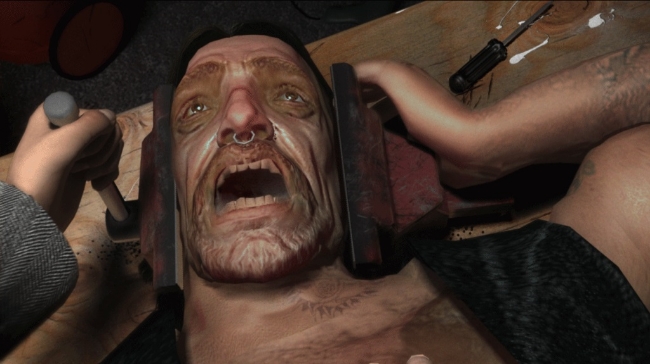
Simply titled Dirty Harry the game was to be developed by The Collective Inc in association with Clint Eastwood’s Malpaso production company. The premise of the game was to continue the story of loose-cannon police detective “Dirty Harry” Callahan as he sought to clean up the streets of San Francisco. The story was set immediately after the “Scorpio” case, as featured in the original movie and prior to events featured in the sequel Magnum Force. Clint Eastwood was to reprise his role as Harry Callahan, lending his voice and likeness as well as providing consultancy services and creative input. The game was scheduled to be released in 2007 on multiple platforms.
Sadly despite the project being nearly 70% completed, the game never saw the light of day. Allegedly senior management at Warner Bros. Interactive Entertainment were not happy with the work that had been completed and were worried about potential harm to the “brand”. It has been claimed, although never officially confirmed, that the project was then transferred to two further studios for redevelopment; namely TimeGate studios and Monolith Productions. However the cost of replacing the game engine and adding additional content such a co-op multiplay was prohibitive. The game’s launch was further delayed and eventually vanished from the publishers marketing and press releases. It has been implied by those involved with the project that the main reason for Dirty Harry’s demise was that it simply wasn’t that good.
Apart from some screen captures taken from preliminary builds and a promotional trailer, not much remains in the public domain of Dirty Harry. It should be noted that the trailer that is still available on You Tube does not actually show any footage from the game itself. It was animated by a production house, using the concept artwork to simulate the completed product. It’s a shame in many respects because the game seemed to have an authentic seventies feel to it. Certainly Dirty Harry boasted an impressive voice cast with the likes of Lawrence Fishburne, Lucy Liu and Gene Hackman, joining Clint Eastwood. Sadly Dirty Harry is now just another title on an ever growing list of games that “could have been”. Perhaps that is for the best because a franchise such as this deserves a truly great game and not a one that “knows its limitations” to quote Harry Callahan.
Air Warrior
It was about mid 1996 when I first got internet access. At the time the UK market had a multitude of small ISPs but it took the likes of AOL and CompuServe to make the worldwide web truly accessible to the general public. Like many others I had an AOL account mainly because it was easy to configure and use. There was no complexity to setting up the service and so it wasn’t long before I was monopolising the telephone line and running up epic phone bills. The early days of the internet were an exciting time. This was the age of modems, the Netscape vs Internet Explorer browser war and IRC flame wars. It had a hint of living on the frontier about it.
It was about mid 1996 when I first got internet access. At the time the UK market had a multitude of small ISPs but it took the likes of AOL and CompuServe to make the worldwide web truly accessible to the general public. Like many others I had an AOL account mainly because it was easy to configure and use. There was no complexity to setting up the service and so it wasn't long before I was monopolising the telephone line and running up epic phone bills. The early days of the internet were an exciting time. This was the age of modems, the Netscape vs Internet Explorer browser war and IRC flame wars. It had a hint of living on the frontier about it.
Now I was a dyed-in-the-wool PC gamer by this time so when I was presented with the opportunity to play online along with hundreds of other people I jumped at the chance. AOL was in business partnership with games developer Kesmai at the time and had recently included their multiplayer on-line air-combat simulator, Air Warrior as part of their internet services. I can remember now how it took numerous hours to download the game client and that I then copied it to dozens of floppy disks to save my friends the pain of a similar ordeal. I was so enthusiastic that I even bought an analogue joystick and spent hours calibrating it.
Air Warrior offered an extensive collection of World War II planes that you could fly in multiplayer dogfights with up to 100 pilots at the same time. The combat was set in both the European and Pacific theatres of war. There were also single player missions which were invaluable for honing your skill as a pilot. Each aircraft had individual flight models, cockpits and unique features. The game used flat polygon graphics and supported a maximum resolution of 1024 x 768. Air Warrior was surprisingly complex and not a simplistic as some arcade air combat shooters. It was also highly addictive, especially when playing with friends.
Gameplay centred on trying to destroy the enemy factions’ airfields, thus requiring the use of both fighters and bombers. For players who were not so adept with one-on-one aerial combat, you could choose to man one of the various gun turrets on the bombers. The tail gunner on the B-17 being the most coveted position. Dropping your stick of bombs via the bombsight was also immense fun and quite a skill in itself. It was always immensely satisfying to change camera positions after dropping your payload and watching the explosions several seconds later.
Like many online games if you were prepared to take the time and experiment, you could achieve some interesting results. For example Air Warrior also offered tanks and trucks as well as planes. The Flakpanzer was a mobile AA vehicle that was designed to be deployed around your team’s airfield to provide ground-to-air support. However I discovered that it was possible to drive across the entire game map to the enemies’ airfields and that if you took a scenic route; you were seldom spotted from the air. I use to spawn camp the main runway and destroy enemy aircraft as they materialised. This could continue for ten or even fifteen minutes before they realised exactly what was happening and take countermeasures.
Air Warrior was my first multiplayer online game. Although it wasn’t a MMO as such, it shared many similarities. I enjoyed it immensely and for a twelve month period played it frequently. It’s odd that when I inevitably drifted away, I didn't return to multiplayer gaming until 2003 when I started playing Hidden and Dangerous 2. As for MMOs, I bypassed most of the classic titles apart from a brief trial of Star Wars Galaxies and didn't really explore the genre until 2008 when I started playing LOTRO. In many respects it was my fond memories of Air Warrior that inspired me to buy the double pack of Shadow of Angmar and Mines of Moria.
Subtitles
My hearing is fairly robust for a man of my age. I also pride myself on my ability to concentrate. Yet despite the benefits of both those attributes, I still often find myself struggling to keep up with the dialogue and plot of many a game, TV show or movie. It’s something that is not unique to me and seems to be part of a growing phenomenon. Take last year’s science fiction blockbuster Interstellar. Amongst the critical praise there was a lot of grumbling over the mixing of ambient sound effects and the movies score drowning out dialogue. Similar complaints have been levelled at a lot of contemporary TV shows.
My hearing is fairly robust for a man of my age. I also pride myself on my ability to concentrate. Yet despite the benefits of both those attributes, I still often find myself struggling to keep up with the dialogue and plot of many a game, TV show or movie. It’s something that is not unique to me and seems to be part of a growing phenomenon. Take last year’s science fiction blockbuster Interstellar. Amongst the critical praise there was a lot of grumbling over the mixing of ambient sound effects and the movies score drowning out dialogue. Similar complaints have been levelled at a lot of contemporary TV shows.
This problem frequently manifests itself in video games, although it is more often than not due to overlapping dialogue. All too often I’ve been playing a game in which an essential piece of narrative from a key NPC is competing against the ambient dialogue from background characters. As someone who enjoys a good story and likes to absorb as much details as possible, this problem can be quite frustrating. Hence I’ve recently started enabling all subtitle options on games, TV shows and movies by default. It was a little disconcerting initially but it’s something I have adapted to quite quickly.
Subtitles apart from reflecting the main dialogue, often have the benefit of providing a lot more detail. Audio descriptions of sound effects, as well as secondary dialogue and other background noise can prove to be most illuminating. When watching the movie Right at Your Door, the subtitles displayed all the details of the radio and TV broadcasts that were playing in the background. This greatly enhanced the plot and provided some invaluable narrative detail. Subtitles are also a great way of obtaining an accurate quote and resolving the esoteric spelling of certain words and character names.
I find subtitles in gaming to be increasingly useful. Unlike a movie you cannot easily rewind a cutscene or the bestowal dialogue for a quest. If like me you find the story one of the main selling points of a game then you don’t really like to miss any of the plot. Also games don’t always have the best voice acting and subtitles allow you a means of penetrating poor accents and poorly expressed dialogue. Therefore having an additional tier of information is useful. It can also provide some amusement when the text is misspelt or has not been updated and is merely place-holder content.
However subtitles are not for everyone. Some people find onscreen text very distracting and a major impediment to their enjoyment of the game or movie. Plot and dialogue are also not important to all gamers, many of whom simply want to get to the action, rather than waste time upon a story that is superfluous to them. Therefore it very much is a question of taste and mercifully subtitles are more often than not optional. For me I consider them to be a great asset and an enhancement to my entertainment. They also play a great part in making many leisure activities far more accessible and inclusional. As a result I find their absence from certain mediums an inconvenience.
Gaming and Lore
Lore: A body of traditions and knowledge on a subject or held by a particular group, typically passed from person to person by word of mouth. Synonyms: mythology, myths, legends, stories, traditions, folklore, culture, beliefs, sayings, superstitions, fantasy, oral tradition.
Certain genres of games love to steep themselves in faux lore. Then there are titles based upon existing intellectual properties that have a wealth of material to draw upon. Either way it would seem that such content is very popular among gamers. Perhaps it has something to do with how an in-depth sense of history can bring a virtual world to life. Or maybe it’s more about being human and our compulsion to share stories. Regardless of the armchair psychology, the bottom line is lore can be a major selling point for a game.
Lore: A body of traditions and knowledge on a subject or held by a particular group, typically passed from person to person by word of mouth. Synonyms: mythology, myths, legends, stories, traditions, folklore, culture, beliefs, sayings, superstitions, fantasy, oral tradition.
Certain genres of games love to steep themselves in faux lore. Then there are titles based upon existing intellectual properties that have a wealth of material to draw upon. Either way it would seem that such content is very popular among gamers. Perhaps it has something to do with how an in-depth sense of history can bring a virtual world to life. Or maybe it’s more about being human and our compulsion to share stories. Regardless of the armchair psychology, the bottom line is lore can be a major selling point for a game.
Personally I like strong narratives in the games, whether it’s based on an established franchises such as Star Wars, Star Trek or Middle-earth, or wholly original like The Elder Scrolls. When questing in a MMO or single player RPG, I like to know why I have to vanquish the Nibble-pibblies, rather than just blithely go and exterminate them. Ultimately it comes down to the old literary device of “investment”. Providing a back story makes the player more likely to empathise with the characters and the narrative. This contributes to the sense of immersion, which for many is a key aspect of gaming.
The Lord of the Rings Online is a text book example of an MMO whose lore is integral to its popularity. In some respects it is quite unique beast in so far that it’s IP has the capacity to attract non-gamers. The game developer’s Turbine have always managed to work within the confines of the established lore and create stories that although are not canonical, are inventive, measured and engaging. LOTRO is one of the games that I always ensure that I read all bestowal and dialogue text. I am interested in how the in-game characters link to existing plot elements from Tolkien’s source text.
Sadly not every game is successful at creating a vibrant and involved lore. The fantasy genre can often be extremely generic, self-plagiarising and even arbitrary. Where the lore in Skyrim prompted me to conduct further research outside of the game, due to its depth and sophistication, the storyline of Arcania Gothic 4 was lost on me. The latter game seemed to have a very inconsistent narrative that had precious little new to offer. Thus by the time I completed the RPG after thirty hours plus of gameplay, I was left confused as to the meaning of the ending and ill disposed towards installing the expansion.
Lore can also find itself at odds with pre-established material when it pertains to popular IPs. Both Star Wars: The Old Republic and Star Trek Online have complex and well written storylines that were designed to work in harmony with existing content. Sadly both are officially non-canonical, marginalising the hard work of the writers. This is especially galling for Star Trek fans as there is not any official new material being created at present, outside of the recent movies which are set in an alternate timeline.
Earlier this year I attempted to complete Dragon Age: Inquisition. Having not played through the previous two games in the series, I was not au fait with the lore and as a result struggled to keep abreast of the wider story. Although I enjoyed the fully voice acted character interactions I couldn’t apply myself to the various codex entries that regularly appeared. Despite having an impressive legendarium I was far more concerned with trying to master the various game mechanics. As a result the lore actively became a distraction rather than an embellishment.
As ever with gaming there are always opposite points of view and the matter of lore is no different. I know many a player who will happily skip cutscenes, ignore bestowal dialogue and are not in the least bit interested in the prevailing back story of the virtual world they inhabit. If that is their chosen play style then so be it. There is no right or wrong way to play a game, despite what some may tell you. There are players who are more interested in the task in hand, rather than the motivation for it. As long as they are having fun, then that is all that matters. However for me, lore still counts as an integral part of my game enjoyment and I shall continue to seek it out in the titles I play.
The Cost to Fun Ratio
In January I bought a Codemasters gaming bundle for the sum of £2.79 which contained ten titles. One of them was the action RPG Rise of the Argonauts, initially released in 2008. The game’s setting in the world of Greek mythology was its main appeal. A little research showed that the game had a distinctly average score and offered nothing new. I completed the entire story over the period of a week in about sixteen hours or so. It was broadly entertaining, although nothing special, apart from not being in the usual fantasy setting. The word “adequate” springs to mind.
In January I bought a Codemasters gaming bundle for the sum of £2.79 which contained ten titles. One of them was the action RPG Rise of the Argonauts, initially released in 2008. The game’s setting in the world of Greek mythology was its main appeal. A little research showed that the game had a distinctly average score and offered nothing new. I completed the entire story over the period of a week in about sixteen hours or so. It was broadly entertaining, although nothing special, apart from not being in the usual fantasy setting. The word “adequate” springs to mind. Here’s a reminder of the dictionary definition.
Adequate (adjective). Satisfactory or acceptable in quality or quantity.
Rise of the Argonauts has an enjoyable story, which apart from drawing upon famous characters, has no real basis in established mythology. Yet the original plot serves its purpose and includes some enjoyable characters and good voice acting. I liked Pan especially, mainly due to his banter and quips. Combat is based around hit chains and unlocking bonus skills. There are the usual dialogue trees with their arbitrary choices and optional side quests. However if this game were compared with a more recent title such as The Witcher 3: Wild Hunt, it is simply not quite of the same calibre. However I still enjoyed Rise of the Argonauts and felt that my time had been well spent.
This raises the question how much does a games price have upon the level of enjoyment you gain from it? Is there such a thing as the cost to fun ratio? If I had spent £40 or more on Rise of the Argonauts would I have been so forgiving of its generic game mechanics or distinctly average storyline? Would I have felt that its sixteen hours plus running time was good value for money? Would I have finished the game with quite the same sense of satisfaction? I believe that my opinion on these points would be somewhat different.
In the past I have equated the difference between good and average games as being similar to comparing a fine restaurant and a fast food outlet. Both can be enjoyable experiences but they satisfy different needs. The money that you spend determines some interesting differences between meals, such as presentation, the overall quality of the constituent parts and that most nebulous of terms, the customer experience. Fast food chains use their generic nature as an actual selling point. You can get an identical meal at any of their outlets. The expensive restaurant is trying to sell a more unique experience with the bespoke creations of its gourmet chef. These points can be applicable to games.
Another important aspect to consider is the expectation that comes with the purchase of any game. This most certainly does vary and there’s a great deal of research out there on this very matter. When you stump up £70 for a triple A title along with a season pass, you do so expecting to have your socks well and truly blown off. It’s the same if you go and see a major band or musical artists perform an arena concert or buy a top of the range electrical device. Purchases of this nature come with perceived expectations and practical obligations. Conversely, games bought as part of a bundle is not subject to the same criteria. If it amuses for an evening then it’s justified its cost. If not then it was hardly a major financial loss.
I can’t really say whether this perceived difference in the quality “fun” is real or simply an illusion, born of snobbery and clever marketing. I do think there is some truth regarding cost influencing expectation. From my own perspective, I’ve had more consistent enjoyment of late from games I’ve bought from bundles than those I’ve purchased upon releases. Out of the five premium games I bought upon launch last year, three were abandoned for various reasons. Yet many of the titles I bought at a discount were played to completion. So perhaps for me at least I am influenced by the cost to fun ratio.
Is there a similar parallel in other industries? Are other products subject to the same scrutiny? For example consider the difference between an inexpensive bottle of wine and one of a fine and rare vintage. Both can be the basis of a good evening, have a similar affect as far as consuming alcohol but have entirely different price implications. Returning to a gaming example I enjoyed Skyrim immensely but I bought it in 2013 at the retail half price with all the DLC included. Would I have enjoyed it just as much if I had purchased it at launch eighteen months earlier?
Once Upon Atari (2003)
Once Upon Atari is a documentary exploring the meteoric success of the Atari company during the seventies and eighties. It consists mainly of interviews with many original Atari 2600 game development staff. Made by Howard Scott Warshaw, a programmer and author of titles such as Yar’s Revenge, Indiana Jones and the infamous E.T. the documentary provides a fascinating insight into day-to-day life at what was one of the most iconic companies of its era. The work environment as described by those who laboured there is the polar opposite of the way many businesses are structured today. This was the age of the game auteur, where successful coders were indulged.
Once Upon Atari is a documentary exploring the meteoric success of the Atari company during the seventies and eighties. It consists mainly of interviews with many original Atari 2600 game development staff. Made by Howard Scott Warshaw, a programmer and author of titles such as Yar’s Revenge, Indiana Jones and the infamous E.T. the documentary provides a fascinating insight into day-to-day life at what was one of the most iconic companies of its era. The work environment as described by those who laboured there is the polar opposite of the way many businesses are structured today. This was the age of the game auteur, where successful coders were indulged.
Once Upon Atari features informal but in-depth interviews with the likes of Larry Kaplan (Kaboom! ), Rob Fulop (Missile Command ), Tod Frye (Pac-Man ) as well as Atari co-founder, Nolan Bushnell. The documentary format is predominantly "talking head" interviews intercut with some game clips and a wealth of personal photos. If you're at all interested in the significance of Atari and its place in the annals of gaming history then you'll be extremely satisfied. This is an honest snapshot of how the game industry worked over three decades ago. It certainly paints a vivid picture of the organised chaos that occurred daily at the Atari office.
Once Upon Atari is filled with anecdotes such as “the hot tub, the sprinkler lobotomy, the flying frog, walking on walls”. Many were fuelled by the use of recreational drug. It’s amazing how these talented individuals were given creative freedom and fiscal responsibility at such a young age. It reminds me of the similar culture that existed in dot-com “companies” of the late nineties. The programmers essentially worked their own hours, eschewed the conventional formality of the business world and were known for their hijinks both in and out of the office. As with dot-com “millionaires”, the programmers often made their fortunes, only to lose them shortly thereafter.
Although very simply made Once Upon Atari highlights the unique situation at Atari and how through synchronicity, it brought an eclectic group of talented freethinkers together at the right time. It’s amazing to think that during the eighties, a hit game could be conceived, written and lovingly crafted by just a single developer. A freedom that I’m sure many who currently work in the gaming industry would view with envy today. If you are a gamer who is at all interested in the history of the medium or have fond memories of the Atari 2600, then you need to watch this documentary. It’s funny, informative and compelling.
Gamers and Self-deprecation
Wisdom does not automatically accompany age. I know people who are just as dumb as they were twenty five years ago. Age does however offer a new perspective and an opportunity to reflect upon change. It’s down to the individual whether they choose to do this or not. I happily admit that I have shed a great deal of my nobler ideals over the years. I'm no longer passionate about many of the things I was in youth. I also tend not to get angry or irritated by things any more. Getting mad is not good for your health and seldom solves anything. Also why hand someone the ability to push your buttons on a plate. For me age has brought equilibrium and a degree of contentment because I don’t give a shit about lots of things any more.
Wisdom does not automatically accompany age. I know people who are just as dumb as they were twenty five years ago. Age does however offer a new perspective and an opportunity to reflect upon change. It’s down to the individual whether they choose to do this or not. I happily admit that I have shed a great deal of my nobler ideals over the years. I'm no longer passionate about many of the things I was in youth. I also tend not to get angry or irritated by things any more. Getting mad is not good for your health and seldom solves anything. Also why hand someone the ability to push your buttons on a plate. For me age has brought equilibrium and a degree of contentment because I don’t give a shit about lots of things any more.
Now that I have set out my proverbial stall, let us move on to main point of this post. Some gamers are their own worst enemy and once again because of the behaviour of a few, the perception and credibility of the whole is harmed. I refer of course to the recent incident involving US talk show host and comedian Jimmy Kimmel. He made a few flip remarks regarding gaming and live streaming on his show and subsequently received a tide of abuse, outrage and death threats which seems to be the default response these days. It was all very predictable and thoroughly demoralising.
Kimmel’s comment themselves were far from original and not especially vitriolic. He merely referenced how incredible it was to him that people would wish to watch other people play games. Such comments are not surprising. Comedians traditionally favour soft and obvious targets. The more you protest the more they’ll continue to mock. In this instance I can even appreciate his perspective. Kimmel and I are both the same age and I still find the idea of watching someone else play games somewhat incongruous, although I also see its benefits. From my perspective, I simply didn't find his remarks problematic.
Sadly some gamers did and responded in an all too familiar manner. Which beggars the question why do they do this? I would suggest it’s because these gamers completely lack any sense of self-deprecation. They take themselves far too seriously and their behaviour demonstrates that they are emotionally illiterate. Since when has it become the social norm to go nuclear as your opening gambit to any form mockery or criticism? I also worry that some gamers perceive themselves as an oppressed minority with commensurate needs. Nothing could be farther from the truth. Gaming is very much the preserve of the middle-class professional or their offspring; hardly a marginalised group.
Some gamers still cling to the myth that they are some sort of über problem solvers or have a unique set of skills. This again is nonsense, perpetuated by some spurious scientific research taken out of context. Gamers therefore deserve no special treatment and should be subject to the same amount of deference or lack of it, as any other social group. Frankly the social dysfunction that is so often demonstrated by those that shout the loudest, simply invites further opprobrium.
Is this lack of perspective solely the province of gamers or evidence of a wider cultural problem? Are we as a society losing our sense of tolerance and emotional maturity? Are we too quick to go off alarmingly when criticised and turn our response up to eleven? Well politics and social commentary has certainly got more confrontational of late, especially on social media. It can be argued that the internet has removed some people’s inhibitions and freed them from social etiquette and responsibility. Sports fans also don’t take mockery well. Yet I can’t think of any other group that seem to have such a short fuse as gamers. Perhaps it stems from intense fandom associated with gaming culture.
Humour such as that demonstrated by Jimmy Kimmel is par for the course and not something that is likely to be going away any time soon. The correct response when confronted by such loaded comments is to shrug it off and let it lie. Ask any politician, scientist or religious leader and they’ll tell you the same. So will your Mum. Until this particular subset of gamers learn this invaluable lesson and cultivate a sense of perspective and dignity, they will continue to find themselves squarely in the sights of comedians and others. Sadly their predictable reaction to being baited simply encourages their more socially adept colleagues to further disassociate themselves with the gaming community.
My Work and Gaming Environment
I know a good bandwagon to jump on when I see one, so I’m also going to write about my personal work space. Joking aside I don’t consider this sort of post to be just filler. As a self-employed person my desk and PC set up has a major impact upon how I make my living. I spend a significant part of my week based at my desk, so it’s essential to me that it is an organised, efficient and healthy work space. As I use the same set up for recreational purposes, it is doubly important that this is an agreeable environment.
I know a good bandwagon to jump on when I see one, so I’m also going to write about my personal work space. Joking aside I don’t consider this sort of post to be just filler. As a self-employed person my desk and PC set up has a major impact upon how I make my living. I spend a significant part of my week based at my desk, so it’s essential to me that it is an organised, efficient and healthy work space. As I use the same set up for recreational purposes, it is doubly important that this is an agreeable environment.
First off there is my chair. It is an executive model that is two years old and has certainly seen better days. It conforms to all the usual health and safety regulations, being fully adjustable and fire resistant. However it doesn’t matter how well designed a chair may be, if you don’t sit in it properly then all its health benefits are mitigated. I have a tendency to slouch but when I do sit properly my trusty chair has proven to be comfortable and supportive.
The desk is actually a dining table I bought back in 2008. It is a little higher than the average office desk and as a result my monitor is directly level with my line of sight. I favour a clear desk and tend to avoid the miscellaneous bric-a-brac that usually accumulates. I keep an A4 notepad to hand as well as my 7 inch Android tablet. I use this so I don’t have to tab out of games to web browse and to also playback podcasts. This has the benefits of not placing additional system demands upon my PC. I tend not to eat at my desk while at work or gaming. I use a coaster for drinks because someone has to maintain standards.
My primary display is a single Samsung SyncMaster T240HD dual monitor and TV. This is a curious hybrid with a native resolution of 1920 x 1200. It’s becoming increasingly hard to find 24 inch screens that accommodate this resolution these days. Although seven years old this screen still has a bright and vivid image quality. Audio is via a pair of Logitech LS21 stereo speakers and subwoofer. These are over 12 years old but still provide adequate sound quality for gaming.
Having worked in IT for twenty years, I have until recently maintained a stockpile of spare peripherals. These were mainly surplus stock from corporate rollouts and tended to be Dell or HP items. I get through a keyboard and mouse every twelve months as I wear them out through constant use. This summer I exhausted my stock and had to buy a new gaming mouse. I chose a mid-range Steelseries Rival Optical mouse which I’ve found to be perfectly adequate. My keyboard is the one that came with my Zoostorm PC when I last upgraded in spring 2014. Cataloguing the finer details of one’s PC is incredibly tedious. Let is suffice to say I have system based around the ubiquitous Intel Core i-5 processor, an acceptable amount of RAM and a suitable Nvidia GPU. I recently upgraded to Windows 10.
Overall I am content with my work and gaming environment. Much of the hardware could be upgraded if I chose to but everything that is currently in place is both functional and a known quantity. The space in which you work and play is just as much about comfort and familiarity as it is about performance and reliability. So at present I am happy to maintain the status quo. It suits my needs eminently and ensures that my desk is free from water marks. Finally before anyone asks, yes I do dust my desk and PC about twice a week. I am not a barbarian.
Retro Gaming
Despite having a robust gaming PC and a multitude of new titles to choose from, I have recently found myself returning to older games. I even went so far as to track down a SNES emulator recently so I could revisit some classic titles. Retro gaming is a curious phenomenon and a more complex subject than you may expect. Having examined my own motives and feelings I have concluded that it is not driven purely by a rose tinted view of my gaming past. So I thought it would be interesting to list some of the different factors that have encouraged me to look backwards, rather than forwards. I suspect they may strike a chord with other gamers.
Despite having a robust gaming PC and a multitude of new titles to choose from, I have recently found myself returning to older games. I even went so far as to track down a SNES emulator recently so I could revisit some classic titles. Retro gaming is a curious phenomenon and a more complex subject than you may expect. Having examined my own motives and feelings I have concluded that it is not driven purely by a rose tinted view of my gaming past. So I thought it would be interesting to list some of the different factors that have encouraged me to look backwards, rather than forwards. I suspect they may strike a chord with other gamers.
The power of nostalgia.
Nostalgia is a very strong emotion that is often perceived to be a false interpretation of past experiences. However it doesn’t have to be so. One can be nostalgic while maintaining a degree of balance and perspective. When I started console gaming in the early nineties I found games to be far simpler and accessible. I often played them for long periods with a circle of friends. Overall this was a good period in my life so I don’t consider my memories of this time to be incorrect or misleading. I had a similar experience with MMOs and as a result enjoyed the genre the most between 2008 and 2010. Although it is impossible to recreate these experiences, simply by revisiting specific titles, I do sometimes get a flashback of how I use to feel and it is often brought about by the most trivial of things.
Bargain prices.
Many classic titles are still available usually at bargain prices. The advent of gaming bundles is a major contributory factor to the rise in retro gaming. Ten dollars will buy you a fistful of titles, where many modern games and DLC can cost you six or seven times more. Google is your friend when it comes to tracking down older and discontinued titles. There are plenty of forums where vintage titles are exchanged and traded. If you are comfortable with straying off the path of legality and entering the “grey” market, then there are even more options available to you.
Better gaming?
It is frequently argued that some older games are superior to their modern equivalents. Although they may be graphically lacking, they often have stronger game mechanics, challenge the player more and require a greater degree of application. However this is not a universal rule. Ultimately this comes down to personal taste, although I do think that the technical limitations of the previous decades did force the game designers to be more innovative. Another thing to consider is “replayablity”. There are console titles from the nineties that I regularly return to and enjoy. I don’t find this to be the case so often with contemporary titles. Perhaps the simplicity factor is the key here.
Emulation.
I have emulators for several old consoles installed on both my phone and my seven inch tablet. The simple nature of many of the SNES and Genesis titles makes eminently suitable for these platforms. Unlike many contemporary Android and iOS games, retro games do not restrict content behind pay walls or mislead you about their gameplay. Emulators can also improve and enhance classic titles to standards beyond their initial incarnation. PC emulators will often add multiplayer and other features that weren't necessarily available on some titles.
Running older games on modern PCs.
Because technology has advanced so rapidly over the last three decades, many older PC games will not run in a modern Windows 64 bit environment. However companies such as Good old Games do optimise classic titles and bridge the compatibility gap. If you are technically minded it can be an interesting challenge to see if you can do this for yourself. I spent several hours recently looking at re-installing the classic horror title Nocturne. Designed to run on Windows 98 and with older graphic cards, the game can be coaxed to run normally with a few tweaks and additional drivers.
I do not view retro gaming as an alternative to contemporary gaming, nor do I consider it preferable. It is simply another facet of gaming per se and something to be enjoyed as equally as playing the latest blockbuster or indie title. Does reading Charles Dickens or Joseph Conrad constitute retro reading? Once again we have a phenomenon that really requires a more sophisticated name, rather than a binary label such as retro or old school.
I do think that as games have evolved over the years, the technicalities and aesthetics have on some occasions over shadowed the gameplay or narrative. Necessity is the mother of invention and some older titles had to rely more on their creativity rather than on their looks. But this is a subjective observation rather than a hard and fast rule. There are just as many old titles that are bad as well as modern releases.
I would encourage younger gamers to checkout some of the classic games titles as it may well prove both fun and illuminating. Having an informed perspective on the past can be very useful when considering the present. Reconnecting with older games can demonstrate how some underlying concepts and mechanics are timeless and why they’re still prevalent today. It’s also amusing to consider that many of the title that we consider cutting edge, will be deemed old school in thirty years’ time and subject to scepticism and amusement by our children and grandchildren.
The Enigma of Role-play
If there’s one thing that I’ve learned over the years from reading forums, blog posts and chatting online, it’s the fact that gamers play games for many different reasons. Furthermore these differences can be quite pronounced and often you’ll find each respective group equally dumbfounded by each other’s motivations and personal preferences. As a result gaming is a very broad church and certainly not the homogenous, stereotypical group that the some would have you believe.
If there’s one thing that I’ve learned over the years from reading forums, blog posts and chatting online, it’s the fact that gamers play games for many different reasons. Furthermore these differences can be quite pronounced and often you’ll find each respective group equally dumbfounded by each other’s motivations and personal preferences. As a result gaming is a very broad church and certainly not the homogeneous, stereotypical group that the some would have you believe.
I mainly play games for entertainment and leisure. I usually prefer games with a strong narrative, although I do occasionally succumb to the instant gratification fix that the FPS genre can provide. For me gaming is very much akin to an interactive book, with potential puzzles and obstacles to be overcome. However I am aware that many gamers have different criteria and although they may not be to my taste I understand their allure. The competitive nature of PVP and high level raiding are easy to understand, as are the motivations of the gaming completionist. I can also appreciate the relaxing nature of simpler games that provide so many people with a means to unwind after a hard day’s work.
However there is one subset of gaming that is more enigmatic than others and for some a little harder to relate to; namely role-play and role-players. Furthermore it is a form of gaming that is often pilloried not only by those who do not play games but also by those who do. This is something I find very curious. For years gamers have endeavoured to dispel the myths and stereotypes surrounding their activities and yet some will happily indulge in this form of internal discrimination when the fancy takes them.
I must admit, role-play is a very nebulous term. Within the confines of an MMORPG it may cover simply writing a back story for your character to developing a completely separate persona for your avatar and playing and interacting with the virtual world through that prism. Role-play often involves a great deal of social interaction and can facilitate events and bespoke activities. Some role-players extend this beyond the games and runs websites or blogs associated with their characters. Some enterprising players have extended this in to such mediums as You Tube and Twitch TV. There are also bespoke guilds and social groups based around role-play.
I recently spent some time on the Landroval server in LOTRO, as this is a designated RP community. The Prancing Pony in Bree is often filled with players exchanging stories and news “in character”. The music system found within the game provides a major platform for role-play. The server features a wealth of musical groups and regularly hosts major festivals. Such events are well attended by players, each sporting a bespoke avatar with an individual identity. Some dismissively see role-players as “playing dress-up” but I believe it is a far more complex issues than that. Role-play is a virtual form of self-expression outside of a real world of increasing uniformity.
However it is this level of immersion and involvement that often flummoxes other players. Some see such pursuits as childish or running away from reality. Yet our affinity for narrative is just as common place as our competitive nature. Both are examples of the human need to express oneself. Ultimately role-players, raiders and PVP players are essentially scratching the same itch just in different ways. Furthermore role-play is just another means for humans to create an environment that can be controlled and then projecting a persona that we choose in to it. This is something that we have always done as a species and is the basis of all our literature and plays. It is a facet of human culture that we now see reflected in social media. Writer and social commentator Charlie Brooker argues that twitter itself is ultimately a game where we adopt a virtual approximation of ourselves and play that role with the intent of gaining more followers for personal validation.
So perhaps role-play is far from the province of the eccentric and is in fact an intrinsic part of the so called human condition. Perhaps we all do it to various degrees in other aspects of our life. Think about how we interact with different people and groups in our day to day lives. Is not that interaction both contextual and situational? Is the "you" that Colin in the HR department at work knows, identical to the "you" that your partner or your children sees? Modern life, especially the internet, gives up a perfect opportunity to project the best version of ourselves, free from the reality of our personal imperfections.
I am still not sure that I fully understand all facets of role-play within MMOs and I do not feel the need to participate in such activities myself. I guess I express myself through the medium of this blog and prefer to talk about the things I enjoy or find interesting that way. For others fiction, art or music provides more appropriate outlets. But I do see that role-play can be a lot more than just the sum of its parts. It certainly offers an alternative window upon both gaming and the world. Whether it provides a means of expression or psychological comfort to those who adopt it, I see no harm in it and certainly see no reason why people should be denied it. Role-players as a group certainly seem to be more positively orientated and contribute a great deal to the community. That said they are not free from vanity and other human failings. I do get the feeling that some role-players are very much in it for the “me, me, me” factor. However that is a personal issue rather than a role-play issue.
So in conclusion perhaps the enigma of role-play is the fact that there is no enigma associated with it after all. It is simply people exploring the medium of games through a different but no less valid path. It is curious that some games developers understand this and nurture it, by offering dedicated servers, where others are not so accommodating. Yet despite this role-play still seems to thrive within the MMORPG community. Perhaps it is the dogged determination of the role-players themselves along with their perceived “difference” that gets them noticed and labelled in so many ways. As for myself, I do my best to keep an open mind.
The Relationship between Gaming and Cinema
The distinctions between film and games are have certainly blurred over the last decade. Modern games are often visually cinematic and frequently include soundtracks by established film composers. They are clearly influenced by prevailing style and trends that emerge from Hollywood. Yet simply plagiarising set pieces from popular cinema and revelling in excess for its own sake does not a necessarily make a good game. Involving mechanics is one of the keys to success. A strong narrative is another. The latter is often neglected, leaving a market littered with products based around excruciating clichés, hackneyed storylines and painful dialogue.
The distinctions between film and games are have certainly blurred over the last decade. Modern games are often visually cinematic and frequently include soundtracks by established film composers. They are clearly influenced by prevailing style and trends that emerge from Hollywood. Yet simply plagiarising set pieces from popular cinema and revelling in excess for its own sake does not a necessarily make a good game. Involving mechanics is one of the keys to success. A strong narrative is another. The latter is often neglected, leaving a market littered with products based around excruciating clichés, hackneyed storylines and painful dialogue.
However the games industry has become increasingly aware of these short comings and has endeavoured to fill this narrative gap by employing the talents of established writers and creative luminaries from other genres. Fear 3 utilised the talents of legendary director John Carpenter helping on the cinematics as well as 30 Days of Night writer Steve Niles. Kaos Studios Home Front was written by John Milius who co-wrote Apocalypse Now and wrote/directed Red Dawn. The Bond franchise game, 007: Blood Stone developed by Bizarre Creations was penned by Bruce Feirstein who co-wrote Golden Eye, Tomorrow Never Dies and The World Is Not Enough. As you can see, the current budgets and increased standing of the gaming industry can attract some major talent.
I mentioned earlier that composers of note are now often creating the soundtracks for high profile games. Furthermore, these soundtracks are then commercially sold as part of the total marketing campaign for the respective title. Hans Zimmer’s outstanding soundtrack to Call of Duty Modern Warfare 2 is still a top seller, nearly six years after its release. It is the inclusion of well-orchestrated themes at key points within the story that helps blurs the line between film and game. The fate of the characters Ghost and Roach are especially highlighted by the score and cinematics in MW2.
With the inclusion of stronger narratives, developers have managed to secure the voice acting talents of increasingly higher profile actors. This in turn has altered the public perception of the gaming industry and such work is now deemed totally respectable. Ed Harris, Gary Oldman, Kiefer Sutherland, Stephen Merchant, Daniel Craig, and even Timothy Spall have all contributed their talent to major franchises. Furthermore, many big blockbusters films inevitably spawn a game these days and many major games often make it to the big screen. LOTRO, SWTOR and AoC are examples of the former; Hitman, Doom and Silent Hill examples of the latter. The quality of such genre crossing products can vary but they still seem to make money.
However this synthesis of mediums seems to have moved a step closer with the release of L.A. Noire in 2011. The game is effectively an interactive film “noir”, with the actor’s performance motion captured. The reviews were positive, reflecting the games complex narrative, strong performances and immersive atmosphere. The gaming industry flirted with FMV during the early 90s considering this to be an innovative way forward. It wasn’t. The technology of the time could not deliver the quality required and often resulted in a shoddy compromise; Star Fleet Academy being a prime example. However with modern day game engines becoming increasingly more robust, the concept of photo-realistic gaming is becoming viable once again.
Ultimately the world of film and gaming despite being increasingly derivative of each other, remain different entities due to the single major difference between the two mediums. Cinema is a passive experience (although it is not emotionally neutral), lasting several hours where the story and outcome are shaped in advance. Games however are dependent on those who play them and are structured around the resulting interaction. A single player RPG or FPS can have anything between 10-40 hours of content. This makes cinema and gaming very different beasts, in the same way that listening to music is not the same experience as playing an actual instrument.
Film has flirted in the past with audience interaction in a very clumsy manner but it seldom works. When watching a DVD in the comfort of your own home, do you wish to have to press buttons on your remote control to decide from multiple endings? Conversely when playing a game, sprawling cinematics and cuts scenes along with an over burden of dialogue choices, can often interrupt the flow of the game. The emergence of “augmented reality” is potentially something that could be integrated into both games and films. However so far this does not seem to have taken off. So regardless of the superficial elements that each genre borrows from each other, ultimately both gaming and cinema seem fated to remain separate entities due to their different nature. Until someone can come up with a convincing argument I see no reason why the status quo needs to alter.
Discovering Music Through Games and Movies
Growing up in the seventies I was very fortunate to have exposure to a wide variety of music. My parents were older than most and therefore their personal frame of reference musically was the forties and fifties. During my youth there were a limited number of music programs on TV and radio, so I would often have to sit through an entire show just to hear the artists that I liked. As a result I have become familiar with a wide selection of musical genres and now have broad musical tastes. However although there is far more choice available these days, it doesn’t necessarily mean that audiences are more musically literate. Solely listening to a radio station or TV channel that exclusively plays a specific style or genre, can leave its listeners musically isolated.
Growing up in the seventies I was very fortunate to have exposure to a wide variety of music. My parents were older than most and therefore their personal frame of reference musically was the forties and fifties. During my youth there were a limited number of music programs on TV and radio, so I would often have to sit through an entire show just to hear the artists that I liked. As a result I have become familiar with a wide selection of musical genres and now have broad musical tastes. However although there is far more choice available these days, it doesn’t necessarily mean that audiences are more musically literate. Solely listening to a radio station or TV channel that exclusively plays a specific style or genre, can leave its listeners musically isolated.
Movies and games can often provide an invaluable window into types of music or songs from a specific era that the audience may not be familiar with. This is something I have become increasing aware of through the use of You Tube. The comments left under specific songs can be quite insightful and I’ve frequently read quotes along the lines of “I’m here because of [insert film or video game title here]”. I find it very reassuring that classic songs and music are finding new audiences in this manner and that people are widening their musical horizons as a result. So I thought it would be fun to list some examples of this.
The Ink Spots – I Don’t Want to Set the World on Fire
The Ink Spots were an American vocal group popular in the 1930s and 1940s. Their simple ballads were driven by tenor Bill Kenny while the rest of the band provided harmony backings. At a time when racial segregation was still common place in the US, The Ink Spots found popular acclaim across multiple communities. Their songs have featured in games such as Mafia II and Bio Shock 1 & 2. But it is in the Fallout series that their work has found a home. I Don’t Want to Set the World on Fire, one of their finest songs, was used on the trailer and opening credits for Fallout 3.
Tiny Tim – Tiptoe Through the Tulips
Tiny Tim (born Herbert Khaury) was an American singer, ukulele player, and musical archivist who became popular during the late sixties and early seventies. After several successful albums he enjoyed some success as a TV personality. His most well-known work is a rendition of Tiptoe Through the Tulips which he sung in a distinctive high falsetto voice with lots of vibrato. Like many artists his star inevitably waned and he died in 1996. However he achieved posthumous success once again in 2011 when Tiptoe Through the Tulips was featured in the horror film Insidious. It added greatly to the film’s atmosphere, despite seeming an incongruous fit.
Tchaikovsky – Melodié, Op. 42, No. 3
Mélodie is the third movement of Souvenir d’un lieu cher composed byTchaikovsky for the violin and piano. It has featured numerous times in Frogwares Sherlock Holmes video games series. In titles such as Sherlock Holmes: The Awakened, and Sherlock Holmes versus Jack the Ripper, Mélodie is played in the background during scenes set in 221B Baker Street. It’s an exquisite piece that is ideally suited for use with the great detective and greatly adds to the games ambience.
The video above features Eugene Ugorski (violin) & Konstantin Lifschitz (piano) and is one of the best interpretations of Mélodie that I’ve heard.
Sonny Rollins – St. Thomas
St. Thomas is possibly the most recognizable instrumental in the repertoire of American jazz saxophonist Sonny Rollins. I don’t claim to know a lot about jazz but Mr. Rollins is widely recognized as one of the most important and influential jazz musicians of his generation. If you want to become au fait with this genre of music then his body of work is a good starting point. St. Thomas featured as a track on the JNR 108.5 Radio Station in the video game Grand Theft Auto IV. It is a catchy and uplifting composition which suits the game curiously well.
Slim Whitman – I Remember You
Slim Whitman was an American country music singer, songwriter and instrumentalist. He was known for his yodelling abilities and his three octave range falsetto. His songs were often uncomplicated and focused on universal themes, yet his honest style and sublime vocals invariably made them true classics. He was greatly influential with a broad spectrum of artists from George Harrison to Michael Jackson. Rob Zombie chose to use I Remember You in his debut movie House of 1000 Corpses. It was a controversial choice but its use in such a film doesn’t in anyway detract from the succinct beauty of the song.
Do You Have a Gaming Philosophy?
We all play games for different reasons. Some will argue that “fun” is the common factor that unites all gamers, but it’s an extremely subjective term. I would argue that we all experience fun in our own way and therefore it is not a universal experience for all. The things that I enjoy in a game and that motivate me may be the complete opposite of the things that you like. It is our individual personalities and personal tastes that shape our motivations, causing us to gravitate towards certain genres of games as well as types of game play.
We all play games for different reasons. Some will argue that “fun” is the common factor that unites all gamers, but it’s an extremely subjective term. I would argue that we all experience fun in our own way and therefore it is not a universal experience for all. The things that I enjoy in a game and that motivate me may be the complete opposite of the things that you like. It is our individual personalities and personal tastes that shape our motivations, causing us to gravitate towards certain genres of games as well as types of game play.
Our relationship with games is also affected by other factors. Time, money and even our personal morality all play a part in the way we perceive games and how we approach them. The rise of multi-player and social gaming in recent years has added yet another layer to this complex system. I therefore thought it would interesting to see if I could try and quantify my personal relationship with gaming. So here is a summary of my personal gaming philosophy. It’s fairly straight forward and not profound. But it works for me.
I play for mainly for entertainment. I like a good story and the vicarious thrill of shooting stuff and blowing crap up. Gaming shouldn't be a chore. Therefore if you do not enjoy a particular game then don’t play it. It’s your leisure time, why waste it?
I am a lazy gamer. Although I like a modicum of a challenge, I don’t want to have to jump through too many hoops to get the job done. Nor do I want to read an immense tome of instructions or learn excessively complex skills. I have to do that already in real life but at least I get paid for that. I certainly do not want such activities in my leisure activities.
I like games that offer different skills levels. I don’t like it when the learning curve has some rogue peaks in it. Getting stuck at a specific point is lazy game design in my view. Choice is king as far as I’m concerned.
I see games as a simple business transaction. Games are a business transaction and as such should be subject to all the usual consumer legislation. Gamers should not be exploited by the publishers and vice versa. I don’t like a high degree of gated content in games. I have paid for an experience and therefore expect to be able to access all relevant content within the confines of the game mechanics.
I play for my own pleasure and do not consider my in-game achievements of any significance outside of their own context. Outputting 11K DPS in STO says nothing about me as a person or reflects any prestige or merit. I wouldn't big up my gaming on my resume and don’t buy into that theory that gamers are all misunderstood minor deities and geniuses.
Game developers are not social workers or rock stars. The guys and girls that work in the gaming industry are not trying to develop some utopian meritocracy. Some may have aspirations of art but this is often tempered by the fact that they are working in a competitive industry driven by financial imperatives. They are not your friend or your enemy.
I like to play both solo and with groups. There are times when I want to play socially and then there are times when I need to play socially (IE I cannot do something alone and therefore grouping is a tool). There are also times when I want everyone to fuck off.
Treat other players how you like to be treated yourself. Courtesy goes a long way in gaming. Conduct yourself with decorum. Remember that chat can be switched off and problem players can be put on ignore. It is also important to take a stand from time to time. Call people out if they cross the line and never feel bad for reporting someone if they have clearly broken the TOS.
Gaming is just one of the things I enjoy. I like games and facets of gaming culture. I like to interact with the gaming community. However it does not define me. There are times when I will happily ignore gaming and focus on some other leisure activity. Everything in moderation as the expression goes.
I'm sure there are gamers whose personal philosophies are at total odds with mine and my foibles are a complete anathema to them. However there is no right or wrong when it comes to gaming philosophies (with possibly the exception of the “don’t be a dick” rule) and it really comes down to doing what is right for you. It can also be beneficial to take the time out and to actually clarify your own personal approach to gaming. It may well allow you to make better decisions about how you spend your leisure time.
Completing Games
The last RPG that I played was Arcania (formerly known as Arcania – Gothic IV). In total I spent about thirty or so hours playing the game. Like so many RPGs, as well as the central storyline, there’s a wealth of side quests, usually based around factions or specific zones. I think I possibly completed about a two thirds of these. However once I finished the main story, my interest in the game began to wane. I briefly toyed with the idea of installing the expansion pack but my attention was already focused on the “next game”, so I abandoned my character and uninstalled Arcania from my PC to free up some valuable hard drive space. None of this is a negative reflection on the game. I enjoyed the time I spent playing this quirky RPG. I’d simply had my fill and voted with my feet.
The last RPG that I played was Arcania (formerly known as Arcania – Gothic IV). In total I spent about thirty or so hours playing the game. Like so many RPGs, as well as the central storyline, there’s a wealth of side quests, usually based around factions or specific zones. I think I possibly completed about a two thirds of these. However once I finished the main story, my interest in the game began to wane. I briefly toyed with the idea of installing the expansion pack but my attention was already focused on the “next game”, so I abandoned my character and uninstalled Arcania from my PC to free up some valuable hard drive space. None of this is a negative reflection on the game. I enjoyed the time I spent playing this quirky RPG. I’d simply had my fill and voted with my feet.
100% game completion is a perennial subject of discussion among gamers due to the fact that so many of us never seem to do so. Titles such as Lifeless Planet, which I purchased last year, are designed to have a definitive ending. Once the player reaches it, they have completed the game. The Testament of Sherlock Holmes is another title with a very linear narrative and a specific conclusion. However although I reached the end, I didn't necessarily complete all the in-game achievements. After spending over three hundred hours playing Skyrim, I did clear all the quest content available and was eventually only left with repeatable activities. However this was a unique experience for me, as I seldom find a game that engages me to this extent.
At present I have Deadlight, Call of Juarez: Gunslinger and a host of other titles in my Steam library, all in an unfinished state. This got me wondering why exactly does this happen so often? So I had a quick brainstorming session and collated a few bullet points. There’s no particular order to them. I've simply written them as they've occurred to me.
- Finite leisure time: Sometimes there just aren’t enough hours in a day to finish a game. A game can fall off the radar due to other demands on your free time.
- Familiarity breeds contempt: Sometime it’s simply a question of over playing and burning out.
- You don’t like the game: A very straight forward reason. I bought Watch Dogs and didn’t care for the interface or controls, so I went and played something else. I walked away from Dragon Age: Inquisition due to its ponderous narrative that cease to be interesting and became a chore.
- The remaining content is not as good as the main story: When I completed the central narrative in Middle-earth: Shadow of Mordor the ending proved a little anti-climactic. The minor quests proved arbitrary so I left the game and didn't return until DLC became available.
- The grass is always greener: I think this is the greatest malady that afflicts gamers. I regularly fall victim to this and am always keeping one eye on the future. Why complete a game you've already got two thirds of the way through, when there’s something else that’s new and shiny, to do?
I also think that there has been a major shift in perception about gaming in recent years and that many titles are now regarded in a more disposable fashion. Perhaps this is something to do with gaming becoming more casual and the growth of mobile games. Gaming on these platforms is often about letting off steam and relaxing, rather than complex achievements. Discounts and bundles also have an impact. A games cost certainly influences customer’s perception of it. Abandoning something that cost only a few dollars is no big deal. Something else that may be relevant is that I don’t think that as many gamers treat their hobby as seriously as they use to. As gaming has become more main stream, it has joined the list of other popular and transient pastimes we indulge in as a society. Being top of the leader board or having 100% completion may not be as appealing as it used to be.
Even the MMORPG genre, which used to be a bastion of hardcore gaming culture with its never ending list of deeds and achievements, no longer seems as compelling. I remember a time when I use to ensure that I completed all the slayer deeds in LOTRO as well as gained kindred status with all reputation factions. In recent years, unless such tasks offer something tangible, then I don’t pursue them. A while ago, I was aiming for 100% world completion in Guild Wars 2, where all areas of the map are fully explored. The effort to reward ratio of that task was not to my liking, so I stopped trying and am happy to leave this task unfinished. Gear grinds, weapons upgrades and all the standard activities you find in MMOs are often dependent on a sizeable time investment. I think this is perhaps the biggest obstacle for many gamers these days.
It’s also worth taking a moment to consider what the game developer’s perspective is on this situation? Much of the content that they’ve laboured on often remains unseen to a large percentage of customers. From a creative and artistic point of view this must be very frustrating. However I’m sure it doesn’t matter at all to the bean counters. Once the revenue has been secured all other considerations are secondary. As I get older my compulsion towards game completion has slowly diminished. Gaming is no longer about the achievements and bragging rights but simply a question of having some semblance of fun. Therefore I’m sure that in the years to come I’ll continue to leave a swath of abandoned and incomplete games in my wake. I suspect this will become the norm for a lot of other gamers as well.