Food Banks
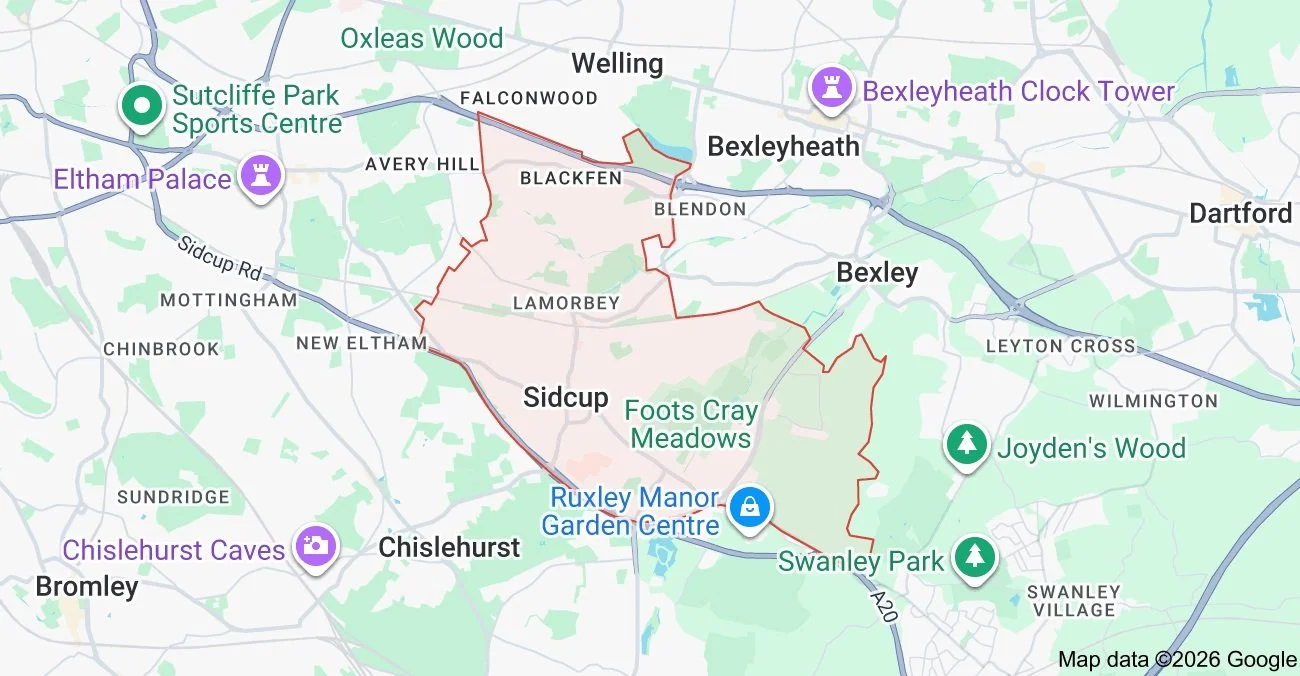
Every Thursday, Mrs P volunteers at a food bank that is run from a local church; Avery Hill Christian Fellowship. Today there was a shortage of staff so I agreed to help out. It proved to be an equitable arrangement as she collated the various orders and I packed the bags and took them to the respective clients. The food bank itself is organised and administered by the Trussell Trust, a UK based NGO and charity providing emergency food and support to people locked in poverty. It is open for 2 to 3 hours a week depending upon demand. During today’s session we served just six people. Some weeks its can be triple that amount. Upon closure, a member of staff from the Trussel Trust did a stock take and collated a list of what was needed. This is provided by various local church communities via parishioners donations, as well as local supermarkets who have an arrangement with the trust to provide surplus stock or good approaching the end of their sales window.
Every Thursday, Mrs P volunteers at a food bank that is run from a local church; Avery Hill Christian Fellowship. Today there was a shortage of staff so I agreed to help out. It proved to be an equitable arrangement as she collated the various orders and I packed the bags and took them to the respective clients. The food bank itself is organised and administered by the Trussell Trust, a UK based NGO and charity providing emergency food and support to people locked in poverty. It is open for 2 to 3 hours a week depending upon demand. During today’s session we served just six people. Some weeks its can be triple that amount. Upon closure, a member of staff from the Trussel Trust did a stock take and collated a list of what was needed. This is provided by various local church communities via parishioners donations, as well as local supermarkets who have an arrangement with the trust to provide surplus stock or good approaching the end of their sales window.
Every now and then it can be beneficial to step outside of the immediate confines of your own life and spend sometime observing the lives of others. It is a good way of dispelling a lot of the deliberate misinformation that surrounds certain socioeconomic issues. Simply put food banks do not exist exclusively to cosset the idle and malingerers. The vast majority of people who use them are in work. The most commonest reason cited for using a food bank is that an individuals income does not cover essential costs. Furthermore, food banks are not open to all. Referrals from the local authority, citizens advice bureau, healthcare professionals and charities are required. An assessment is then made and vouchers allocated accordingly. Vouchers entitle you to a parcel which usually contains at least three to seven days of nutritionally balanced, non-perishable food. The size of the parcel varies depending on whether it is intended for an individual or family.
The food bank at Avery Hill Christian Fellowship has a surprisingly comprehensive stock. Essentials such as bread, pasta, milk, sugar, tea and coffee are well represented. There are tinned goods, breakfast cereals, soft drinks and even frozen or refrigerated ready meals. However, it is not just a question of providing food. food banks also help with personal toiletries, toilet paper, sanitary products and nappies. Razors are also available. Then there are household cleaning products such as laundry pods and detergent. Simply put, most items that make up a weekly household shop are available. The Trussell Trust also has a policy of making minor indulgences such as sweets and snacks available, as they see it important that those who use their services maintain some level of comfort and dignity. It should also be noted that provision is made for those with dogs and cat, hence pet food and treats are included in vouchers if required.
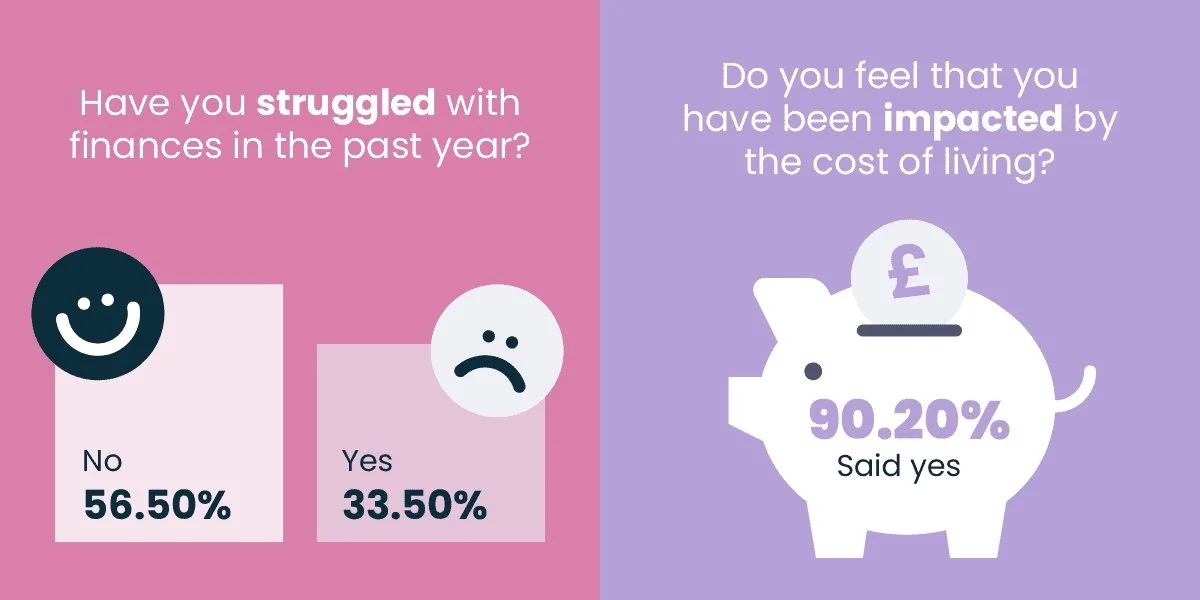
I passed pleasantries with those I served today and contrary to the UK tabloids, all were decent folk. When one stops and considers the wider issues that are being addressed by UK food banks, they are all economic and sadly political. There is something fundamentally wrong when wages from full time work cannot cover the costs of living. It can also be argued that the government having to supplement people’s income with benefits and subsidising employers, is also a fundamental problem. The Trussell Trust does a great deal of research into the wider issues of their respective field of work. They have determined that a single adult in the UK in 2023 needs at least £29,500 a year to have an acceptable standard of living. Two adults with two children would need £50,000 to meet comparable criteria. Currently 19.2 million people in the UK out of a population of 69.9 million, live in households with incomes below those figures.
The UK economy is struggling at present. There is no growth, wages are stagnating and as a result of these and other factors, unemployment is going up, especially among the young. The Trussell Trust runs approximately 1,700 food banks across the UK, guided by “Christian principles”. There are a further 1,200 additional food banks run by other organisations and charities. While the Trussell Trust provides over 2.6 million parcels annually, the true figure for the entire UK, inclusive of the independent sector, is not known. In the current economic climate it has been conjectured that it may reach 5 million by the end of the year. Hence food banks are addressing a very real need. For those who are sceptical of “Christian principles” and altruism, consider the work that food banks do in purely pragmatic terms. If they did not exist, what would be the consequences of having 27% of the UK population living in food poverty and receiving no help whatsoever?






















RV There Yet? The Best Game I’ve Never Played
RV There Yet? is possibly the most entertaining game I’ve never played. My vicarious pleasure regarding this title has come exclusively from watching two popular YouTubers, JackFrags and WillFromWork, play through the game over a series of videos. It has been immensely amusing to watch and I have empathised a great deal as the group of four players has struggled with the game’s unpredictable mechanics and their own team’s dynamic. I could go and buy RV There Yet? myself but I doubt if I would ever have a gaming experience anywhere close to what I’ve watched online recently. So in some respects watching these videos has been an interesting alternative as I’ve been entertained, which ultimately is the point of video games. Perhaps there is a deeper philosophical point here that the game developers should reflect upon, as they’ve lost a potential sale. However, that is separate discussion for another day.
RV There Yet? is possibly the most entertaining game I’ve never played. My vicarious pleasure regarding this title has come exclusively from watching two popular YouTubers, JackFrags and WillFromWork, play through the game over a series of videos. It has been immensely amusing to watch and I have empathised a great deal as the group of four players has struggled with the game’s unpredictable mechanics and their own team’s dynamic. I could go and buy RV There Yet? myself but I doubt if I would ever have a gaming experience anywhere close to what I’ve watched online recently. So in some respects watching these videos has been an interesting alternative as I’ve been entertained, which ultimately is the point of video games. Perhaps there is a deeper philosophical point here that the game developers should reflect upon, as they’ve lost a potential sale. However, that is separate discussion for another day.
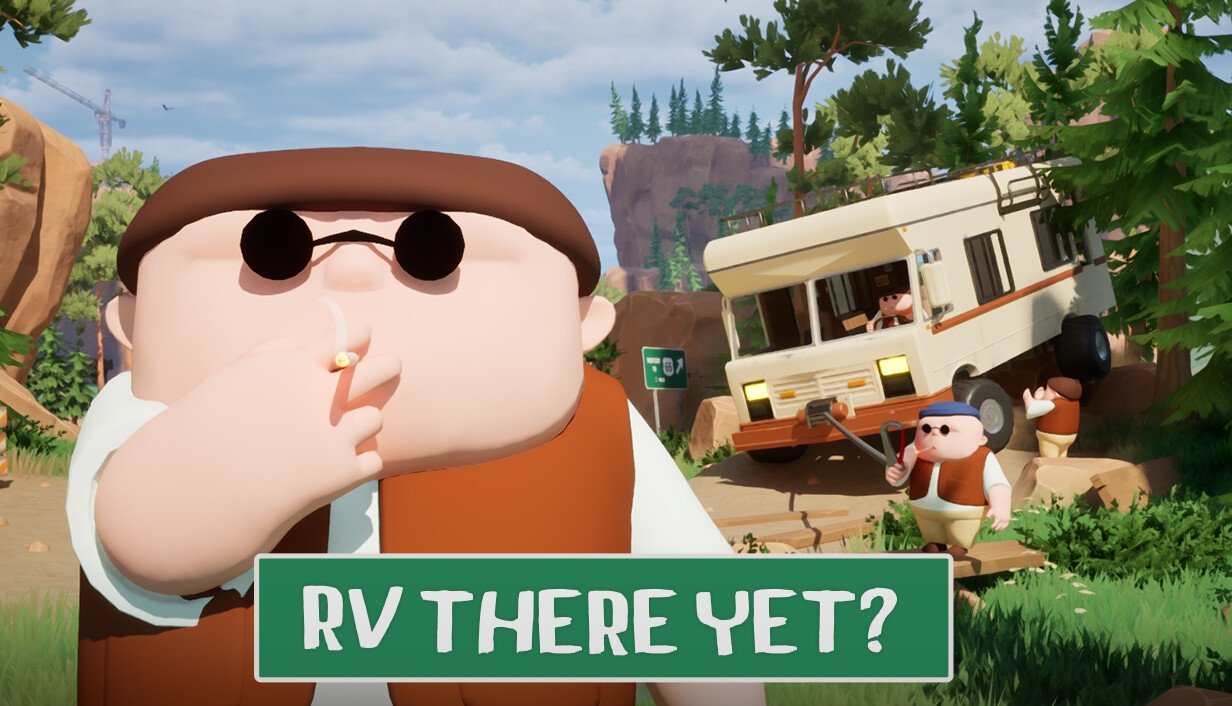
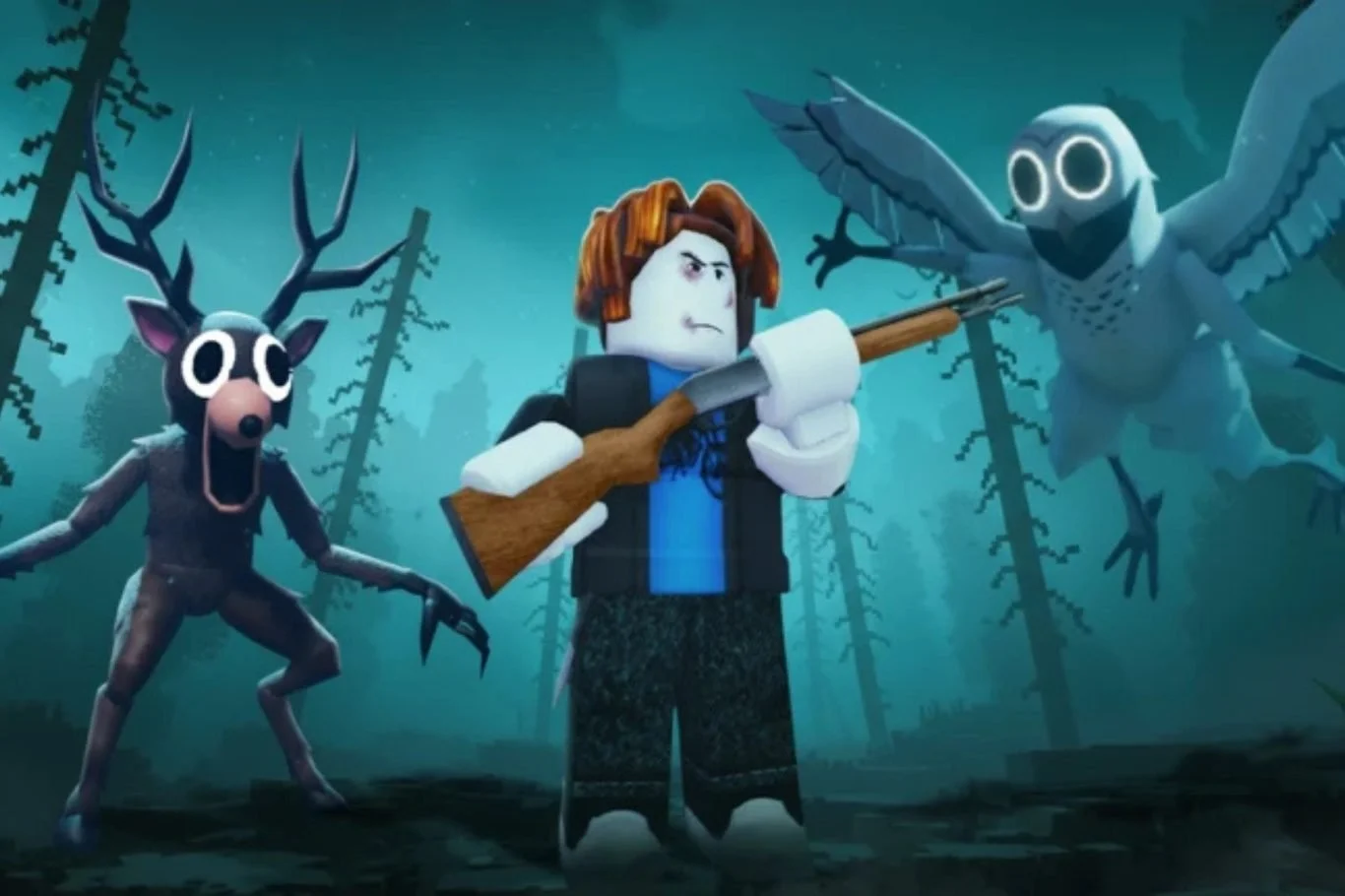
RV There Yet? is a cooperative adventure video game developed and published by Swedish game studio Nuggets Entertainment. It was released for Windows on 21st October last year. During the past few months it has gained traction and cult status mainly through word of mouth and being streamed. The game has players control a beat-up RV and attempt to navigate it through challenging terrain while returning from a camping trip. The game emphasises careful driving, obstacle management and teamwork in multiplayer mode, as players work together to avoid damage and complete the journey. The RV is fitted with two winches, front and back, which are often integral to traversing the terrain. Animals such as mountain lions, eagles and goats are also a source of danger. The games cartoony aesthetic and collision physics are also very amusing. RV There Yet? can be played either solo or co-operatively. Hilarity ensues.
What I found so amusing when watching this game being played on YouTube was the way the players personal pathology and their approach to problem solving would vary. Attention spans would wander often resulting in disastrous choices and decisions. The group dynamic between JackFrags, WillFrom Work, TommyRage and Bongeh in these videos is another factor that made things enjoyable. The group banter and the affable nature of those involved made the proceeding very relatable. If I were playing, I would be the logical individual trying to shepherd those players with less focus. It is this emergent game play and the entertainment that stems from it that makes this genre of games so popular. There is no requirement for skill or min-maxing. It’s about being in the moment and taking your fun where you find it. These games do not have any form of gatekeeping. The only barriers to participating are owning the game and having friends.
Prior to writing this post, I went online to find a video review of RV There Yet? The first video I saw wasn’t a critique of the game but more of a rant against this genre which some have rather scathingly labelled “friendslop”. I instantly disliked this trite epithet as it is clearly intended to circumnavigate any critical thinking and debate. Instead it seeks to create a biased binary position and is ultimately a pejorative term. Games such as RV There Yet? are not intended to be a skills based grind. Yes they’re contrived and simplistic but that doesn’t invalidate them. Yes, it does help having the right group of friends to get the most out of such games and these highly condensed videos show all the best parts of a far lengthier gameplay session. However, despite this curation, the fun is organic and often that’s the best kind of fun. Sometimes I despair of the blinkered mindset of competitive gamers who cannot countenance anything outside of their own experience. They seem a singularly po-faced demographic.
There was a time when I would’ve been a little envious when watching the likes of these four friends having such an entertaining gameplay experience. However, I realise nowadays that there are multiple factors that contribute to such things happening and you cannot always replicate them yourself. Sometimes, just watching someone else doing “the thing”, rather than doing it yourself, is the next best option. It’s one of the reasons sports attract audiences. Is RV There Yet? an entertaining game. Not by default. But it does offer the potential for entertainment and that potential doesn’t ask much from the players. Overall, I see that as a good thing. Therefore, ignore the fun police. There’s none so blind as those who cannot see, to coin a phrase. And if you, like myself, cannot play the game personally for whatever reasons, checkout someone else’s gameplay on YouTube. It will raise a wry smile.



Guild Wars 3
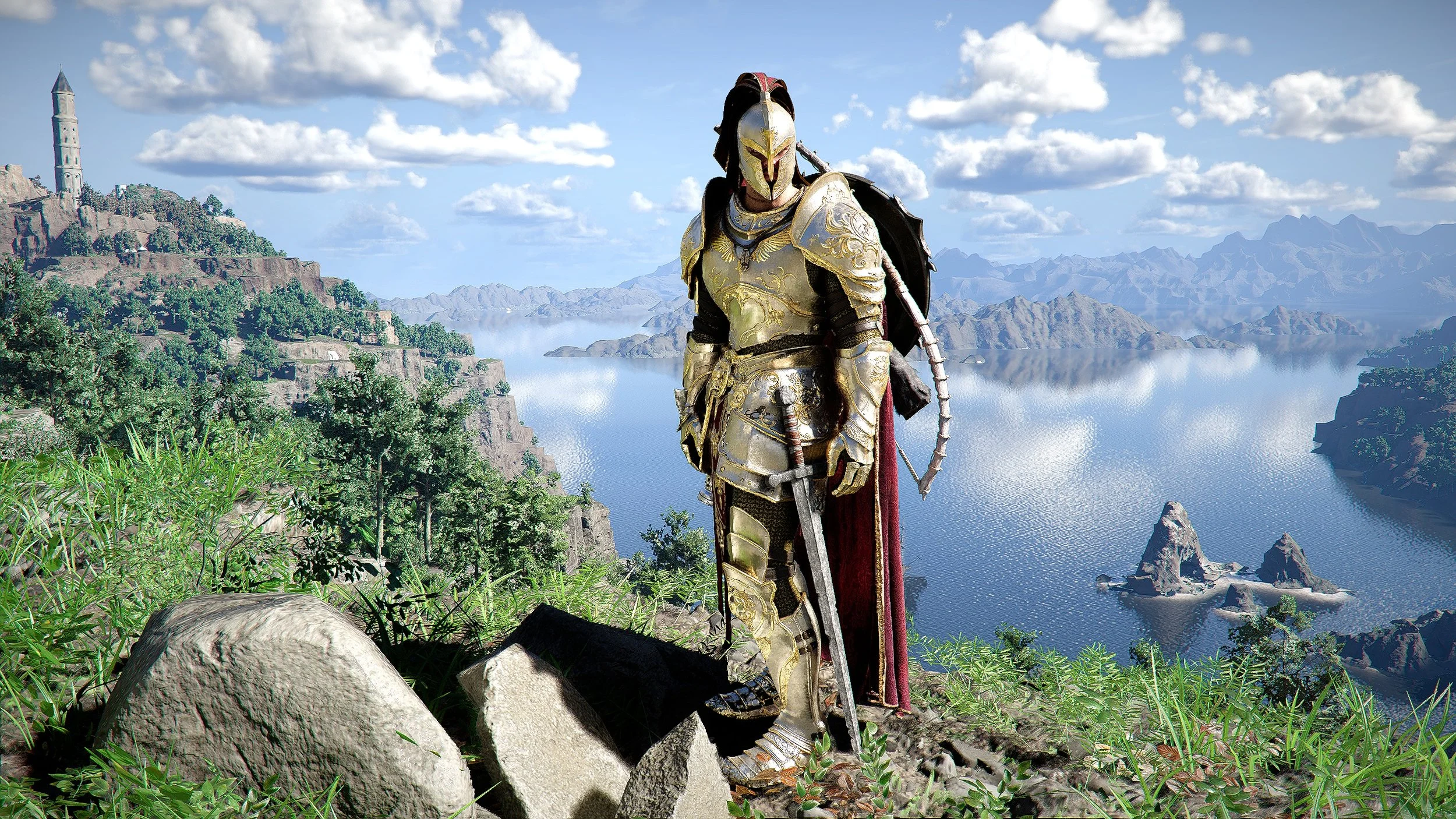
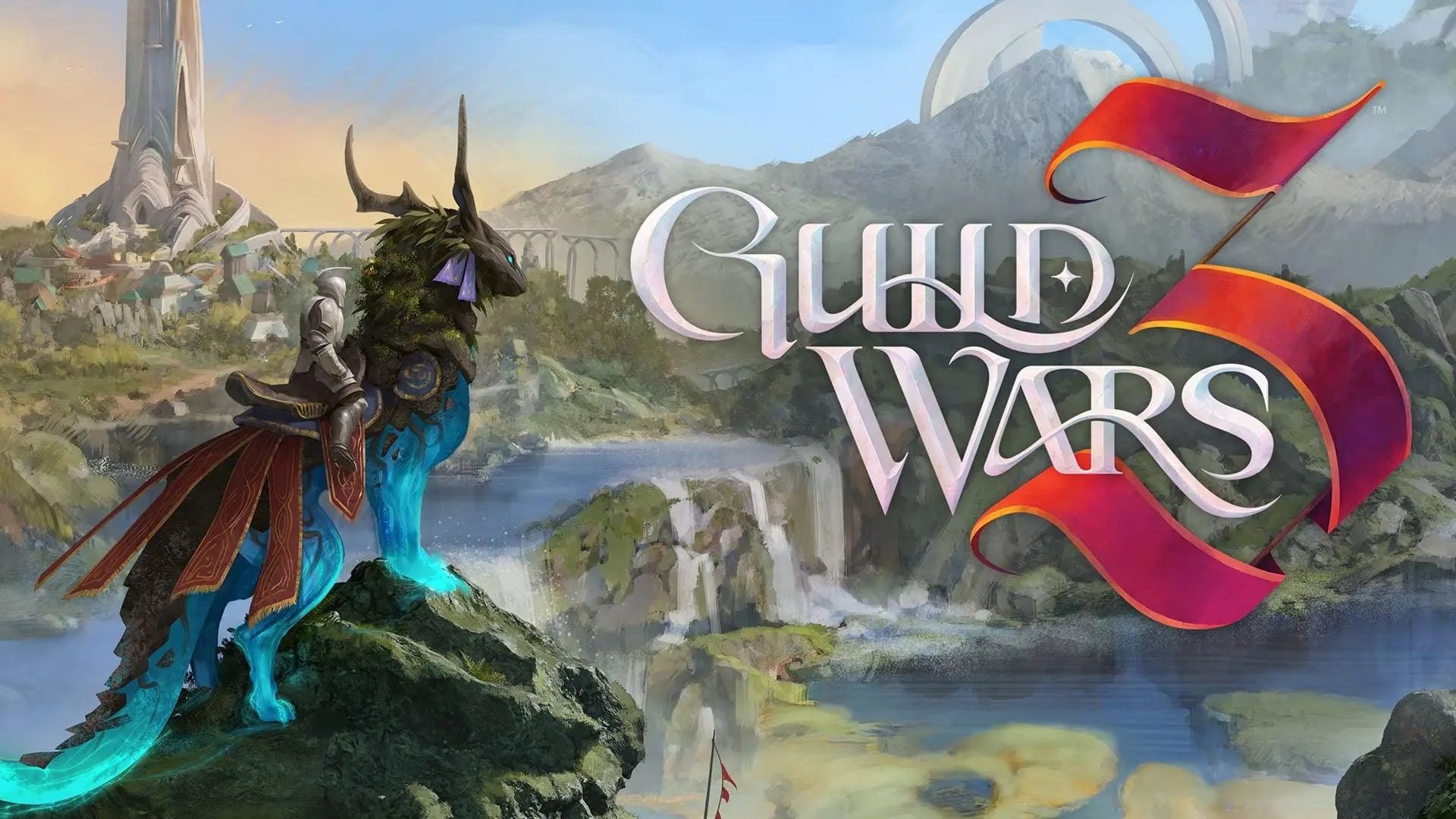
I don’t keep up with gaming news as much as I use to but several noteworthy announcement have come to my attention of late. Firstly, there’s an expansion, Songs of the Past, coming for the Witcher III: Wild Hunt in 2027. No doubt this is to pave the way for the Witcher IV. Next, I also found out about Hand of Fate: Horde. I liked this franchise and was saddened to learn that the original studio, Defiant Development, closed. Hence is was a pleasant surprise to see this new game being developed by members of the original studio. The third announcement was regarding Guild Wars 3. A new MMORPG in active development by a major studio is no small feat and is certainly good news for fans of this franchise and the genre per se. However, once you look beyond this news this announcement raises several questions and has certainly given me pause for thought. Let us take a few moments to consider them.
I don’t keep up with gaming news as much as I use to but several noteworthy announcement have come to my attention of late. Firstly, there’s an expansion, Songs of the Past, coming for the Witcher III: Wild Hunt in 2027. No doubt this is to pave the way for the Witcher IV. Next, I also found out about Hand of Fate: Horde. I liked this franchise and was saddened to learn that the original studio, Defiant Development, closed. Hence is was a pleasant surprise to see this new game being developed by members of the original studio. The third announcement was regarding Guild Wars 3. A new MMORPG in active development by a major studio is no small feat and is certainly good news for fans of this franchise and the genre per se. However, once you look beyond this news this announcement raises several questions and has certainly given me pause for thought. Let us take a few moments to consider them.
When a new game in a popular franchise is launched, it does not necessarily mean the immediate death of the previous iteration. You can still buy and play older versions of titles such as Call of Duty and Battlefield and they often maintain a dedicated player base. That has not always been the case with the MMO genre. The Playstation 2 version of EverQuest Online Adventures was shutdown by Sony Online Entertainment upon the release of EverQuest II. Overwatch was not closed as the such but the game client was patched thus morphing existing installations of the game into Overwatch II, regardless of whether players wished this or not. However in the case of Guild Wars 2, ArenaNet have announced that they will keep producing content for the older game once they have completed work on Guild Wars 3. ArenaNet have a track record of maintaining old and new products in parallel.
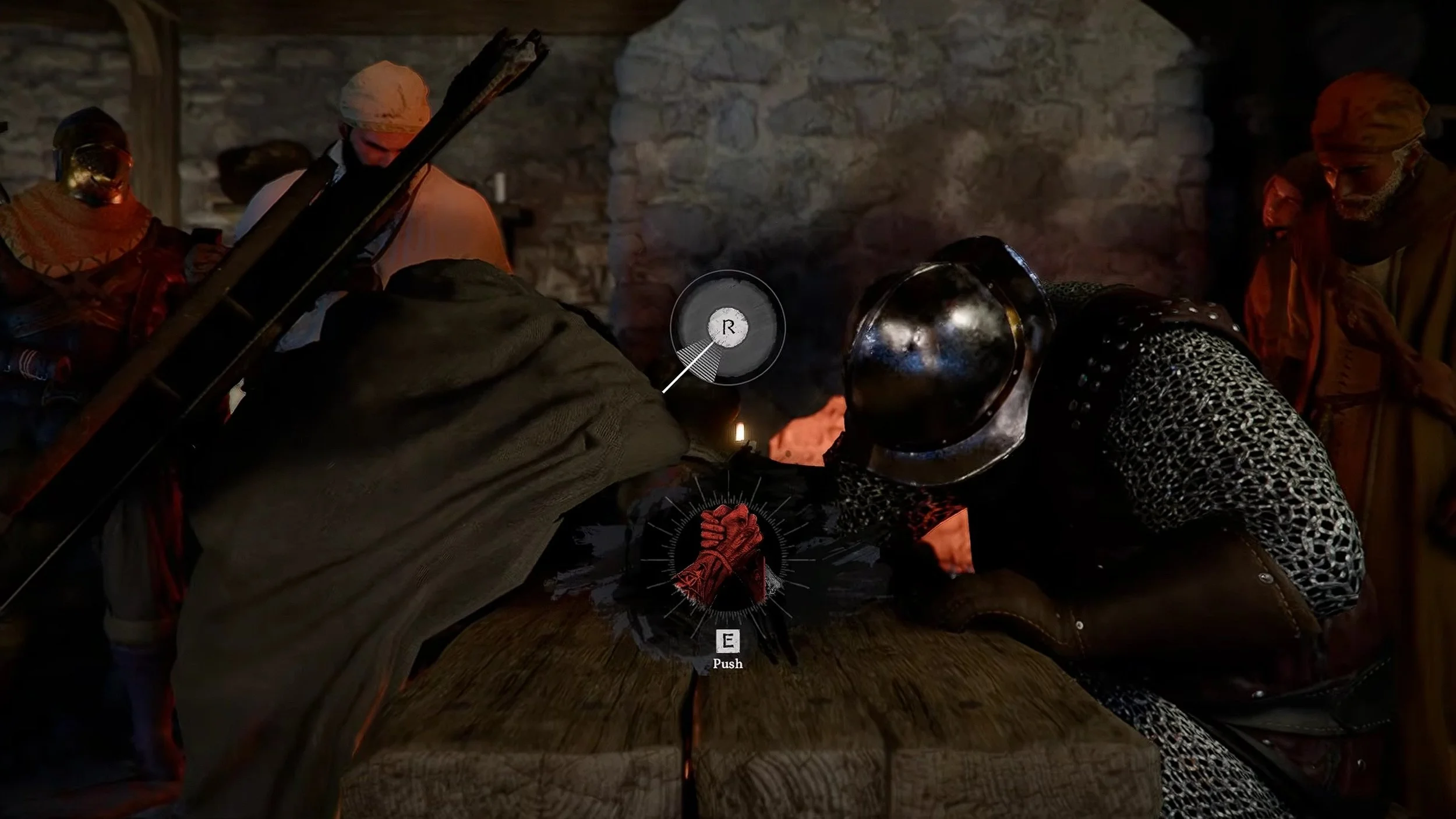
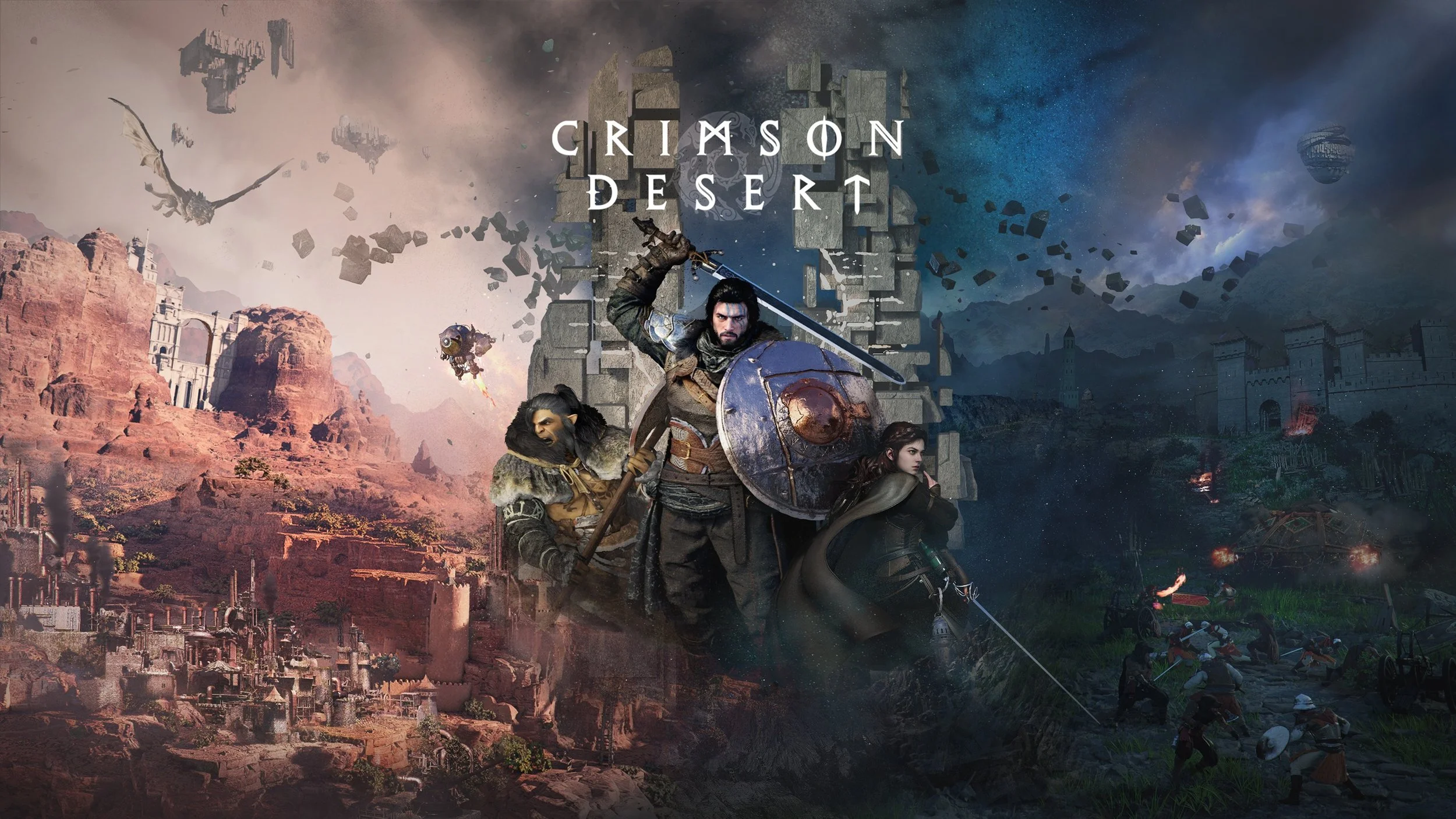
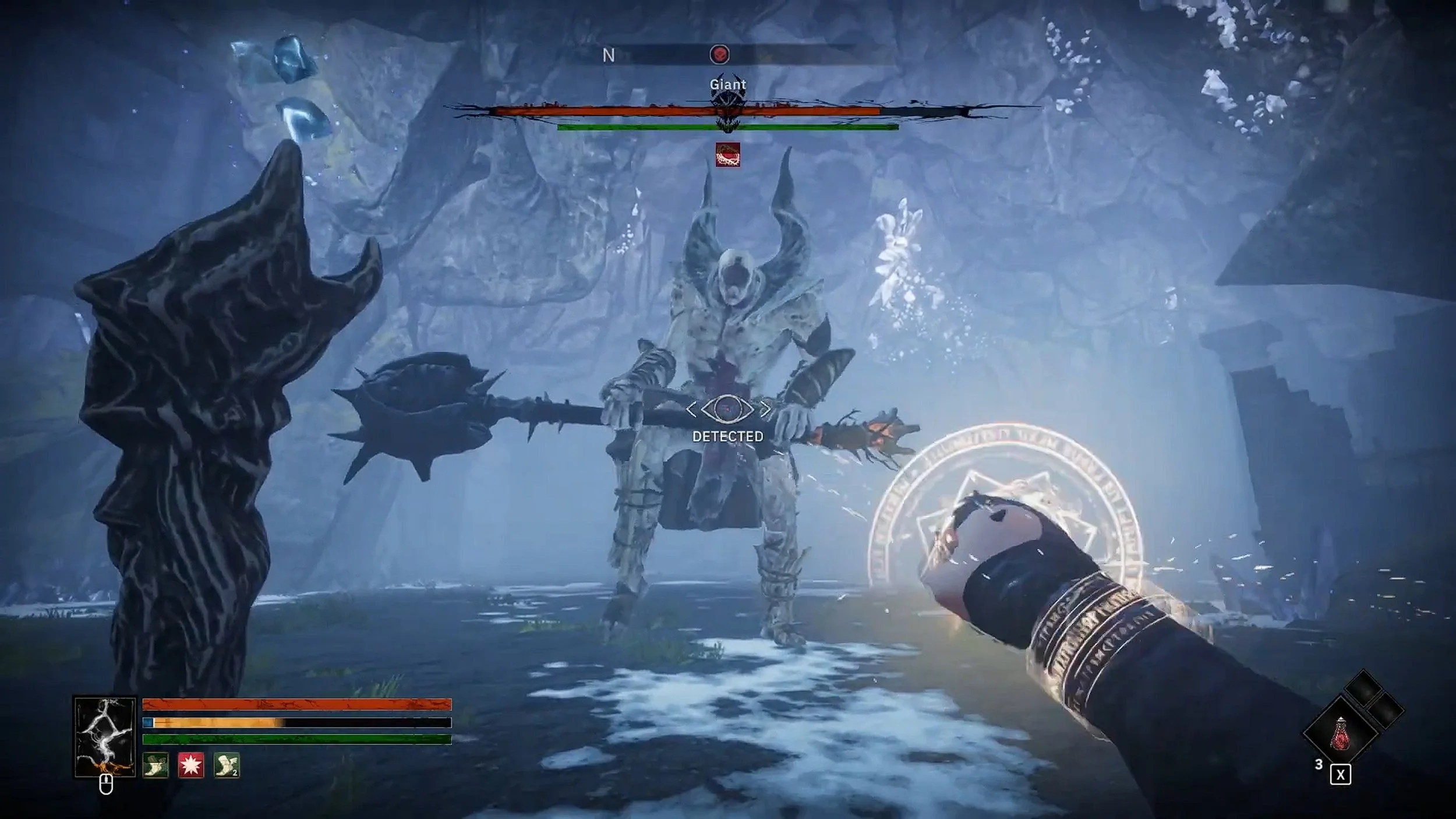
Perhaps the biggest issue associated with Guild Wars 3 and the one that is currently being debated, is what does a modern MMORPG look like? The term has evolved greatly over the last 25 years and as a result there are clear difference between games hailing from different eras. Those who want tab targetting, static combat and structured skill rotations, along with a strong social component and required grouping may be disappointed. I suspect that ArenaNet will be pursuing a modern approach to Guild Wars 3, utilising a hybrid style that blends a large persistent online world with the kind of high-mobility gameplay that you find in modern third-person action games. Perhaps there are clues to be found in the recent RPG Crimson Desert, which started its development life as an MMORPG before being transitioned into a single player game. It has many systems inherent in the MMORPG genre but its combat is very contemporary.
Naturally, there is scope that some players will not like the cut of Guild Wars 3 proverbial jib and will not migrate to it. Conversely, the existing Guild Wars 2 community may well see a substantive drop in players which may impact negatively upon guilds and end game content. You cannot please everyone, nor should you try to. It will be interesting to see how both game fare. I still have numerous screen captures taken during the Guild Wars 2 beta tests in 2012 and have fond memories of that time as I was a consummate MMORPG player back then. Nowadays, I am more curious about the development of Guild Wars 3 from a business and industry perspective, rather than an active player of the genre. As to those players who have already questioning whether to continue to play Guild Wars 2 now that a new game has been announced, I’d urge them to live in the moment and continue to play and enjoy the current game. Guild Wars 3 is a long way off. “Now” is here already.
Local Theatres
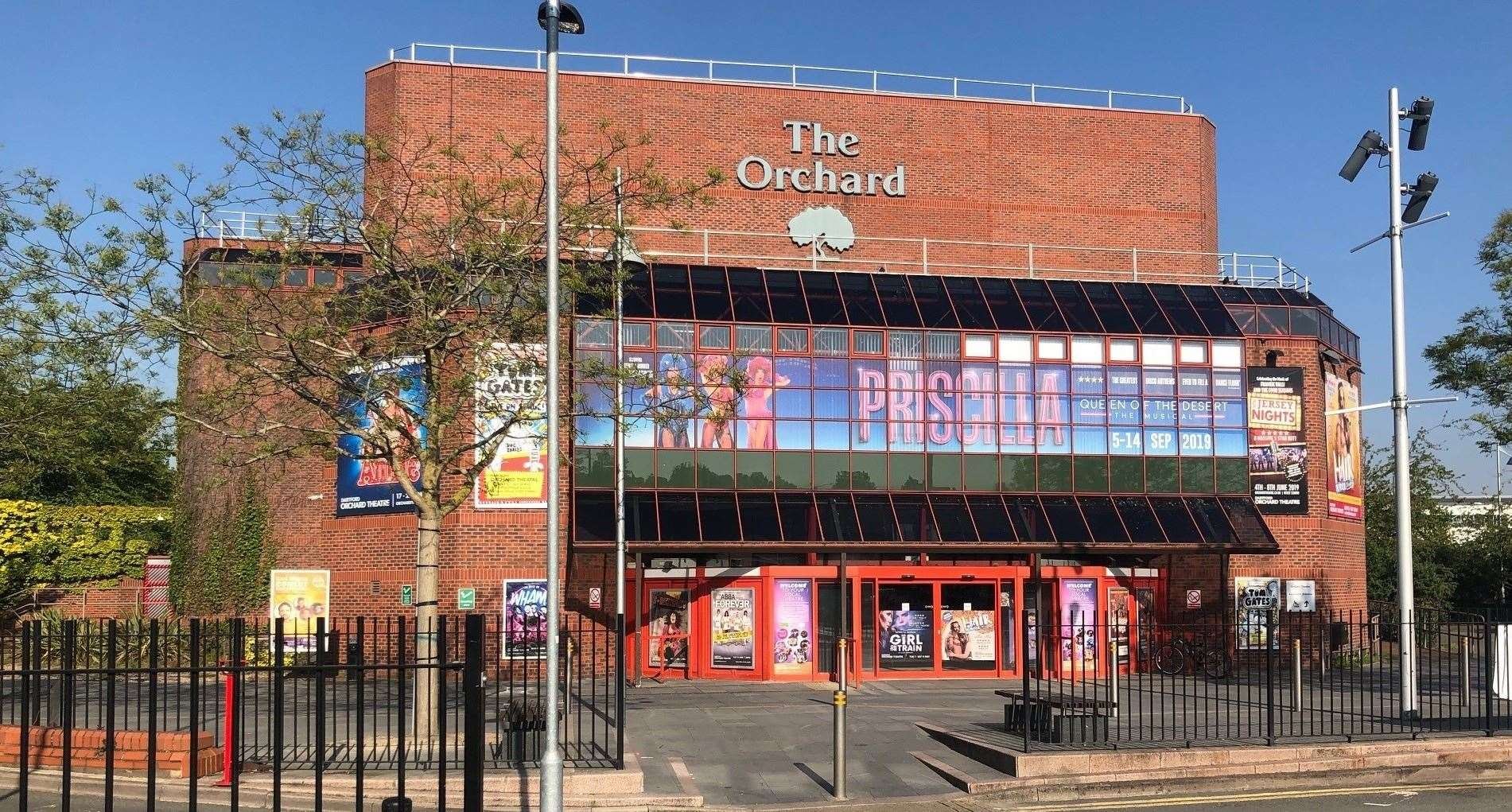
Over the course of the last year and a half, I’ve started going to the theatre more often. Mainly because contemporary cinema has less and less to offer me as an adult. Over 18 months I’ve seen half a dozen shows of various kinds. Dance, dramas and standup comedy. One of these was a West End show, in central London, to see The Lion King (which was very entertaining and lived up to the hype). The others have all been at local theatres. Either the Churchill Theatres in Bromley, the Orchard Theatre in Dartford or the Orchard West. All of these venues are easily accessible by public transport or car and offer a wide variety of entertainment at “reasonable” prices, compared to the premium shows in London which have very high prices. So far, all of the six shows I’ve seen have proven entertaining and good value for money. I’ve also learned that theatre has changed a lot to suit the tastes of the modern audience.
Over the course of the last year and a half, I’ve started going to the theatre more often. Mainly because contemporary cinema has less and less to offer me as an adult. Over 18 months I’ve seen half a dozen shows of various kinds. Dance, dramas and standup comedy. One of these was a West End show, in central London, to see The Lion King (which was very entertaining and lived up to the hype). The others have all been at local theatres. Either the Churchill Theatres in Bromley, the Orchard Theatre in Dartford or the Orchard West. All of these venues are easily accessible by public transport or car and offer a wide variety of entertainment at “reasonable” prices, compared to the premium shows in London which have very high prices. So far, all of the six shows I’ve seen have proven entertaining and good value for money. I’ve also learned that theatre has changed a lot to suit the tastes of the modern audience.
I can remember going to the Young Vic Theatre, London, in 1983 to see a production of Shakespeare’s Twelfth Night. The trip was organised through my school and was part of the course work for our English Literature exam. Being 15 years old at the time and ambivalent to the merits of Shakespeare and this “comedy”, I remember becoming bored once the novelty of seeing Blakey from On the Buses (actor Stephen Lewis) on stage wore off. However, I think that my overall experience accurately reflected the prevailing stereotypes about theatre at the time. Traditional content made up the majority of productions and prevailing theatre culture was rather formal, aloof and not really aimed at the “hoi polloi”. My recent forays into the world of local theatre highlights how this has changed and that giving the public what they want, rather than what you think is good for them, is now the cornerstone of business.
When booking shows at both my local theatres what has struck me is the variety of content and the types of productions available. There are traditional plays and musicals on offer throughout the year but there is also a lot of live comedy, contemporary “jukebox” musicals and themed events. For example, I recently saw a live version of the Uncanny podcast. There are also authors on promotional tours, sports retrospectives from retired pundits and sportsmen and a great deal of content specifically aimed at children. Theatres also seem to showcase a lot of tribute bands and events that are clearly intended to include audience participation. I am not going to argue either way regarding artistic merit and cultural value. Such things are highly subjective and couched in other complex societal issues such as respective wealth and class. The simple fact remains that such productions sell and keep the theatres open.
Another minor change I noticed at my two local theatres is that they’re both now “cashless”. Drinks, food and merchandise can only be purchased by card or phone. Furthermore, although you can visit the theatre in person to book tickets for future shows, the majority of business is conducted via an online box office. There are associated apps and membership is encouraged to gain advance booking access to forthcoming shows. On a more subjective note, the venues themselves exude an atmosphere of modernity and the old, stuffy ambience has been dispelled. This informality is welcome but it also means that the notion of “dressing up for the theatre” is less prevalent. I’m sure there are naysayers out there decrying this cultural change but for me it makes the theatre a more inviting prospect, compared to how it was four decades ago. Plus you can still find old school, traditional plays, as I have booked tickets to see Robert Bolt’s A Man For all Seasons in November.



Audible: The Standard Plan
I am a big fan of Audible as a service. Over several years I have built up a sizeable collection of audiobooks and whenever a new title is released that is of interest to me, I instantly consider do I wish to buy a physical copy of the book in question or an audio version. I consume a lot of non-fiction titles, especially science based content. I find audiobook versions of such material a lot easier to digest, mainly due to the measured pace of the narrator that gives me time to consider and mentally digest what I am listening too. If I struggle with a point, I can instantly rewind the audio back 30 seconds and listen again. Plus listening to Stephen Fry or someone else with a distinctive and charismatic voice read something is eminently superior to my own inner monologue. Hence I find audiobooks to be a medium that if both convenient and enjoyable for me. Furthermore, the various subscription tiers of Audible have proven beneficial. That is until this March when they altered these.
I am a big fan of Audible as a service. Over several years I have built up a sizeable collection of audiobooks and whenever a new title is released that is of interest to me, I instantly consider do I wish to buy a physical copy of the book in question or an audio version. I consume a lot of non-fiction titles, especially science based content. I find audiobook versions of such material a lot easier to digest, mainly due to the measured pace of the narrator that gives me time to consider and mentally digest what I am listening too. If I struggle with a point, I can instantly rewind the audio back 30 seconds and listen again. Plus listening to Stephen Fry or someone else with a distinctive and charismatic voice read something is eminently superior to my own inner monologue. Hence I find audiobooks to be a medium that if both convenient and enjoyable for me. Furthermore, the various subscription tiers of Audible have proven beneficial. That is until this March when they altered these.
Audible use to have a two tier subscription system. The first tier cost £8.99 a month and award the customer 1 credit that they could use to purchase an audiobook of their choice. The next tier cost more and gave the customer 2 credits per month. Both of these tiers also gave subscribers access to some free books and bespoke podcast content. If you stop subscribing you naturally lost access to the free books and Audible exclusive podcasts but you still owned the books that you purchased with your credits. Furthermore, every six months or so, Audible would have a promotion where you could subscribe to the first tier for only £2.99 a month for 3 months, then the price increased to the standard amount. This was very useful as you could take advantage of this for three months then cancel your subscription. Sadly, Audible decided that allowing customers to buy a newly released audiobook for just £1 is perhaps a little too generous. Hence they altered the subscription model.
A new entry level tier called the Standard Plan has been introduced that costs £5.99 a month. This again awards the customer with a credit that they can spend on any title in the current catalogue. However, the moment you stop subscribing, you lose access to that title. Hence you haven’t purchased the book you have simply rented access to it. It is not a dissimilar business model to some MMORPG video games. The old first tier option offering 1 credit for £8.99 has now become the second tier. As £8.99 still buys 1 credit, what is my point, I hear you ask. It is the elimination of the regular featured promotion of 3 months subscription at £2.99 and the fact that the new default, entry level tier of subscription doesn’t allow customers to own the books that they spend their credits on. This appears to be an example of the online version of “shrinkflation” and requires new customers to read small print very carefully as they are now “renters” and not “owners” at this tier of subscription.








Riverhill Himalayan Gardens
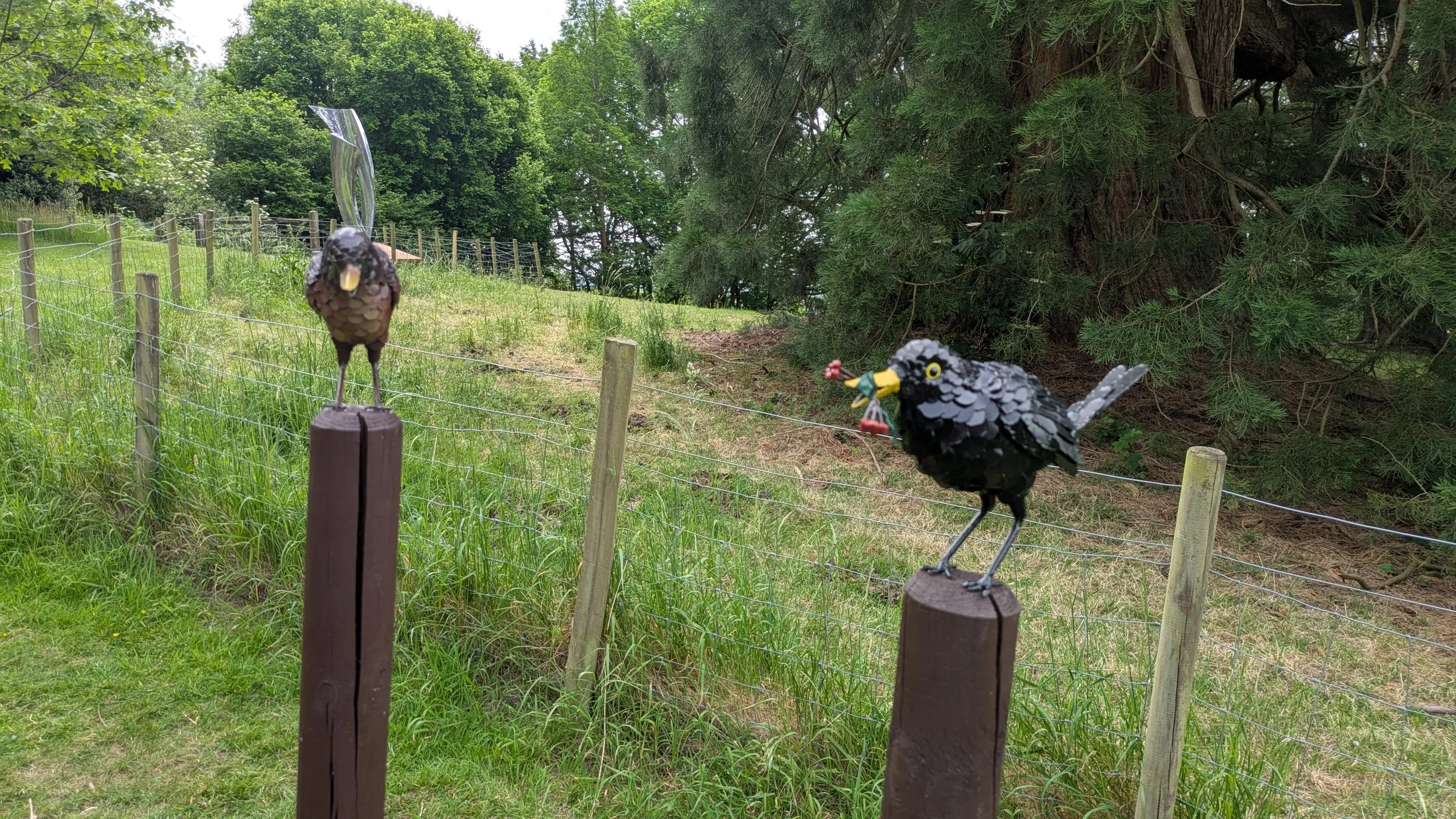
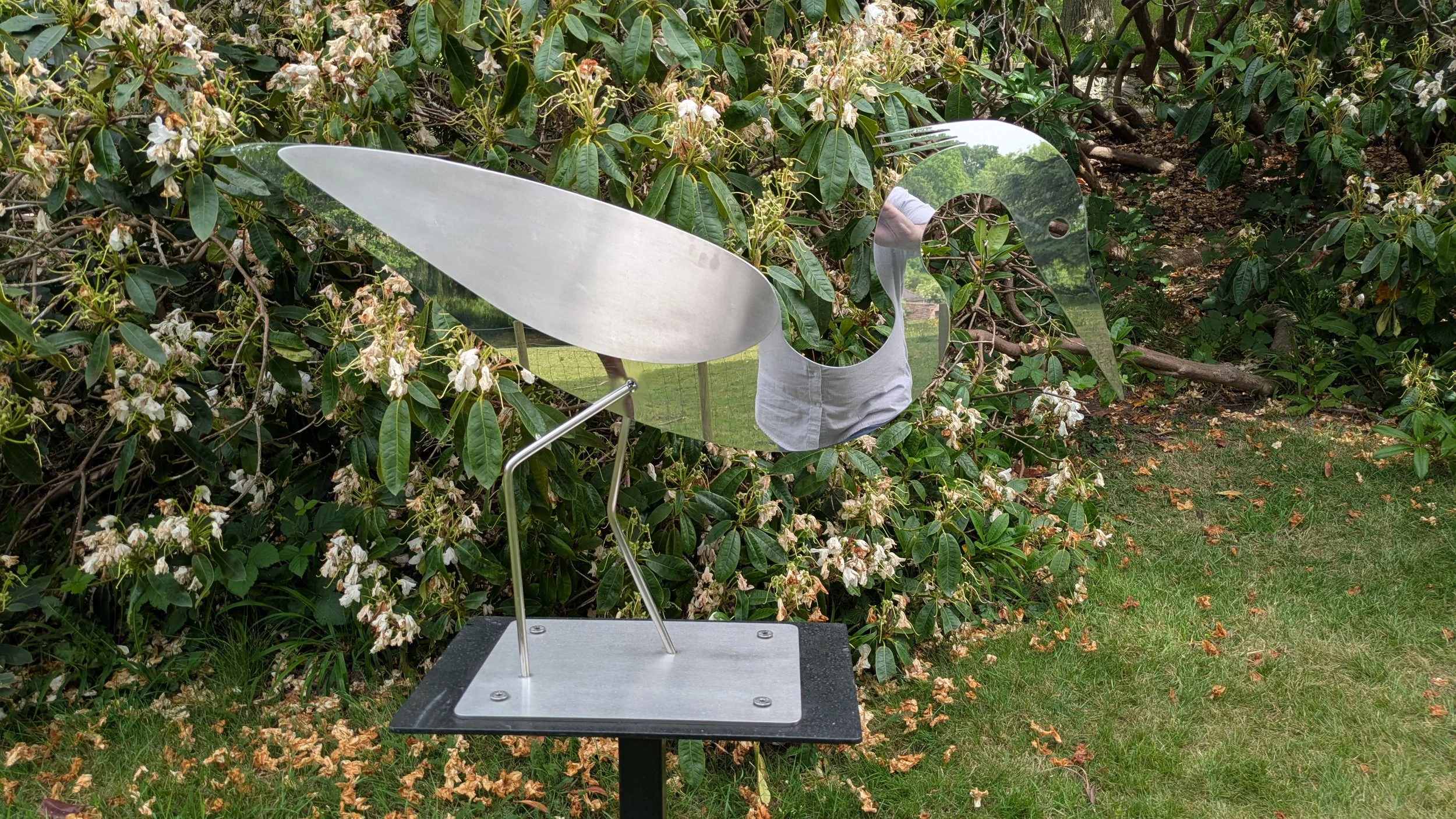
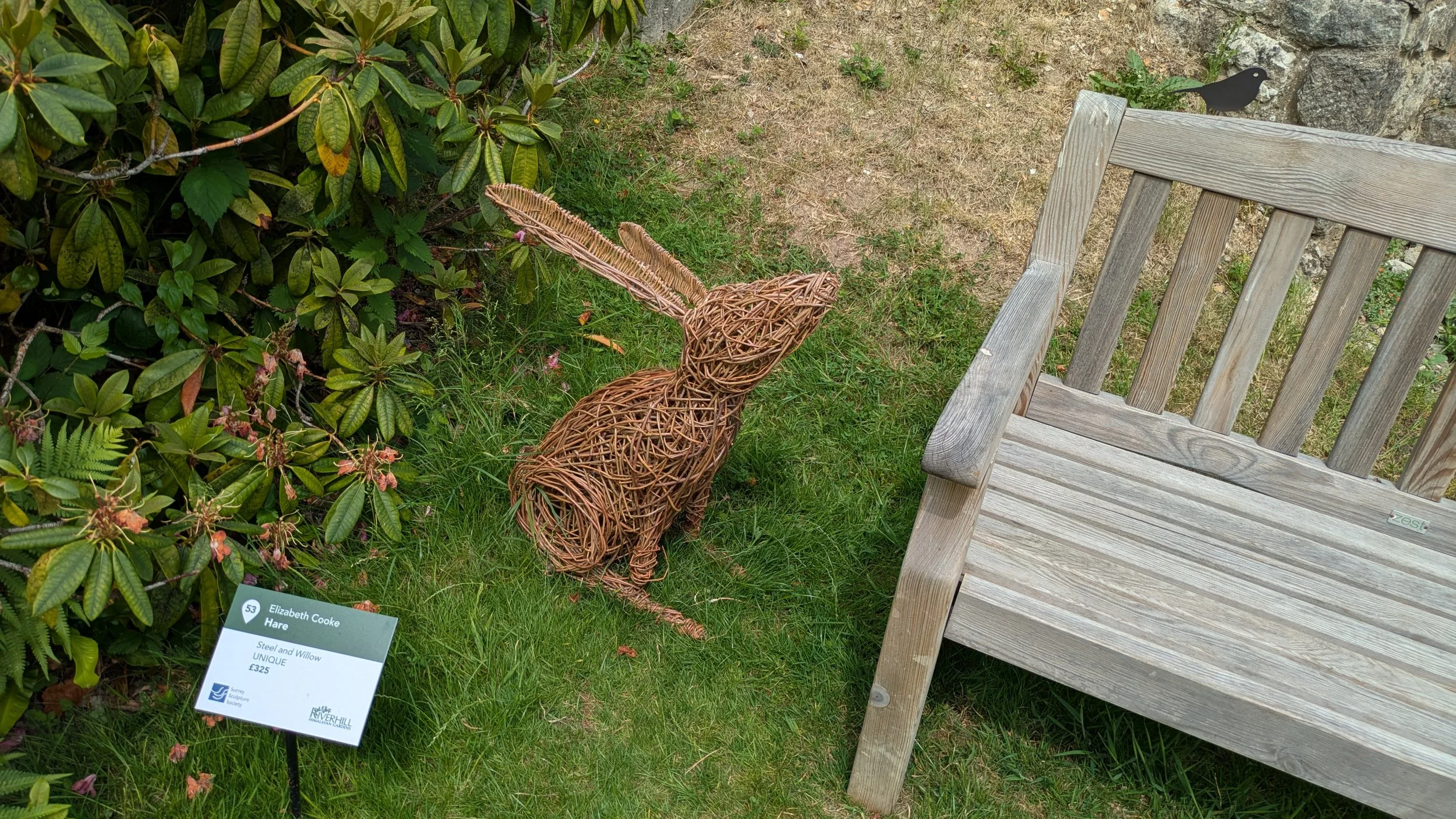
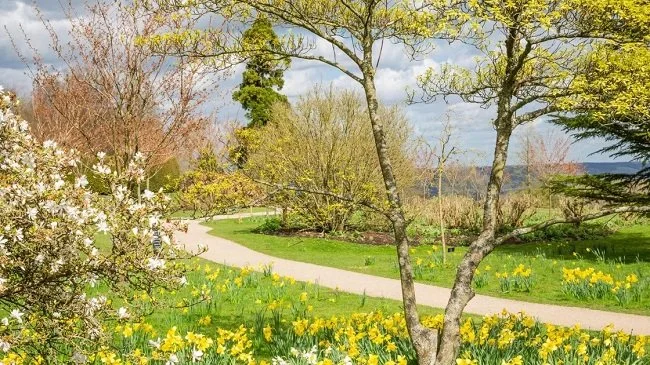
Riverhill Himalayan Gardens are set in the grounds of Riverhill House, a Grade II listed Queen Anne manor house located on the southern edge of Sevenoaks in Kent, England. Riverhill is well known for its stunning and historic gardens as well as its sweeping vistas over the Weald of Kent. The estate has been the residence of the Rogers family since 1840 who currently operate the gardens as a tourist attraction, along with the house and associated facilities as a wedding venue. Visitors can enjoy a walled garden, rose walk and maze as well as other attractions. There is also an excellent trail around the grounds culminating in a view from the top of the hill over the estate. Riverhill Himalayan Gardens, as a supporter of the Surrey Sculpture Society, regularly showcases a selection of sculptures and art pieces throughout its grounds. All are available for purchase if you have deep pockets.
Riverhill Himalayan Gardens are set in the grounds of Riverhill House, a Grade II listed Queen Anne manor house located on the southern edge of Sevenoaks in Kent, England. Riverhill is well known for its stunning and historic gardens as well as its sweeping vistas over the Weald of Kent. The estate has been the residence of the Rogers family since 1840 who currently operate the gardens as a tourist attraction, along with the house and associated facilities as a wedding venue. Visitors can enjoy a walled garden, rose walk and maze as well as other attractions. There is also an excellent trail around the grounds culminating in a view from the top of the hill over the estate. Riverhill Himalayan Gardens, as a supporter of the Surrey Sculpture Society, regularly showcases a selection of sculptures and art pieces throughout its grounds. All are available for purchase if you have deep pockets.
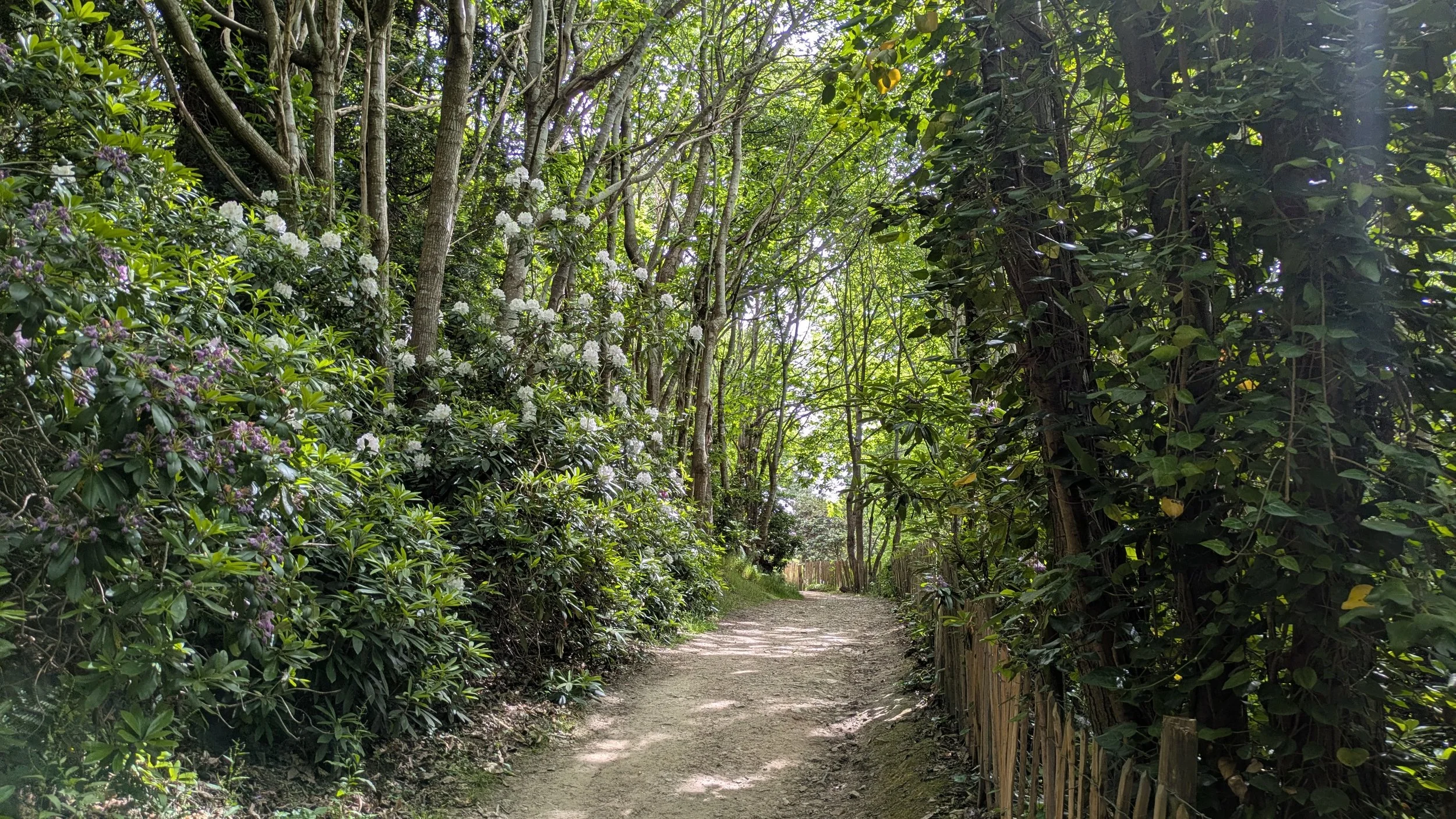
I had the pleasure of visiting Riverhill Himalayan Gardens earlier today. The entrance fee is £14 which strikes me as reasonable in today’s tourism market. However, all discussions regarding prices and value are highly subjective. On arrival myself and Mrs P decided to tackle the trail to the viewpoint at the top of the hill in which the gardens are set. The track proved quite challenging due to its gradient and the heat (it was 29°C/84.2°F). It is essential to have appropriate footwear as the paths are mainly earth and loose stone. However, the effort was worth it as the summit is in a clearing, affording a view over the estate and the Weald of Kent towards Tonbridge, Ashdown Forest and Hadlow. We then made are way down to the maze and attempted to find the cupola in the centre. Sadly we failed to solve the maze and due to the hot weather, decided to seek some shade in the walled garden.
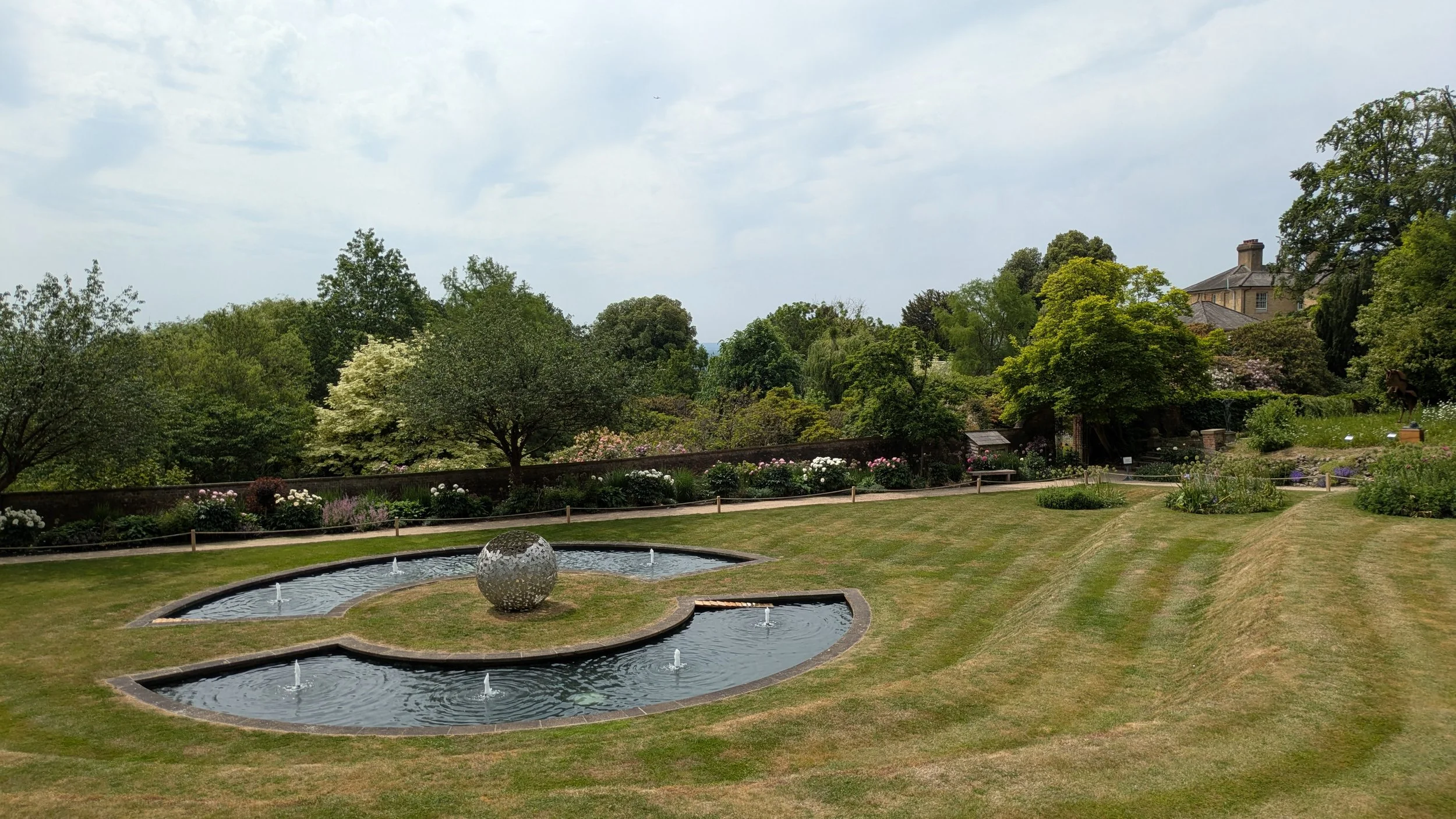
The walled garden and the surrounding grass area are home to various sculptures made by local artists. They encompass an eclectic variety of styles and reflect different schools of art. However the one thing they have it common is that they all provide a great talking point. Adjacent to the walled gardens it the Rose Walk, with a fine selection of well tended bushes. The walled garden features immaculately terraced lawns and has a contemporary water feature at the centre, created by British sculptor Julian Wild. There are roses, alliums and peonies as well as herbaceous borders and dalias. It is all very colourful and for those with functioning olfactory senses (I lost mine after catching COVID), very fragrant. There is seating available around the walled garden, some of which is in the shade. So you can sit, relax and contemplate the nature of reality or whatever takes your fancy. The ambient sound of the water feature adds greatly to the atmosphere.
Riverhill Himalayan Gardens has several areas specific to young children, such as the adventure play area and the den building trail. Both are well maintained and sensibly away from quieter areas such as the walled garden. On weekends there is a Yeti spotting event in this area (and whoever has to wear the Yeti suit has my sympathy in the current heatwave). Naturally, there is a garden shop and a rather good cafe run by a local company, Malabar. It has an outstanding orange drizzle cake. The grounds and services are very well maintained and the staff are friendly and knowledgeable. Hence, Riverhill Himalayan Gardens makes for an excellent day out, providing a modest but challenging hillside walk, an enjoyable maze and some excellent ornamental gardens for those of a horticultural bent. It is also a great place for those visitors that just want to slowly amble and chill out. Furthermore, the grounds are dog friendly which is another plus point.


























Thinking Out Loud
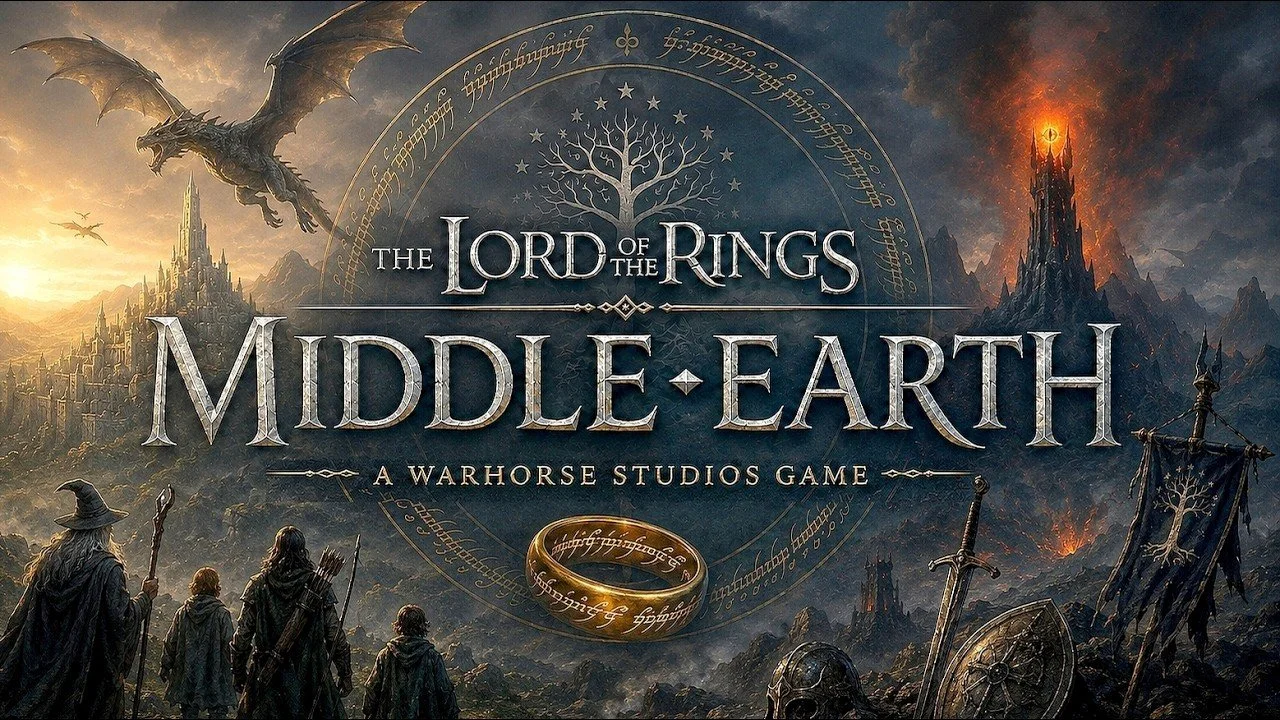
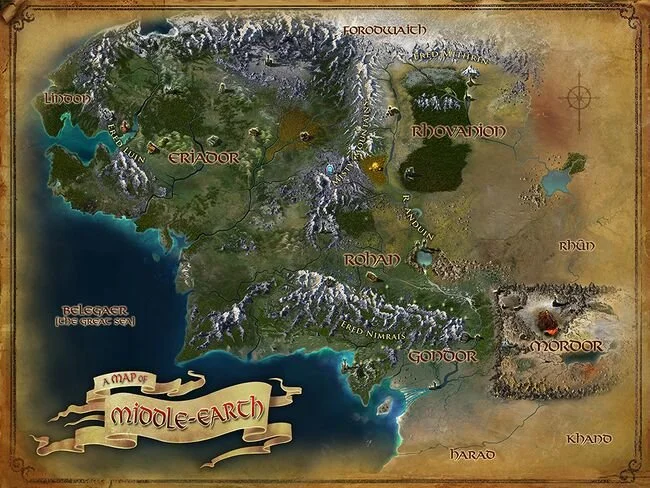
Kingdom Come: Deliverance and its subsequent sequel have been very well received, both commercially and critically. Hence the recent announcement that developer, Warhorse Studios, are currently working on an open world RPG, set in Middle-earth has caused a great deal of excitement in the gaming community. At present, details are scarce and speculation is rife with regard as to what period in the history of Middle-earth will the game be set in. As far as I’m concerned, I don’t really mind when and where it is set as there are so many potential good choices. But I would like clarification as to whether the game is being made in in first person or third person perspective. By default, I prefer the latter when it comes to this RPG genre. Naturally the best outcome would be if the game supports both. However, it should be noted that the developer’s previous games were in first person. If that is the case with this project, I will revise my expectations.
Thinking Out Loud is a recurring blog post where I just throw out ideas and thoughts that have crossed my mind. I then write them here for your consideration. Some of these thoughts could potentially be the basis of an entire article. However, that is not the idea. I see them as simply opening gambits for possible wider discussions. Some of these ideas can be fairly weighty. Others may be deemed trivial. Such is the nature of the things that we think about. Another major factor in all this is the fact that random thoughts make for easy blog posts and every now and then is perfectly okay to just “coast”. I can’t churn out “pure gold” every day (or ever). Please free to leave any comments that you see fit or challenge any of the ideas presented here. If you think its all somewhat spurious, remember that I’m just “thinking out loud”.
Warhorse Studios are Making a Middle-earth RPG
Kingdom Come: Deliverance and its subsequent sequel have been very well received, both commercially and critically. Hence the recent announcement that developer, Warhorse Studios, are currently working on an open world RPG, set in Middle-earth has caused a great deal of excitement in the gaming community. At present, details are scarce and speculation is rife with regard as to what period in the history of Middle-earth will the game be set in. As far as I’m concerned, I don’t really mind when and where it is set as there are so many potential good choices. But I would like clarification as to whether the game is being made in in first person or third person perspective. By default, I prefer the latter when it comes to this RPG genre. Naturally the best outcome would be if the game supports both. However, it should be noted that the developer’s previous games were in first person. If that is the case with this project, I will revise my expectations.
Socialising When Older
I have been looking around online recently to see if I can find any local social groups that I could possibly join. Simply put, I need to interact with more people. I feel that there is a gap in this part of my life and feel the need to address it. I spoke to my sister who has joined such a club and she really likes the range of activities that they do. There are day trips, quiz nights and meetings just to chat. In principle, these are the sort of things I’m looking for. Yet something I can’t quite identify is holding me back. May be it’s my age. I am 58 and have retired early. Most of the social groups out there are populated by people in their sixties and older. People my own age are mainly still working. Age isn’t always an issue but it can be. Plus I admit that I’m a very particular person. I’m not looking for innocuous small talk and passing company. I want something more tangible and more intellectually demanding. I guess I shouldn’t talk myself out of things before trying.
Lego: Adults Welcome
In recent years Lego have started producing various products that are pitched at adult customers. These sets are usually based upon major film and pop culture franchises, such as The Lord of the Rings and the ubiquitous Star Wars. I recently saw a Lego Jaws set, featuring the Orca and its crew as well as the shark Bruce. It’s all rather niche, entertaining and expensive. However, the sets pitched at the adult market are far from cheap. The aforementioned Jaws set retails at £130.00 in the UK. Another issue stemming from the popularity of these Lego sets is that when you search online for more, a lot of the results returned are fictitious. People use generational AI to create images of sets they’d like to see released by the Danish manufacturers, that are not available. I stumbled across one such example recently. A bogus Where Eagles Dare Lego set. If it was real, I most definitely would buy it. Sadly it isn’t.
The UK and Hot Weather
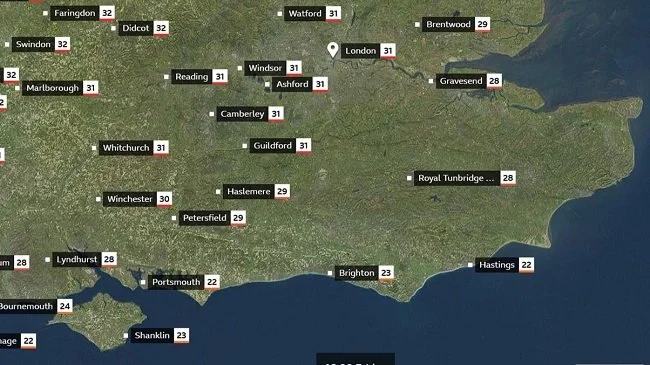
As I am writing this post (2:00 PM on Monday 25th May 2026) the weather in the UK and indeed parts of Europe is unusually warm for this time of year. It is currently 31°C (87.8°F) in South East London. The heat tends to linger into the evening due to the urban sprawl absorbing it during the day and radiating it out at night. Although unusual for the time of year, there is evidence that the weather is getting warmer in the UK and frankly it shouldn’t be as much as surprise as some people portray it. I bought three very robust (and most importantly quiet) pedestal fans over the last two years and they’re now proving to be worth every penny. Air Conditioning is not yet a default part of UK house building but it may well be so in the years ahead. As for those people who one minute decry how miserable the weather is, then promptly moan the moment the sun appears, try shutting your curtains and pulling your blinds. It does much to reduce the room getting warm.
Jaffa Cakes
For those who do not know, Jaffa Cakes are a popular biscuit in the UK (although for tax purposes they’re considered cakes). They consist of a Genoise sponge base, a layer of orange-flavoured jam and a coating of chocolate. Jaffa Cakes have been around since 1927 and have proven to be a popular indulgence. Sadly, they have in recent years been subject to the most egregious “shrinkflation”, like so many food items. First off, you no longer get a dozen Jaffa Cakes in a box. Secondly, you need an electron microscope to see them. In fact I would go as far as to say that the reduction in size has effectively killed my interest in Jaffa Cakes. They’re gone in a mouthful. If you want to be satisfied you have to eat two at once. A single box therefore yields five mouthfuls.“Shrinkflation” is a false economy and takes consumers for fools. Fuck you McVitie’s. Just make Jaffa Cakes bigger and we’ll pay more.










Star Trek Online: Reputation System
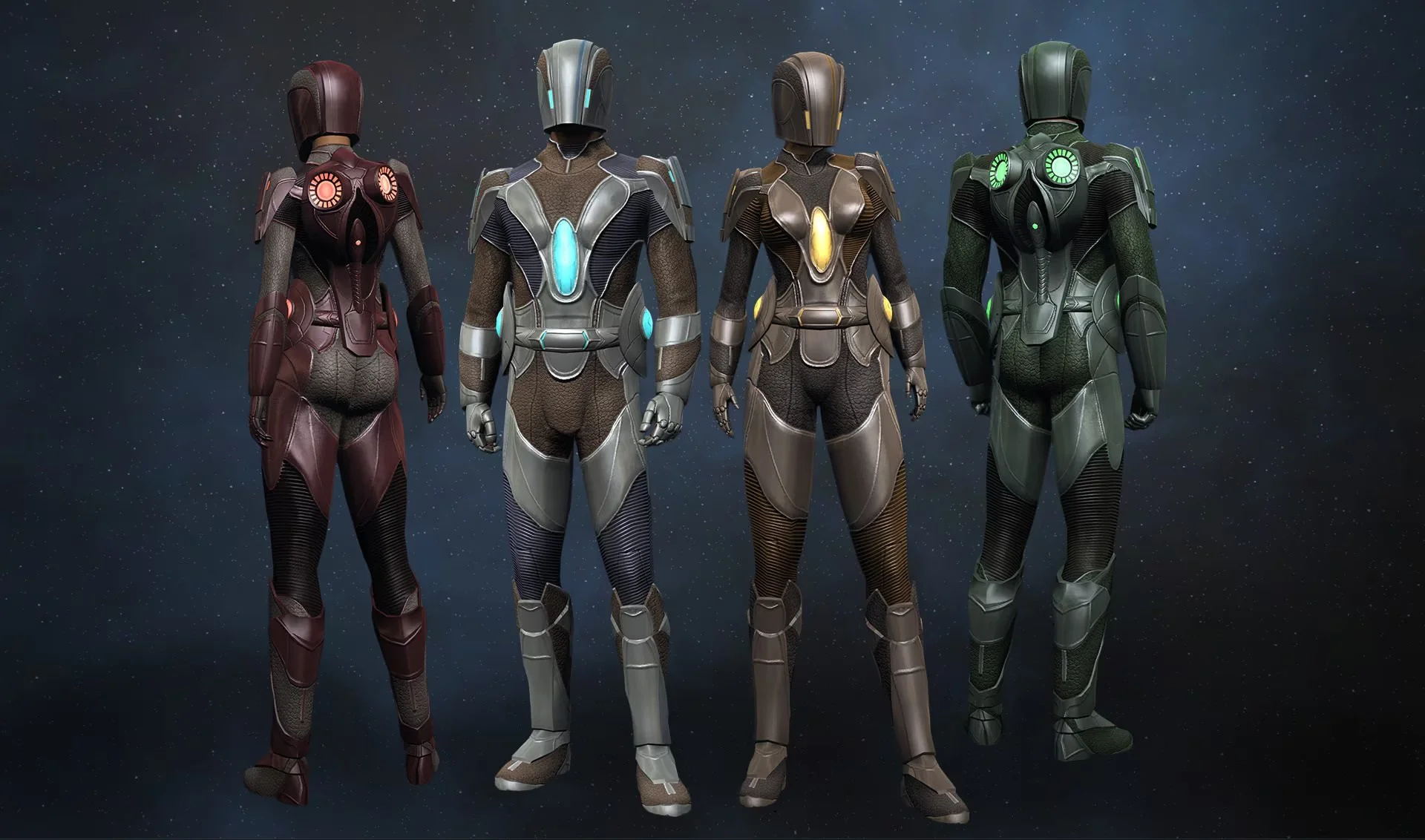
Star Trek Online has many in-game systems that are common to the MMORPG genre. The reputation system is one such example. In STO there are 13 reputation factions. Once a player has reached level 50 they may start progressing through the 6 reputation tiers of each one. Players gain progression through daily projects (20 hours in duration). Hourly projects are also available though they yield less reputation advancement and are limited to three times a day. Hence 20 hour projects are consider by default the most efficient way to gain rep. Projects require 30 Faction Specific Marks (earned via various activities in-game), 15,000 Energy Credits (standard in-game currency) and 2000 Expertise points. The most efficient way to tackle the reputation grind is to build up the necessary resources in advance and then at a designated time each day, start all 13 respective projects. Upon completion projects yield a player bound lockbox containing a random space or ground weapon, a console or Elite Marks which can be used to acquire faction gear.
Star Trek Online has many in-game systems that are common to the MMORPG genre. The reputation system is one such example. In STO there are 13 reputation factions. Once a player has reached level 50 they may start progressing through the 6 reputation tiers of each one. Players gain progression through daily projects (20 hours in duration). Hourly projects are also available though they yield less reputation advancement and are limited to three times a day. Hence 20 hour projects are consider by default the most efficient way to gain rep. Projects require 30 Faction Specific Marks (earned via various activities in-game), 15,000 Energy Credits (standard in-game currency) and 2000 Expertise points. The most efficient way to tackle the reputation grind is to build up the necessary resources in advance and then at a designated time each day, start all 13 respective projects. Upon completion projects yield a player bound lockbox containing a random space or ground weapon, a console or Elite Marks which can be used to acquire faction gear.
The reputation system in STO is intended to be a lengthy process. The time required to complete each reputation tier increases as you progress. If a player maintains a regular schedule with regard to undertaking 20 hour reputation projects, then they can complete all 6 tiers within 70 days. However, once a player has reached Tier 5 in a specific reputation, they then unlock reputational “sponsorship” which effectively halves the time it takes to gain rep on any subsequent alts on that account. Sponsorship doubles the amount of reputational experience you gain from projects. This makes the process somewhat easier but it is still considered one of the biggest chores within STO. However, unlocking each factions reputation provides players with access to a wealth of useful gear and traits, some of which are currently deemed to be the default meta by the community. Reputations also provide a means to earn Dilithium which is a major currency in STO.
I recently created a new account for STO, so I could document the overall experience of being a new player. As I mentioned in a previous post, I do not have the advantage of being able to access account wide unlocks from prior alts. However, my current rep progression is complex, as I did claim the free Jem’Hadar Vangard alt as part of the ongoing Gamma Recruitment Event. This is a level 60 character that has three reputation factions already progressed to tier 5 and inherent reputation sponsorship. Hence I was similarly expecting to have the benefit of sponsorship on my new TOS era alt across all 13 rep factions. However that is not the case and for some reasons, Discovery Legends and GammaTask Force factions are progressing at the normal, unsponsored rate. I am not sure whether this is a bug or by design but it means that not all rep factions will progress in a uniform fashion.
It’s been a while since I have through the reputation grind in STO. All my other alts belong to a lifetime account and benefit greatly from the myriad account wide unlocks. A new alt associated with that account is showered with claimable faction marks and therefore has all the resources necessary to fast-path through the rep system before they even reach level 50. Not so with this new alt. In fact I recently decided to farm the ongoing Crystalline Catastrophe Event, which rewards the player with 105 reputation marks of their choice each time. I ended up doing this event 26 times in one play session to build a stockpile. Obviously, I could have chosen not to do this but that would have made the timetable for gaining maximum rep in all factions longer than the current 50 days (70 for the two factions that aren’t sponsored). It should be noted that Cryptic do give players the option to buy tier 5 rep if they see fit. I do not. I like convenience but I have my limits.








Changing Internet Service Provider
Yesterday we changed internet service providers. We moved from EE (formerly BT) to Plusnet. The transition went surprisingly well, mainly due to the existing infrastructure remaining the same. We’ve had fibre to the premises (FTTP) since 2022 so this was essentially an administrative change. The previous ISP terminated their service at 1:30 AM in the morning, while I was playing Star Trek Online. By 6:30 AM I received a message from Plusnet that the new service was live. It took about an hour to configure the new Netgear Nighthawk RS100 router (I bought my own) and get all our household devices attached to the new network. The connection is running at exactly the same speed and stability as it had under the previous supplier. At present a 1Gbps connection is sufficient for our needs. The main factor that has driven this change is cost. We are currently paying £28 per month for internet access which is a competitive price in the UK.
Yesterday we changed internet service providers. We moved from EE (formerly BT) to Plusnet. The transition went surprisingly well, mainly due to the existing infrastructure remaining the same. We’ve had fibre to the premises (FTTP) since 2022 so this was essentially an administrative change. The previous ISP terminated their service at 1:30 AM in the morning, while I was playing Star Trek Online. By 6:30 AM I received a message from Plusnet that the new service was live. It took about an hour to configure the new Netgear Nighthawk RS100 router (I bought my own) and get all our household devices attached to the new network. The connection is running at exactly the same speed and stability as it had under the previous supplier. At present a 1Gbps connection is sufficient for our needs. The main factor that has driven this change is cost. We are currently paying £28 per month for internet access which is a competitive price in the UK.
When we had FTTP set up, the Optical Network Terminal (ONT) was installed in the spare room at the front of the bungalow. I use this room as my office. Hence the router is located here and sits on the lower shelf of a table, next to my desk. I have an ethernet connection to my PC. However, the wifi in our lounge has always been quite low, due to the brick walls. Furthermore, we have our home media equipment setup in the fireplace, which compounds the problem. Previously I was using a wifi extender, which connected to a mini-hub. The TV, Media player, Blu-ray player and Satellite box all have ethernet connections. Unfortunately, this wifi extender did not perform well with the new router, mainly due to its age. However, after searching through my stash of IT related bric-a-brac, I found a pair of powerline adaptors, so I was able to replace the wifi extender. The equipment in the fireplace now has a 60Mbps connection.
As part of this change of service, we finally said goodbye to our landline. When we moved over to FTTP, the old analogue line was disconnected but we retained a VOIP landline purely for incoming calls. Mainly because several clinics and other healthcare institutions still contacted us via our old telephone number. We have addressed this issue now and made sure that all calls of this nature come purely to our mobile phones. Hence there was no longer a reason to keep the landline and it has finally been decommissioned. It is a curious milestone as we’ve had that number since 2003 and had access to a landline all our adult life. However, the culture associated with telecommunications has changed radically in the last twenty five years and by and large, landlines have become an anachronism for most people. As have the concept of voice calls. The majority of those I do receive nowadays are marketing and other spam.
Our new ISP is providing an identical service to the old one over exactly the same infrastructure. Hence this change has not been about seeking an upgrade in internet speed or superior technical support but getting a better deal. The best deals in the UK for internet and cell phones always seem to be for new customers. Brand loyalty is not especially well served. We left EE mainly because they could not or would not offer us a competitive price. So we have contributed to market churn and taken advantage of a “new customer” deal with Plusnet. We know what price we shall be paying over the next twenty four months and if a more favourable one can be found at the end of that period, we will move once again. It strikes me as a risible and unsustainable course of action but if that is the way to ensure the most economic price, then so be it.







MMORPGs Based on Existing Intellectual Properties
I was recently perusing my archive of old blog posts, when it struck me how much I’ve written about the MMORPG genre over the years. Naturally, there was far more material from between 2008 and 2012 as that was period when I immersed myself in the genre and was very enthusiastic about it. I was at a point in my life when I had the time to dedicate to such games and I was happy to participate in the social aspect of they offered. I would regularly play through group content and spend time socialising online with fellow guild members. My experience remains a textbook example of how online games can be more than the sum of their parts and that where you are at in your life has a major impact upon your overall enjoyment. As I read though various old posts it became clear that my experiences where specific to this particular part of my life and that they cannot be repeated. My relationship with the genre is very different now and that’s fine.
I was recently perusing my archive of old blog posts, when it struck me how much I’ve written about the MMORPG genre over the years. Naturally, there was far more material from between 2008 and 2012 as that was period when I immersed myself in the genre and was very enthusiastic about it. I was at a point in my life when I had the time to dedicate to such games and I was happy to participate in the social aspect of they offered. I would regularly play through group content and spend time socialising online with fellow guild members. My experience remains a textbook example of how online games can be more than the sum of their parts and that where you are at in your life has a major impact upon your overall enjoyment. As I read though various old posts it became clear that my experiences where specific to this particular part of my life and that they cannot be repeated. My relationship with the genre is very different now and that’s fine.
Out of all the MMOs that I’ve dabbled with over the years, only two are still being actively played. The Lord of the Rings Online and Star Trek Online. After giving this matter some thought, I have concluded that it is my relationship with the intellectual property on which they’re based is the main reason why these two have remained, where as other have fallen by the wayside. I used to play Guild Wars 2 regularly. I participated in the beta testing and doggedly worked my way through the base game and tackled the first expansion. It was the latter that killed my interest. On its release Heart of Thorns was difficult to play through, due to it’s three dimensional environment. There were no flying mounts at the time, so the game ground to a halt for me. Usually in such circumstances, games like LOTRO have the benefit of lore heavy narratives which appeal to my sense of fandom. Guild Wars 2 is its own unique IP and sadly has no emotional resonance for me. So I stopped playing.
The same thing effectively killed my interest in most other MMOs. I really tried to get into the lore of The Elder Scrolls Online because I had enjoyed Skyrim so much. But it all seemed a little too derivative for my taste. When I’ve raised this issue in-game, other MMO players have suggested I just ignore the dialogue and mission text and focus on just getting whatever is required done. Sadly, I like narratives and therefore want to know what my motivation is. Doing a task for “reasons” doesn’t really suit me. Such things don’t kill my interest in an MMO immediately. The social component can keep me engaged for a while, especially if you often play through content as a group. However, that too can wane over time, especially if friends move on to another game. I’m in a curious situation where I still talk online each week to a friend I have met through MMOs but we seldom play the same games any more.
All of this raises the question of whether I am still an MMO player per se, or whether I am just playing MMOs as single player games, in a multiplayer environment. Crimson Desert has highlighted this point as that game feels conspicuously like an MMO, especially with regard to many of its game systems and mechanics, yet it lacks the presence of other players. I suppose the definitive test would be if a new MMO launched that took my fancy, would I now play it? That question would depend greatly upon its setting and whether it was based on an IP I was already familiar with and enjoyed. If there was a modern MMO released that was set in the First Age of Middle-earth, then I would most definitely try it. I cannot say the same about titles with just a generic fantasy setting. I am not entirely sure if this change in perspective is down to me or the ongoing evolution of the genre. I suspect that both have contributed to my current outlook.


Learning via AI
In 1990 I was working at the DWP (Department for Work and Pensions). I had just taken the role of Computer Support Officer where I administered user access to the mainframe and provided first line support to staff using the terminals. That summer the office moved to a PC based network and the project was undertaken by the newly formed Siemens Nixdorf company. To cut a long story short I befriended one of the contract engineers and over the next 9 months he became an unofficial mentor to me. Technically he was only supposed to train me in the most basic of fashions but he liked the fact that I was always asking questions and effectively ended up schooling me in PC and server architecture, network administration and the associated protocols. For me this was the best way to learn. It was not a case of coming to grips with theory in a classroom environment. It was learning by doing and having direct and exclusive access to a source of knowledge and experience.
In 1990 I was working at the DWP (Department for Work and Pensions). I had just taken the role of Computer Support Officer where I administered user access to the mainframe and provided first line support to staff using the terminals. That summer the office moved to a PC based network and the project was undertaken by the newly formed Siemens Nixdorf company. To cut a long story short I befriended one of the contract engineers and over the next 9 months he became an unofficial mentor to me. Technically he was only supposed to train me in the most basic of fashions but he liked the fact that I was always asking questions and effectively ended up schooling me in PC and server architecture, network administration and the associated protocols. For me this was the best way to learn. It was not a case of coming to grips with theory in a classroom environment. It was learning by doing and having direct and exclusive access to a source of knowledge and experience.
Throughout my career in IT which ran until 2016, I always enjoyed the fact that there were always professional colleagues available who were happy to share knowledge. We would all call each other if something came up that required additional information. There would be a few engineers who were cagey but they were soon sidelined from our shared, informal ad hoc pooling of knowledge. One of the aspects that I liked so much about my career was the opportunity to continuously learn and challenge my assumptions. A lot of the time in IT, you would work alone so your successes were yours. However, having access to a network of like-minded friends and colleagues was an invaluable resource. One that I now miss. Not only because it was a great means to learn something new or solve a problem but because there was a social component to this network. We would often meet up for drinks after work and swap stories and news.
I have embarked on several technical projects recently and it’s extremely frustrating when I grind to a halt due to gaps in my knowledge. Having been out of my line of work for over a decade, I no longer have access to people “who know”. So I have started using AI as an alternative. As my questions have become increasingly complex, I’ve started subscribing to Google Gemini so that I don’t run into any kind of cap or restrictions. The results have proven broadly positive although there has been issues along the way. Overall, I haven’t changed my position on AI. It is a tool and like all tools can be used efficiently and effectively or it can be misused. I don’t use it for writing and only generate images for my own amusement. As far as providing technical support it is very useful, especially with simple coding issues or troubleshooting software. However, it does have its own foibles, or at least Google Gemini does, which have to be worked around.
Simply put Google Gemini is a pedant. If you ask a broad question you can and often will get a broad answer. Hence you have to be very specific and detailed in your questioning. It takes a while to find the right level of information you need to provide and the learning curve can be frustrating. I asked multiple questions about setting up the live streaming software OBS. I wanted the stream to be in 2K resolution and there were all sorts of configuration settings, many of which were linked to which make and model of graphics card you have. Google Gemini would often reference setting by names that were not present in the version I had installed, so all my subsequent questions had to reference the software version number to ensure relevance. As Google Gemini’s “knowledge” is drawn from the websites that it parses, there is often a bias towards whatever has been written about the most. Hence its answers although correct, may not be the most recent.
Hence AI’s need to be addressed in a very specific manner. Often you feel that your not only asking questions but you’re also like a sheep dog; trying to steer the entire undertaking in the right direction. Google Gemini now has the capacity to retain your previous questions to try and get a better overall understanding of what you’re working towards. Obviously this is a privacy issue and comes down to personal choice but I have allowed it for the present as none of my questions are about me personally. They are simply technical enquiries relating to minor tasks I’m undertaking. I do not use AI to do such things as write letters, compose emails as I am more than capable of doing such things for myself. Hence for the present, Google Gemini is not accessing vast swathes of personal information about me. Unless asking lots of questions about specific video games and their respective mechanics provides any insight.
The one thing that AI cannot provide is the social aspect that comes with shared problem solving with a network of professional colleagues. Often exchanging information with colleagues is done after work over drinks or a meal. The social component often leads to wider friendships. That aspect is not present when you’re learning via an AI. Mind you, the latter can be a lot cheaper, as you don’t have to buy it a pint either or make small talk with it. Joking aside, both methods of sharing knowledge and learning have their respective merits. My recent experience using Google Gemini has been a very interesting experience. The quality of answers the AI gives increase in the quality once you start subscribing and accessing a more advanced version. However, while writing this post and reflecting upon the network of colleagues that I use to have, has made me realise how much I miss both their expertise and company.












Tactical Voting
Under the First Past the Post electoral system, the candidate(s) receiving the highest number of votes in each constituency are elected. This system is used in the UK during general elections and in some local elections, such as those recently conducted in England. An alternative approach is the system of proportional representation, which aims to allocate seats in a manner that reflects the popularity of various parties. Both the Scottish Parliament and the Senedd in Wales employ systems of Proportional Representation. Historically, first-past-the-post has been seen as advantageous for the Conservative and Labour parties. It poses challenges for smaller parties whose votes are distributed evenly across different regions, making it difficult for them to secure seats. This dynamic effectively prevents potential competitors to the Conservatives and Labour from succeeding electorally. Consequently, due to this situation, voters may hesitate to support these smaller parties from the outset.
Under the First Past the Post electoral system, the candidate(s) receiving the highest number of votes in each constituency are elected. This system is used in the UK during general elections and in some local elections, such as those recently conducted in England. An alternative approach is the system of proportional representation, which aims to allocate seats in a manner that reflects the popularity of various parties. Both the Scottish Parliament and the Senedd in Wales employ systems of Proportional Representation. Historically, first-past-the-post has been seen as advantageous for the Conservative and Labour parties. It poses challenges for smaller parties whose votes are distributed evenly across different regions, making it difficult for them to secure seats. This dynamic effectively prevents potential competitors to the Conservatives and Labour from succeeding electorally. Consequently, due to this situation, voters may hesitate to support these smaller parties from the outset.
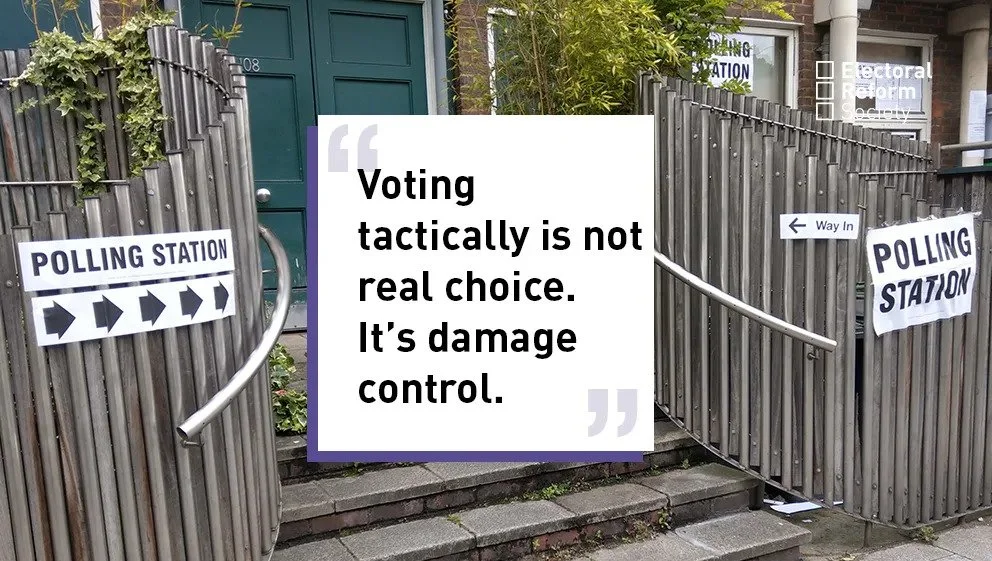
Therefore, as voting the way you wish to can be rendered pointless under the First Past the Post electoral system, the only other means available to the electorate to have any meaningful agency is to vote tactically. Tactical voting is a strategy where voters support a candidate other than their first preference to prevent an undesirable candidate or party from winning, It provides an option in which one does not feel you’ve “wasted your vote” upon parties and candidates that are unlikely to win in a specific constituency. However, it is an act couched often in negativity and is a tacit admission that votes in certain constituencies and wards do not count as much as others. Groups like the Electoral Reform Society argue tactical voting is a “symptom of a failing system” and hence advocate for a replacement electoral system such as Proportional Representation (PR), to make tactical manoeuvring unnecessary.
Last Thursdays local elections in the UK saw a large degree of tactical voting. Dissatisfaction with the current Labour government has lead to a significant surge in votes for Reform UK. However, voting in Council Elections during midterm is often perceived as a protest, hence this can be interpreted as a tactical vote. It sends a message to the government but such a vote may not be repeated during a General Election. There has also been tactical voting to prevent Reform UK candidates from gaining office locally. Reform UK generates strong negative feelings among some quarters of the electorate, who are willing to set aside their own party loyalties to block them. Reform UK is more susceptible to effects of tactical voting as their support is spread unevenly across the country, rather than concentrated in “safe” political strongholds. It is also something the party is particularly truculent about calling tactical voting a “conspiracy of the establishment”.
I voted tactically in last weeks local elections. I have no love for the Conservatives or any other political party, considering them all unfit for purpose. However, I did not want the local council, which is run relatively efficiently, falling to into the hands of Reform UK who are ill equipped in all respects to run a civic institution. So I voted for the incumbent party as it was the “least worst” option. Had I spoilt my ballot in a self-indulgent act of “ideological purity” the loss of the vote could have allowed a Reform UK candidate to gain a seat. There literally was only a few votes in it. However, the outcome affords me no pleasure whatsoever. It’s a deplorable situation when I have to cast my vote based upon what is the least awful option, rather than voting for a candidate or party in which I am genuinely invested. I am reminded of the words of Winston Churchill.
“Many forms of Government have been tried, and will be tried in this world of sin and woe. No one pretends that democracy is perfect or all-wise. Indeed it has been said that democracy is the worst form of Government except for all those other forms that have been tried from time to time.”














UK Local Elections 2026
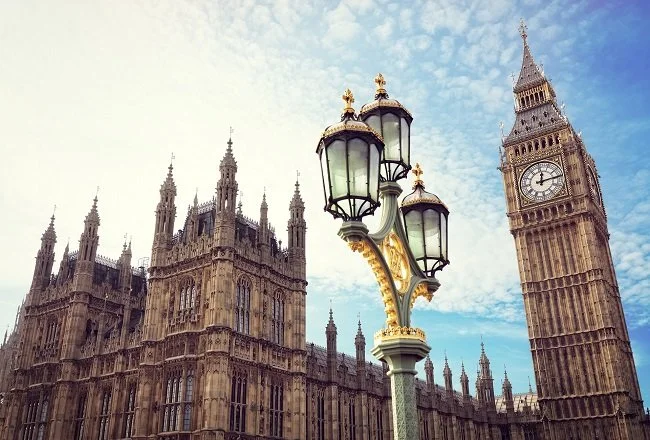
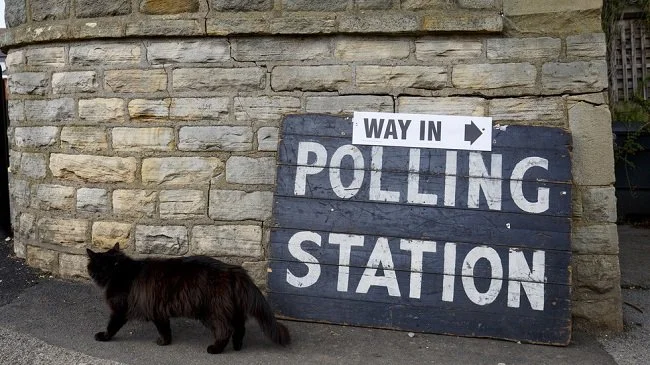
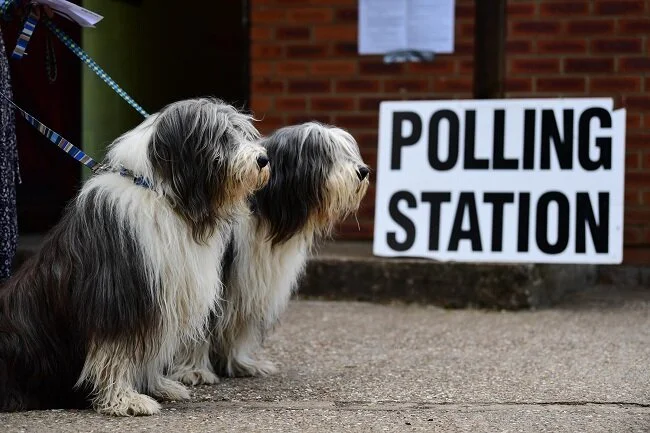
There are local elections being held across the UK today. Voters in Scotland and Wales will elect representatives to their respective national parliaments, while in England the voting is for local councils and regional mayors. These are the first major elections to be held in the UK since the 2024 General Election which saw the Conservative government of fourteen years, fall to the Labour Party. Midterm elections are often a litmus test for how the electorate think the national government are performing although local issues are also a major factor. The consensus among political journalists and commentators is that the incumbent government is polling extremely poorly and will subsequently face a backlash. In recent years the UK has seen a decline in traditional two party voting with Reform UK and the Greens gaining significant traction among the electorate. Hence today’s elections may well see both these parties make significant gains.
There are local elections being held across the UK today. Voters in Scotland and Wales will elect representatives to their respective national parliaments, while in England the voting is for local councils and regional mayors. These are the first major elections to be held in the UK since the 2024 General Election which saw the Conservative government of fourteen years, fall to the Labour Party. Midterm elections are often a litmus test for how the electorate think the national government are performing although local issues are also a major factor. The consensus among political journalists and commentators is that the incumbent government is polling extremely poorly and will subsequently face a backlash. In recent years the UK has seen a decline in traditional two party voting with Reform UK and the Greens gaining significant traction among the electorate. Hence today’s elections may well see both these parties make significant gains.
Bexley Borough, of which I am a resident, has been a Conservative stronghold for decades. It has always returned a Conservative MP in General Elections and the local council has been Conservative controlled for the last twenty years. However, it has been targetted by Reform UK who see it as a potential beachhead into Greater London. Hence they have been actively campaigning on such issues as road maintenance, protecting the Greenbelt and addressing the existing council budget gap which is forecast to reach £17.8m by 2029/30. Houses in Multiple Occupation have also become a political football, in which residential properties are converted into individual rentable rooms with shared kitchen and bathroom faculties. These can and have been on occasion rented by the Home Office and used to house asylum seekers and refugees, although the “official” argument is made that these take local property out of the housing market.
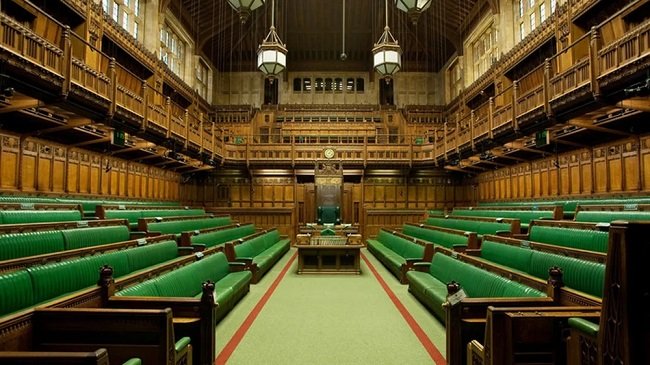
Due to the potential for immediate gain and long term political capital, 192 candidates are standing in the Bexley Borough this year, meaning many wards are now in a three-way battle between the Conservatives, Labour and Reform UK. The latter is projected to gain 20 council seats, potentially becoming the largest party. This would leave Bexley Council with no party in overall control, leading to all the associated “horse trading” that comes with no definitive “winner”. Despite the political stakes, Local Elections seldom see a large voter turnout and there are concerns that substantial political changes could be made across the UK on very small shares of votes cast. Then there are the wider ramifications of such a political sea change and the immediate consequences they could have on the incumbent Labour government.
Bexley Council Offices
Many among the political commentariat see today’s elections as the moment Britain broke with the traditional two party system of past century (although it has not always been that way). Where the focus in Bexley Borough is on the performance of Reform UK, nationally there is a great deal of interest in the performance of the Green Party. Especially with regard to their popularity with younger voters and ethnic minorities. However, the biggest story could be Labour’s worst ever local election performance, as voters give their verdict on two years of Keir Starmer’s premiership. If such results come to pass, then there is strong chance of a leadership challenge within the Labour Party. Such a possibility would not be well received by the electorate, as the continuous infighting and changes of leadership within the last government was one of the reasons cited for them being voted out of office.
I completed my postal ballot two weeks ago. I am a floating voter with no affiliation with any of the parties, seeing none of them as fit for purpose. I am not alone in my current exhaustion with politics, the way it is conducted and reported. Both the political class and the legacy media inhabit a curious societal adjacent bubble where they assume that the public are equally as engrossed and enthralled by their esoteric machinations. Sadly the opposite is true. Both groups are blissfully unaware of the contempt in which they are held by the public, who find their indulgences tedious and exhausting. The electorate are desperate for some old school, “bread and butter” politics in which essential issues such as the economy, the funding of public services and law and order are addressed. Sadly all parties seem more concerned about “the optics”, rather than offering tangible plans and policies. I await today’s election result with a sense of resigned disappointment.
Star Trek Online: Levelling an Alt on a New Account
Creating alts is an integral aspect of the MMORPG genre. Many players will create a character of a specific class or faction, play it for a while, lose interest in it or they may decide that it is just not for them. Fortunately it is no effort at all to simply re-roll a new alt and set off once again. Furthermore, lots of players never reach level cap of the MMORPG that there playing. When the going get’s tough, so to speak, you can either soldier on for another 50 levels or simply create a new alt and return to the comfort of tried and tested content. Alts also give you the chance to secure an accolade or achievement that you previously missed. They are also of great benefit to the genres social aspects. Creating a new alt so you can play along with a friend who is just starting is great fun. Developer’s love them too as it means you’re still playing the game.
Creating alts is an integral aspect of the MMORPG genre. Many players will create a character of a specific class or faction, play it for a while, lose interest in it or they may decide that it is just not for them. Fortunately it is no effort at all to simply re-roll a new alt and set off once again. Furthermore, lots of players never reach level cap of the MMORPG that there playing. When the going get’s tough, so to speak, you can either soldier on for another 50 levels or simply create a new alt and return to the comfort of tried and tested content. Alts also give you the chance to secure an accolade or achievement that you previously missed. They are also of great benefit to the genres social aspects. Creating a new alt so you can play along with a friend who is just starting is great fun. Developer’s love them too as it means you’re still playing the game.
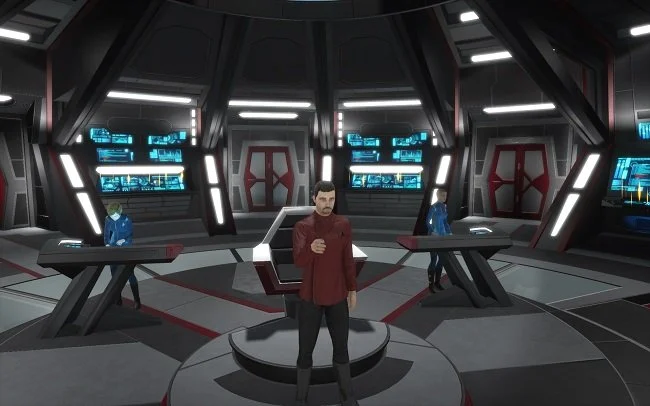
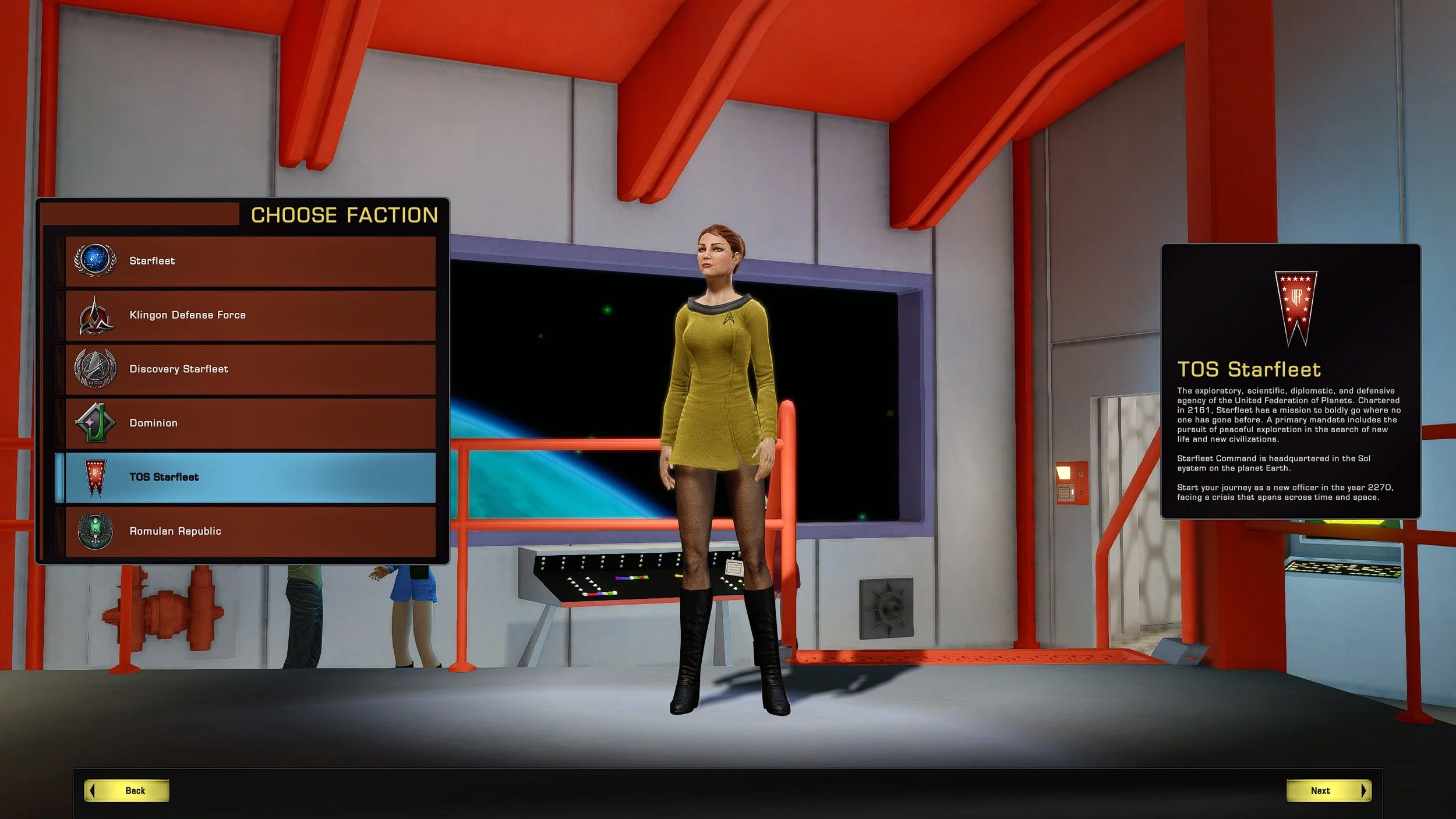
So it is easy to see why alts are so popular and a key part of the MMRPG scene. I recently resumed playing Star Trek Online and found that I have nearly used up all my available character slots. Rather than pay for more, the easiest solution was to create a new account, which I duly did. I took advantage of the on going Gemma Recruitment Event and claimed the free Level 60 Tactical Vanguard Jem’Hadar character. However, what I really wanted to do was create a new 23rd Century character from the Star Trek: The Original Series era. STO has an outstanding but somewhat short story arc set in this time period which totally catches the vibe of the TV show. Hence I created a new Captain and “boldly” went about the business of saving the universe without ripping my shirt at the shoulder. It didn’t take long for me to spot the difference between creating an alt on this new account compared to my existing one.
My main STO account dates back to the launch of the game in January 2010. In 2015 I upgraded to a lifetime account. I have one primary character that I have used to play through all in-game content and events. In STO a lot of the rewards you receive from events are account unlocks. Ships you have bought from the C-Store are similarly available across your account. So if you create a new alt, as soon as you have completed the tutorial you can start claiming a wealth of gear that greatly assists in your ongoing progression. Kit modules, ground weapons, shield and armour for your away team. Universal consoles and various sets of ship gear. Then there’s dozens of vessels to choose from. You get the idea. Simply put, rolling a new alt under such circumstances is a relatively frictionless undertaking because they get such a leg up with all the material advantage. My new alt on the recently created alternate account has no access to any of this.
Overall this has been a timely reminder as to how all new players experience Star Trek Online. You get a level appropriate ship, default gear and slowly progress using the mission rewards you’re given. Your inventory and bank space is initially small but sufficient for the loot that you receive at this stage of the game. Without the benefits of fancy unlocks, learning combat with the gear the game provides teaches you the situational awareness and tactics you need to master. You can’t cheese it through having access to better stuff. Hence the levelling process, via the missions, means you progress in a measured fashion, gaining access to better gear, as the game intended. The game gives you what you need as you level for free. If you want any more then you can always use the store. This intended scarcity makes the new player consider what they equip and what they may sell or buy.
As I am playing on a new account which I created mainly for short term fun, I am reticent to spend any money on the two alts it is currently home to. I did remember to check on the Alienware website to see if there were any freebie game codes available and there are at the time of writing this posts. So I managed to secure the following items. Terran Empire Odyssey Outfit. An Elite Services Pack and a small XP Boost. The service pack provides 36 bank slots and 36 inventory slots, as well as two bridge officer slots. This usually costs 1000 Zen in the C-Store store so is well worth grabbing while its still available. Beyond this addition, I shall continue to play in the “vanilla” fashion, as Cryptic intended. Although not being able to access my account unlocks has made me appreciate how beneficial they can be. In the meantime, I shall battle the Klingons with my vendor trash gear, like its some kind of Kobayashi Maru test.
Returning to Star Trek Online in 2026
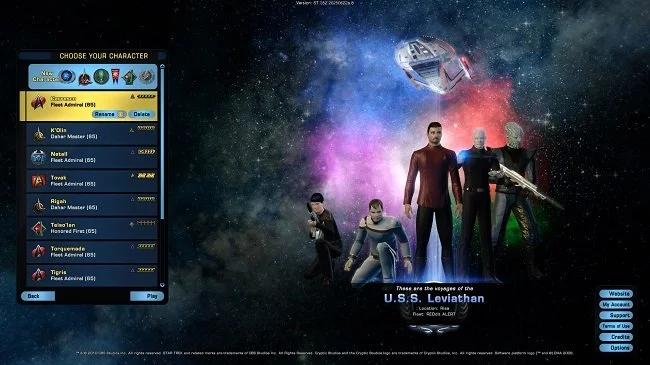
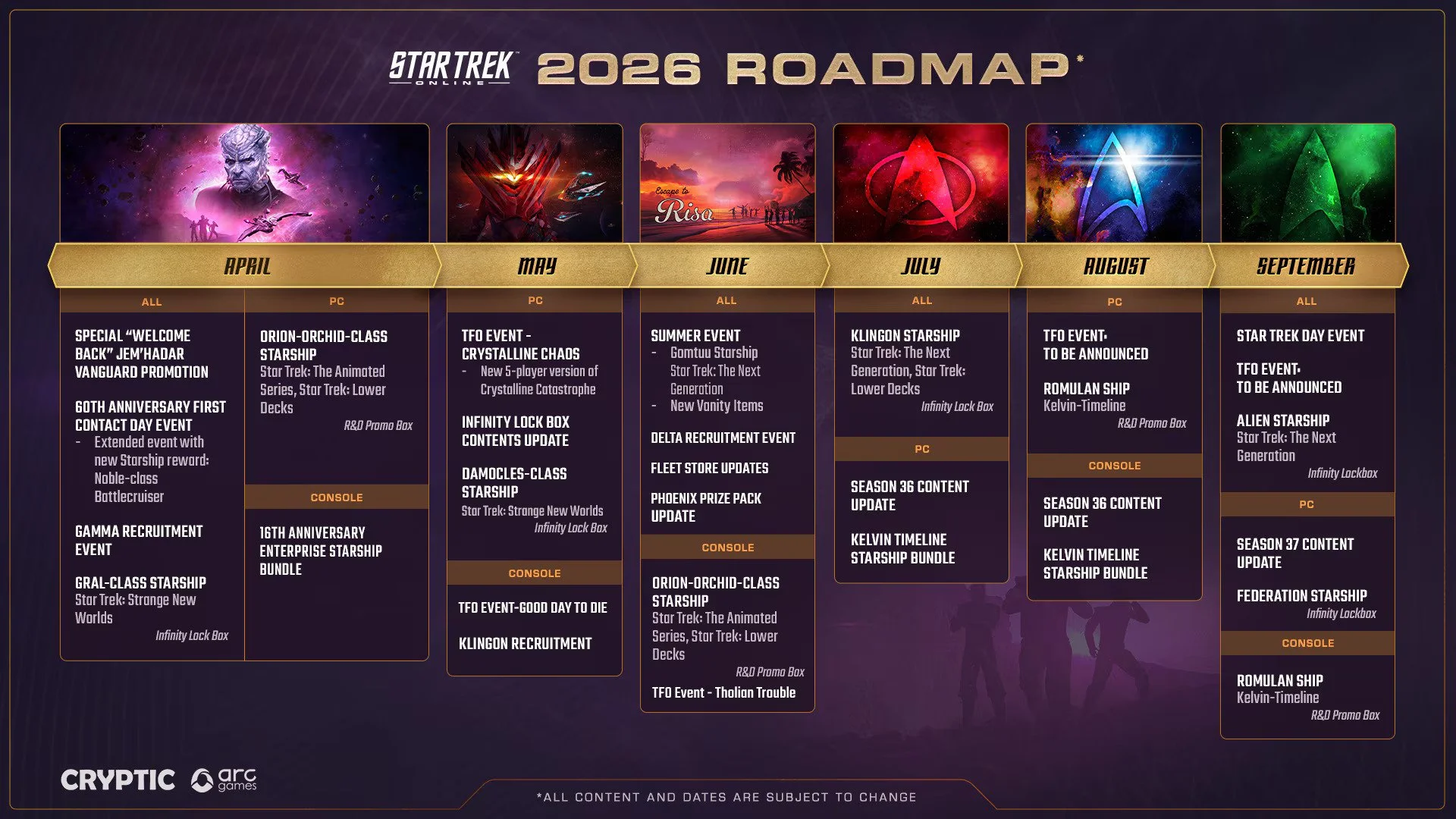
I recently took a break from Crimson Desert choosing instead to to play something familiar and easy going. As I’ve been logging into Star Trek Online daily to participate in the anniversary event, I decided to look through my various alts and see how far they had progressed through the game and what resources they had. At present I have twelve alts. My primary Captain was created in 2015 during the original Delta Recruit Event. I had previously played STO intermittently since its release in January 2010 but I never kept any of those characters. Hence this decade old Tactical Federation Captain has been my main focus when playing. The other eleven alts are the result of other recruitment events or whenever I wanted to try something different, such as playing a specific class or faction. I obviously played a lot of STO during the lockdown as several alts date from that period. Several had maximum reputation across all factions.
I recently took a break from Crimson Desert choosing instead to to play something familiar and easy going. As I’ve been logging into Star Trek Online daily to participate in the anniversary event, I decided to look through my various alts and see how far they had progressed through the game and what resources they had. At present I have twelve alts. My primary Captain was created in 2015 during the original Delta Recruit Event. I had previously played STO intermittently since its release in January 2010 but I never kept any of those characters. Hence this decade old Tactical Federation Captain has been my main focus when playing. The other eleven alts are the result of other recruitment events or whenever I wanted to try something different, such as playing a specific class or faction. I obviously played a lot of STO during the lockdown as several alts date from that period. Several had maximum reputation across all factions.
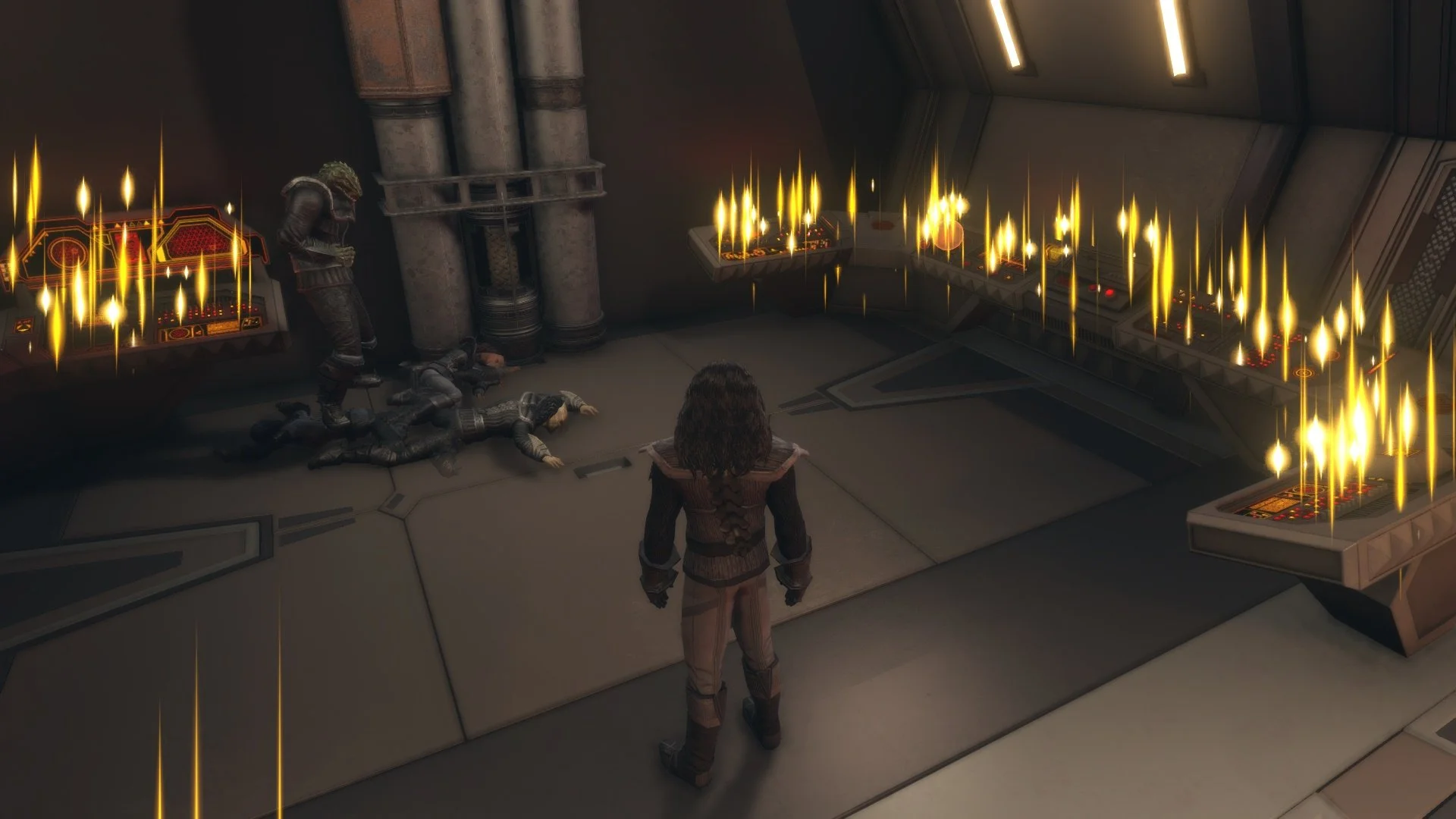
I created a Klingon Defence Force Captain in early 2021, going so far as to buying a Legendary D7 Intel Battlecruiser for them. So I decided to resume playing through the various story arcs with this character, while tinkering with the his gear, away team and ship as I went. It has proven a most satisfying experience because the game offers a great deal of scope for change and fine tuning. It is also a good example of a game where it is easy to pick up where you left off and if you want instant action, you can always jump straight into a Task Force Operation. STO is a process driven game with a strong set of underlying mathematically driven systems. Hence improving your overall build is an unambiguous process. However, if learning the theory behind build creation does not appeal to you, you can always just follow one of the many guides that can be found online. The story driven missions certainly provide adequate gear for all the PVE content.
Endgame in STO seems to be predominantly focused on min-maxing, increasing your DPS and running Elite level content. However, the game certainly lends itself to roleplay for those disposed to such things. Having twelve alts means I can always return to one and find some aspect that needs improvement or tweaking. The story content is also very engaging and certainly captures the heart and soul of most Star Trek shows. Having so many of the original cast providing voices helps immensely with atmosphere and immersion. Some of the minor mini-games and their subsequent accolades and benefits can become obsessive pursuits. The Lore Mission, The Path to 2409, being one example. I recently discovered that you can still breed specific species of Tribbles and despite the age of this systems, some can still offer some very useful buffs when equipped. Then there is the rabbit hole of visiting the in-game tailor and customising your outfit.
However, you cannot play STO without referencing the persistent bugs as well as the element of “jank” that is present in several aspects of the game. Despite being based upon a premium franchise, STO has always had a the air of a second tier MMORPG, with developer’s Cryptic having to fight for resources. Although I am very fond of this game and think that it captures the essence of the franchise well, it always feels like it hasn’t fully met its potential. I’m sure now that Cryptic are back in full control of the development that they have aspirations to improve the game which is currently showing its age. Yet whatever plans they may have, they will not be realised immediately. Which means that anyone returning to STO or playing for the first time, has to accept the game as it is at present. The low level bugs and glitches can be annoying at times but for me, they never make the game unplayable.
Having watched a few videos on the subject of playing STO in 2026, the issue of the C-Store comes up quite quickly. Simply put, STO monetises multiple aspects of the game. Ships, personnel, items, services and more. However, it must be said that they are always selling you more of what you have already. The resources that are available to free players are adequate. As you level a new character through the game you are given free ships that may not be the best but can get the job done. You have sufficient bank and inventory spaces. If you want more then there is scope to earn in-game currency or participate in regular events that reward you with gear or ships. As for the argument of “pay to win”, I’m not sure what you win exactly? You can create a high performance ship build made up of premium items but you can also do the same with regular gear. Skill is also an important factor and that cannot be bought.
As a franchise Star Trek is in a state of flux at present. The acquisition of Paramount Global by Skydance Media has led to all current TV productions being halted. Long term plans have yet to be announced but the new owners seem focused on feature films rather than episodic television. This leaves a substantial gap in the market for fans. Something that a persistent world game with regularly updated lore adjacent content, could address. Whether Cryptic can rise to such a challenge remains to be seen. In the meantime if you fancy trying STO, there is a convenient on going Quick Start Event running until May 21st. Both old and new players can login to the game and claim a free Tactical Vanguard Jem’Hadar character. They are level 60 by default and come with appropriate gear, skills, traits and ship. Alternatively you can start the game from the beginning, choosing between multiple factions, all of which begin with unique starter missions.
As I mentioned at the start of this post, STO is currently celebrating its 16th anniversary. That’s a long lifespan for an MMO. Developers’ Cryptic recently posted a new road map for 2026 and they certainly have plans. As a lifetime account holder, I wish them well but I do hope that they can do more than just put new events, items and episodic stories. I would like to see a comprehensive ongoing project to address the bugs in the game and to streamline and restore the existing story content. Due to the story arcs being tweaked (some have been removed altogether), what is left although narratively good, has some continuity issues. Ground combat needs to be revised and any improvement to the character models would go a long way to improve things. The game needs more story content that is in the idiom of that produced in the first decade of the game. In the meantime, I shall continue to progress my alts and play what content is available.

Spotify and Sound Quality
I was recently listening to some music on Spotify when it struck me how poor the sound quality was. It lacked any depth and certain instruments seemed lost in what I can only describe as a somewhat flat and smudged soundscape. Then I remembered that I had recently reinstalled the app on my PC after the search facility "broke" on the previous install. It would seem that any prior settings and customisations that I may have made had not carried over, not that I recollect specifically making any. I consulted Google Gemini to see if this issue was a common one and low and behold it is. The latest version of Spotify, by default, has the streaming bitrate set fairly low to accommodate data capped internet services or low bandwidth connections. In audio terms the music quality sounds poor. Hence I spent sometime nosing around in the settings to see what needed to be changed to remedy this problem. Here is the breakdown of the alterations that I made.
I was recently listening to some music on Spotify when it struck me how poor the sound quality was. It lacked any depth and certain instruments seemed lost in what I can only describe as a somewhat flat and smudged soundscape. Then I remembered that I had recently reinstalled the app on my PC after the search facility "broke" on the previous install. It would seem that any prior settings and customisations that I may have made had not carried over, not that I recollect specifically making any. I consulted Google Gemini to see if this issue was a common one and low and behold it is. The latest version of Spotify, by default, has the streaming bitrate set fairly low to accommodate data capped internet services or low bandwidth connections. In audio terms the music quality sounds poor. Hence I spent sometime nosing around in the settings to see what needed to be changed to remedy this problem. Here is the breakdown of the alterations that I made.
Audio Quality:
By default, the audio quality is set to “Automatic” which can drop your bitrate as low as 24 kbps or 96 kbps depending on available bandwidth. I changed this to “Very High” (320 kbps). If you have the Premium subscription tier, then this can be set to “Lossless” (FLAC). Note that lossless uses significantly more data (up to 1GB per hour), so keep that in mind if you have a data cap.
Normalise Volume:
This setting can be found under Playback. Normalisation tries to keep every song at the same volume so you don't have to keep making manual adjustments yourself but it does this by applying digital compression. This naturally impacts upon audio quality, so I turned it off as well.
Use the Equalizer:
There are over twenty presets for the Equalizer that adjusts the treble and bass accordingly. They make a noticeable difference so it is worth experimenting to find one that you find satisfactory. Or you can tinker with the settings yourself to suit your own tastes and preferences. There a “Reset” button if you are not happy with the results and with to return to the default settings.
Hardware:
If you’re listening via wireless headphones, it is worth remembering that Standard Bluetooth (SBC) compresses audio. If you're using high-end wireless headphones when listening on a phone, ensure they are using LDAC or aptX Adaptive if your handsets supports it. Interestingly, the Spotify Web Player is capped at a lower bitrate (AAC 128-256 kbps) than the dedicated Desktop or Mobile apps. Hence it is advisable to always use the PC or phone app for the best sound quality. Obviously the quality of your speakers is a major factor and if they are poor then it really doesn’t matter how much you tinker with the settings within Spotify. I have a Majority Snowden Soundbar connected to my PC via an optical connection. The sound quality is very good and there is none of the cabling issues you get with individual speakers.
I use Spotify mainly for convenience. You can curate your own playlists and access those made by others. It is accessible and fairly comprehensive. I am often surprised by what I can find available via the app. However, there are negative aspects associated with the service. The level of financial remuneration the artists receive being the main one. Another issue is the way we consume music nowadays has actually led to tangible changes in the way that music is now created and produced. However, such a subject is best dealt with a separate blog post. In the meantime, if you’re having issues with the sound quality of Spotify, hopefully the practical steps listed above will help you make changes for the better. If you have any tips yourself, feel free to share them in the comments below.






Thinking Out Loud
I was listening to a podcast recently in which comedian Stewart Lee talked about the comedy, music and local arts scene in London during the eighties. He highlighted how you could make a living out of music journalism at the times, albeit not an especially good one. He also talked about bands and comedians that lived from “hand to mouth” in shared properties and squats. Essentially it was still possible to pursue a career in the arts due to its standing within British culture which meant there was still some local funding as well as the revenue generated by those working in it and adjacent to it. The UK economy was such that is could “accommodate” working in the arts. Sadly, the internet and commodification culture has effectively killed such career avenues. You now need a regular job to fund your artistic ventures, which puts pay to such dreams for many people. You also have use social media to promote your work, which comes with its own set of full-time problems. The world changes but not all changes are for the better.
This post endeavours to curate a variety of random thoughts, diverse ideas and musings, then convey them clearly and concisely for your edification. Here are a few points on various topics that have occupied my mind lately. These may include talking points arising from the relentless news cycle or even those obscure ideas and musings that come to you while lying awake in bed. Many of which I feel do not warrant a comprehensive blog post or extensive analysis. Instead the idea is to provide a paragraph or two for your consideration and then see if any develop into a wider discussion. All of this is brought together under the title “Thinking Out Loud”, which has become a recurring feature on this blog. Please feel free to share your thoughts and insights on any of the topic included in this post, that may have piqued your interest.
Arts and the Economy
I was listening to a podcast recently in which comedian Stewart Lee talked about the comedy, music and local arts scene in London during the eighties. He highlighted how you could make a living out of music journalism at the times, albeit not an especially good one. He also talked about bands and comedians that lived from “hand to mouth” in shared properties and squats. Essentially it was still possible to pursue a career in the arts due to its standing within British culture which meant there was still some local funding as well as the revenue generated by those working in it and adjacent to it. The UK economy was such that is could “accommodate” working in the arts. Sadly, the internet and commodification culture has effectively killed such career avenues. You now need a regular job to fund your artistic ventures, which puts pay to such dreams for many people. You also have use social media to promote your work, which comes with its own set of full-time problems. The world changes but not all changes are for the better.
Family
I recently went to my Aunt’s funeral. She reached the grand age of 98. It was a very celebratory affair, rather than being excessively sad and possibly one of the most positive funerals I’ve attended. It was pleasant to catch up with my cousins and we all noted that we mainly just see each other at funerals, these days. On the journey home I reflected upon the fact that both my parents families, IE their immediate siblings, are now all deceased. Hardly surprising as all were born between 1925 and 1930. Listening to the service for my Aunt, it also struck me how she lived through times and experienced historical events that would strike many young people as utterly alien. Living abroad in a country that was part of the British Empire. Returning to the UK during WWII. Her devotion to the local church that she served for over 50 years. To coin a phrase it’s like something out of a (period) novel. I wonder if my personal history would be similarly considered abstract?
Projects
I started the year with several online projects approaching fruition. These included live streaming, posting regular YouTube videos and a new film review website. All were complete and ready to be launched upon an unsuspecting internet. However, upon reflection it struck me that none of them would yield the results that I wanted, within the time frame I wished. All of them would have to compete for an audience and take time and effort to grow. They would require promotion and marketing which are jobs in themselves. Furthermore, all these projects would eat into the finite amount of leisure time that I have available and have a financial cost. Simply put, I should have done all these things a decade ago when I was more disposed to “playing the game” required to be successful online. Hence the projects all got canned. The overall experience has not been a total right off. I’ve learned a lot. If there’s moral to this story it is don’t put off to tomorrow what you can do today.
Nick Clegg
Having recently read Nick Clegg’s book How to Save the Internet about his time working at Meta and his thoughts on the future of the internet, I decided to see what critics and other readers thought. Like myself, opinions were mixed on the overall content with many feeling him being a little too lenient and deferential to his former employer. However, many thought his arguments for maintaining a global, open internet were well made. Sadly, what I found all too often when reading reviews and readers thoughts, were the same, tedious, partisan criticisms from people who seem incapable of separating their own party politics from their analysis of the book. IE “I won’t engage any of the points raised in the book because I think Nick Clegg was a poor Deputy Prime Minister”. A classic example of “playing the man and not the ball”. Clegg seems to attract this more than some other ex-politicians, due to his liberal, centrist credentials. It saddens me how so many people are uninformed and incapable of critical thinking.
Postal Vote
There are local elections coming up in the UK on 7th May. Where I live we are voting for Councillors who run the Borough Council. When I was caring for my elderly parents, I changed to a postal ballot for practical reasons. Since their deaths, I have chosen not to change back to regular vote cast at a Polling Station. Hence, I have already voted early for these up and coming elections. One of the reasons I have retained a postal vote is because they are vilified by certain political parties, who spuriously claim that they are a means of widespread voter fraud. There is absolutely no data to support this, nor the notion of so called “family voting” and both are examples of deliberate political misinformation and dog whistle racism. Hence I maintain a postal ballot so if I am ever “doorstepped” by a politician or political market researcher, I can reference my means of voting and shutdown any ill conceived and pointless sound bites they choose to trot out.

Hunterian Museum
The Hunterian Museum is a museum of anatomical specimens in London, located in the prestigious building of the Royal College of Surgeons of England. The museum is made up primarily of a collection from the 18th century Scottish surgeon John Hunter. Over the years it has since been subsequently supplemented by Odontological material curated by A. E. W. Miles and various natural history exhibits from Richard Owen. In May 2023, the Hunterian Museum reopened following a five-year redevelopment of the Royal College of Surgeons of England’s headquarters at Lincoln’s Inn Fields. The £4.6 million museum project features the exhibition of more than 2,000 anatomical specimens from Hunter’s original collection. In addition to these there are instruments, equipment, models, paintings, and archival materials that document the evolution of surgery from ancient eras to contemporary robot-assisted procedures. The Museum boasts the largest public display of human anatomy in England.
The Hunterian Museum is a museum of anatomical specimens in London, located in the prestigious building of the Royal College of Surgeons of England. The museum is made up primarily of a collection from the 18th century Scottish surgeon John Hunter. Over the years it has since been subsequently supplemented by Odontological material curated by A. E. W. Miles and various natural history exhibits from Richard Owen. In May 2023, the Hunterian Museum reopened following a five-year redevelopment of the Royal College of Surgeons of England’s headquarters at Lincoln’s Inn Fields. The £4.6 million museum project features the exhibition of more than 2,000 anatomical specimens from Hunter’s original collection. In addition to these there are instruments, equipment, models, paintings, and archival materials that document the evolution of surgery from ancient eras to contemporary robot-assisted procedures. The Museum boasts the largest public display of human anatomy in England.
The Hunterian Museum is more than just a curious collection of questionable items in jars. It does a very good job of providing an overview of the life, times and aspirations of the surgeon John Hunter. Hunter was a keen advocate of the scientific method and of careful observation. He eventually set up his own anatomy school after serving as a Staff-Surgeon in the British Army. The museum has several very informative interactive displays that provide not only an insight into medical knowledge of the time but the “unorthodox” means in which specimens were procured. The museum does not shy away from the problematic ethical aspects of medicine from this era, such as “resurrection men” and the selling of organs. Furthermore, it readily acknowledges that a lot of items in the collections were obtain questionably. Which is why one of its most well known exhibits, the skeleton of the “Irish Giant” Charles Byrne, is no longer on display.
However, in the later rooms in the museum, there are displays focusing on modern medicine and the role that technology plays nowadays. These include the evolution of microscopes and MRI scanners which are depicted by several intricate models created by sculptor Eleanor Crook. They illustrate the complex procedures involved in open heart surgery and keyhole gallbladder removal. There is also a video display in which the nature of modern surgery are jointly discussed by both surgeon and patient. Hence, the Hunterian Museum is not exclusively based upon anatomical exhibits and instead provides a fascinating insight into the history of medicine and surgery in the UK. It is also worth noting that there is also a very good cafe available to visitors with an excellent selection of freshly made cakes. However, not everyone may be disposed towards such comestibles after their visit.









Dissatisfied With the Content Creation Status Quo
I recently watched a video on Patreon by someone who I actively support as a “content creator” and whose work I enjoy. I shall provide no more detail regarding their identity because they may not want their work referenced with regard to what I am going to say. During the course of their video they briefly referenced the work put into promoting a podcast they are currently producing and the relatively low audience that it has garnered so far. The comments were an aside and most certainly not said with any sense of self-pity. They were simply a statement of fact. Furthermore, I suspect they are far from unique and similar sentiments have been expressed in one way or another by anyone who has created something the published it online, only for it to be lost among the greater white noise” of the wider internet.
I was going to start this post by noting that it probably won’t be well received. Measured and considered criticism seldom finds an audience and the go to riposte to such writing is “you’re just whining” and other knee-jerk, stock remarks. However, upon mature reflection and sober deliberation, I came to the conclusion that it really doesn’t matter if this doesn’t go down especially well, because so few people will read this. Something that is integral to the points I shall try to convey.
I recently watched a video on Patreon by someone who I actively support as a “content creator” and whose work I enjoy. I shall provide no more detail regarding their identity because they may not want their work referenced with regard to what I am going to say. During the course of their video they briefly referenced the work put into promoting a podcast they are currently producing and the relatively low audience that it has garnered so far. The comments were an aside and most certainly not said with any sense of self-pity. They were simply a statement of fact. Furthermore, I suspect they are far from unique and similar sentiments have been expressed in one way or another by anyone who has created something the published it online, only for it to be lost among the greater white noise” of the wider internet.
I’ve been blogging since 2007 and over the years have become part of an ad-hoc community that has come together and grown through various vicarious means. It used to be predominantly about blogging about video games but through a series of year events designed to promote writing online, it has now become much broader in scope. We’re now a community of variety bloggers and niche fandom writers. There are some very good writers among us, as well as those who have engaging personalities. A decade or so ago, consistently writing in specific areas of fandom would yield results and you could find an audience. Not so much today.
But let’s not just focus on writing online. The point I want to explore is relevant to streamers, podcasters and YouTube channels just as much as bloggers. Simply put there is no meritocracy as I see it, anymore. People whose material deserves a wider audience do not find one. A lot of talent goes unnoticed and unrewarded. Furthermore, to add insult to injury, those writers, podcasters and YouTubers that have nothing to offer but “hot takes”, controversy and entry level oafish buffoonery gain an audience and often financially benefit from their material.
Now some will argue that this is simply the way of the free market and if more cerebral material doesn’t “sell” then simply start churning out what does. IE clickbait. Others will argue that anything vaguely ethical, thought provoking or that is based in facts and data is out of vogue. Both prospects are utterly demoralising. If I honestly thought that we now live in a world where the idiots have definitively won, then I would bother getting up in the morning. However, I do not believe that to be the case. Because I still regularly meet and interact with people who like and enjoy good material and who eschew the tabloid clickbait that is ubiquitous online these days. Which begs the question, why are things like they are?
The answer lies with the big corporations that own all the major platforms for sharing content online. I think most of us have determined that the major algorithms used by these platforms are skewed towards specific types of content. Multiple studies have found that the algorithms prioritise engagement metrics (clicks, comments and watch time) for “controversial” content. Such content is served by default to new accounts, regardless of the viewer preferences. I recently created a new Facebook account to keep in touch with some friends in the US. My profile contained the bare minimum of data about myself and my preferences. Yet I was immediately served “recommended videos” by political parties, news stations and influencers that I abhor and revile. At present the business model for most social media platforms gives a structural advantage to content that is provocative, controversial, or emotionally charged. In my experience, such material is seldom intellectually rigorous, honest and most importantly of all, entertaining.
It is important to be able to correctly audit your own feelings and state of mind. When I think about the fact that so many good bloggers, YouTubers and streamers are simply falling between the cracks and getting overlooked, I don’t get angry. Nor am I especially jealous of those who find success with little talent. Such revenue stream are vicarious. My main feeling is one of dissatisfaction. Because the status quo serves no one but the social media platforms. Yes, there is good content out there but it is becoming increasingly difficult to find. Furthermore, the process of attrition, a factor that all content creators face, is accelerated when one people feel that they’re making no progress. Hence the status quo actively contributes to good, creative individuals quitting the scene.
So, there you have it. I’m dissatisfied. Am I going stop blogging? Not at the moment. I don’t feel disposed to be driven off the internet, be it indirectly, by the fact that there’s a lot of shit out there that drowns out everything else. However, my present mindset does have an impact on my writing schedule. But I take comfort in the fact that it is likely that I am not the only one who feels this way and that others are not happy with either current “market forces” or the existing business model. Surely racing to the bottom and continuously serving clickbait has a finite lifespan? Will there be a reset of some kind when the public finally tire of such material? May be. But not at present. Which brings an old adage to mind. What can’t be cured, must be endured. But not necessarily with good grace. If the status quo pisses you off, say so.






















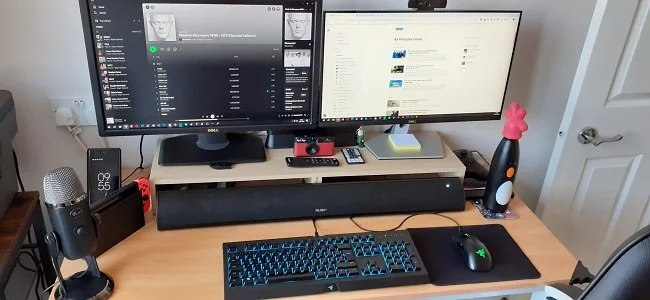


The Crystal Palace Dinosaurs
The Crystal Palace Dinosaurs are a collection of sculptures depicting dinosaurs and other extinct species located in Crystal Palace Park, in the London borough of Bromley. These sculptures were originally commissioned in 1852 for display at the Crystal Palace following its relocation from the Great Exhibition held in Hyde Park. They were revealed to the public in 1854 and are the first speculative dinosaur sculptures ever created. Although the models are now considered inaccurate by contemporary standards, they were designed and crafted by Benjamin Waterhouse Hawkins under the scientific guidance of Sir Richard Owen, reflecting the prevailing scientific understanding of the time. The sculptures were designated as Grade II listed buildings in 1973 and underwent extensive restoration in 2002. In 2007 they were elevated to Grade I listed status. As of spring 2026 the dinosaurs are again being renovated as part of a £5 million regeneration of the park.
The Crystal Palace Dinosaurs are a collection of sculptures depicting dinosaurs and other extinct species located in Crystal Palace Park, in the London borough of Bromley. These sculptures were originally commissioned in 1852 for display at the Crystal Palace following its relocation from the Great Exhibition held in Hyde Park. They were revealed to the public in 1854 and are the first speculative dinosaur sculptures ever created. Although the models are now considered inaccurate by contemporary standards, they were designed and crafted by Benjamin Waterhouse Hawkins under the scientific guidance of Sir Richard Owen, reflecting the prevailing scientific understanding of the time. The sculptures were designated as Grade II listed buildings in 1973 and underwent extensive restoration in 2002. In 2007 they were elevated to Grade I listed status. As of spring 2026 the dinosaurs are again being renovated as part of a £5 million regeneration of the park.
The Dinosaurs sculptures depict fifteen species of extinct animals, of which only three are classified as true dinosaurs. They span a broad array of geological periods, including true dinosaurs, ichthyosaurs and plesiosaurs primarily from the Mesozoic era, as well as some mammals from the more recent Cenozoic era. The models are significant for illustrating the inaccuracies present in early palaeontology, stemming from poorly reconstructed fossils and the scientific limitations of the 19th century knowledge. Notably, the models of Iguanodon and Megalosaurus are particularly flawed with the famous Iguanodon “spiked thumb” being mistaken as a horn. They also reflect the Victorian scientific view that dinosaurs were slow, squat, lumbering creatures, akin to Iguanas, rather than the agile, dynamic creatures that contemporary science depicts today.
I had the pleasure of visiting Crystal Palace Park on Wednesday 8th April, which was an unusually warm and pleasant day for this time of year in the UK. The park was very busy due to the weather and it being an end of term school holiday at the time. The “dinosaur walk” is clearly marked and there are plenty of signs. As we approached the lower lake area some of the sculptures depicting mammals from the Cenozoic Era are visible, such as the Palaeotherium. Sadly as you progress further along the walk the sculptures from earlier historical periods are partially hidden behind scaffolding and plastic sheeting. There was a great deal of activity and a lot of staff attending to the ongoing restoration. However, what could be seen seems very striking. The famous Iguanodons have been handsomely repainted in accordance to their original design. I shall plan a return visit in autumn to see the finished results. Overall it is satisfying to see such a significant scientific and cultural exhibit as the Crystal Palace Dinosaurs being maintained for future generations.