
LOTRO: Wildwood, Deeds and Virtues
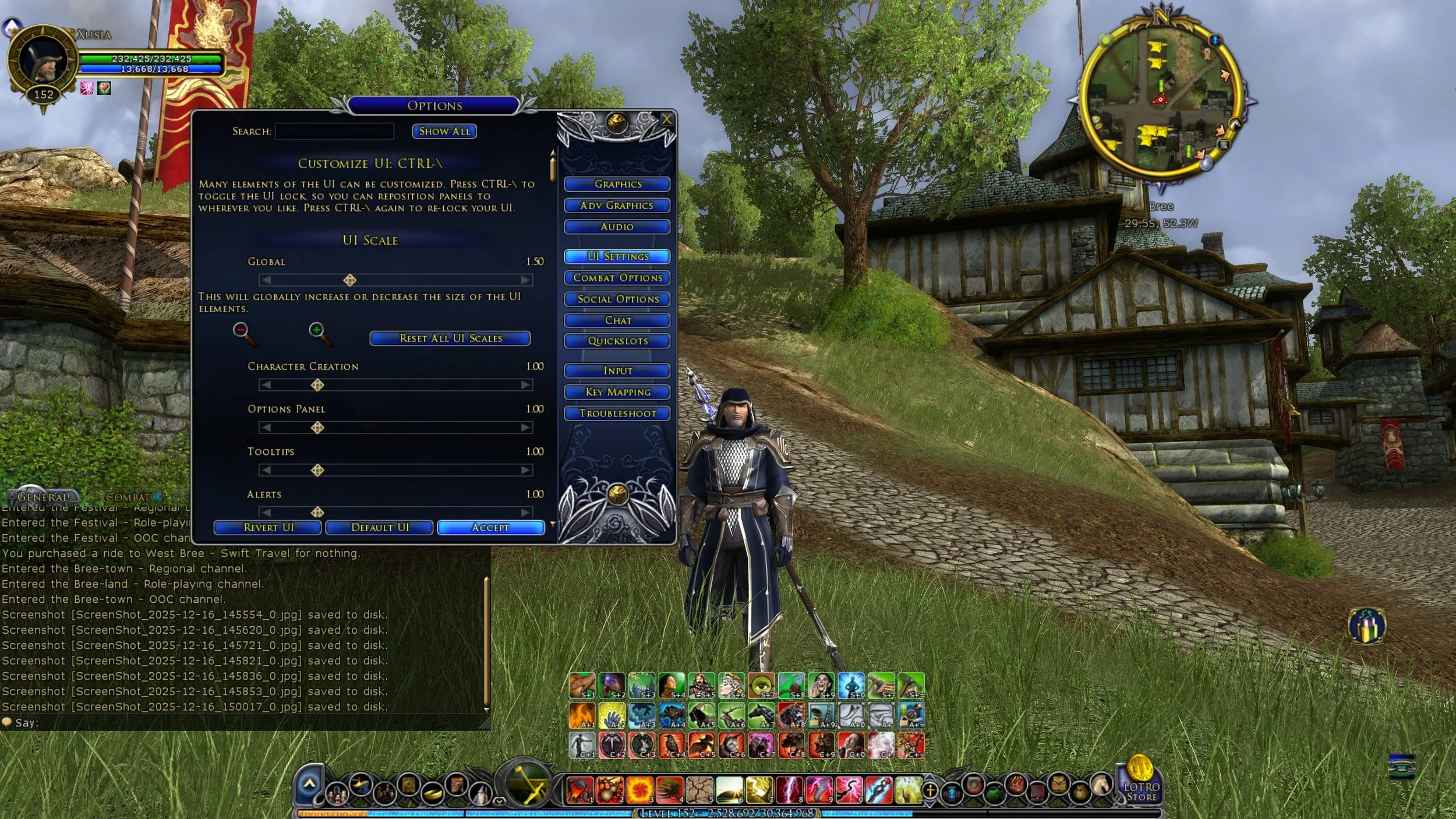
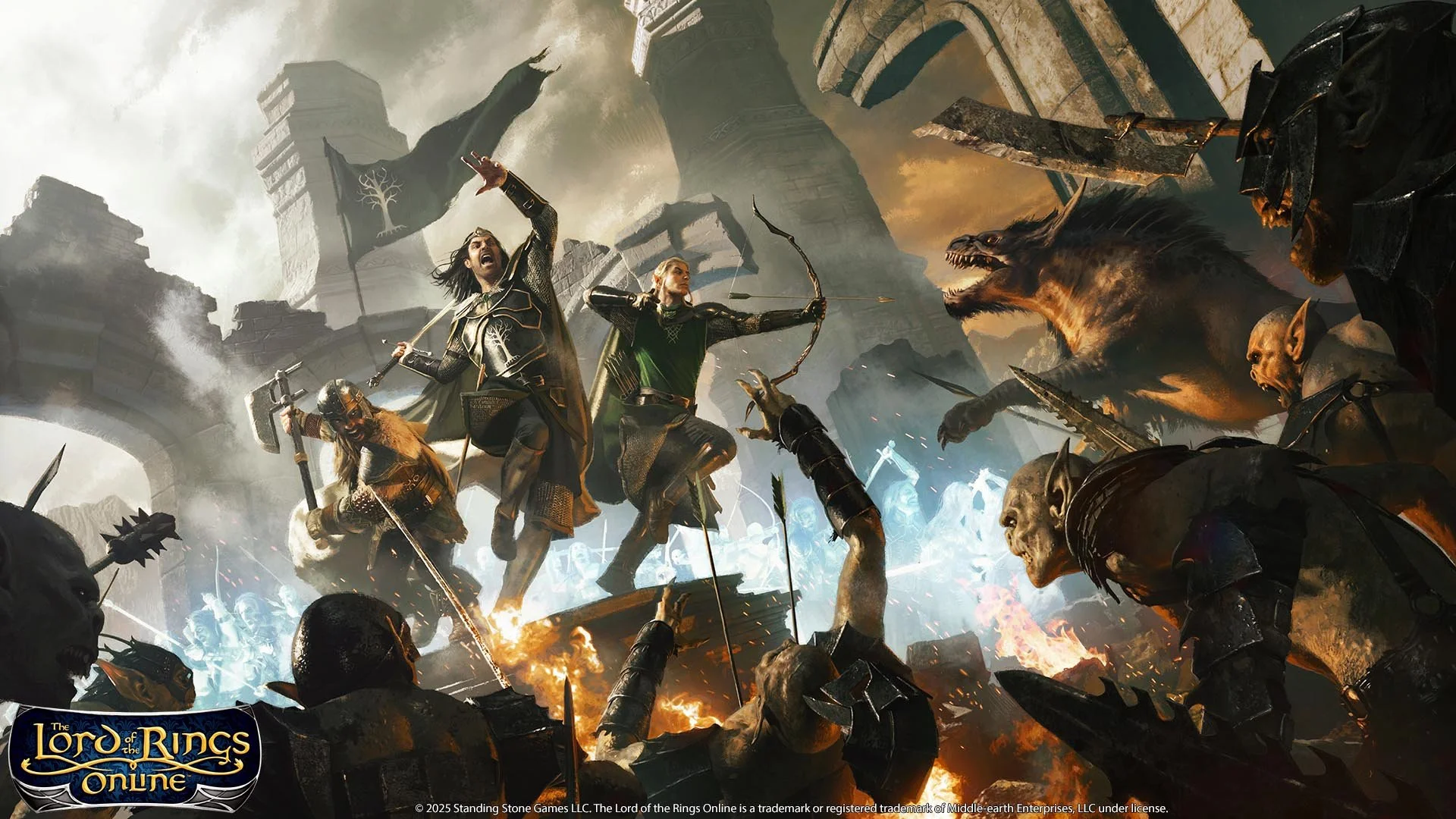
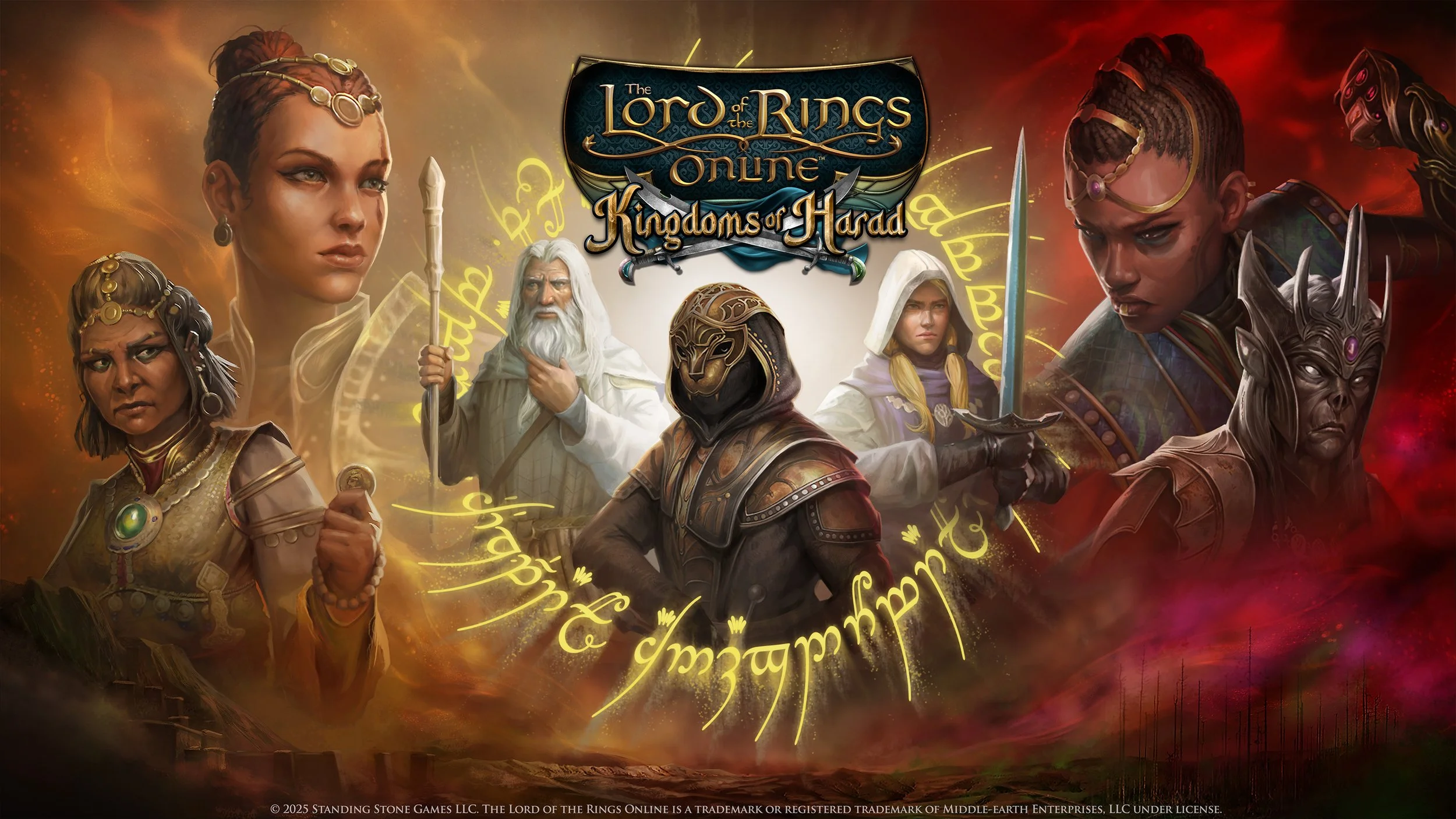
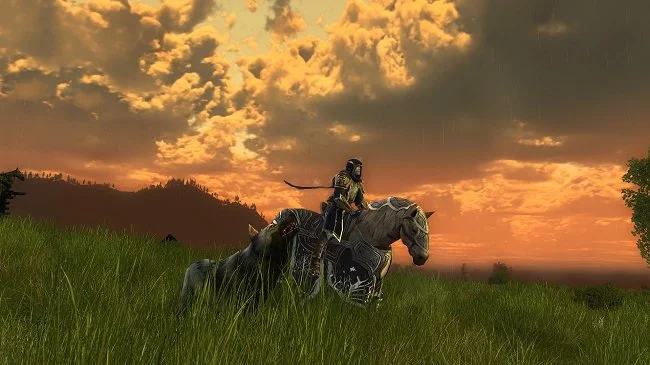
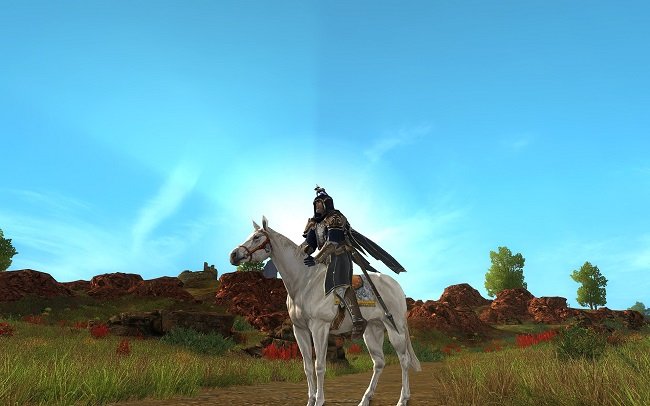
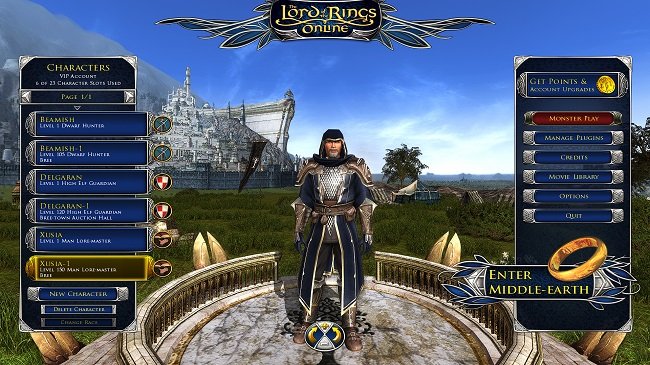
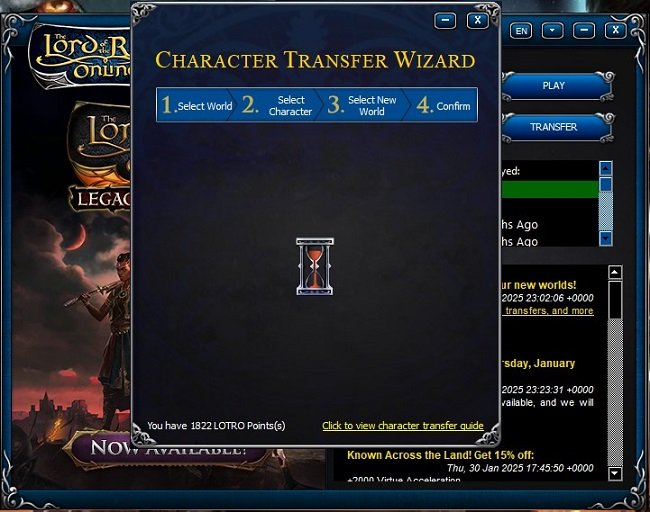
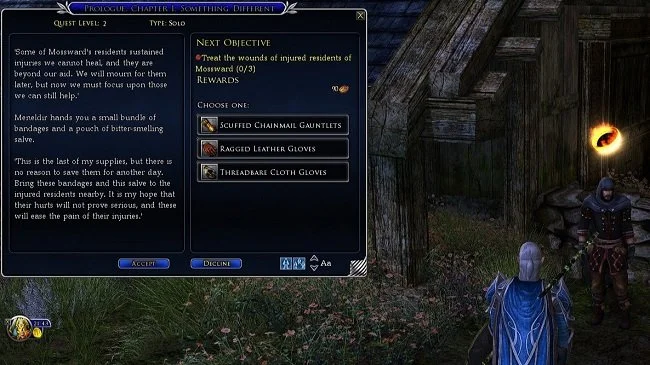
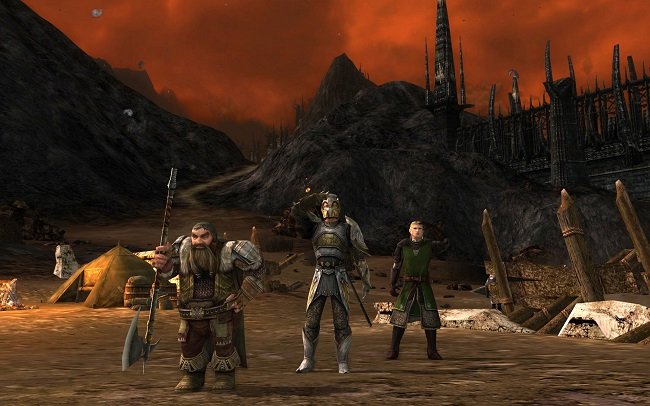
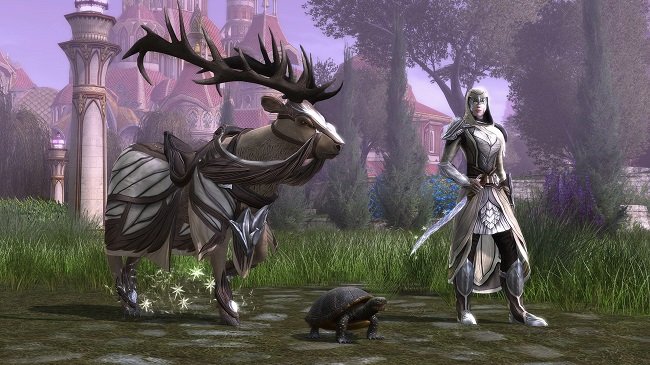
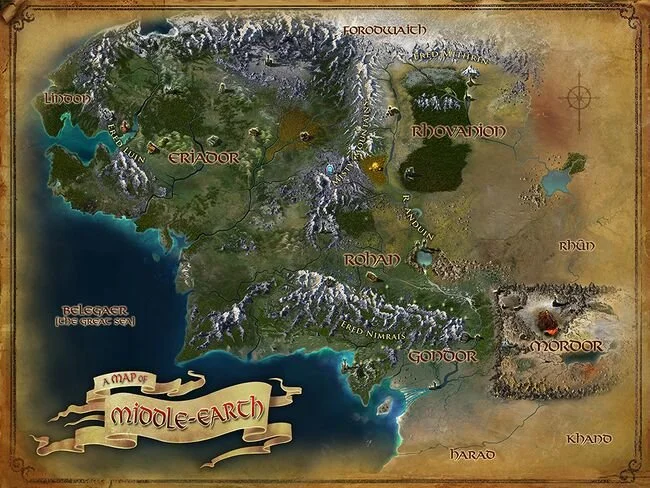
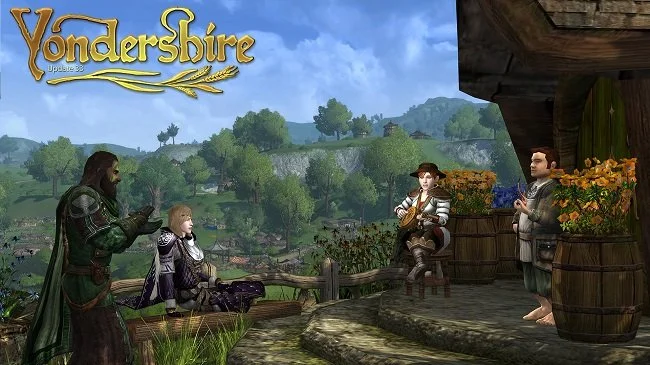
I recently logged into the MMORPG The Lord of the Rings Online with the intention of completing Update 30: Blood of Azog. I got as far as some of the wrapper quests which set up the main story and then I lost interest when I reflected upon the content ahead. I tire of some of the excessively dour regions one has to play through in LOTRO, although I realise they are fully lore appropriate. LOTRO is also one of those games where I frequently struggle to see what is going on if there is low lighting. In such instances I have to tinker with the video settings to try and improve things. So with all this in mind, I decided instead of participating in the Battle of Azanulbizar, I would go and visit the Wildwood region in Bree-land which was added to the game in April. Now you may ask why take a level cap Lore-master to a zone that has content at level 45? Well the answer is simple. There are deeds to be completed.
I recently logged into the MMORPG The Lord of the Rings Online with the intention of completing Update 30: Blood of Azog. I got as far as some of the wrapper quests which set up the main story and then I lost interest when I reflected upon the content ahead. I tire of some of the excessively dour regions one has to play through in LOTRO, although I realise they are fully lore appropriate. LOTRO is also one of those games where I frequently struggle to see what is going on if there is low lighting. In such instances I have to tinker with the video settings to try and improve things. So with all this in mind, I decided instead of participating in the Battle of Azanulbizar, I would go and visit the Wildwood region in Bree-land which was added to the game in April. Now you may ask why take a level cap Lore-master to a zone that has content at level 45? Well the answer is simple. There are deeds to be completed.
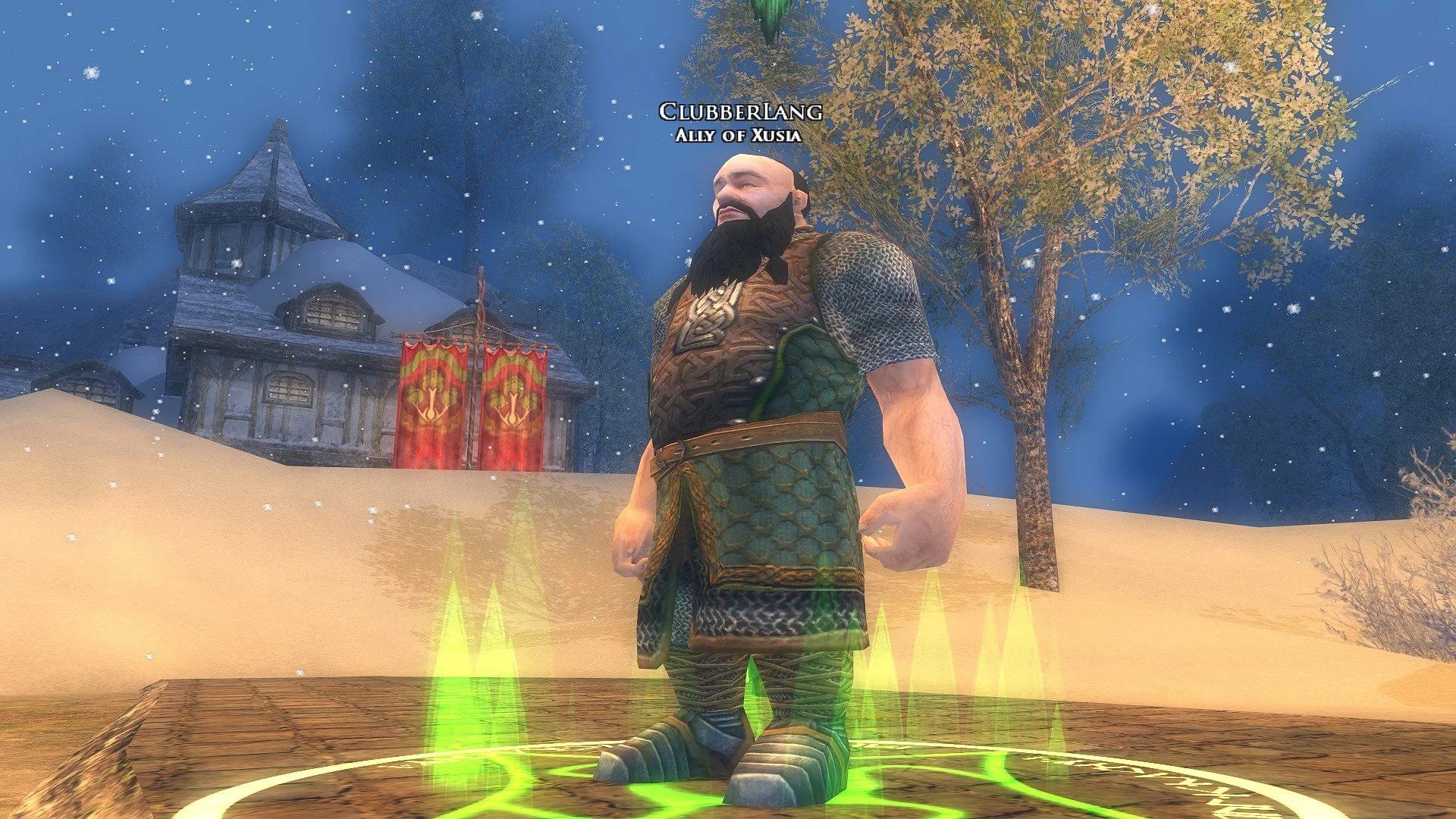
For those who are unfamiliar with the deed system in LOTRO, each region of the game, such as The Shire, Bree-land or Wildwood has a set of deeds available for completion. These range from visiting key locations, slaying specific amounts of foes and completing a fixed number of quests. Upon completing any deed you are awarded “virtue experience” which is tied to the virtue trait system. Virtues traits grant bonuses to your character's base stats. The player can slot five at a time, usually picking those they deem appropriate for their class. Therefore, the discerning player can choose one of their five virtues and then undertake specific deeds to level it to 75 which is the current cap. You then repeat the process until you’ve levelled all of your equipped traits. It’s not as if you’ll run out of deeds. The game is rife with them.
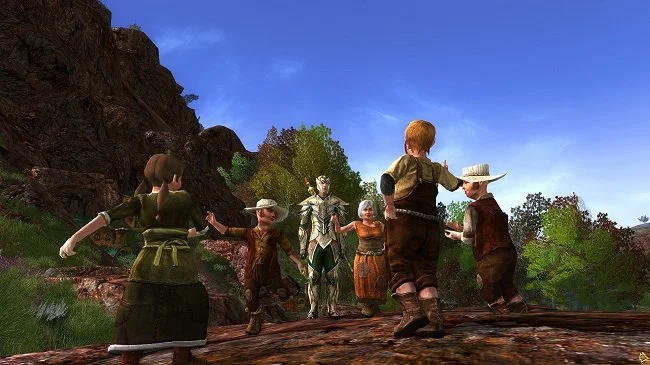
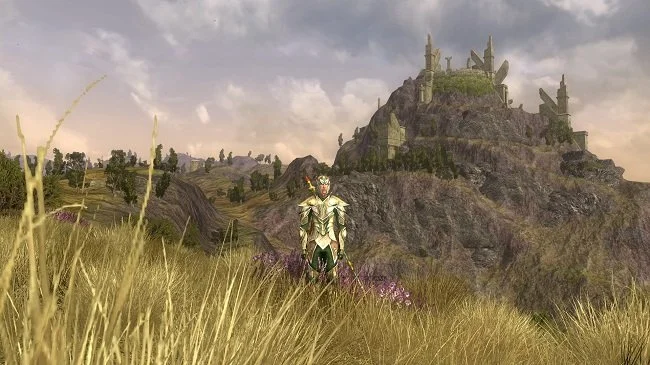
It took 48 hours to play through the main content in Wildwood. As ever with LOTRO, it is the story driving the questlines that made the experience enjoyable. I like the fact that you can start the zone by either helping the Woodcutter's Brotherhood in Trestlebridge Gate or League of the Axe at Trader's Wharf in Evendim. The Wildwood itself is not difficult to traverse and is green and leafy, making it a pleasant environment to quest in. Too often the developers at Standing Stone Games go out of their way to make navigating a zone very esoteric. While undertaking the various quests in the area, I maintained a policy of “kill everything” and it didn’t take too long for the deeds to rack up. I didn’t even bother using a deed accelerator. Hence by the time I finished the region I was at maximum reputation with both factions and had increased two of my five virtue traits to level 75 (they were previously 72).
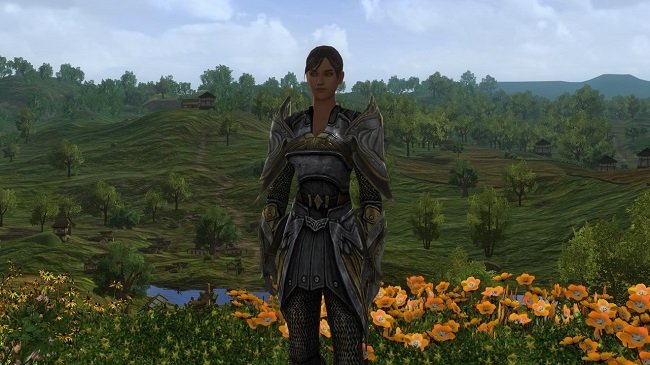
Playing content above level does have some advantages. Not having to worry about combat allows you time to focus on the story and enjoy the environment that you’re travelling in. LOTRO is a game where zones are often densely populated with mobs. To the point that you feel that it’s been done just to try and slow you down. However, LOTRO does something that other MMOS don’t. It has a peculiar mechanic in which if you’re several levels above the mobs, they ignore you. You can stand right next to them and they behave as if you’re not there. It makes taking screenshots a lot easier. It certainly made completing Wildwoods quicker. Overall, it has been a productive and entertaining endeavour. My virtue traits have increased plus I have bought two additional “return to” skills (Trestlebridge and Traders Wharf) from the faction quartermasters. I suppose it’s now time to move on to Update 30.






Star Trek Online: Then and Now
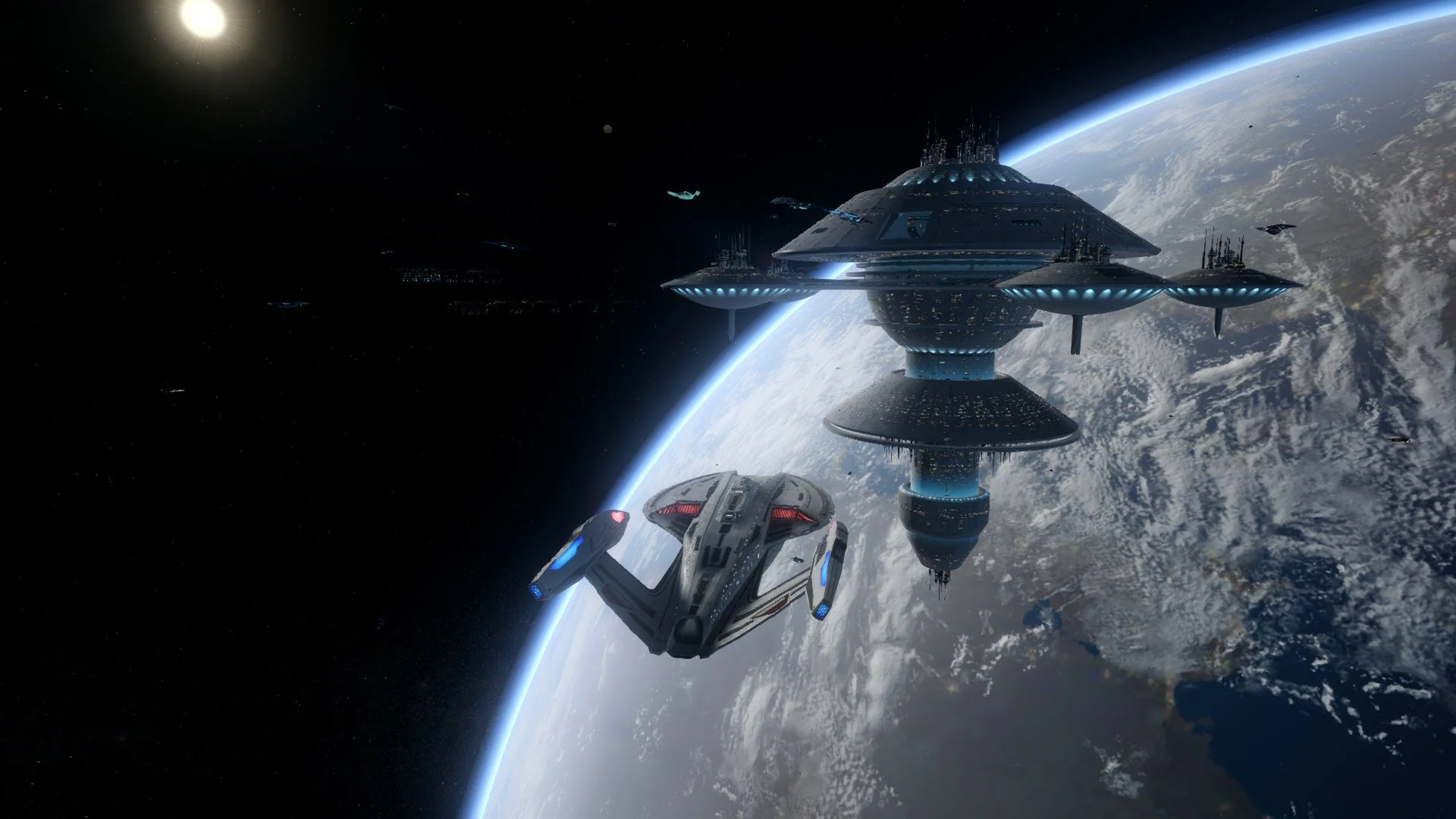
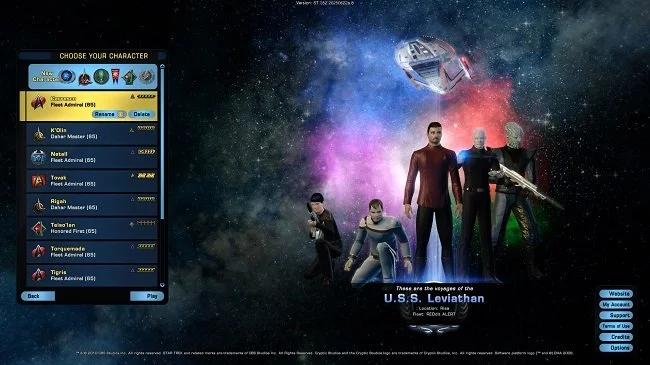
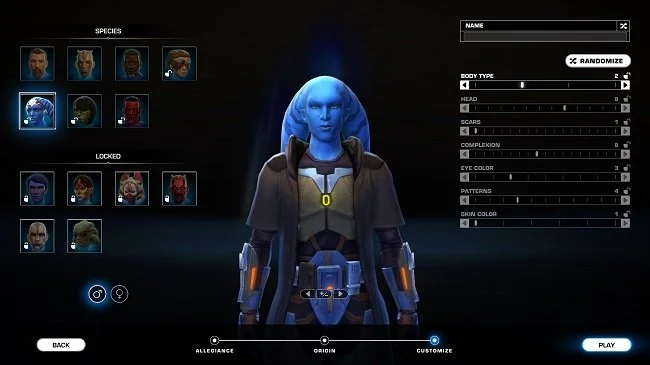
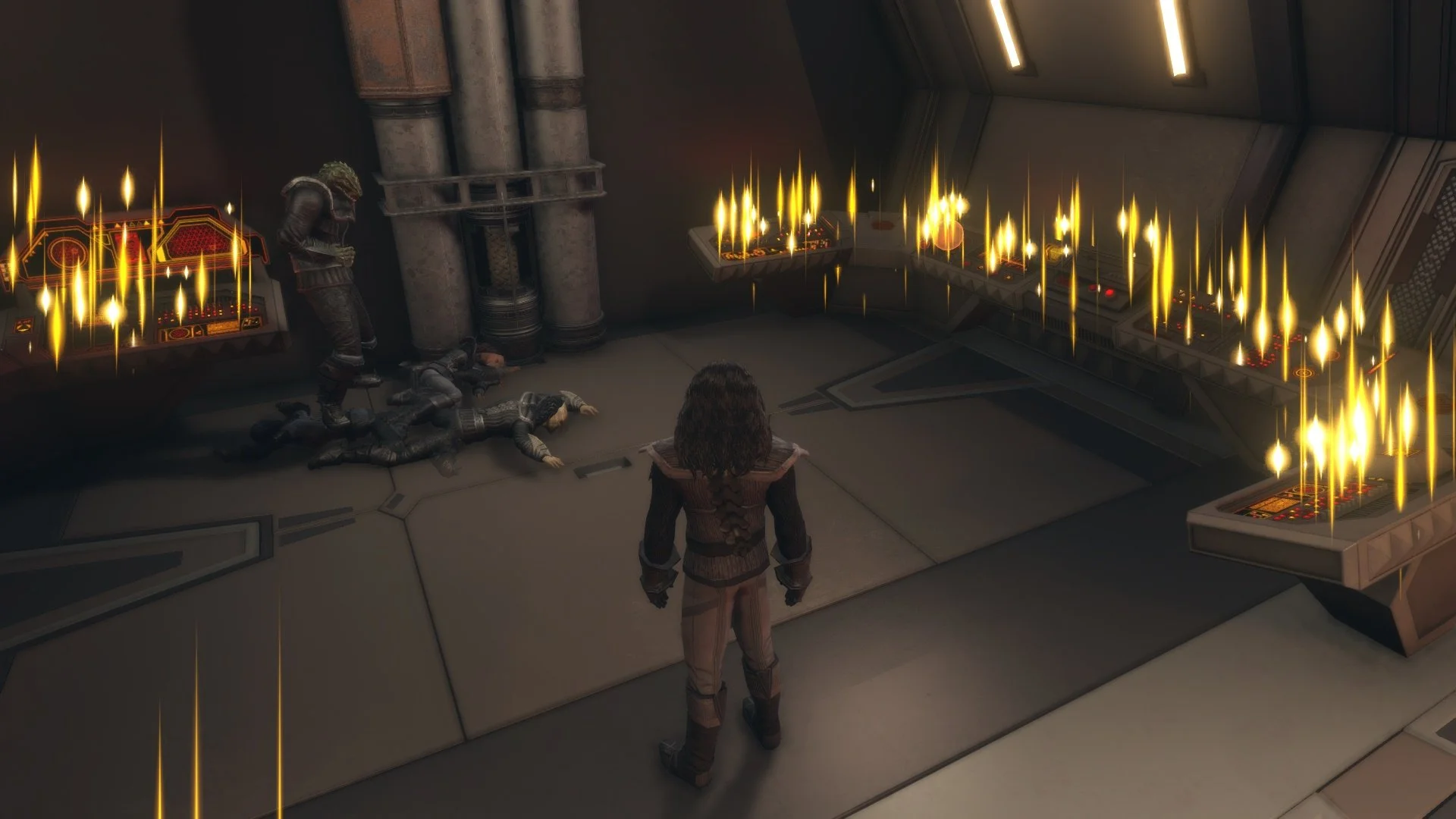
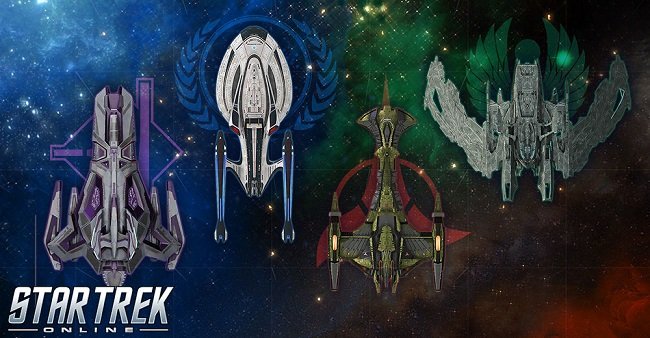
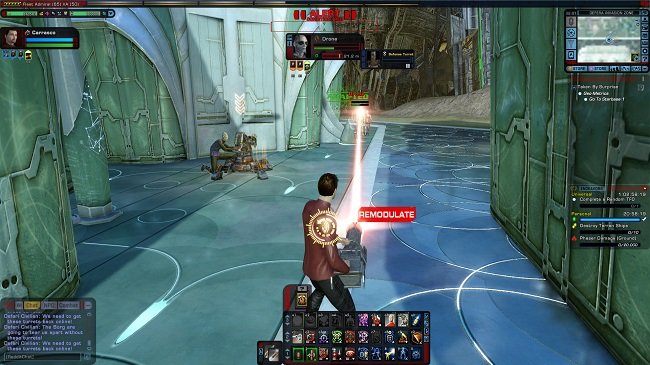
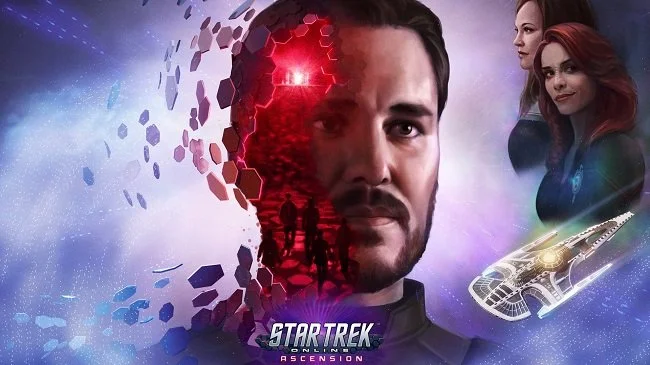
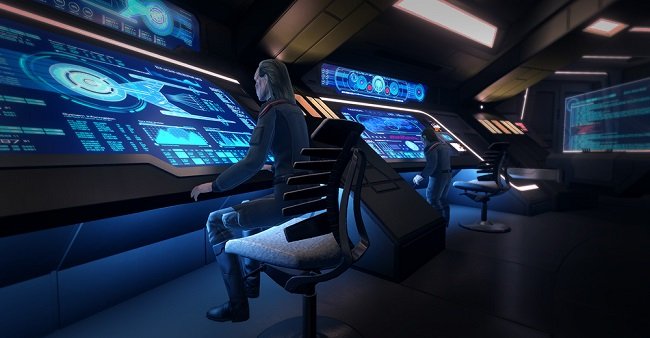
I recently found my original post about the MMORPG Star Trek Online from February 2010. I pre-ordered the Steam Digital Deluxe Edition version of the game for £40 a month prior. I remember that I was very excited about the launch of this MMO and I wasn’t at the time au fait with its tumultuous development history. Myself and two friends started playing virtually immediately and I can remember struggling to find the game’s virtues. It was confusing, unfinished and unbalanced. My friends quickly got tired of the situation and returned to The Lord of the Rings Online. I stuck with STO for about a year before moving on. I briefly returned to the game in early 2013 but it was still unpolished. It wasn’t until the Delta Recruitment Event of 2015 that I found that the game had finally hit its stride. I’ve been playing regularly since then. Reading back over my original thoughts is quite a trip down memory lane.
I recently found my original post about the MMORPG Star Trek Online from February 2010. I pre-ordered the Steam Digital Deluxe Edition version of the game for £40 a month prior. I remember that I was very excited about the launch of this MMO and I wasn’t at the time au fait with its tumultuous development history. Myself and two friends started playing virtually immediately and I can remember struggling to find the game’s virtues. It was confusing, unfinished and unbalanced. My friends quickly got tired of the situation and returned to The Lord of the Rings Online. I stuck with STO for about a year before moving on. I briefly returned to the game in early 2013 but it was still unpolished. It wasn’t until the Delta Recruitment Event of 2015 that I found that the game had finally hit its stride. I’ve been playing regularly since then. Reading back over my original thoughts is quite a trip down memory lane.
Star Trek Online is a classic example of a product that was released before it was ready. The open beta which ran for several months, revealed multiple bugs and glitches. However, since the February 2nd launch date, the game still feels like it is unfinished and is being patched on a daily basis. This has made progression through the game very hard and where I have persevered, two of my online colleagues have already abandoned it. Discussion boards and forums are filled with comments that support this argument.
Here are just a few of the issues I feel are causing problems. The game does not have any semblance of a manual. There is an online guide but it simply does not tackle the game mechanics in any depth. So, after the standard tutorial you are pretty much on your own. If you’ve played other MMOs then you can draw on that experience to look for similarities, in which there are many. However, if you are a casual player then this game has a steep learning curve.
Now Cryptic Studios have decided not to run region specific servers, so effectively all user traffic is centralised. There have been periods where users have to queue to log on. The game relies heavily on instances to handle the flow of traffic and travelling therefore becomes a sequence of loading screens. The single environment approach means the chat channel is extremely fast moving. It is currently spammed continuously by gold farmers. As a means of in game communication it is redundant.
Certain “episodes” require teamwork and the game uses an automatic system which theoretically groups players of a comparable level. This can be beneficial as you gain from the completion of tasks by other members of your team. However, on several occasions, I have found myself in a team on an away mission, pitched against opponents of a much higher level. There was no realistic chance of completing the task in hand except by quitting the team and hoping that the next random group would be more balanced.
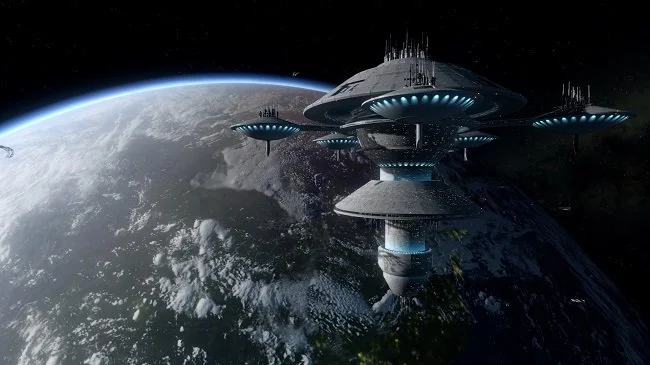
I could list a lot more, but do not wish to sound excessively negative, as STO, despite all its faults, has the potential to be a very good MMO. It looks very impressive and certainly catches the atmosphere of the franchise. Like so many games these days, the soundtrack is extremely good and embellishes the game, especially the space battles. The depth to which you can customise your character is also laudable. The storylines themselves are engaging and have the feel of a classic episode of the series.
Cryptic Studios have taken a gamble with this MMO. It has had a troubled development and if it were any other product, may have fallen at the first hurdle. But due to the good will of the fan base regarding this franchise, they have to be able to make mistakes without too many repercussions. To be fair, they are working hard to address issues and are listening to their user base as this recent statement from Cryptic shows. I shall be continuing with STO and it will be interesting to assess the status quo in the sixth month’s time.
28th February 2010.
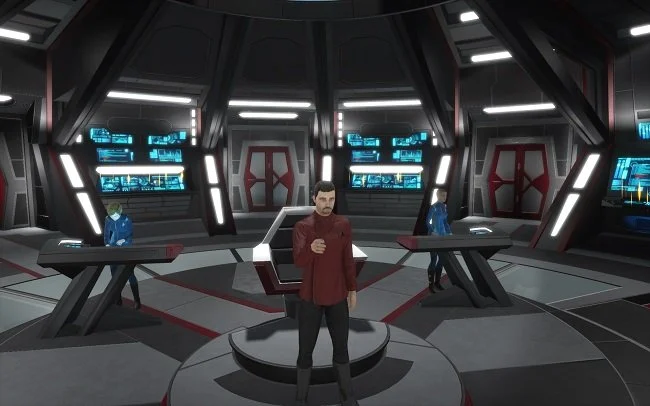
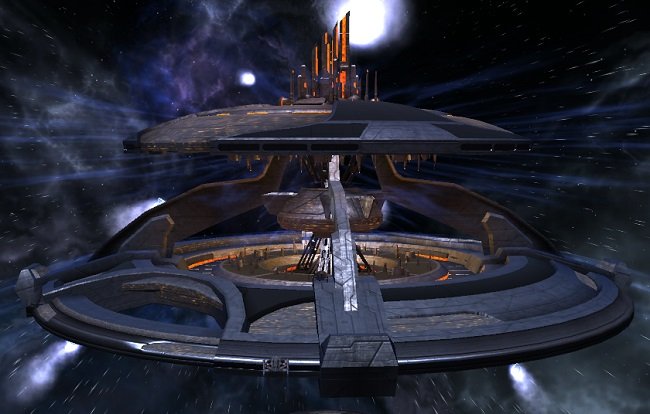
All things considered I believe this remains a fair assessment of STO at launch. It certainly was not the most auspicious of beginnings and as Cryptic were contractually bound to deliver a functional game by a specific date and had to rewrite most of the previous developers work. However, a great deal has changed over the last decade and the game has greatly improved. Today STO is a healthy MMO with a wealth of good content behind it. Many of the cast who appeared in the various TV shows over the years, have voiced their characters again in the game. The change is so profound it is hard to reconcile the two versions of the game. Sadly I do not have that many screenshots from this period. If you wish to see how the game was at launch then I would recommend the YouTube channel Hailing Frequency which did much to promote the game in the run up to February 2nd 2010. It shows clearly how rough around the edges STO was at the time and how far the game has come.


Fall Guys: Is it Just Me?
Before I began writing this post, I tried to do some research regarding odds, percentages and statistics associated with the game Fall Guys: Ultimate Knockout. However, I soon discovered that this appears to be a contested field with conflicting data. Furthermore you have to navigate a lot of forum posts and subreddits which are filled with players bragging and talking shit. So I haven’t got any tangible data to present as such, yet I believe that my suppositions are as logical as they can be. Moving on, Fall Guys: Ultimate Knockout, is a platform battle royale game developed by Mediatonic and published by Devolver Digital. It was released for Microsoft Windows and PlayStation 4 on 4 August 2020. I began playing it a few days after launch and have continued to do so regularly over the last twelve months.
Before I began writing this post, I tried to do some research regarding odds, percentages and statistics associated with the game Fall Guys: Ultimate Knockout. However, I soon discovered that this appears to be a contested field with conflicting data. Furthermore you have to navigate a lot of forum posts and subreddits which are filled with players bragging and talking shit. So I haven’t got any tangible data to present as such, yet I believe that my suppositions are as logical as they can be. Moving on, Fall Guys: Ultimate Knockout, is a platform battle royale game developed by Mediatonic and published by Devolver Digital. It was released for Microsoft Windows and PlayStation 4 on 4 August 2020. I began playing it a few days after launch and have continued to do so regularly over the last twelve months.
The game consists of 60 players competing over 5 rounds. Each round 11 or so players are eliminated although this can vary depending on the type of game. Some rounds are races through obstacle courses, others are puzzle solving or memory tests. There are also team based events which are especially annoying because your success depends on other carbon based life forms. Another major factor that impacts upon your success is other players' behaviour. Bottlenecks frequently occur. If one player falls over then it can start a cascade. And then there is the grab facility. Yes, other players can grab you and actively attempt to impede you if they see fit. Hence the game often evokes a broad spectrum of emotions among players. One minute you can genuinely be in fits of laughter as a whole bunch of players tumble off a pivoting platform, the next you fail to qualify due to some asshole grabbing you just before the finish line.
But these are the terms by which you play Fall Guys: Ultimate Knockout. It is a fun game but it can also be brutal with its unwavering mechanics. You can be diving for the finish just as the timer runs down and if you’re not over the line, then you’re out of the game, no ifs, no buts. Hence I tend to play in short bursts and if I feel myself getting vexed then I log out and do something else. Or alternatively, I just mess around with the cosmetic options which are an utter delight by the way. Judging by the comments I’ve read on Steam, many a game controller has been hurled across a room due to this game. I find that there are simply some rounds in the game that I just cannot do. Lily Leapers is a new round and requires the player to bounce on the lily pads to cross the course. I can get about a third of the way, then find I just cannot gain sufficient clearance to reach the next pad. I often just wait this particular round out and collect my points for participating at the end.
Much has been written online about this game, analysing the various rounds and activities. To be fair it would appear that developers Mediatonic do listen to player feedback and adjust the game with each season. Yet I do feel that the game is in danger of at times being its own worst enemy. It is supposed to be light hearted fun and not a purely competitive game and “tryhard” magnet. Yet that seems to be the way it is going. Mario Kart does little things to “encourage” the player who’s always at the back. Perhaps Fall Guys: Ultimate Knockout should do the same. I’ve been playing for a year and still haven’t won five rounds in a row. The nearest I’ve got so far is four. Which is why I’ve been trying to find some meaningful analysis of the game, so I can see if this is just me. Am I just a bad player? Is it a question of “git gud”? Or am I in a far larger group than I think and the odds are actually more likely that I lose rather than win? I’m curious as to the answer.




Looks Matter
You’re strutting around in your favourite MMORPG, dressed to the nines in your finest outfit. You recently acquired The Tabard of Marginal Statistical Improvement after finally beating that particularly difficult raid boss. As you stroll into the auction house with the confident air of someone who knows they’re looking damn good, you keep an eye on the chat window anticipating comments and praise from other players. You stop in front of an NPC and stand their basking in presumed public adulation and revelling in your own self satisfaction. Suddenly another player appears on the periphery of your monitor and catches your attention. Oh calamity, their avatar looks virtually identical to your. Same fez, monocle and handlebar moustache. They’re also wearing The Tabard of Marginal Statistical Improvement, except theirs is in electric pink. Oh the humiliation. Oh the humanity. Oh Vienna. You log off in tears, your ego crushed, a victim of a game with insufficient character customisation and diversity.
You’re strutting around in your favourite MMORPG, dressed to the nines in your finest outfit. You recently acquired The Tabard of Marginal Statistical Improvement after finally beating that particularly difficult raid boss. As you stroll into the auction house with the confident air of someone who knows they’re looking damn good, you keep an eye on the chat window anticipating comments and praise from other players. You stop in front of an NPC and stand their basking in presumed public adulation and revelling in your own self satisfaction. Suddenly another player appears on the periphery of your monitor and catches your attention. Oh calamity, their avatar looks virtually identical to your. Same fez, monocle and handlebar moustache. They’re also wearing The Tabard of Marginal Statistical Improvement, except theirs is in electric pink. Oh the humiliation. Oh the humanity. Oh Vienna. You log off in tears, your ego crushed, a victim of a game with insufficient character customisation and diversity.
Wolfy over at Through Wolfy’s Eyes wrote a very astute post yesterday about the significance of character customisation in the MMO genre. He makes some very good points and also offers some suggestions regarding improvements that could be made. This is exactly the sort of post that other bloggers can use to riff off, as the subject of character customisation is pretty important to the MMO genre. Hence I thought I would add my own thoughts on subjects having been an active MMO player since late 2007. Simply put, you cannot have enough character customisation options in this genre of game. Creating your own unique avatar is as essential to the players enjoyment of the game as the story and the gameplay. I will often spend an hour or more fine tuning my character, pondering a suitable name and even reflecting upon a backstory for them if the game supports such an option. Your character is the conduit through which you experience the game so from my perspective I want that avatar to be as much to my liking as possible.
Gamers approach character creation in different ways. Some players strive to make a virtual game persona that is based upon themselves to provide a more personal gaming experience. Many strive just to make something unique, different or quirky that amuses them. A fun character who it will be enjoyable to customise further with cosmetics, as they progress through the game. Other gamers may well try and create some sort of aspirational "imago". An avatar that they desire to be on some level. In some MMOs that are based on particular intellectual properties, gamers sometimes try to recreate their favourite character from the franchise. And sometimes, players just like to see how extreme and incongruous they can make their avatar. However, the success of all of these endeavours depends on how expansive the character customisation options are. Yet even in those titles where the scope is limited, never underestimate player ingenuity.
I believe that for some players, creating their avatar in a popular game is more significant than merely making a “fun character”. For some individuals, video games and especially the MMORPG genre provides a virtual environment in which they can be themselves. Something they feel they cannot do in their day to day life. Creating and customising their in-game character is a cathartic process allowing them to express their true nature and feel comfortable and free. This is why I feel that it is essential to have as many options as possible with character customisation and that these variables should not to be arbitrarily gated and segregated by traditional cultural notions. Gender, race, body size and such like should be equally accessible across all classes and factions. Possibly the only mollifying factor should be a game’s own internal lore but even that should not be a sacred cow.
Perhaps at its most fundamental level, character creation in video games is just another example of human beings trying to make some sort of personal mark upon the world, as they journey through life. It’s a basic human instinct. Wherever you live, you try to arrange things in a way that suits you. Regardless of your budget you try to personalise your living space, be it through expensive décor or just putting up a poster and putting your plushies on the shelf. We do something comparable in the games we play. We create a character according to our personal whims and needs, then enter a virtual world and say “here I am”. It is a very personal statement while being at the same time somewhat ephemeral. Which is why many of us take so many screen captures of our in-game characters. The video game industry would do well to reflect upon the significance of this facet of gaming and do their utmost to develop it.
Another Boat Missed
It would appear that due to the ongoing woes of Blizzard Entertainment, that the world and his wife are migrating from MMORPG World of Warcraft and relocating to the alternative game, Final Fantasy XIV. Other games are feeling the benefits of this ongoing exodus but it seems that FFXIV is by far picking up the most new players. I certainly think that the fact that several high profile streamers moved from WoW to FFXIV has contributed to this trend and the resulting surge in social media postings about the game has had a further impact. Furthermore, judging from what I have read about FFXIV and been told by my peers, the game has a lot going for it. There’s a wealth of content, solid mechanics and a favourable environment for group gameplay. And yet despite all these positive attributes I have looked at FFXIV and decided that this game is not for me.
It would appear that due to the ongoing woes of Blizzard Entertainment, that the world and his wife are migrating from MMORPG World of Warcraft and relocating to the alternative game, Final Fantasy XIV. Other games are feeling the benefits of this ongoing exodus but it seems that FFXIV is by far picking up the most new players. I certainly think that the fact that several high profile streamers moved from WoW to FFXIV has contributed to this trend and the resulting surge in social media postings about the game has had a further impact. Furthermore, judging from what I have read about FFXIV and been told by my peers, the game has a lot going for it. There’s a wealth of content, solid mechanics and a favourable environment for group gameplay. And yet despite all these positive attributes I have looked at FFXIV and decided that this game is not for me.
There are three major aspects of a video game that have an impact upon my decision whether or not I buy and play them. Gameplay, intellectual property/story and aesthetics. Where FFXIV scores well with the first, yet I find the narrative impenetrable and the game’s visual style unappealing. I have spent some time looking through various sub reddits aimed at new players and the advice on offer doesn’t exactly mollify my concerns. Opinions over how complex the learning curve is vary greatly. Some players advocate a lot of “studying” before you start playing the game. Others talk about customisation of the UI being essential. All of which are red flags as far as I’m concerned. I genuinely like The Elder Scrolls Online but the fact that you need addons to be able to play the game without impediment is a borderline deal breaker. It sounds to me that FFXIV requires as much preparation and homework, which is hardly a positive advertisement.
I don’t like the so-called Asian video game aesthetic, just as I don’t really care for the visual style of anime. It is purely a question of personal taste, the same way as someone may not like cubism in art or country music. The problem with my position is that not liking the look of a video game is a big deal, considering it is an essentially visual medium. Human beings are hardwired to interpret the world via their eyes (or else we would have evolved sonar), so I will not dismiss my dislike as trivial. Hence I shall not be joining my peers in playing FFXIV. Just like WoW, it would seem that FFXIV is another popular boat that I am going to miss. However, it can sometimes be quite an interesting position to stand outside of a popular phenomenon and simply spectate it, rather than be an active participant. Conversely, it can also be a little sad just to be a spectator. Such is the nature of gaming. You can’t like or play everything.
Blaugust 2021: Getting to Know You
According to the Blaugust 2021 Festival of Blogging schedule it is “getting to know you week”. Although I have been knocking around the blogging community since 2007 it would be extremely arrogant of me to assume that people know who I am. Plus, as I am allegedly a mentor in the Blaugust event, it is both polite and proper to introduce myself to those who are new participants. I’ve never been especially keen on the whole standing up and introducing yourself thing that comes up from time to time in one’s social and working life but it is a necessary evil. Whenever I used to attend training courses for work, I’d always go first when it came to introductions, just so I could get it out of the way. So with all that in mind let’s tackle this now. Here are a few minor facts about me so that people can “get to know me”, so to speak.
According to the Blaugust 2021 Festival of Blogging schedule it is “getting to know you week”. Although I have been knocking around the blogging community since 2007 it would be extremely arrogant of me to assume that people know who I am. Plus, as I am allegedly a mentor in the Blaugust event, it is both polite and proper to introduce myself to those who are new participants. I’ve never been especially keen on the whole standing up and introducing yourself thing that comes up from time to time in one’s social and working life but it is a necessary evil. Whenever I used to attend training courses for work, I’d always go first when it came to introductions, just so I could get it out of the way. So with all that in mind let’s tackle this now. Here are a few minor facts about me so that people can “get to know me”, so to speak.
Firstly, I use my real name, Roger Edwards, for my writing. I did initially start writing under my gaming handle but found it a somewhat bizarre form of social etiquette. Having conversations with Jubal the Questionable or Cardinal Spleen has always struck me as odd. So I just started posting under my own name which is fairly unremarkable. Plus I did at one point harbour aspirations to be a professional writer. Anyway, I do understand why people wish to compartmentalise their lives and certainly if you’re posting content on the internet, the anonymity helps keep the crazy people at bay.
Captain Scarlet
I was born on 18th December 1967. One week before Christmas. From an early age I discovered that anyone who said anything along the lines of “I’ve bought you a joint birthday and Christmas present” was a cheapskate bastard. 1967 was an interesting year. Sandie Shaw won the Eurovision Song Contest with Puppet on a String, Captain Scarlet and The Prisoner were on TV and The Beatles released Sgt. Pepper's Lonely Hearts Club Band.
I live with she who is known colloquially as “Mrs P (short for Mrs Peril). This is the agreed method to reference her online. I have a son who is 29 and three grandchildren. Twin granddaughters who are 6 and a grandson who is 6 months old. I used to be a IT consultant for small businesses but gave up full time work in 2016 to look after my ageing and disabled parents. My Father passed away last September at the age of 91. My Mother is 90 and now the focus of care. I am currently 53. Mrs P’s age is not for public disclosure. She took early retirement from work. We have a bungalow in South East London in what can be described as a “leafy suburb”. Walter lives with us.
Walter
As far as hobbies and interests, I like writing, reading, films, walking for pleasure and exercise. I’m not really interested in sport although I’m not hostile to it. It serves a purpose. I can swim, draw and paint competently. I used to sing and was in several choirs as a child. And then it all stopped and I can’t remember exactly why. I cannot play any musical instruments but I have a great passion for the craft of making music. I find it frustrating that I don’t know the correct terms when trying to write about music. I love words, logical arguments and critical thinking. I eschew ill conceived points of view, emotive debating and the overall infantilization of public discourse. It boils my piss that people will get up in arms about Geronimo the Alpaca but don’t seem disposed towards protesting against child poverty in the UK. Oh and binary, tribal politics is a constant source of irritation.
Here are a few more random facts. Mrs P and I don’t have pets due to health issues. In the past we’ve had dogs and cats. I am currently on a diet and need to shed about 18lbs. I’m trying to get down to 168lbs. I like good food and wine as well as good company. The latter is in short supply at present. I am not a practising Christian, although I grew up in the seventies when the UK was still very much culturally disposed towards that faith. Humour is extremely important to me and I consider it to be a kind of societal safety valve. I am not an extrovert although I can be social, even gregarious when I choose to be. I don’t like small talk and don’t tend to suffer fools gladly. Does anyone? However, politeness is hardwired into my social programming.
I enjoy church architecture
Finally, here is an anecdote from my childhood for your consideration. Around the age of five or six, I was compelled to appear in a school play. You didn’t have a choice in such matters. If you expressed dissent you were beaten (Yay, the seventies). The play was Snow White and I was assigned the role of The Huntsman who lets Snow White go. Dressed in a green felt ersatz Robin Hood outfit, I delivered my lines with all the disinterest of a school careers advisor. I then remember the audience laughing in that patronising “oh isn’t he adorable” parental fashion. Apparently I turned and scowled at all the assembled adults in a manner that my Father subsequently described as saturnine. The reason I mention this is because if I ever commit murder, I shall base my entire legal defence upon this traumatic experience. That and the fact I never got a model train set as a child.























Deciding the Scope of Your Blog
One of the most helpful pieces of advice you can give someone who is just about to take up blogging for the first time is “write about what you know”. Expressing opinions and views on subjects that you’re familiar with or especially knowledgeable enables you to write with confidence. Stepping outside of your comfort zone is a more complicated proposition, unless you're writing to specifically document your learning experience. Which is why most of the people that I know who maintain a blog tend to write about the games they’re currently playing. Sometimes if someone is especially enamoured with a particular title, that single video game will be the sole focus of their blog. I did this in 2008 with Misadventures in LOTRO which catalogued my experiences playing the MMORPG The Lord of the Rings Online. It was a fun starting point and being focused on a single subject, kept me engaged with my writing.
One of the most helpful pieces of advice you can give someone who is just about to take up blogging for the first time is “write about what you know”. Expressing opinions and views on subjects that you’re familiar with or especially knowledgeable enables you to write with confidence. Stepping outside of your comfort zone is a more complicated proposition, unless you're writing to specifically document your learning experience. Which is why most of the people that I know who maintain a blog tend to write about the games they’re currently playing. Sometimes if someone is especially enamoured with a particular title, that single video game will be the sole focus of their blog. I did this in 2008 with Misadventures in LOTRO which catalogued my experiences playing the MMORPG The Lord of the Rings Online. It was a fun starting point and being focused on a single subject, kept me engaged with my writing.
However, there is an obvious downside to putting all your eggs in one basket, especially with regard to video games. What happens when you tire of the very subject that is integral to your blog or you just want to write about something else? This can be particularly troubling if you have found a niche for yourself and have built an audience through your writing. Will they stay if you diversify your writing? One possible solution is to set up a separate blog but that requires a great deal of discipline as you now have double the work, effectively having to produce and promote content for two sites. When I found myself in this situation I decided to broaden my blog’s remit and cover a wider spectrum of games. However, I didn’t feel that my existing blog could accommodate subjects such as films, TV, books etc so I set up a second site. As time progressed and I became more confident with my writing, I saw the sense in posting all my material on a single site. I wish in some respects I’d done this initially but sometimes you have to learn through experience.
You may wish to blog exclusively about Etruscan pottery
Therefore, my advice to anyone setting up a new blog is to keep the scope of your writing as broad as possible unless you have very specific goals associated with a single subject or are targeting a specific niche. At first glance a food blog or fitness blog may seem like subjects with clear lines of demarcation but that is actually not the case. A food blog can explore cooking, recipes, ingredients, world cuisine and much more. Writing about fitness allows the writer to discuss not only exercise but associated products, the social aspect of keeping yourself in shape and wider topics such as diet and general wellbeing. It’s the same if you blog about travel, sport, fashion and lifestyle. There is plenty of wiggle room in those subjects, affording the writer the opportunity to vary their content and hopefully prevent them from getting bored or burned out.
If you do maintain a “variety blog”, you can segregate content if you prefer, allowing your readers to focus on the material they like best. This is not an issue as many blog templates support such a magazine approach. Writing on a multitude of subjects is also beneficial for developing your overall writing skills. How you write about your experiences in a particular game is not the same as writing a book or film review. Running a varied blog means you can write think pieces, essays, reviews, streams of consciousness and other types of posts. All of which can help with refining your writing technique. The other benefit of writing about multiple subjects is that it adds depth to your writing persona and the way you as a writer are perceived. If you intend to write professionally, a blog with a spectrum of different content can be an important part of your portfolio.
Contains Moderate Peril circa July/June 2015
Some bloggers will cogently argue that blogging about a very specific subject or occupying a clearly defined niche is a lot easier to monetise. It also makes search engine optimisation a lot easier. However, I suspect that neither of these two points are necessarily driving factors for the new blogger who is just starting out. Most bloggers just want to come up with a snappy title for their new blog and to try and find a writing schedule that they can manage and that they’re comfortable with. I therefore cautiously suggest that establishing a fairly broad remit of things to write about will certainly be helpful in discovering the latter. It should also help keep so-called “writers block” at bay. However, choice is not always a good thing and some bloggers prefer to have the focus of a single subject blog. As ever there is no “one size fits all” solution. Ultimately, it is up to you to decide what the scope of your blog is to be, so pick what works for you the best.
Should You Monetise Your Blog?
If you search online for advice on “how to monetise your blog” you’ll find a wealth of articles claiming to have all the answers. There’s a veritable cottage industry out there offering guidance and help on how to make money from your writing. Such posts range from proven business advice to utter bilge peddled by the worst sort of snake oil salesmen. Yet good or bad, there is a strong demand for this sort of information because blogging is still perceived by a lot of people as a means to make money. It would appear that the idea of setting up a blog, making a living off it and quitting your day job is still a common goal and the various “lockdowns” we’ve all experienced in the last 18 months have only boosted such perceptions. Some people have been successful with their home businesses in 2020, although I would argue that the market has been anomalous, to say the least.
If you search online for advice on “how to monetise your blog” you’ll find a wealth of articles claiming to have all the answers. There’s a veritable cottage industry out there offering guidance and help on how to make money from your writing. Such posts range from proven business advice to utter bilge peddled by the worst sort of snake oil salesmen. Yet good or bad, there is a strong demand for this sort of information because blogging is still perceived by a lot of people as a means to make money. It would appear that the idea of setting up a blog, making a living off it and quitting your day job is still a common goal and the various “lockdowns” we’ve all experienced in the last 18 months have only boosted such perceptions. Some people have been successful with their home businesses in 2020, although I would argue that the market has been anomalous, to say the least.
I have maintained a writing presence online since 2007 and despite growing a modest audience have never made a red cent from my blog (although I have been paid for my writing elsewhere). In fact Contains Moderate Peril, The Gaming Blog Nexus and sundry podcasts such as Burton and Scrooge always have been and remain to date a financial black hole. I’ve written in the past about the financial realities of running a blog or similar online platform as the costs do add up over time. In purely notional terms, I would welcome a means to recoup my operating costs. Unfortunately, I have not found a method to do this that I find acceptable. However, as the purpose of the blog post is to address this very question, let’s indulge in some critical thinking and see if we can come up with some valid ideas regarding how to monetise your blog.

Is there value in your content? This is a complex question. It requires a degree of introspection and self scrutiny which might make you uncomfortable. However, value is a very open ended term and people find merit in all sorts of things. If you’re writing gaming guides or collating data from public test servers for a popular game, then you may well have a very clear market. Providing commentary on a popular topic or making yourself the “go to” news source for something specific also can make your writing of value. Sometimes it may come down to whether your readers like the “cut of your jib”. Also it’s not just about what others think about your writing. Your own opinion is important. If you are confident that your body of work is marketable then why not try and monetise it. Other aspects that may well have a bearing on this matter are your writing schedule, how unique your work is and how much content you are offering.
Optimising your writing for monetisation. If you’re looking to make your writing commercially viable, then you need to decide who you’re writing for. If you are looking to cover popular trends and the latest talking points then that is a distinctly reactive process. You may also have to consider “optimising” your writing to fit the broadest of demographics. Things such as your personal opinion and taste may well have to be sidelined as you go where the audience currently is. All of which are perfectly acceptable things to do. You are still providing a service, just one that is driven by the needs of your readers as opposed to your own likes and dislikes. There may well be occasions when those two positions overlap. The reverse of this is writing purely for yourself, which can be immensely preferable from a personal perspective but comes with the caveat that your readers may not always share your passion. However, writing for yourself may benefit if you have a strong writing persona.
How to monetise your writing.
The most obvious is advertising although the rise of ad blockers has had a real impact upon this option.
Affiliate marketing is another longstanding solution, although you need to make a lot of referrals to third party websites and hope those referrals make a purchase.
Influencer marketing can be lucrative but you need to reach a critical mass of followers before that becomes viable, so it’s certainly not an option with a quick ROI.
Creating an eBook is another option. This may suit writers who write reviews or write longform essays.
Offering premium content behind a paywall can work well for those who write prodigiously and have an established audience.
Sponsored content doesn’t necessarily mean selling your soul to the Devil, as long as you hold such material to the same editorial standards of your other content.
Patreon and other subscription services can generate revenue but again requires you to write specific additional content for paying customers.
Blog to promote another primary business. This is a very particular business approach but it can prove beneficial. This approach works best if you offer some sort of online service.
Offer bespoke writing services. Again this is more of an option for an established writer.
Have an online “tip jar”. Possibly the most benign and optimistic way to try and monetise your writing.
Out of the ten options listed I only feel that three are applicable to myself, if I decided to try and monetise my writing. I have considered in the past expanding some of my film reviews and creating an eBook. It certainly seems like a logical progression. I have also previously considered using Patreon, specifically when I was producing a regular podcast. The editing process makes producing two versions of a weekly show quite straightforward and in principle it seems like an easy idea to market. I also like the concept of a “tip jar” as I’ve been surprised by readers' generosity in the past. In 2014 when Contains Moderate Peril exceeded the bandwidth restrictions of its then hosting package, I was taken aback by how many people offered to help with the cost of migrating to a more expensive, yet viable solution. The other options mentioned above just don’t seem to fit my needs. Ultimately asking your readers for money is a big ask and you’ve got to feel right about it. That’s one of the reasons why I haven’t done it so far. However times can change.
The Chairman (1969)
The Cold War was a mainstay of many a thriller and action movie throughout the sixties, seventies and eighties. However, all too often it was depicted in terms of the US versus the Soviet Union. China didn’t seem to feature so much, although it was just as equally an “enemy” of the West. Hence when I recently read about The Chairman (which has just had a Blu-ray release), it was of interest to me. An espionage story, starring Gregory Peck with a hidden bug implanted in his skull, infiltrating China to steal a secret enzyme formula is quite an intriguing premise. Furthermore, director J. Lee Thompson had previously worked with Peck on The Guns of Navarone, which is a solid action movie. Therefore I was initially optimistic that this film which I was previously unaware of, would be an interesting diversion. Unfortunately, having now seen The Chairman, all I can really describe it as is a cinematic curiosity. One of numerous films produced by a big studio in the late sixties that failed to satisfy anyone's expectations.
The Cold War was a mainstay of many a thriller and action movie throughout the sixties, seventies and eighties. However, all too often it was depicted in terms of the US versus the Soviet Union. China didn’t seem to feature so much, although it was just as equally an “enemy” of the West. Hence when I recently read about The Chairman (which has just had a Blu-ray release), it was of interest to me. An espionage story, starring Gregory Peck with a hidden bug implanted in his skull, infiltrating China to steal a secret enzyme formula is quite an intriguing premise. Furthermore, director J. Lee Thompson had previously worked with Peck on The Guns of Navarone, which is a solid action movie. Therefore I was initially optimistic that this film which I was previously unaware of, would be an interesting diversion. Unfortunately, having now seen The Chairman, all I can really describe it as is a cinematic curiosity. One of numerous films produced by a big studio in the late sixties that failed to satisfy anyone's expectations.
Nobel Prize-winning scientist Dr John Hathaway (Gregory Peck) receives a letter from a former Professor Soong Li (Keye Luke), who now resides in The People's Republic of China, requesting his assistance. Raising concerns with the US authorities, Hathaway is "invited" by Lt. General Shelby (Arthur Hill) to visit the Professor, who has allegedly developed an enzyme that allows crops to grow in any kind of climate. Hathaway subsequently agrees and finds himself embroiled in a joint operation between the U.S. and the Soviet Union. A transmitter is implanted in Hathaway's skull which can be monitored by a satellite. He is not informed that the device also includes explosives that can be triggered by the Americans if necessary. Neither the U.S. nor the Soviet Union wants the enzyme to remain exclusively in Chinese hands. Hathaway flies to Hong Kong to request “authorisation” to visit China and meets Security Chief Yin (Eric Young) who is deeply suspicious of his motives.
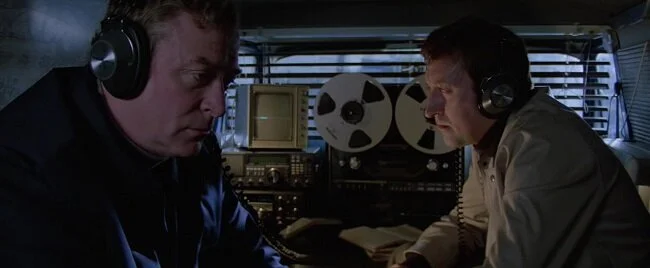
The Chairman has high tech trappings, similar to those seen in The Forbin Project or even Fantastic Voyage. Staff sit at computers monitoring Hathaways pulse and respiration, big screens track his locations and military staff pace up and down drinking coffee from plastic cups. The basic premise is sound and Peck makes for an unlikely hero. But once the plot has been established, very little happens. Hathaway goes to Hong Kong, meets the shadowy figure of Yin and then is granted permission to travel to China. There is a brief diversion when a Chinese agent attempts to seduce him while another searches his apartment but nothing is made of the plot device. On arrival in China Peck is given an official tour of the country, with a few nods to the continuous military presence everywhere. He next meets Mao Tse Tung (the chairman of the communist party and leader of China) who needs his help in finding a way to mass produce the enzyme. They trade political views and philosophy over a game of table tennis.
Peck is always compelling to watch and it’s interesting to see a story which attempts to explore the fear of China at the time. But there simply isn’t sufficient to sustain the narrative. There is an action sequence at the end of the film when Hathaway flees the remote experimental compound with the help of a deep cover Soviet operative played by Burt Kwouk. There’s then a chase to the border and an attempt to penetrate the minefield and electrified fences. But it’s too little, too late. The film ends with all three superpowers sitting on the information they all share and Peck attempting to place the information in the public domain for the benefit of mankind. It is a suitable ending and the film is quite concise at 98 minutes but it all feels very undeveloped and unremarkable. The main point of note is a solid score by the ever dependable Jerry Goldsmith.






Red Tails (2015)
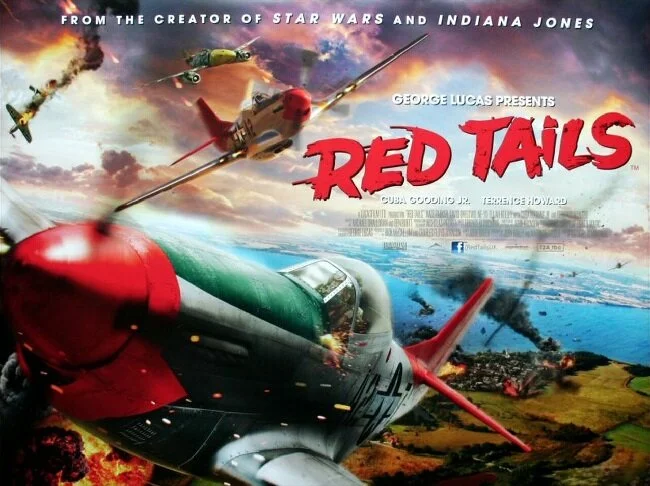
In 1944, the USAAF faces increased losses of Allied bombers conducting operations over Europe. The 332d Fighter Group (The Tuskegee Airmen), consisting of young African-American fighter pilots, are confined to ground attack missions in Italy and hampered with ageing, poorly maintained Curtiss P-40 Warhawk aircraft. After the Tuskegee Airmen distinguish themselves in support of the Allied landings at Anzio, Col. A.J. Bullard (Terence Howard) is surprised when the USAAF Bomber Command asks him if his men will escort the Boeing B-17 Flying Fortress bombers on their day time raids. Casualties have become unacceptably high. Bullard accepts on the condition his unit be supplied with the new North American P-51 Mustang. The tails of the new aircraft are painted bright red and become the unofficial name of the outfit. Bullard orders his pilots to remain with the bombers that they’re escorting and their first escort mission proves a success without the loss of a single bomber. Slowly, entrenched racist attitudes within the USAAF begin to change.
In 1944, the USAAF faces increased losses of Allied bombers conducting operations over Europe. The 332d Fighter Group (The Tuskegee Airmen), consisting of young African-American fighter pilots, are confined to ground attack missions in Italy and hampered with ageing, poorly maintained Curtiss P-40 Warhawk aircraft. After the Tuskegee Airmen distinguish themselves in support of the Allied landings at Anzio, Col. A.J. Bullard (Terence Howard) is surprised when the USAAF Bomber Command asks him if his men will escort the Boeing B-17 Flying Fortress bombers on their day time raids. Casualties have become unacceptably high. Bullard accepts on the condition his unit be supplied with the new North American P-51 Mustang. The tails of the new aircraft are painted bright red and become the unofficial name of the outfit. Bullard orders his pilots to remain with the bombers that they’re escorting and their first escort mission proves a success without the loss of a single bomber. Slowly, entrenched racist attitudes within the USAAF begin to change.
George Lucas is not known for his subtlety as a director, focusing more on visual flair than finely honed character development. Mercifully Red Tails does not do any sort of disservice to the memory of The Tuskegee Airmen. However, it doesn’t do them a great justice either. There are many aspects of the production that are outstanding, such as the ensemble cast featuring Nate Parker, David Oyelowo and Tristan Wilds and striking visual effects. But the weak link in the chain yet again is the screenplay by John Ridley and Aaron McGruder. It is laboured and pitched at a rather simplistic level. Subjects such as institutionalised bigotry, fascism and personal sacrifice need to be dignified with a bit more intelligence when depicted on screen. They are too important and complex issues to be portrayed in such an arbitrary fashion and sadly that is exactly how Red Tails plays out.
As a piece of populist entertainment, Red Tails works sufficiently. With the full weight of Industrial Light and Magic behind the visual effects, there is plenty of spectacle and the traditional story arc follows a distinctly tried and tested formula. The characters are engaging but this is predominantly due to the personalities of the respective actors. There is very little depth to the screenplay and the cast are mainly tasked with providing archetypes. The film will certainly play well to audiences who may not be so familiar with this aspect of World War II. The mixture of action and fast paced story should suit a youth demographic. But for the more sophisticated viewer, Red Tails will seem a bit light in content and lacking anything to make it distinctive. Portraying the Germans as “bad” because they are “Germans”, does not wash and seems a hangover from war films of the fifties. Furthermore the film seems to imply that after the success of The Tuskegee Airmen that the systemic problems of a segregated Air Force are effectively remedied. This sadly was not the case.
All films regardless of genre, require the suspension of disbelief by the audience to varying degrees and Red Tails is no different. Unfortunately George Lucas requires the audience not only to do this but to actively leave their common sense as home. You don’t have to be a military plane enthusiast to quibble over obvious technical inaccuracies or liberal bending of the laws of physics. One expects this to a degree in mainstream filmmaking but there are limitations. In this respect Red Tails does cross over the line. Ultimately, this could have been a superior film as opposed to just adequate, if a more seasoned director had been at the helm, armed with a more robust screenplay. One has to wonder exactly how much influence executive producer George Lucas had over various aspects of this production as Red Tails does exhibit the usual in-balance of content associated with his work.






The Marksman (2021)
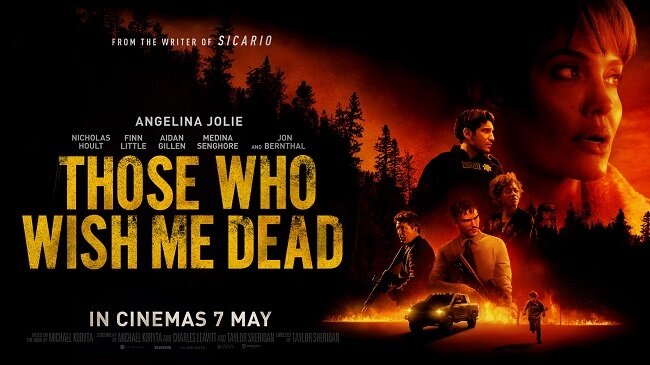
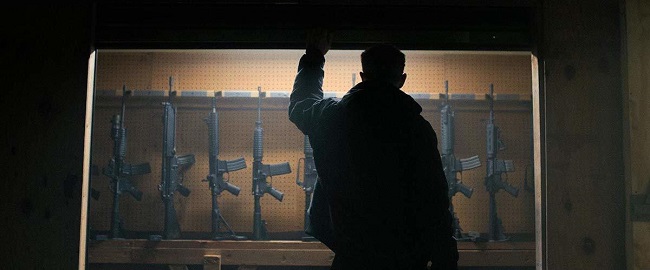
Former United States Marine Corps Scout Sniper and Vietnam War veteran Jim Hanson (Liam Neeson) lives on a ranch on the Arizona-Mexico border. The mortgage on the property is in arrears after the death of his wife has left him medically bankrupt. One day while patrolling his property he encounters Mother Rosa (Teresa Ruiz) with her son Miguel (Jacob Perez) illegally crossing the border fence. He calls his step daughter Sarah (Katheryn Winnick) in the border patrol and reports them as they’re miles from any habitation. However, Rosa and Miguel are fleeing a drug cartel and Mauricio (Juan Pablo Raba), one of their enforcers. When Mauricio and his men try to forcibly take Rosa, Jim intervenes and a car chase and firefight ensue. Mauricio’s brother is killed and Rosa is fatally wounded. She gives Jim a note with her family's address in Chicago and he reluctantly agrees to take Miguel there.
Former United States Marine Corps Scout Sniper and Vietnam War veteran Jim Hanson (Liam Neeson) lives on a ranch on the Arizona-Mexico border. The mortgage on the property is in arrears after the death of his wife has left him medically bankrupt. One day while patrolling his property he encounters Mother Rosa (Teresa Ruiz) with her son Miguel (Jacob Perez) illegally crossing the border fence. He calls his step daughter Sarah (Katheryn Winnick) in the border patrol and reports them as they’re miles from any habitation. However, Rosa and Miguel are fleeing a drug cartel and Mauricio (Juan Pablo Raba), one of their enforcers. When Mauricio and his men try to forcibly take Rosa, Jim intervenes and a car chase and firefight ensue. Mauricio’s brother is killed and Rosa is fatally wounded. She gives Jim a note with her family's address in Chicago and he reluctantly agrees to take Miguel there.
The various trailers and advertisements for The Marksman give the impression that this is an action film but that is not the case. This thoughtful, low key drama is far more of a character study of the relationship between Jim and Miguel. The film explores bereavement and loss, the plight of migrants across the US border and what happens when the “American Dream” turns bad. It bears a lot of similarities to Clint Eastwood’s A Perfect World (1993). Critics claims that the story is formulaic are indeed true and there are not many plot surprises along the way. However, the film’s strength lies in the two central performances which are both very good. There is genuine pathos as opposed to contrived sentimentality and again we are reminded that Neeson is a serious actor who reinvented himself as an action star. Plus it helps that Neeson can do “gruff” and “sad” with his eyes shut. He does much with the simple dialogue to establish his Rooster Cogburn credentials. “Nobody needs to call me, and I like it that way” he exclaims when asked why he doesn’t own a cell phone.
The Marksman is obviously made on a modest budget yet its cinematography by Mark Patten is handsome and makes the most of the vistas and scenery of Arizona and Wyoming. The film does a good job of conveying the immense size and often remote nature of the US border states. The action scenes are functional and do not strain the viewer's sense of credulity. Neeson is supposed to be an ageing Marine and not a special forces operative. He handles himself well in a fight but he also takes a beating. Everything of this nature remains within the confines of the film’s PG-13 rating which is fine as this is a story about characters bonding rather than breaking bones. Director Robert Lorenz has one final trick up his sleeve after teasing us with an action movie and giving us a character drama for 100 minutes. The ending, as Liam Neeson takes a bus to return home, is very reminiscent of Midnight Cowboy. It’s a little unexpected but in step with the film’s overall tone. The Marksman is by no means a masterpiece but is certainly better than its marketing campaign implied.
Your Writing Persona
People bookmark sites and regularly visit blogs for a multitude of reasons. If you’re writing guides for a specific game then you may well gain traction within the appropriate community. Writing reviews or providing commentary on pop culture issues can also attract a growing audience. Some bloggers find themselves simply at the right place at the right time with regard to their writing activities and then later find they’re the “go to” site on a given subject. Never underestimate the importance of diligence and hard work. Writing regularly, interacting with others and building up a back catalogue of material does yield results. There is an element of truth in the old adage that if you throw enough mud at a wall, some of it will eventually stick. But content is not necessarily the only defining factor of a blog’s popularity or success. There is the matter of the writer’s persona.
People bookmark sites and regularly visit blogs for a multitude of reasons. If you’re writing guides for a specific game then you may well gain traction within the appropriate community. Writing reviews or providing commentary on pop culture issues can also attract a growing audience. Some bloggers find themselves simply at the right place at the right time with regard to their writing activities and then later find they’re the “go to” site on a given subject. Never underestimate the importance of diligence and hard work. Writing regularly, interacting with others and building up a back catalogue of material does yield results. There is an element of truth in the old adage that if you throw enough mud at a wall, some of it will eventually stick. But content is not necessarily the only defining factor of a blog’s popularity or success. There is the matter of the writer’s persona.
Unless you deliberately seek to make your writing as anodyne as possible, aspects of your personality will bleed through into your blog posts. It may be your sense of humour, your boundless passion or a fleeting admission of something personal that resonates with others. Some bloggers go a stage further and actively seek to create a deliberate persona through their content. Either way, it can be an important facet of blogging and integral to building a rapport with your readership. There are several bloggers who I admire and respect who frequently cover subjects or write about matters that I am not immediately interested in. However, it is their written style, personality or blogging philosophy that keeps me engaged and reading their content, even if it is about crop rotation in the 14th century. I just enjoy their turn of phrase, acerbic wit or just down to earth outlook upon life.
A writer’s persona may be obvious or it can be enigmatic. Some specific or non-specific aspect of their prose that resonates with the readers. It also doesn’t have to be something positive. I’ve followed some particular bloggers in the past just to see what outrageous nonsense they’d be pontificating today. Being controversial does sell although I’d argue it paints you into a corner and does make you a bit of a one trick pony. So perhaps this option is one to avoid. But whether you seek to cultivate a persona or not, readers do latch on to the tiniest of things and they will endeavour to humanise you. It is in our nature as a species to try and find similarities and common ground with those we encounter in real life, so it really is no surprise that we do the same online. Hence a passing reference to your cat, dog or children suddenly provides a psychosocial bridge and a window into your own humanity. Next thing you know you’ve gained regular readers.
People are nosey. I am. One of the many reasons I enjoy my online social relationships and reading blogs from all over the world is that they provide such a wonderful window into other people’s lives and personal experiences. These things are often paradoxically the same but at the same time different. I thought I had a good handle on what life in America was like but when I started doing a weekly podcast with my good friend Brian, it proved to be a fascinating insight into the cultural differences between the UK and US. This is why I like blogs that have a broad remit and will at times cover wider subjects. I love reading about how someone went on a hike, spent the day at a Renaissance Fayre or is undertaking some major home improvements. I find all these things relatable and the moment that happens I find reading their blogs far more intimate and friendly. It ceases to be just a post but becomes more of a conversation or catching up with a friend and having a coffee.
As to my own blogging persona, it isn’t really that different from the one I present to the world in day to day life. I speak pretty much the same as I write. I like words and am happy to use them. I use humour as a tool to navigate the choppy waters of social interaction and the discussion of those controversial cultural talking points. I will be profane if I think it’s relevant or necessary. Someone once described the Contains Moderate Peril podcast as two grumpy old men, sitting in far side chairs, wearing smoking jackets while they give vent to their loquacity through extraneous bombastic circumlocution. Whether that was the case or not (okay it was) they kept listening. I think a better example of a natural writing persona is that of Justin Olivetti AKA Syp who writes for Massively Overpowered and has his own blog BioBreak. He has an easy going, measured style but that does not mean it’s lacking in substance. He is generous, thoughtful and seldom gets annoyed. He’s kind of like the James Stewart of video game blogging.
Your writing is an extension of you. You have a personality. Therefore your blogging will have one to a degree. However, that is not to say that it is something to fret or fuss over. You may want to write solely about Etruscan pottery and keep purely to the topic in hand, ensuring that any details of your personal life are kept out of your content. That is fine. Be an enigma, although that in itself is a distinct persona. But whatever way in which you express yourself will still have an impact upon your readers. Hence you will develop a perceived writing persona regardless of what you do. However, unless you are deliberately spreading unrest, or actively trolling a community then I don’t think this is anything to be feared. Be genuine in your writing and that is what your readers will see. And think yourself lucky that you’re not a live streamer as your online persona has a far greater bearing in that particular medium.
Yet More PC Peripherals or How I killed a Game Controller in Under a Year
I bought a new game controller for my PC last September. Specifically a PowerA Spectra Enhanced Xbox One Wired Controller for £35. I chose this model as it has good reviews and is deemed a good alternative to the exorbitantly priced official Microsoft equivalent. I chose a wired controller to further keep the cost down. I mainly use a keyboard and mouse for PC gaming but specifically use a game controller for driving vehicles or for titles with simpler game mechanics like Fall Guys: Ultimate Knockout. Much to my surprise after less than a year this game controller has developed a problematic left thumbstick. It doesn’t register direct forward movement which is a major impediment. I have recalibrated the entire controller via Devices and Printers in Windows 10 but the problem persists indicating a physical fault with the controller.
PowerA Spectra Enhanced Xbox One Wired Controller
I bought a new game controller for my PC last September. Specifically a PowerA Spectra Enhanced Xbox One Wired Controller for £35. I chose this model as it has good reviews and is deemed a good alternative to the exorbitantly priced official Microsoft equivalent. I chose a wired controller to further keep the cost down. I mainly use a keyboard and mouse for PC gaming but specifically use a game controller for driving vehicles or for titles with simpler game mechanics like Fall Guys: Ultimate Knockout. Much to my surprise after less than a year this game controller has developed a problematic left thumbstick. It doesn’t register direct forward movement which is a major impediment. I have recalibrated the entire controller via Devices and Printers in Windows 10 but the problem persists indicating a physical fault with the controller.
It is disappointing that this PC peripheral has failed so soon. What makes it more frustrating is that this particular model feels very robust to the touch. It has a weight to it that implies a solid build and quality. However, after perusing Google, it would appear that thumbstick drift and failure are common problems and can affect most brands of game controllers, including the more expensive models. So rather than attempt a repair (as I did last summer which ultimately proved unsatisfactory), I have elected to buy a replacement. I recently installed Days Gone and so require a game controller for the parts of the game that take place while driving a motorbike. I briefly considered purchasing a USB Bluetooth adaptor and using my Nintendo Switch Pro controller. However, this requires additional software to make it PC compatible and then you have to customise the control settings for each game.
JAMSWALL Xbox 360 Controller
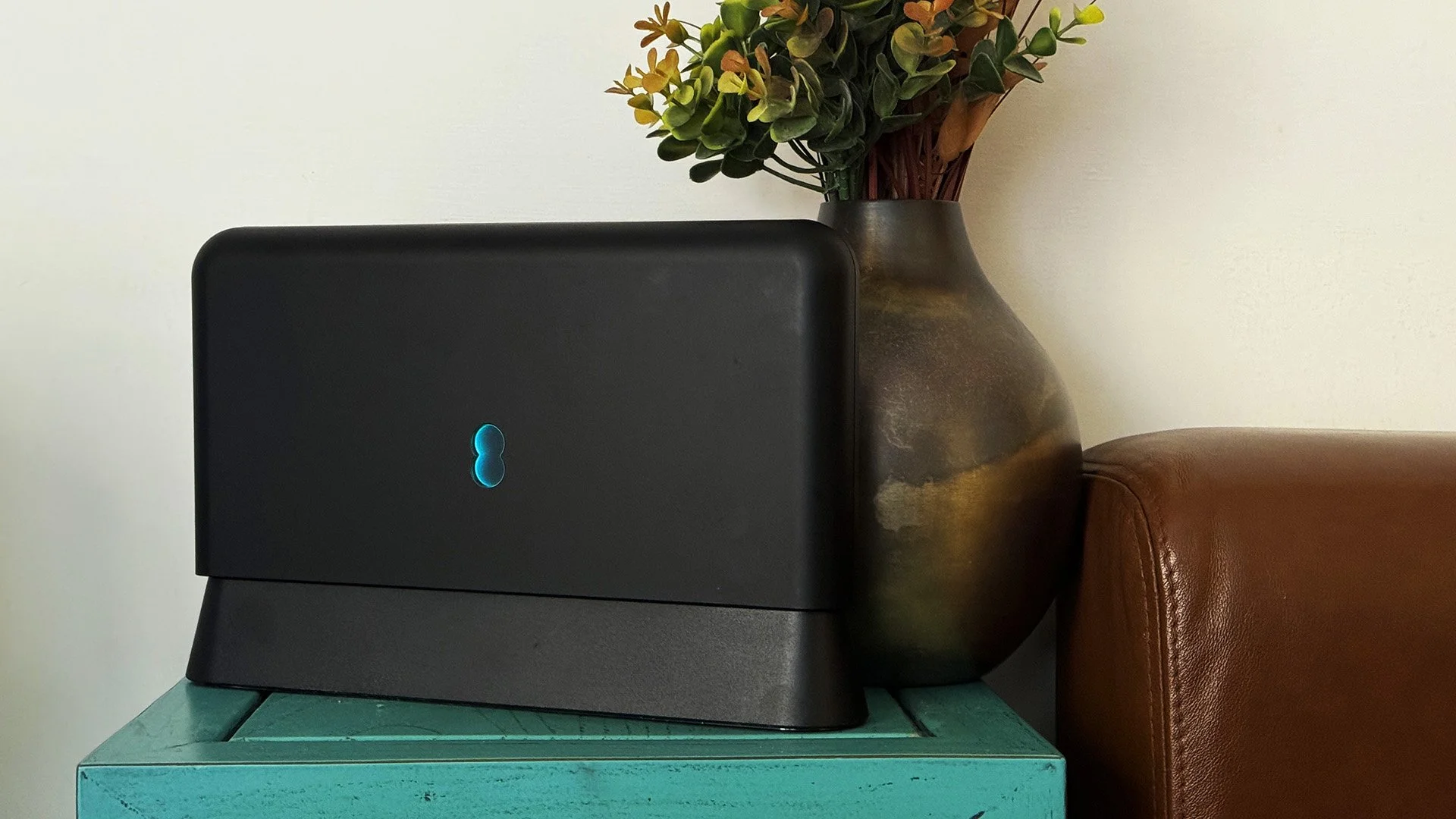
Last night, I spent over an hour trawling through listings for both high end and budget game controllers on various websites. User reviews strike me as capricious to say the least and models at both ends of the spectrum receive both high praise and scathing comments. I often find after reading such customer feedback, that I am none the wiser as to making a decision. However, considering the very specific use I have for a game controller, I eventually decided to purchase a low cost model. If it fails then the initial investment won’t add insult to injury. I ended up buying a generic Xbox 360 style wired controller for £14 from some “no name” brand. It arrives today and it will be interesting to see how it feels and performs. As for the old controller, that has been added to an ever growing pile of PC peripherals and electrical items that are destined to go to my local recycling centre.




















Minigames
“Minigames” are small, short and self-contained games, within a larger RPG or MMO (as well as other game genres). Sometimes they are incidental and have no major bearing on the wider narrative or progression. For example, in The Lord of the Rings Online, you can take up fishing as a hobby. It is an additional activity and nothing more. Many players enjoy it as it can be very relaxing. Minigames of this nature are optional and can be ignored if the player sees fit. When mining Dilithium in Star Trek Online, there is a simple minigame where you have to match your onscreen triangular reticle over a secondary triangular marker that moves over the Dilithium seam. When they are aligned you start mining. It adds a nominal amount of effort to what is otherwise an arbitrary task. However this minigame is mandatory if you wish to do this task. If you elect not to do it then you cannot mine but there are plenty of other ways to acquire Dilithium.
“Minigames” are small, short and self-contained games, within a larger RPG or MMO (as well as other game genres). Sometimes they are incidental and have no major bearing on the wider narrative or progression. For example, in The Lord of the Rings Online, you can take up fishing as a hobby. It is an additional activity and nothing more. Many players enjoy it as it can be very relaxing. Minigames of this nature are optional and can be ignored if the player sees fit. When mining Dilithium in Star Trek Online, there is a simple minigame where you have to match your onscreen triangular reticle over a secondary triangular marker that moves over the Dilithium seam. When they are aligned you start mining. It adds a nominal amount of effort to what is otherwise an arbitrary task. However this minigame is mandatory if you wish to do this task. If you elect not to do it then you cannot mine but there are plenty of other ways to acquire Dilithium.
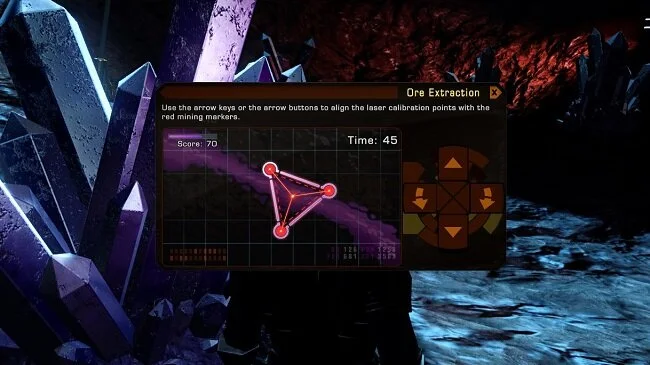
Then there’s a third type of minigame. One that is mandatory and integral to moving forward within the confines of the game. It acts as a gatekeeper and blocks further progression until it is completed. Minigames of this nature are universally reviled and are often an anathema to gamers. Furthermore they’re often considered “lazy game making”. If the player cannot complete the minigame in question then they may as well uninstall the game that they’re playing as they cannot progress any further. It begs the question why would anyone consider including such a system within a video game? Such situations remind me of that classic comedy routine by Irish comedian Dara O’Briain. For those unfamiliar with said pop culture reference here is the most salient quote. I do recommend that you watch the entire vignette as it is worryingly relevant.
You cannot be bad at watching a movie. You cannot be bad at listening to an album. But you can be bad at playing a video game and the video game will punish you and deny you access to the rest of the video game.
No other art form does this. You’ve never read a book and three chapters in, the book has gone, “What are the major themes of the book so far?”
You go “I, I, I don’t know, I wasn’t paying close enough attention”
And the book goes THOOMP.
“Aw, Jesus, come on”
You’ve never been listening to an album after three songs, the album has gone “Dance for me. Show me how good your dancing is.”
You’re dancing and going, “Is this good enough?”
And the album has gone “No,” and stopped. Games do this all the time.
So you may be wondering, “Roger, what prompted this somewhat querulous post”? I shall clarify the situation for you. For the last couple of weeks I’ve been playing through Assassin’s Creed IV: Black Flag. It’s a fun game with lots of pirate based mayhem and shenanigans. However, every so often the story moves from the 18th century to the present which is quite jarring. Anyway, there is a section of the game where you have to hack a computer terminal and move “a data packet” through a security field. Essentially you have to use the up, down, left and right arrows to navigate an obstacle course. Timing is everything. If you touch a “red” obstacle you have to repeat the activity from the beginning. Needless to say I was shit at it and spent an hour (yes that right an entire sixty minutes) trying to complete this utterly tedious, unenjoyable and insulting task. I came very close to just quitting the game and purging it from my hard drive.
Minigames can be fun. Minigames can enhance video games. Minigames can keep a player engaged when the more substantive content has lost its allure. You can use minigames as a means of levelling in something like STO if you don’t want to play through the story missions on alts. Minigames based around collecting and collections are also very popular and addictive. So I fully recognise that they can contribute something tangible and of merit to game design. But the utterly pointless and deliberately malicious kind that you find, such as the one I described earlier, are an utter blight upon the video games industry. Why would anyone countenance putting an impediment to progress into a game that cannot be bypassed. The sheer illogic of it is baffling. Gating content in such a fashion is counter productive and frankly trolling your customers, especially when one considers the cost of games these days. Video games are supposed to be entertainment and not feats of endurance.
Blogrolls
As today is the first day of Blaugust, I thought I’d write something pertinent to blogging. If you’re not sure what Blaugust is then follow the link and you’ll find a wealth of posts that explain this yearly event along with useful advice and guidance. So returning to the matter in hand, bloggers tend to form informal communities which support and promote each other's work. This can be either due to altruistic reasons or down to pure pragmatism. Either way networks of bloggers emerge, often around specific subjects or facets of popular culture. Our own community that holds the Blaugust event is one that is broadly centred around video games, although that is not in any way a defining criteria. All are welcome. However, the point I’m striving to make is that if you run a blog then you need people to read it. And if you want people to read it it helps if you cross promote others and they in turn promote yours. And the easiest way to do this is with the humble blogroll.
As today is the first day of Blaugust, I thought I’d write something pertinent to blogging. If you’re not sure what Blaugust is then follow the link and you’ll find a wealth of posts that explain this yearly event along with useful advice and guidance. So returning to the matter in hand, bloggers tend to form informal communities which support and promote each other's work. This can be either due to altruistic reasons or down to pure pragmatism. Either way networks of bloggers emerge, often around specific subjects or facets of popular culture. Our own community that holds the Blaugust event is one that is broadly centred around video games, although that is not in any way a defining criteria. All are welcome. However, the point I’m striving to make is that if you run a blog then you need people to read it. And if you want people to read it it helps if you cross promote others and they in turn promote yours. And the easiest way to do this is with the humble blogroll.
After writing online for over a decade, I consider blogrolls to be both an asset and a social minefield. In principle they provide a list of online resources that others can use for reference. In fact if you find a site with a comprehensive blogroll it can become a major asset with regard to keeping abreast of others writing. However they can also have some less desirable consequences. Some people see them as a popularity contest or a self indulgent backslapping exercise. There is also a strange sort of internet etiquette associated with them. Sometimes bloggers feel snubbed if they find that their site is absent from their peers' blogroll. If someone adds your site to their blogroll are you obliged to reciprocate? It may sound all very inconsequential but you’d be surprised at the little things that some people choose to get annoyed over.
When I moved Contains Moderate Peril from a hosted WordPress site over to Squarespace, I decided to review whether I should maintain a blogroll. Due to the template I chose and its lack of a sidebar, the matter pretty much resolved itself. I could set up a separate page with a list of blogs but it lacks the convenience of having it on the site homepage. Back in early 2012 I set up The Gaming Blog Nexus, as a more practical means to aggregate blog content and keep track of the latest post published. It proved to be a popular website and successful resource but like so many online projects, it was subject to increasing operational costs. After two and a half years I decided to close the site, which at the time listed over one hundred and twenty gaming related blogs. Although I do not regret my decision, as I do not have unlimited funding for my online projects, I do miss its practical benefits.
If you’ve decided that you wish to maintain a blogroll on your website, here are a few tips for your consideration. If possible present your blogroll in order of new posts or alphabetical site names. If your blogroll is simply a list of hyperlinks then the latter is possibly the best option. Fancier addons or plugins may offer more complex ways to tabulate and collate the blogs listed on your roll. Decide in advance what your policy is to be with regard to which blogs you add to your roll. If you choose a quid pro quo approach then stick to it. If you decide to be more particular, bear in mind that some people may question your policy. Also remove sites from your roll that have become inactive or you know are “dead”. A year is a fair benchmark. If you do these things and manage your blogroll well, you may see a spike in your website traffic. Just bear in mind it may be due to the well maintained resource that you’ve curated, rather than the quality of your prose.
Building Communities
Back in July 2014, a small group of podcasters banded together to launch The Gaming and Entertainment Network, a website which aggregated the content of eight independently produced shows. This eclectic group of podcasts covered a range of subjects such as gaming, movies, TV, hats and bacon as well as other aspects of popular culture. The project was conceived and implemented by Braxwolf from the popular blog Gaming Conversations. It was designed to raise awareness of the respective shows, as well promote group collaboration between the content creators. In addition to the website, TGEN (as it was abbreviated to) also had a presence on twitter, Facebook and Anook ensuring that the network was represented on all popular social media. Initially 8 podcasts participated in the project. Aggrochat, Battle Bards, Beyond Bossfights, Cat Context, Contains Moderate Peril, Couch Podtatoes, Massive Failure and Roleplay Domain.
Back in July 2014, a small group of podcasters banded together to launch The Gaming and Entertainment Network, a website which aggregated the content of eight independently produced shows. This eclectic group of podcasts covered a range of subjects such as gaming, movies, TV, hats and bacon as well as other aspects of popular culture. The project was conceived and implemented by Braxwolf from the popular blog Gaming Conversations. It was designed to raise awareness of the respective shows, as well promote group collaboration between the content creators. In addition to the website, TGEN (as it was abbreviated to) also had a presence on twitter, Facebook and Anook ensuring that the network was represented on all popular social media. Initially 8 podcasts participated in the project. Aggrochat, Battle Bards, Beyond Bossfights, Cat Context, Contains Moderate Peril, Couch Podtatoes, Massive Failure and Roleplay Domain.
The Gaming and Entertainment Network was intended to offer both convenience and choice to listeners. It was also supposed to foster and promote a collaborative ethos among the blogging community that had spawned it. As well as the individual shows, TGEN also produced its own quarterly round table podcast with a panel made up of members of each show. It was at times a little chaotic but the discussions were always fun due to the diverse spectrum of participants. Overall my memories of my involvement with the show are positive. Simply put they were good times. However, real life often trumps one’s aspirations. After three years, some of the podcasts started to fall into decline or stop altogether. Braxwolf, like so many of us, struggled to find the time to maintain the site while juggling work and family life. Inevitably TGEN finally closed and folk moved on. Not everyone though. Belghast and Scormus still regularly produce podcasts and Battle Bards is still a fixture of the community.
Setting aside the nostalgia, I guess what I really wanted to do was reference an example of collaboration between individuals from a shared community and highlight that such projects can be a success as well as a great deal of fun. I’ve been blogging for one and a half decades now and I was most fortunate to start at a time when blogs and podcasts were beginning to gain wider traction. From 2007 to about 2014 I was involved in such projects as The Newbie Blogger Initiative, the aforementioned The Gaming and Entertainment Network as well as the The Gaming Blog Nexus. All of which proved to be learning experiences and a great opportunity to meet and hangout with like minded people. Sadly, many have come and gone over the years but that is the nature of blogging. It has a very high rate of attrition. Some still soldier on, doggedly writing or producing shows. From time to time, someone long gone returns unexpectedly which is always a great surprise. Unfortunately, some members of the community have tragically passed away and left us too soon.
I really did enjoy the sense of belonging that came from the game blogging community back then. It’s still present today but it is a lot different because things change, especially myself. One can never recapture the events of the past but sometimes you can encourage others to try something, in the hope that they will also have a positive experience. I put a lot of stock in grass roots, community driven projects. So if you are a blogger, YouTuber or streamer and have a hankering to work collaboratively, build a community or simply just hangout with others, then don’t just think about it. Reach out to others and take the first steps. Doing is so much more rewarding than just endlessly planning. Even if things don’t work out at least you’ve tried and learned along the way. But there’s also a chance of creating something of value, finding new friends and making a lot of happy memories.
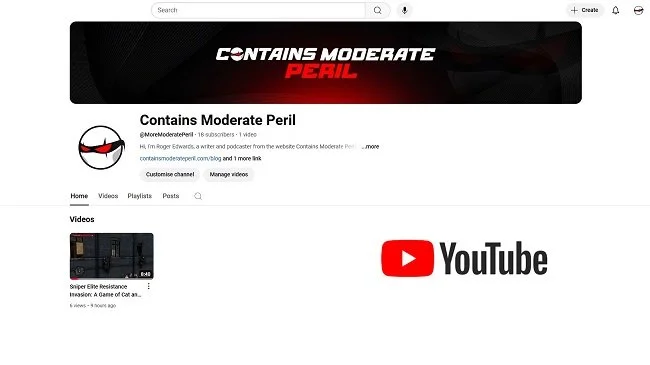

Blog Comments
Leaving comments on a post is a perennial talking point among bloggers. A good comment is often encouraging, provides valuable feedback and is also personally rewarding. However, allowing them on your site is also an invitation for assholes to talk bollocks. Setting aside the overall debate, comments per se just seem to be in decline these days. I find that people will respond to a post on Twitter, where they saw the initial link to begin with. Although this is pleasant it doesn’t leave anything permanent associated with the post. But such is the nature of social media. And of course another major stumbling block to leaving comments are the foibles of the various websites and platforms themselves. All too often a site will just ignore or reject your comment. This itself then acts as a future disincentive.
Leaving comments on a post is a perennial talking point among bloggers. A good comment is often encouraging, provides valuable feedback and is also personally rewarding. However, allowing them on your site is also an invitation for assholes to talk bollocks. Setting aside the overall debate, comments per se just seem to be in decline these days. I find that people will respond to a post on Twitter, where they saw the initial link to begin with. Although this is pleasant it doesn’t leave anything permanent associated with the post. But such is the nature of social media. And of course another major stumbling block to leaving comments are the foibles of the various websites and platforms themselves. All too often a site will just ignore or reject your comment. This itself then acts as a future disincentive.
As it’s the New Year, I decided that as I read my Feedly RSS feed each morning, it would be “chummy” to leave comments and to try and reinforce that sense of community that only seems to come to the fore during writing events. Hence this morning, I left a few positive words on one website and everything worked just fine. I believe I logged in using my Twitter credentials. However, when I tried to do the same thing again on another blog, I couldn’t login and post anything. The process ground to a halt during the validation stage and after about two minutes, I got bored and moved on. It’s not the author of the blog’s fault. This just seems to be a random issue associated with some platforms. Even if you opt for a different method of logging in, such as Google or Facebook, the problem can often persist. And then if you wait for 24 hours it will work fine the next day.
This also happens on my Blog. As a host, Squarespace provide some useful functionality but this really isn’t the case with comments and “likes”. I will sometimes notice that a post has been “liked” several times but have absolutely no idea by whom. Which kind of makes the process somewhat redundant. Some folk have found leaving comments “problematic”, although I can never determine whether there’s a common factor to this. Thus, this is the current status quo. I am trying to leave more comments, something I’m usually really bad at doing but the circumstances are conspiring against me. I could leave a similar comment on the Blaugust Discord server, assuming that the author is active on that server and will see it. Not the best solution but the best I can come up with at the moment. Certainly want to maintain the positive feedback ethic, as I feel it’s needed at present.
Essential Technology
Today’s Blaugust Promptapalooza writing prompt is “what technology would you have the hardest time living without?”, which is a great question. Fellow blogger Telwyn has already tackled this conundrum over at Gaming Sans Frontières and I found myself agreeing wholeheartedly with the sentiment they expressed (more on that shortly). Over the course of my life, technology has become more and more ubiquitous and is now an integral part of our society. We take its presence for granted and only fully realise the benefits it provides when it ceases working or there’s some sort of outage. Technology has also dramatically fallen in price over the last five decades. What used to be marketed as expensive, labour saving luxuries or recreational indulgences, are now just disposable consumer items. The pace at which technology advances has also accelerated. It’s a struggle sometimes to keep abreast of what is new.
Today’s Blaugust Promptapalooza writing prompt is “what technology would you have the hardest time living without?”, which is a great question. Fellow blogger Telwyn has already tackled this conundrum over at Gaming Sans Frontières and I found myself agreeing wholeheartedly with the sentiment they expressed (more on that shortly). Over the course of my life, technology has become more and more ubiquitous and is now an integral part of our society. We take its presence for granted and only fully realise the benefits it provides when it ceases working or there’s some sort of outage. Technology has also dramatically fallen in price over the last five decades. What used to be marketed as expensive, labour saving luxuries or recreational indulgences, are now just disposable consumer items. The pace at which technology advances has also accelerated. It’s a struggle sometimes to keep abreast of what is new.
Telwyn wrote “the PC is one of my main sources of entertainment” and that is the same for me as well. When I wake up in the morning, I meander into “the office” and fire up my PC before ambling off to the bathroom to get washed and dressed. I then go to the kitchen and make breakfast for myself and Mrs P and return to my desk where I busy myself catching up with Twitter, Feedly and the Blaugust Discord server. I do all my research and writing at my PC. Administrative tasks such as banking and prescription renewals are all done online and via my PC. If Mrs P wants to watch something different to me, I use my PC as a second TV. And naturally I am a member of the PC “master race” when it comes to gaming. As I said in a previous post, I find sitting at my desk, in front of my PC to be one of the most comfortable and relaxed environments that I know. On the few occasions that my PC has been offline due to technical issues, I wander the bungalow like a lost soul.
Another piece of modern technology that has become essential in my life is the smartphone. I know that this is not a particularly imaginative or original example but the fact remains that this device has had a seismic impact upon our lives and culture in just 13 years. Mobile phones per se have existed for considerably longer but it was the smartphone, with its wider range of functionality, which brought the internet to our pockets. And I use my smartphone in a similar fashion to my desktop PC. I won’t bore you with the multitude of tasks I use it for but I love how I can be out and about somewhere new with Mrs P and within minutes determine where’s there’s parking, a nice restaurant and what the local property prices are like (co’s we’re seriously considering moving soon). The modern smartphone offers communication, information and a wealth of services at your fingertips. I’ve also never been an especially accomplished photographer. But now I can produce at least one decent photo per day trip, thanks to my phone. I just hate it when people call me on it.
Finally, I need to mention dishwashers. I’m not sure if they’re considered standard “white goods” in the UK yet. A quick Google search shows that as of 2018, only 48% of homes have them, so may be not. I’ve been using a dishwasher for about a decade now and I consider them invaluable. For me one of the seven circles of hell is a hot kitchen with a small sink, filled with tepid, greasy water, trying to scrub a roasting pan with a worn plastic brush with splayed bristles. I hate washing up. It ruins your hands and I detest having to do manual labour after a heavy meal, when I should be relaxing in a fireside chair enjoying a large glass of port. My parents have an “old person’s” house, by which I mean that everything in it actively conspires to hinder you. They do not have a dishwasher and it’s like going back to using dial-up internet, except that it involves the use of Brillo pads.
For reasons of brevity, I’ve kept this post to just three examples of what I consider to be indispensable technology. However, here are a few other “honourable mentions” that I think deserve to be referenced, due to the impact they’ve had upon the quality of life in general.
Sat Navs
Wireless Blood Sugar Monitors
Tamagotchi
View-Master
George Foreman Grill
The Lament Configuration
Video 2000
Teletext
PalmPilot
Computer Battleships
Fandom Memories
Syp over at Bio Break leads the charge with today’s Blaugust Promptapalooza writing prompt, with this interesting question. “What is your earliest memory related to one of your core fandoms?” Please do read his thoughts on going to see Return of the Jedi upon its original release back in 1983. It is something I can certainly relate to. I’m a decade older than Syp and so I can recollect actually seeing Star Wars for the first time at my local cinema. However as that was a starting point for a specific fandom rather than an “ongoing” example, I won’t cite it here. I have even earlier recollections of going to Longleat Safari and Adventure Park and having the extra bonus of seeing the Doctor Who Exhibition which ran there from 1973 to 2003. This would have been in August 1974 and I was six at the time. I have dim recollections of all the exhibits being mainly from the Jon Pertwee era and the Daleks being the high point of my day.
Syp over at Bio Break leads the charge with today’s Blaugust Promptapalooza writing prompt, with this interesting question. “What is your earliest memory related to one of your core fandoms?” Please do read his thoughts on going to see Return of the Jedi upon its original release back in 1983. It is something I can certainly relate to. I’m a decade older than Syp and so I can recollect actually seeing Star Wars for the first time at my local cinema. However as that was a starting point for a specific fandom rather than an “ongoing” example, I won’t cite it here. I have even earlier recollections of going to Longleat Safari and Adventure Park and having the extra bonus of seeing the Doctor Who Exhibition which ran there from 1973 to 2003. This would have been in August 1974 and I was six at the time. I have dim recollections of all the exhibits being mainly from the Jon Pertwee era and the Daleks being the high point of my day.
But as the question is about “core fandoms” I think I’ll reference a more contemporary example. One that I can recollect more clearly and so provide a more specific anecdote about. So I’d like to talk about my love of the horror genre and how as I got older, became a consummate fan. I’ve recently written about how during the 80s and 90s the UK home video market endured some rather restrictive regulations that lead to a lot of horror films being unavailable or heavily edited. Due to magazines such as Fangoria and Starburst, fans would be aware of both mainstream US and independent productions long before they were released in the UK. Hence we’d often become aware of those occasional titles that had already caused a stir “stateside” or in Europe and would therefore naturally run into distribution and censorship issues when it came to a British release. How could such films be shown in the UK? The answer was the “film festival”, which provided a limited or one off showcase, where the audience could be strictly regulated. Such events weren’t providing mainstream national distribution.
Now film festivals per se are always a great occasion for fans. I find that watching a cult classic with a like minded audience in a traditional movie theatre setting, rather than watching at home on your own, is a superior way to enjoy a film. I believe there is some truth to the “shared experience”. For example I feel the slapstick shenanigans of Charlie Chaplin work a lot better when viewed with a group. Bearing this in mind, on Saturday 24th February 1990, not only did I get the chance to indulge this theory by going to my first film festival but I was afforded the oppurtunity to see a controversial film that was heading into trouble. That film being Henry Portrait of a Serial Killer. The Splatterfest 90 film festival was held at the Scala Cinema, in Kings Cross, London. The venue was a known private cinema that excelled at hosting such events, as well as regularly showing bizarre and baroque movies.
I remember quite clearly, the atmosphere in the cinema. The Scala was a sumptuous but somewhat dilapidated 1920s building, which lent itself well to its niche market purpose. Between films it was quite noisy with fans talking and constantly going to and fro to the lobby. But when Henry Portrait of a Serial Killer started the audience settled and fell silent. The film was a gruelling 83 minutes experience which left the audience shocked, uncomfortable yet utterly engaged with the proceedings. I subsequently learned that several examiners from the BBFC had attended the screening as an opportunity to “research” a movie they knew would be “problematic” when it eventually sought a formal UK theatrical release. There was a very interesting Q&A with director John McNaughton which shed a lot of insight into the film and its production.
There were several other movies shown that night making Splatterfest 90 a very enjoyable film festival. Brian Yuzna’s Bride of Re-Animator which is a great sequel to the original Re-Animator, was very well received. As was the excellent documentary Document of the Dead, which was made during the filming of George A. Romero’s Dawn of the Dead. However, one film did not go down particularly well. The Comic, a “psychological drama” about a stand up comedian who murders his way to success in a dystopian future, was met with derision, objects hurled at the screen and cries of “for fuck’s sake, turn this shit off”. Director Richard Driscoll was due to be interviewed after the screening but bid a hasty retreat after his film’s suboptimal reception. Overall Splatterfest 90 was a very good introduction to film festivals and was certainly a “grassroots” experience of fandom. I’ve been to many similar events since then but none have had quite the same impact or left such memories as this one.
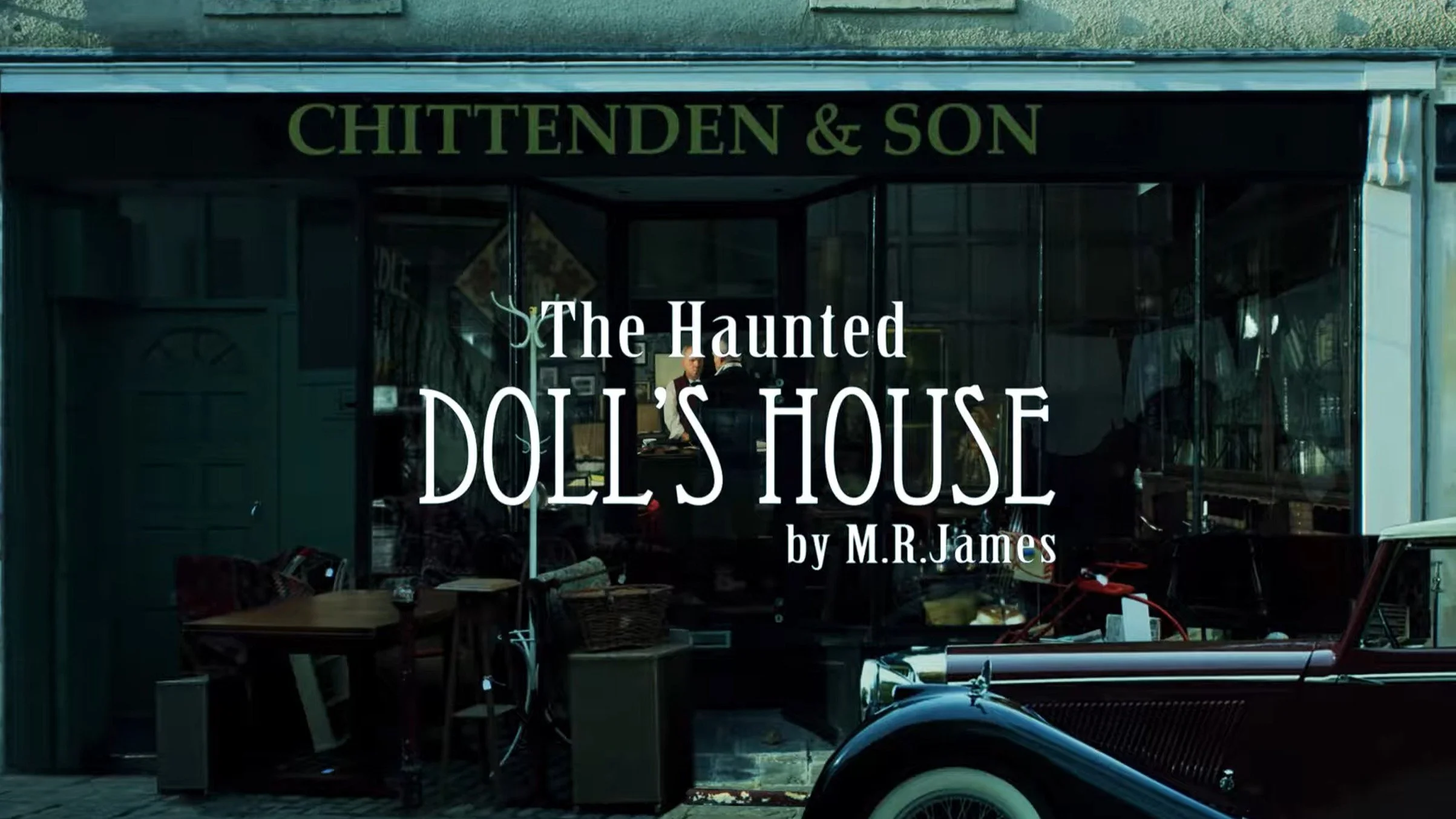











Your Writing Environment (Again)
I thought I’d tackle another Blaugust Promptapalooza writing cue. Today’s question is “Tell us about your physical creative space, and how it influences your content creation” and the official promoter of this prompt is Krikket over at Nerd Girl Thoughts. Do go check out their very candid thoughts and personal experience on this subject. Because where you sit and create your content is a big factor in the process. Sadly, for practical reasons it is often the one that is most overlooked or neglected due to the realities of life (as Krikket explains in their post). Very few of us have a purpose built studio or specifically designed workspace. Most of us just try to adapt an existing part of our home and make do with that. I have done this in the past, when I was living in a rented flat. The lounge dining table also doubled as a writing desk, as well as a computer workstation. It was a little too high for such purposes and it ruined my posture after a while. The ergonomics of where you sit is not something that should be ignored.
My desk as of August 2020
I thought I’d tackle another Blaugust Promptapalooza writing cue. Today’s question is “Tell us about your physical creative space, and how it influences your content creation” and the official promoter of this prompt is Krikket over at Nerd Girl Thoughts. Do go check out their very candid thoughts and personal experience on this subject. Because where you sit and create your content is a big factor in the process. Sadly, for practical reasons it is often the one that is most overlooked or neglected due to the realities of life (as Krikket explains in their post). Very few of us have a purpose built studio or specifically designed workspace. Most of us just try to adapt an existing part of our home and make do with that. I have done this in the past, when I was living in a rented flat. The lounge dining table also doubled as a writing desk, as well as a computer workstation. It was a little too high for such purposes and it ruined my posture after a while. The ergonomics of where you sit is not something that should be ignored.
In 2016, having moved, I started using the spare bedroom in the Peril household as an office. I live in a Bungalow and the bedrooms are at the front property. This is a common foible of buildings of this type from the 1930s. It’s a robust, red brick built home with a South facing garden. Consequently, the “office” faces North and is cool in hot weather. The window looks out into a busy tree lined avenue. I wrote in a previous blog post on this subject about how my original plans were “thwarted” by the arrival of my twin granddaughters. At the time I had to share my “creative workspace” with two travel cots. Hence I initially chose a very small desk. However, the twins are now 5 years old and so the travel cots have gone. There is now a single bed in the room, which has a second pull out mattress in the base. I have now expanded “my domain” and got a bigger desk. One that is the right height and has adequate room for me to type or write longhand.
Ignore the cable management and focus on Pliny and Magnus
I like a tidy and organised work space. My desk is laid out in accordance with my needs.I have a single document tray for my paperwork. There’s a headset available for impromptu online chats. It is an analogue model that plugs into a 3.5mm jack. I have an extension cable that ends in a female socket to hand under the monitor stand. There’s an Xbox controller for those games that require one. I have my internet router under my monitor so I can address any issues, should they arise. This model has greatly improved the wireless network in the home but my PC is attached via an ethernet cable. I have my Fire HD 10 to hand and my phone in a wireless charging cradle. Notebooks and pens are available should they be required. I also have an HP printer, copier, scanner next to my desk. I’ve had the same computer chair for 4 years and have already replaced the gas cylinder. It is getting a little worn but I’m reluctant to part with it as it is very comfortable.
When writing I tend to prefer a quiet environment. If I shut the office door and Mrs P does the same in the lounge then neither disturbs the other. Sometimes if I find my attention wandering and I’m spending too much time watching the shenanigans of “punch above his weight man” who lives across the road, or some other example of life’s rich pageant, then I’ll draw the curtains. I’ve recently started getting up earlier in the morning and now try to do the majority of my writing before 11:00AM. Because I am very much at ease with myself when I’m at my desk and I feel it’s a place where I 100% belong, I’ll often get lost in my writing. On the days when the ideas come and I’m invested in the subject I’m writing about, I can be quite productive. Some days when I’m outraged by something I’ve seen on the news or online, my office is a haven of reason to retreat to. Having been self-employed in the past and regularly worked from home, I can effectively compartmentalise my time. If I’m supposed to be writing then there’s no skiving allowed. Gaming (which I do on the same PC) is allotted to specific times of the day and can only be indulged in when all other obligations have been met.
The beer on the desk is a semi-permanent fixture
I consider myself very fortunate to live in a home that has a spare room that I can use in this way. Shit, I think I’m fortunate to even have a home but that’s a subject for a separate blog post that I may tackle at a future date. Simply put I have a decent sized room in my home that I can appropriate and use simply to write, record podcasts (which I haven’t done for a while), play video games and watch pointless but amusing YouTube videos. One a month or so, my granddaughters come to stay for a night or two and I can’t use “the office” from 8:00 PM for about twelve hours. It’s hardly an inconvenience. Many of my fellow bloggers and content creators do not enjoy this luxury. Families, especially young children take up space. Therefore there may not physically be a room or area to claim for indulging your artistic muse. Or there may be a corner or snug but it needs to be cleared out or maintained before it can be used. Try doing that after pulling a 12 hour shift. And if you rent, then you may find there are restrictions in your leasing arrangement.
Often, the space we'd like to have for our creative endeavours and the one we actually use are not the same thing. However, despite the reality of the situation many bloggers, podcasters, streamers, vloggers and online creators manage to regularly produce good quality material without the benefit of a designated office or bespoke studio. They get by the best way they can and it could be argued that having to create on the fly, guerilla style, is why they create such good material. But I won’t belabor that point because I’m sure many would most certainly like a suitable “den”. I also should add that I’m lucky that Mrs P hasn’t seen fit to use “the office “ as her “sewing room”, “Kabaddi Dojo” or some such similar creative undertaking. If that were the case, I’d be back to writing via the lounge table, on a laptop. How would I be able to see the birds on Mrs Coltart’s roof?