
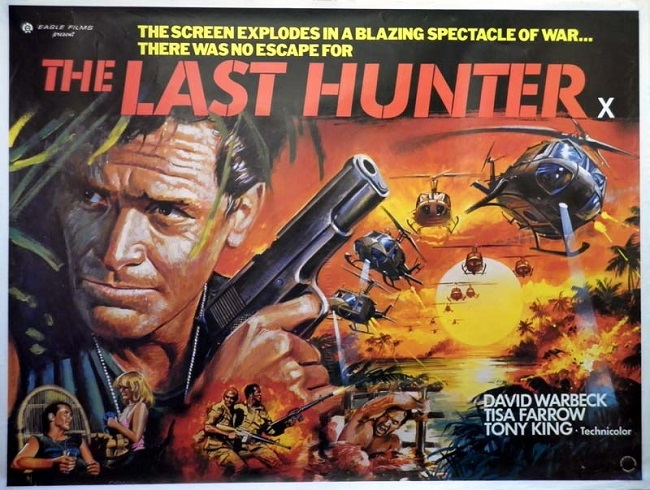
The Last Hunter (1980)
There are many films about war. There are many films about the Vietnam war. A few have transcended mere historical depiction and managed to capture the utter horror and political insanity of the situation, along with the tragic human cost. And then there are those which simply seek to use the setting as a vehicle for an exploitation movie, in the hope of making a fast buck. The Last Hunter (L'ultimo cacciatore) falls firmly into the second camp. This Italian "macaroni combat" movie (yes, I didn’t know that’s a thing either) offers a straight forward tale of an incursion behind enemy lines by an officer charged with destroying a radio transmitter, broadcasting anti-US propaganda. It is violent, action packed and surprisingly honest about what sort of film it is. You’ll find no pretentious philosophical musings here. Just explosions, rotting corpses and Viet Cong booby traps.
There are many films about war. There are many films about the Vietnam war. A few have transcended mere historical depiction and managed to capture the utter horror and political insanity of the situation, along with the tragic human cost. And then there are those which simply seek to use the setting as a vehicle for an exploitation movie, in the hope of making a fast buck. The Last Hunter (L'ultimo cacciatore) falls firmly into the second camp. This Italian "macaroni combat" movie (yes, I didn’t know that’s a thing either) offers a straight forward tale of an incursion behind enemy lines by an officer charged with destroying a radio transmitter, broadcasting anti-US propaganda. It is violent, action packed and surprisingly honest about what sort of film it is. You’ll find no pretentious philosophical musings here. Just explosions, rotting corpses and Viet Cong booby traps.
Directed by veteran Italian film maker Antonio Margheriti (and billed as Anthony Dawson on English language prints), The Last Hunter is a well-made (by Italian cash-in genre standards) exploitation war movie, with a solid international cast and good action set pieces. Margheriti had a background in miniature effects and the film features several scenes of this kind, such as the rail yard bombing at the start and the jungle cave demolition in the films second act. The dialogue is functional (and all dubbed in post-production like so many Italian movies of this kind) and the story efficiently moves the actors from set piece to set piece. There’s even the bonus of a minor twist in the movies climax. David Warbeck is suitably grizzled and burnt out as Captain Morris and Tisa Farrow fills the roll of the “plucky news reporter” embedded with the unit. There’s also wise cracking banter between Tony King and Bobby Rhodes as the units African-American representation. Connoisseurs of eighties Italian genre movies will delight at the cast and the additional inclusion of John Steiner as a suitably deranged Major.
Being an Italian movie of the times, there are copious acts of violence including a graphic gunshot to the eye, a partial decapitation and a leg amputation. There’s also a lot of crude barrack room humour and an attempted rape, but hey that’s how these movies roll. It almost as if there’s a check list being followed. The location cinematography in the Philippines gives the proceedings an authentic feel and like so many Italian movies from this decade, the soundtrack by Franco Micalizzi is contemporary, funky and far more interesting than some traditional orchestral scores. As this movie is not designed to be a cerebral undertaking it has to be judged on what it has to offer. And on that basis, then The Last Hunter is a better than average ninety plus minutes of Italian exploitation cinema. It is also a good steeping stone into the wider works of director Antonio Margheriti. If you enjoy this movie you may wish to try, Codename: Wild Geese (three guesses which movie this rips off), Command Leopard and Killer Fish. All have an interesting international cast, miniatures effects work along with either gore or action.
The Last Hunter Bonus Track: Music from the opening night club scene.
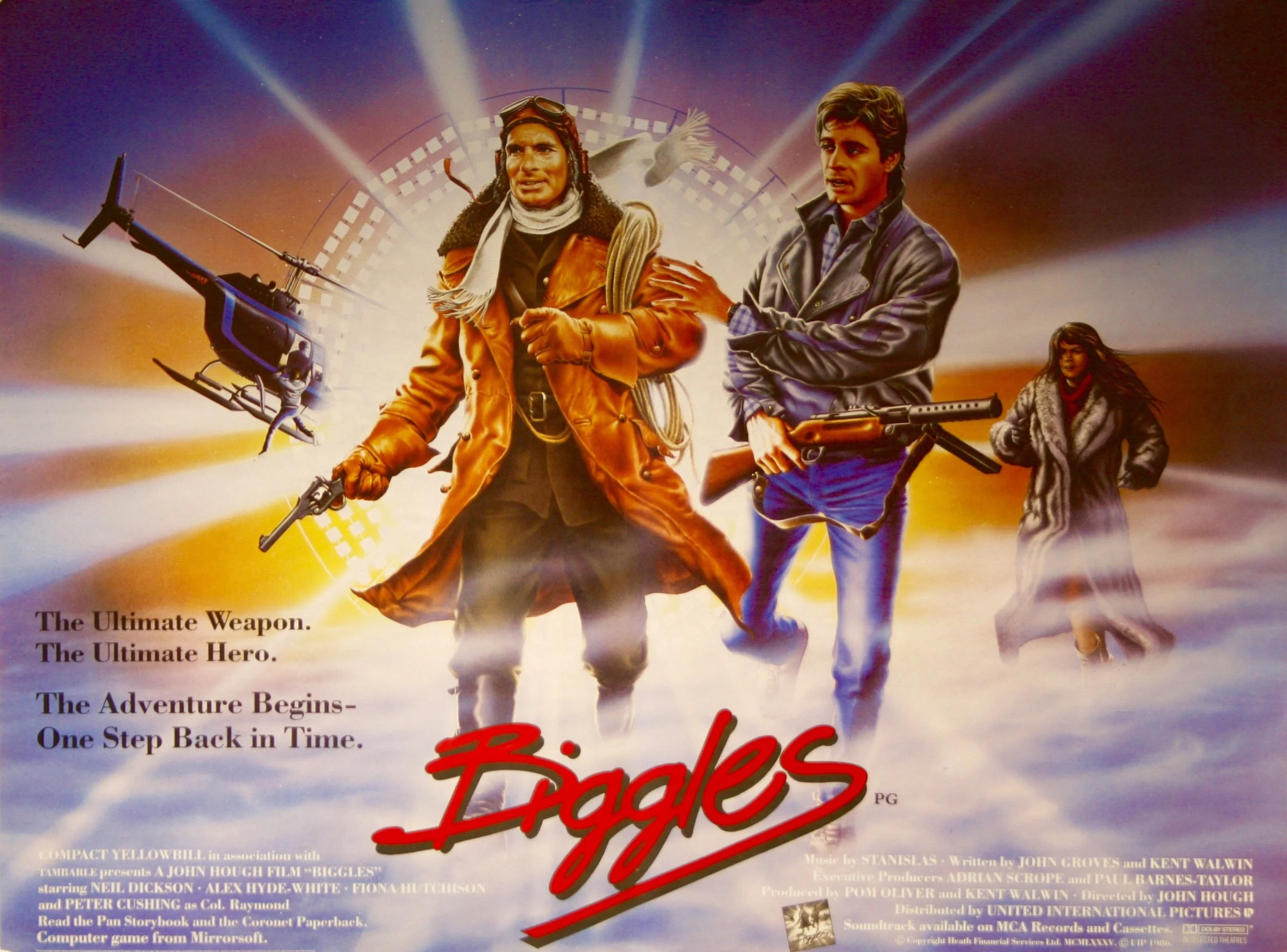
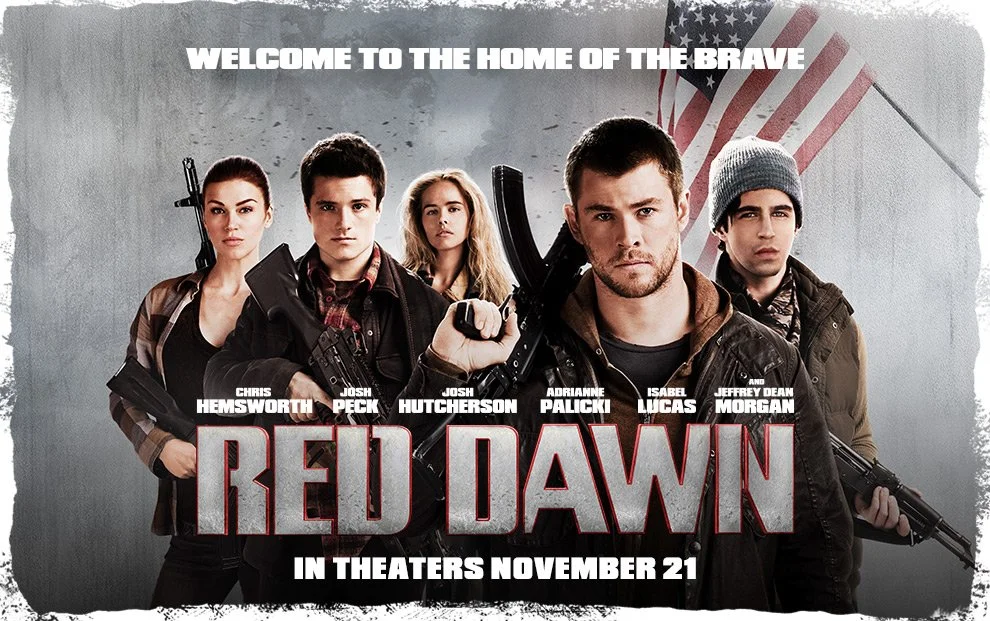
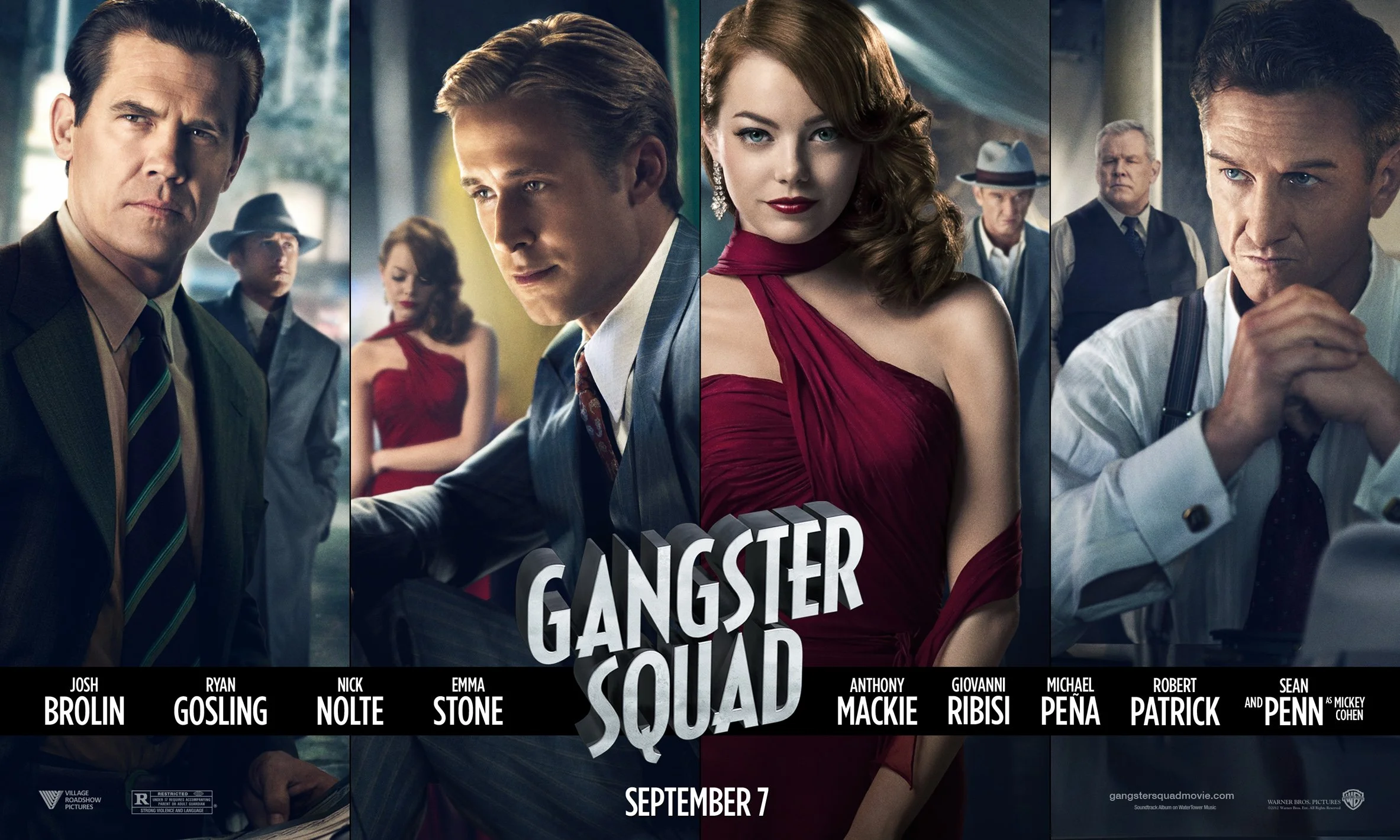

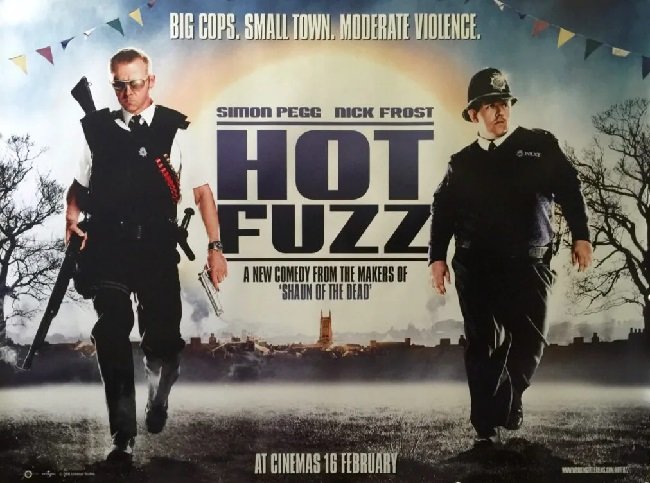
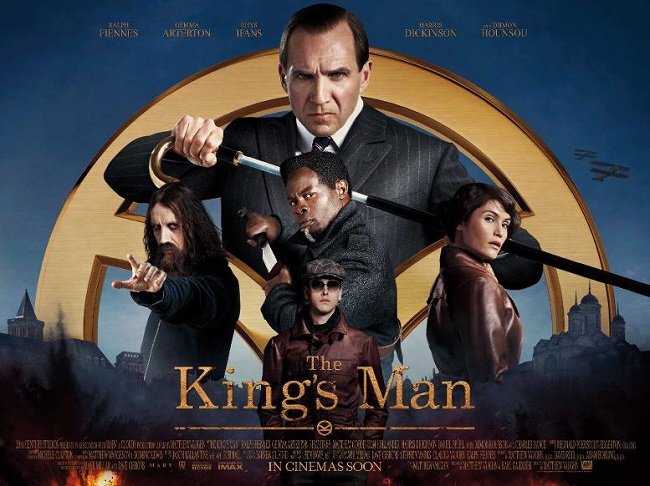
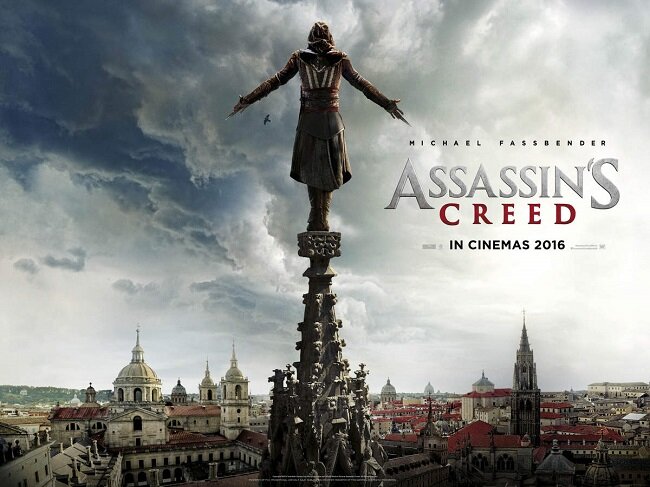

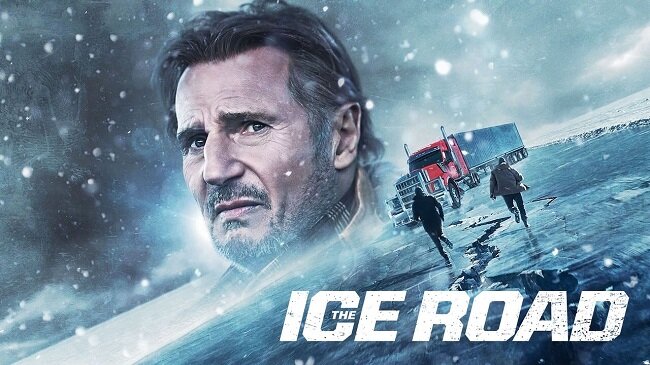
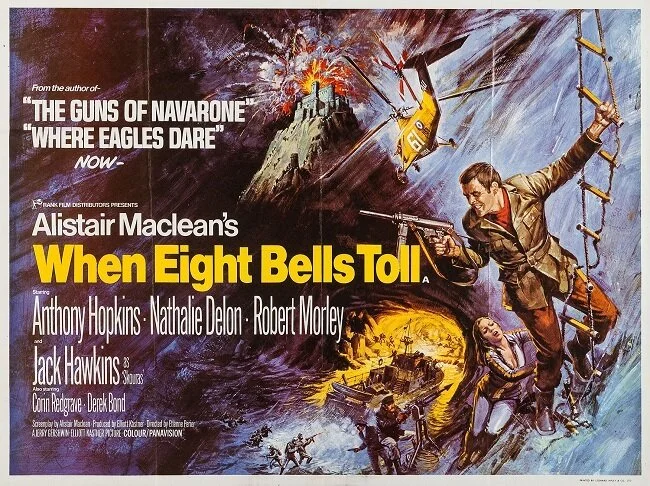





Conan the Barbarian (2011)
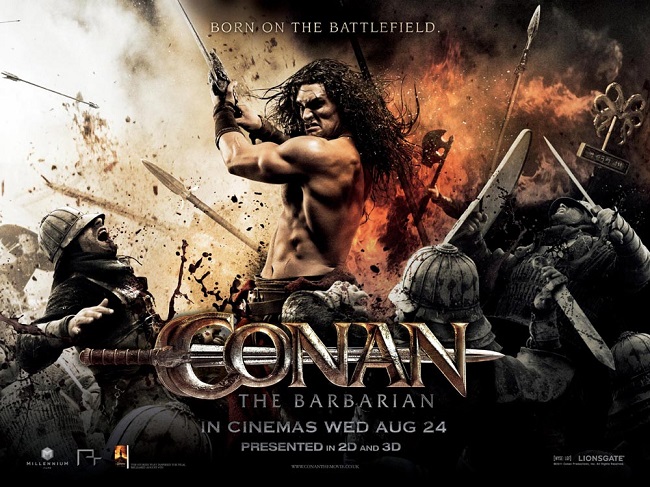
On a superficial level the 2011 Conan reboot provides two hours of blood and thunder. For those who are seeking a quick fix of such material and are not burdened by a strong affiliation to Robert E. Howard’s source material, this will prove adequate. I suspect that Marcus Nispel’s offering will find a home with a younger audience. For purists or those who have fond memories of John Milius’ 1982 version, then this is not the film you are looking for. Move along. But to be honest after watching the various trailers that preceded this release and considering the directors track record, does this really come as any surprise? For those with a longer memory, cast you mind back to Nispel’s Viking versus Indian outing from 2007. Pathfinder was a high concept movie that was chronically mishandled.
On a superficial level the 2011 Conan reboot provides two hours of blood and thunder. For those who are seeking a quick fix of such material and are not burdened by a strong affiliation to Robert E. Howard’s source material, this will prove adequate. I suspect that Marcus Nispel’s offering will find a home with a younger audience. For purists or those who have fond memories of John Milius’ 1982 version, then this is not the film you are looking for. Move along. But to be honest after watching the various trailers that preceded this release and considering the directors track record, does this really come as any surprise? For those with a longer memory, cast you mind back to Nispel’s Viking versus Indian outing from 2007. Pathfinder was a high concept movie that was chronically mishandled.
This re-imagining loosely draws upon Robert E. Howard’s source material, as well as Schwarzenegger’s Conan. It is the opening scenes focusing on Conan’s youth which are the most engaging, from a narrative and character development stance. The brief insight into Cimmerian warrior culture makes for a strong start. But immediately after the death of Conan’s Father (Ron Perlman) it all lapses into by the numbers story telling. Evil Khalar Zym (Stephen Lang) along with sorceress daughter Marique (Rose McGowan), seek an ancient relic to facilitate their fiendish (and formulaic) plans. Throw in a plucky warrior monk named Tamara (Rachel Nichols) and the generic story is complete. Conan’s motivation is purely one of revenge, but without the philosophical musings of Schwarzenegger’s. Jason Momoa has sufficient charm and presence to hold an audience, but the character has none of the depth you would hope.
The film clearly fails at script level. Jason Momoa’s mono-syllabic dialogue is purely reactive, serving as nothing more than an expositionary device. It is also delivered in a contemporary fashion. Nothing kills immersion for me more than period set dramas (be they based in fact or fantasy) utilising current American parlance. Potentially interesting characters are also neglected and given little to do. Rachel Nichols is introduced as a strong female lead but is sidelined as a damsel in distress rather quickly. Both Stephen Lang and Rose McGowan fail to deliver a good performance and maintain their evil nemesis roles purely by dint of the characters they have been assigned. Yet there is the scope for their curious and dysfunctional relationship to have been so much more.
What is so obviously lacking in this cinematic outing is depth. Can movies such as this have any, I hear you ask? Of course they can. Milius explored the nature of revenge and imbued his take on Conan with a Nietzschean subtext. Furthermore, Howard's original work has a multitude of themes and is not simply the pulp fiction it has been glibly labelled over the years. But director Marcus Nispel simply refuses to look beyond two-dimensional, cause and effect structure of the story. His Conan, although personable, has no dignity or nobility. Momoa is brooding but beyond his obvious vengeful motivation, he has few of the qualities of his literary namesake. It seems that the film makers only see the central character as an efficient killing machine and that's what they have brought to the screen.
Subsequently, Conan the Barbarian is totally the sum of its parts. As those respective parts are bland, hollow and uninspired, that is exactly the sort of movie that you get. For those seeking violence and bloodshed, then Conan the Barbarian can provide such commodities. However, it is subject to an excess of CGI and contemporary editing techniques that rob the action scenes of any sense of wonder. Compare them to the physical effects and sword play of the 1982 movie and the difference is obvious. The sequences with the sand spirits and under water creature, along with the films climax fail to offer any real tension. Again, they seem like a dislocated FX show reel that was added by the most economic bidder for the contract.
If Conan the Barbarian had simply been marketed under a different title and not linked to the franchise, perhaps critics would have been more forgiving. Had it just been “Wolgang Rippling Buttocks and the Sword of Kagnazax”, then it may well have been deemed acceptable. However, as it fails so notably to do any justice to Robert E. Howard’s work, it quite rightly merits harsher criticism. Furthermore, the point of failure is abundantly apparent. Director Nispel and the screen writers Thomas Dean Donnelly, Joshua Oppenheimer and Sean Hood are simply not up to the job. They fail to understand the philosophy of Conan and focus purely on spectacle and pandering to ill-conceived market research. The most depressing aspect of this is the fact that the box office failure of the film has pretty much ended any chance for a further reboot by more competent film makers.


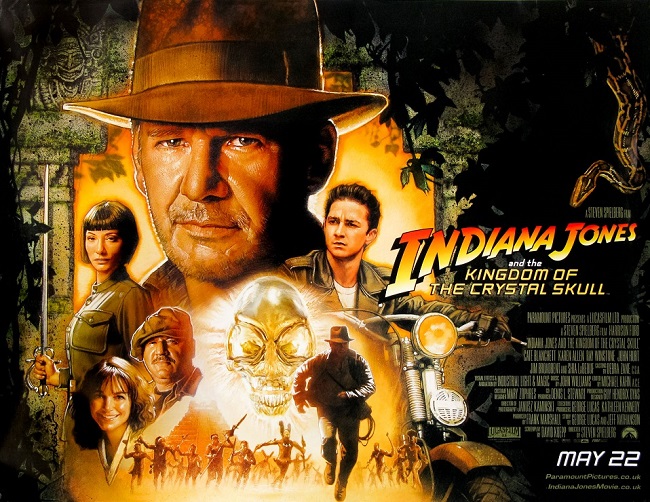
Indiana Jones and the Kingdom of the Crystal Skull (2008)
For many fans and enthusiasts, there are the original trilogy of Indiana Jones movies, all made in the eighties when director Steven Spielberg was reaching the height of his film making creativity. And then you have Indiana Jones and the Kingdom of the Crystal Skull; the poorly regarded, Johnny-come-lately fourth instalment made nearly twenty years later, that jumped the shark, or in this instance “nuked the fridge” and for some viewers, pretty much pissed on the memory of its three predecessors. Make no mistake, over a decade on from the films theatrical release there is still a lot of ill will held towards the fourth Indiana Jones adventure. Let us not forget that South Park based an entire episode around the contempt they have for the movie. Yet despite all this hostility, it should be noted that Indiana Jones and the Kingdom of the Crystal Skull was the most commercially successful entry in the franchise, grossing $786,636,033 worldwide. It was the second most successful movie in 2008 (the first being Christopher Nolan’s The Dark Knight) and although not universally well received by fans, it did broadly garner critical success. However, within that spectrum of reviews there were some strong negative opinions. All things considered Indiana Jones and the Kingdom of the Crystal Skull is somewhat of an enigma, in so far as being financially successful but a movie that most people don’t admit to liking.
For many fans and enthusiasts, there are the original trilogy of Indiana Jones movies, all made in the eighties when director Steven Spielberg was reaching the height of his film making creativity. And then you have Indiana Jones and the Kingdom of the Crystal Skull; the poorly regarded, Johnny-come-lately fourth instalment made nearly twenty years later, that jumped the shark, or in this instance “nuked the fridge” and for some viewers, pretty much pissed on the memory of its three predecessors. Make no mistake, over a decade on from the films theatrical release there is still a lot of ill will held towards the fourth Indiana Jones adventure. Let us not forget that South Park based an entire episode around the contempt they have for the movie. Yet despite all this hostility, it should be noted that Indiana Jones and the Kingdom of the Crystal Skull was the most commercially successful entry in the franchise, grossing $786,636,033 worldwide. It was the second most successful movie in 2008 (the first being Christopher Nolan’s The Dark Knight) and although not universally well received by fans, it did broadly garner critical success. However, within that spectrum of reviews there were some strong negative opinions. All things considered Indiana Jones and the Kingdom of the Crystal Skull is somewhat of an enigma, in so far as being financially successful but a movie that most people don’t admit to liking.
So, what exactly is the proverbial beef with Indiana Jones and the Kingdom of the Crystal Skull. Let’s take a few moments to go over possible areas of contention. Plot wise the story is nothing special but then again, it’s hardly anything controversial. Indie seeks Akator, the mythical kingdom in the Amazon that may hold both great power and wealth. It’s the same basic sort of MacGuffin used in the previous instalments. The story actually does a good job updating the format from the thirties to the fifties. The nuggets of information we get about what Indy's been up to in the last 20 years are rather intriguing. Working for O.S.S. and becoming a decorated war hero for example, are touched upon but never over egged. We also learn the fate of both Marcus Brody (Denholm Elliott) and Henry Jones Senior (Sean Connery), both of whom have died. This is both credible and to a degree necessary because having too many cameos from prior characters can sometimes be as both a boon and a bane. The Soviet Union and Communists replacing Nazis is also a sound move and the way Indy falls foul of McCarthyism and loses his position at the university is a novel idea. It all adds to keeping the same vibe going yet playing it against a subtly different back drop. I even like the anecdote about Roswell, as it raised a wry smile. Overall, despite a superficial change from the supernatural to science fiction, Indy 4 is pretty much a case of same meat, different gravy, when it comes to the narrative.
As for casting, action scenes, pacing and general continuity, as well as visual aesthetics, Indiana Jones and the Kingdom of the Crystal Skull does remarkably well. Harrison Ford and Karen Allen genuinely recreate the chemistry that was present in the original movie. The fist fights and associated stunt work are still very good, leaning towards the gritty. This has always been a violent franchise, despite being sold a family entertainment. Editing is also invaluable cinematic tool for creating a sense of style and maintaining a sense of continuous ambience. Veteran editor Michael Kahn, who has worked on all Spielberg’s movies since 1979, does much to make the movie feel just like the others. Also, although Douglas Slocombe, the cinematographer of the original trilogy had long retired by 2008, Janusz Kamiński, who has shot all of the director's films since Schindler's List, made a conscious effort to recreate the previous visual style. Plus let us not overlook the immense contribution that composer John Williams has made to world of Indiana Jones. His score for the fourth movie is every bit the equal of the first three.
So, if it’s not an overt and specific facet of the production that is the problem, is it a case of something subtler being to blame? I believe the answer is yes. Hollywood is an industry that regularly resurrects franchises. If in doubt, revisit a tried and tested formula. Public good will and nostalgia will often guarantee decent box office returns. Sometimes this works as with Christopher Nolan's Batman Begins and Bryan Singer's Superman Returns. Others fails. Take I Spy, Starsky & Hutch, The Dukes of Hazard, and some may argue the latter three Star Wars prequels. It often comes down to a trade-off between pleasing existing fans and trying to capture a new market who may not be familiar with the original material. It sounds perfectly reasonable to make such a choice but endeavouring to reconcile these two aspirations is far harder to achieve than you think. Both markets have very different needs at times and certainly there are distinct variations in taste across generations.
Despite the familiar faces, music, production team and many other common elements to previous entries, Indiana Jones and the Kingdom of the Crystal Skull suffers from a weak screenplay. Although the story is straight forward, the various scenes don’t quite hang well together. New characters are introduced but none have enough back story. The fact that these roles are carried by quality actors helps, but they are not used to the best of their potential. You don’t have to write large swathes of dialogue to flesh out a fictional character. You just needs to write something intriguing, that makes you think. A detail that makes that individual seem less contrived and more like a real person. It can be an affectation, quirk or foible. Or they can reference a tragedy that shaped their character or show an interest in something you wouldn’t immediately assume. It’s a difficult thing to quantify, but you know it when you see it. Hans Gruber from Die Hard is a great bad guy for example. Because the screenplay in Indy 4 is inconsistent, the movie suffers from a tonal shift on several occasions. I actually liked the way Spielberg handles the relationship between Shia LaBeouf and Harrison Ford. The banter between the two, focusing very much on the age gap feels right. By contrast the female characters do not fare so well. Karen Allen is not given enough to do, which is an utter shame as her character has so much potential. Kate Blanchett is also rather imposing as the Russian villain. Equipped with borderline psychic powers and a penchant for fencing, you'd think she'd be a standout feature of the film. Alas, again there is not enough material to flesh out the role.
But perhaps the biggest Achilles heel of Indiana Jones and the Kingdom of the Crystal Skull is the action set pieces. This is ironic as next to the Bond franchise, Indiana Jones did much to refine and advance this aspect of film making. Yet it is this element of the movie that inadvertently hobbles it instead of embellishing it. Take a moment to reflect upon Raiders of the Lost Ark. The iconic scene at the beginning where Indy flees the collapsing temple pursued by the giant stone ball booby trap. The truck chase in which stuntman Terry Leonard created a modern variation of Yakima Canutt’s iconic set piece form Stagecoach. And of course, the fistfight with Pat Roach under the German flying wing. What made these scenes so great is that they were all done physically with very little or no post production effects. What optical effects there were, remained measured in scope. In many ways the technical limitations forced a degree of credibility on the proceedings. Of course, all movies require audiences to suspend their sense of disbelief, and more so with genre movies. Yet being grounded in these ways mean that the first film stays the right side of the “relative credibility line” and keeps the audience on board. Sadly, in each subsequent movie, the franchise subsequently broke this rule by greater degrees. Bailing out of a plane using an inflatable raft as parachute was a big ask in Indiana Jones and the Temple of Doom. A rear facing turret on a plane that does not have interrupter gear, thus enabling the machine gun to shoot its own rudder in Indiana Jones and the Last Crusade, again is a step too far. These examples are the tipping point where high adventure becomes a caricature of itself.
Indiana Jones and the Kingdom of the Crystal Skull made nearly two decades later from the original trilogy had all the “benefits” of computer-generated imagery and contemporary FX technology. Such limitless possibilities thus removed any remaining vestiges of credibility and the action scenes failed to wow because they were simply impossible and obviously “not real”. I have no problem with the nuclear test scene, but I dislike its resolution. It is just far too silly and instantly breaks a degree of immersion for the enthusiastic viewer. The much-protracted chase through the jungle between jeeps, trucks and amphibious vehicles is ruined by the digital sequences that depict acts so ludicrously implausible they’d be better off in a cartoon. If this scene had been scaled back, lost the Tarzan wine swinging references and had just confined itself to what could be done in camera, then it would have been vastly improved. And as for the alien revelation at the denouement, again it focuses too much on digital spectacle. Even the traditional fist fight with the signature heavy (Igor Jijikine) is spoilt by an excessively FX driven pay off.
Sadly, the aliens plot element and its impersonal CGI actions scenes all bear the clumsy handiwork of George Lucas. It was he who allegedly vetoed scripts from several respected writers, including Frank Darabont and was insistent on pursuing his penchant for spectacle over narrative. At its root the fundamental problem with Indiana Jones and the Kingdom of the Crystal Skull, is that Messrs Spielberg and Lucas were trying to recreate a franchise movie that hailed from an era when not only techniques and film making philosophy were fundamentally different, but so were both men. Trying to revisit your own past is inherently difficult so perhaps this instalment may have faired better if both individuals had deferred to other film makers to helm the project. Modern action blockbusters are a very different beast to those from the eighties and I can’t help feeling the modern corporate film making is too formulaic for the likes of franchise born of a more experimental and flexible era in movie making. Does Indiana Jones and the Kingdom of the Crystal Skull deserve the animosity it still receives from the viewing public. Perhaps not. There are many good aspects to the film. But it is definitely a compromise and like most compromises it doesn’t meet all parties’ expectations. Furthermore, in the last ten years or so the general public seems to be far less disposed toward anything other than getting exclusively what they want. If we do get a further Indiana Jones film in 2020, it will be interesting to see if there is a revision of opinion on Indiana Jones and the Kingdom of the Crystal Skull. That may depend on how bad the new one is because although Indy may well be able to get the better of both Nazis and aliens, he doesn’t seem to have survived modern studio film making too well.







Get the Gringo AKA How I Spent My Summer Vacation (2012)
Mel Gibson fall from grace has been well documented, so I feel no need to dwell on it here. I also don't take any particular moral stance with regard to the man himself. I'm more interested in his work as an actor, director and the material he produces. People are flawed and we all make mistakes. Does this automatically invalidate our work? However, it would appear that I am in the minority on this one, as Mr Gibson has never truly bounced back. The Hollywood establishment has remained sceptical of him in recent years. Therefore, he has financed many of his film projects himself and personally arranged their international distribution deals. Get the Gringo AKA How I Spent My Summer Vacation is one such example of this and the movie premièred on VOD in the US rather than in theatres. However, it did get shown in movie theatres in other territories.
Mel Gibson fall from grace has been well documented, so I feel no need to dwell on it here. I also don't take any particular moral stance with regard to the man himself. I'm more interested in his work as an actor, director and the material he produces. People are flawed and we all make mistakes. Does this automatically invalidate our work? However, it would appear that I am in the minority on this one, as Mr Gibson has never truly bounced back. The Hollywood establishment has remained sceptical of him in recent years. Therefore, he has financed many of his film projects himself and personally arranged their international distribution deals. Get the Gringo AKA How I Spent My Summer Vacation is one such example of this and the movie premièred on VOD in the US rather than in theatres. However, it did get shown in movie theatres in other territories.
Get the Gringo was at the time of its release a clear return to form for Mel Gibson, harking back to the halcyon days of Payback. It’s a fast paced, hard edged action movie, with interesting if amoral characters. It shows all the intelligence and attention to detail you expect from Gibson. Although directed by Adrian Grunberg who usually specialises in second unit direction, the movie shows the presence of its star in all aspects of the production. Career criminal Gibson find himself in an experimental prison south of the border after a bank job goes wrong. Once inside he proceeds to run rings around gang bosses, corrupt official and play the very system for his own personal gain. Although far from a hero, he does extend a hand of friendship to ten-year-old boy (Kevin Hernandez) and his tough but caring mother (Dolores Heredia).
Now the astute reader may well be asking what is a child doing in a prison? Well the films setting is based on a genuine experiment the Mexican authorities undertook, in which prisoners were allowed to set up their own community while incarcerated. This included bringing their families and running business etc. An interesting idea on paper, but the reality of the situation was a lot closer to Escape From New York. Production designer Bernardo Trujillo has created a unique environment in which the story unfolds. Being a prison that story is a violent and bloody one. There is also an interesting subplot in which one of the crime bosses needs a liver transplant. The only suitable donor is of course the young boy under Gibson's protection. It makes for some curious developments.
Under different circumstances Get the Gringo would have garnered a great deal more attention and would have probably been a box office success if released at a different time. It certainly deserved a wider release within the US, but unfortunately some people in the film industry have long memories. The cinematography is solid, bringing to life the grimy environment and many Mexican clichés are turned on their head. The movie did receive a warmer welcome in the international market under its alternative title of How I Spent My Summer Vacation. For those that like more depth to their thrillers Get the Gringo is certainly worth a viewing and should provide more than just gritty action. There are strong performances and amoral conundrums to enjoy.
The Raid 2 (2014)
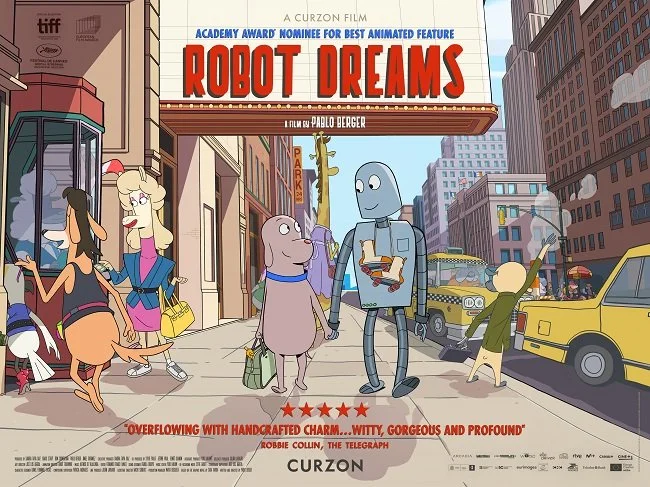
It is very difficult to write about The Raid 2 without descending into hyperbole or gushing like a fanboy. As the movie poster shows, the popular press used pretty much every cliché available on the film’s release in 2014. If I remember, they did this previously with the original movie, The Raid in 2011. I may have leaned towards such enthusiasm myself when reviewing the previous movie. One thing that can be said about The Raid 2 is that it's a game changer and a genre milestone. It is more than just an action movie, in the same way that Enter the Dragon is more than just a martial arts movie and Singin' in the Rain is more than just a musical. Director Gareth Evans has stepped beyond the traditionally narrow scope of the genre to produce something far more ambitious.
It is very difficult to write about The Raid 2 without descending into hyperbole or gushing like a fanboy. As the movie poster shows, the popular press used pretty much every cliché available on the film’s release in 2014. If I remember, they did this previously with the original movie, The Raid in 2011. I may have leaned towards such enthusiasm myself when reviewing the previous movie. One thing that can be said about The Raid 2 is that it's a game changer and a genre milestone. It is more than just an action movie, in the same way that Enter the Dragon is more than just a martial arts movie and Singin' in the Rain is more than just a musical. Director Gareth Evans has stepped beyond the traditionally narrow scope of the genre to produce something far more ambitious.
The Raid 2 exceeds the claustrophobic confines of its predecessor and offers a far more ambitious plot. Following two hours after the siege on Boss Tama’s tower block complex (as seen in the first film), cop Rama (Iko Uwais) is asked to go undercover in a maximum-security prison so he can infiltrate a Jakarta crime syndicate. Rama manages to penetrate the inner circle of Ucok (Arifin Putra), the son of crime boss Bangun (Tio Pakusodewo). When rival gang leader Bejo (Alex Abbad) instigates a turf war for the streets of Jakarta, Rama quickly finds that all may not be as it seems, both in prison and within the ranks of his own police department.
The Raid 2 has a running time of two and a half hours, but it does not out stay its welcome despite its length. It manages to keep the narrative moving forward and switches seamlessly from action scene to occasional exposition. It is clear that director Evans has been influenced by the works of Akira Kurosawa, Park Chan-wook, Takeshi Kitano and Alan Mak, both visually and thematically. There are clear homages to several genre classics; a mass fight in a prison yard that has turned to mud, the use as claw hammers as a weapon and the complex inner politics of the crime syndicate. The movie also excels with its cinematography, editing and choreography. The action is superbly framed and presented in such a way that allows the audience to enjoy the frenetic pace but still see exactly what is happening on screen.
The Raid 2 is not for the squeamish. It is a brutal and unflinching in its depiction of violence. Yet there is a poetical quality to the never-ending litany of broken limbs, stabbings and sundry mayhem. Edwards manages to succeed in making the violence both titillating and disturbing at once. The audience is never quite sure what is going to happen next. It is this element of unpredictability that works so well in the film favour. It’s a radical change in approach to the distinctly passive experience that contemporary mainstream action movies have become in the west. Four years on we have yet to see a third instalment of this franchise, which is a shame. There is still talk of a US remake of the original film, for those viewers that cannot cope with subtitles or a non-American cast. For viewers with broader cinematic taste, The Raid 2 is well worth seeking out and seeing in its original language, because it is a superior, stylish and honest product.
The Raid (2011)
I was not a big fan of Gareth Evans 2009 movie Merantau. Although it was an interesting showcase for Iko Uwais and Pencak Silat martial arts, the story had a ponderous narrative and was thirty minutes too long. The human drama seemed at odds with the action content. However, in early 2011 I started to hear positive things about his follow up movie The Raid. When I finally got to see the international version of the film the following year, I was summarily impressed. The Raid was the most entertaining, all out, kick you in the nuts action film I’d seen since Hard Boiled at that point. Every so often, a film comes along that breathes new life in to an ageing and tired genre. The Raid was exactly such a movie and it didn’t take long for people to take note.
I was not a big fan of Gareth Evans 2009 movie Merantau. Although it was an interesting showcase for Iko Uwais and Pencak Silat martial arts, the story had a ponderous narrative and was thirty minutes too long. The human drama seemed at odds with the action content. However, in early 2011 I started to hear positive things about his follow up movie The Raid. When I finally got to see the international version of the film the following year, I was summarily impressed. The Raid was the most entertaining, all out, kick you in the nuts action film I’d seen since Hard Boiled at that point. Every so often, a film comes along that breathes new life in to an ageing and tired genre. The Raid was exactly such a movie and it didn’t take long for people to take note.
Seven years on (and a sequel later) I recently watched this movie for a second time. Let it suffice to say it still boasts a formidable pedigree. It reaches high gear within minutes of starting and simply does not let up for its hundred-minute duration. It is atmospheric, mean and dirty with one of the highest bodycounts to running time ratios I’ve encountered. And it remains extremely hard hitting. If your forays into the action genre have been mainly PG-13, mainstream US fodder, then you’re in for a “great big fucking surprise” as Jack Watson said in The Wild Geese. This is a fast paced and frenetic movie with a hard edge. It’s violent slick and compelling. It’s lack of Hollywood gloss makes it gritty and a refreshing change from other western genre movies.
A group of elite SWAT style specialist cops launch a dawn raid on 30 floor tenement block that doubles as armed fortress for an evil local drugs baron. However, the textbook plan goes terribly wrong, leaving the forces of law and order decimated. The fire fights with automatic weapons give way to hand to hand combat as honest cop Rama (Iko Uwais) tries to keep the remainder of his team alive and carry out their mission. The Raid boast a grimy production design which is credible and atmospheric. The cinematography by Matt Flannery captures the rundown aesthetic of Jarkarta’s slums very well. Even when the mayhem becomes somewhat balletic, the down to earth setting keeps the viewer grounded. There are shades of Carpenter’s Assault on Precinct 13 in the narrative as well as nods to John Woo and Walter Hill. Director Gareth Evans balances tone, pacing and a feel for action sequences perfectly.
The Raid succeeds because it does not aim to high. There is a wealth of action and wall to wall mayhem. Blood flows freely, but the movie does not make the mistake of copying standard Hollywood output. We don’t have a hero who is bullet proof, blessed with limitless ammunition and can take down a plane with a single shot. We have a flawed hero, who bleeds. Of course, we have to suspend our sense of disbelief. But we do not have to seal it in a lead container and drop it into the ocean to be recovered at a later date. If you like old school action movies, then see The Raid. You won’t regret it. If only Hollywood would take note. Less is more in this case. Also using a talented director who knows what he’s doing, helps. Unfortunately, the US studios seem oblivious to what the fans want and still blithely continue churning out there “targeted products”.
Here is some further trivia on The Raid. The title of the movie was altered from The Raid to The Raid: Redemption in the United States because the production company SPC could not secure the rights to the title; this also allowed Gareth Evans to plan out future titles in the series. The US version also sports a different soundtrack. While the original film was still in production, in May 2011, Sony Pictures Worldwide Acquisitions acquired the distribution rights of the film for the U.S. and asked Mike Shinoda of Linkin Park and Joseph Trapanese to create a new score for U.S. release. The original score from the Indonesian version was composed by Aria Prayogi and Fajar Yuskemal, who worked with Evan's on his previous film, Merantau. This version can be found on the international DVD and Blu-ray release of the movie.
Hanna (2011)
Some people seem to draw parallels between Hanna and Mathew Vaughn’s Kick-Ass but the similarities are somewhat superficial. One is traditional, intelligent action thriller about a youthful female assassin. The other is a tongue-in-cheek neo-exploitation movie, involving a preteen vigilante. The more you compare them the greater the differences become. So, let us start by dismissing such erroneous comparisons.
Some people seem to draw parallels between Hanna and Mathew Vaughn’s Kick-Ass but the similarities are somewhat superficial. One is traditional, intelligent action thriller about a youthful female assassin. The other is a tongue-in-cheek neo-exploitation movie, involving a preteen vigilante. The more you compare them the greater the differences become. So, let us start by dismissing such erroneous comparisons.
One of the most compelling reason to see Hanna is Saoirse Ronan's performance, previously seen in Atonement and Peter Jackson’s The Lovely Bones. It is precise and utterly compelling. Another selling point is Joe Wright's tight and well measured direction. This is a real revelation as his previous works tend to be costume pieces or worthy human dramas. Yet he shows a real feel for the genre proving that some directors can successfully change verticals (unlike Marc Forster, who struggled to grasp the concept of a Bond movie, with Quantum of Solace).
The plot is a straight forward affair about an individual raised in isolation and subsequently discovering on contact with the real world, that they are “different”. There is the implication that Hanna is not only the product of her upbringing, by ex-assassin Eric Bana, but potentially the child of a genetic experiment. Once the initial premise has been established, the script is essentially a series of action sequences, shot in a very contemporary fashion (hence achieving its PG-13/12A rating). The story is neatly structured although formulaic, with a twist ending that really isn't that much of a revalation.
Yet director Joe Wright manages to expand the story's subtext, providing more rounded characters than you would expect in a genre piece such as this. Cate Blanchett and Tom Hollander, provide superior performances as the films antagonists. The score by the Chemical brothers is another innovative aspect that should be applauded. Soundtracks in the action movies are so often perfunctory, these days. Hanna overall is pure escapism but is elevated above the mundane by the significant talent of Joe Wright. Let us hope that he continues to experiment with different genres.
Death Wish (2018)
The latest movie adaptation of Brian Garfield’s notorious 1972 novel has not had an easy journey to the big screen. Over more than a decade, multiple directors have been associated with the project, including Sylvester Stallone, Joe Carnahan as well as Aharon Keshales and Navot Papushado. Actors such as Liam Neeson, Russel Crowe and Frank Grillo have been on the shortlist to play Paul Kersey. Yet due to differing opinions as to how the subject matter of vigilantism should be approached, most of these earlier projects failed. Joe Carnahan apparently wanted to explore the concepts of “toxic masculinity” and gun culture but studio executives simply wanted a more traditional action thriller. This resulted in a particularly acrimonious public falling out in which the boss in question was labelled a “gutless turd” by Carnahan. Oddly enough the job of remaking Death Wish finally went to horror film maker Eli Roth. And as you would expect from a director with such credentials as Cabin Fever, Hostel and The Green Inferno, his grisly signature set pieces take pride of place in the proceedings.
The latest movie adaptation of Brian Garfield’s notorious 1972 novel has not had an easy journey to the big screen. Over more than a decade, multiple directors have been associated with the project, including Sylvester Stallone, Joe Carnahan as well as Aharon Keshales and Navot Papushado. Actors such as Liam Neeson, Russel Crowe and Frank Grillo have been on the shortlist to play Paul Kersey. Yet due to differing opinions as to how the subject matter of vigilantism should be approached, most of these earlier projects failed. Joe Carnahan apparently wanted to explore the concepts of “toxic masculinity” and gun culture but studio executives simply wanted a more traditional action thriller. This resulted in a particularly acrimonious public falling out in which the boss in question was labelled a “gutless turd” by Carnahan. Oddly enough the job of remaking Death Wish finally went to horror film maker Eli Roth. And as you would expect from a director with such credentials as Cabin Fever, Hostel and The Green Inferno, his grisly signature set pieces take pride of place in the proceedings.
As a crime wave grips Chicago, surgeon Paul Kersey (Bruce Willis) experiences first hand the resulting increase in gunshot wounds as he treats both police and criminal alike. Kersey is a law-abiding citizen and doesn’t own any firearms and seems bemused by the violence of society, as he watches various TV talk shows and listens to radio phone-ins. When his wife Lucy (Elisabeth Shue) is fatally shot and his daughter Jordan (Camilla Morrone) is left comatose after a bungled burglary, Kersey looks to the police and Detectives Kevin Raines (Dean Norris) and Leonore Jackson (Kimberly Elise) to track down the culprits. But it soon becomes apparent that crimes of this nature are seldom solved, so grief and anger drive the doctor to seek a gun and roam the streets at night. After he intervenes in a carjacking, a video taken by a passer-by goes viral on the internet. Labelled “The Grim Reaper” by the press, public opinion is divided over his actions. As the police turn their attention on this urban vigilante, Kersey stumbles upon evidence that points to those who attacked his family and sets out to track them down.
Death Wish is professionally made with a robust cast of character actors. The production is not lacking and certainly doesn’t look cheap or rushed. The location work is appropriate contrasting the opulence of the wealthy suburbs with the poverty and decay of the inner city. Sadly, what is lacking is a quality screenplay and a willingness to explore any of the subjects and themes that the narrative sets up. Eli Roth has simply made a seventies exploitation movie with the trapping of a contemporary thriller. If you are just looking for violent set pieces, then you’ll find them here. There is a particular wince inducing torture scene in which Bruce Willis slices into a bad guys sciatic nerve with a scalpel and then pours brake fluid into the wound. There is also a fight sequence that culminates in a random bowling ball incommoding a villain, that could have come straight out of the Wile E. Coyote playbook. If you like your movies nasty and meanspirited, then Death Wish has those qualities in spades.
What Death Wish fails to do is follow through on any of the “hooks” it uses in the first two acts. Talk radio shows, social media, populist news channels are touched upon in setting up “The Grim Reaper” but then fail to dissect and debate the contentious nature of such a social phenomenon. The subject of gun control is referenced and then utterly side-lined in the third act to accommodate the required blood-spattered denouement. As for the character of Paul Kersey, his journey from sedate model citizen to cold blooded killer is perfunctory to say the least. Bruce Willis still has a degree of inherent charisma, but he doesn’t give a performance of note, nor does the much re-written screenplay give him any depth to explore. The remainder of the film is littered with further missed opportunities. There’s a brief appearance by Stephen McHattie as the Chief of Detectives who seems concerned about the appearance of a vigilante. However, this political angle is abandoned. Then there’s Vincent D'Onofrio as Paul Kersey’s brother. Yet the potential of this role as an underachiever who’s always in his brother’s shadow is left undeveloped.
Considering the current political climate in the US along with the thorny issue of gun control and mass shootings, Death Wish could have said something relevant on a multitude of issues if it had wished to. The studio chose conspicuously not to do so. Instead we have a rather glib throwback exploitation movie that achieves nothing new. Compared to The Equalizer 2, which touches upon similar themes and wraps them in a character driven narrative, Eli Roth’s movie is a pale imitation. If you are simply looking for a violent and undemanding thriller to fill an evening, without having to apply yourself in anyway, then Death Wish will tick those boxes. If you want something more then I would recommend James Wan’s Death Sentence, which explores similar territory but actually sticks it’s neck out (especially in the unrated version) and tries to bring some moral consequences to the subject of vigilantism. And then there’s always Michael Winner’s original Death Wish to consider. Although a product of its time it at least had something more to say on the subject, than this current remake. Choose accordingly.
The Predator (2018)
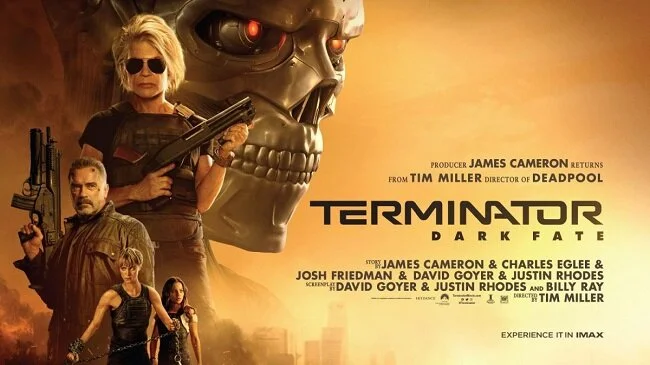
It’s a fairly common habit for a film studio to seek out a particularly skilled director who has an established track record with regard handling specific types of movies, only to subsequently micro-manage and impede them as they go about the task they were employed to do. The net result is often a movie that falls between two stools and lacks any conviction. Furthermore, this is a malady that seems to happen far more often with genre movies. All too often you’ll read about film makers that endured tumultuous productions, running battles with studio executives and ultimately chose to disassociate themselves from the final cut of a movie. With The Predator, we have a curious situation where the opposite appears to be true. Genre luminaries Shane Black and Fred Dekker were both hired to write the screenplay and Black then went on to direct this fourth instalment in the franchise. The idea was to use their established talents to create something that would please core fans and return to the spirit of the first movie. Yet I can only describe the finished results as a classic case of trying too hard. The Predator feels like a caricature of its predecessors and fails to hit its mark.
It’s a fairly common habit for a film studio to seek out a particularly skilled director who has an established track record with regard handling specific types of movies, only to subsequently micro-manage and impede them as they go about the task they were employed to do. The net result is often a movie that falls between two stools and lacks any conviction. Furthermore, this is a malady that seems to happen far more often with genre movies. All too often you’ll read about film makers that endured tumultuous productions, running battles with studio executives and ultimately chose to disassociate themselves from the final cut of a movie. With The Predator, we have a curious situation where the opposite appears to be true. Genre luminaries Shane Black and Fred Dekker were both hired to write the screenplay and Black then went on to direct this fourth instalment in the franchise. The idea was to use their established talents to create something that would please core fans and return to the spirit of the first movie. Yet I can only describe the finished results as a classic case of trying too hard. The Predator feels like a caricature of its predecessors and fails to hit its mark.
Army Ranger sniper Quinn McKenna (Boyd Holbrook) and his team are attacked by a "classic" Predator while on a hostage retrieval mission. McKenna incapacitates the Predator and escapes with part of its armour as a government team arrive. McKenna suspecting the worse sends his evidence by courier to his former home address. After being arrested by government agent Will Traeger (Sterling K. Brown), he written off as "insane" and used as an alibi to cover the governments tracks. McKenna is subsequently shipped off with a bus full of other "troubled" ex-army members. This includes ex-Marine Gaylord "Nebraska" Williams, military veterans Coyle and Baxley, helicopter pilot Nettles, and Lynch, another ex-Marine. Meanwhile Traeger takes the captured Predator to a lab for experimentation and observation, recruiting evolutionary biologist Casey Bracket (Olivia Munn) to study it. The Predator awakes, breaks out of its bonds, and escapes so it can find it's missing equipment that is now in the hands of McKenna's autistic son, Rory (Jacob Tremblay). However, it becomes apparent that a second genetically enhanced Predator is en route, pursuing its own agenda.
It's difficult to know where to start, as there as so many aspects of the film that are problematic. Many of them have been raised by others already. But here are a few off the top of my head that stand out. The plot is tediously generic, simply falling back on an arbitrary trope to justify a “bigger and better” monster (which is neither). The protagonists (and antagonists) are cookie-cutter characters who have zero development. The dialogue strives to be hardboiled, punctuated by dry quips and banter, but sadly comes across as crass, unrelenting and strident, like teenagers trying to out gross each other. The film reeks of re-editing and frequent changes to the production. Characters and plot devices come and go, such as Jake Busey as Scientist Sean Keyes, the son of Peter Keyes from Predator 2 (played by his own father Gary Busey). The alien dog storyline also runs out of steam and ends up being killed quickly out of frame. Then there’s the unpleasant trend of portraying autism as some kind of super power or novelty ability. The action scenes are violent but soulless and of course the villain is underused. The list goes on and on.
What The Predator clearly needed was for the writers to be reined in and for each idea to be developed in a measured and relevant fashion. The “everything bar the kitchen sink” approach that permeates the movie quickly becomes wearing. I have only seen Boyd Holbrook previously in Logan; a role in which he was more of a plot device rather than a defining aspect of the movie. On the strength of The Predator I am far from convinced he can carry a film such as this. Even the score by Henry Jackman overreaches itself. It riffs on previous cues and themes by Alan Silvestri too frequently and the new material sounds more satirical than a homage. The only flashes of inspiration remain the Predator make up effects work by Tom Woodruff Jr (but only for the “classic” predator) and for the brief exchanges of dialogue between the school bullies (it reminded me so much of the Monster Squad). But these are just fleeting positive aspects during one hundred and six minutes of bad choices. I am still aghast that a studio such as Twentieth Century Fox could spend $88 million on an established franchise, employ the best in the genre writing and production wise, only to still fumble the ball so monumentally.
The Predator franchise has spawned numerous comics and novels that have endeavoured to approach the core story from new and innovative angles. Why have none of these been optioned or at least used as a premise for a bespoke screenplay? For example, setting Predator hunts in different periods of world history is a promising premise. Why not explore the backstory of the Predator culture and history? Are there other alien cultures that oppose Predator hunts? Is there any form of law enforcement body that intercedes in their activities? All of these ideas are better and more to the point, have the scope to be developed into something far superior to the sorry mess that is The Predator. Perhaps the studio will reflect upon such feedback before they proceed with yet another instalment. I won’t hold my breath however, as film studios are notoriously tone deaf when it comes to feedback and franchise management. The Predator despite all it’s failings still doubled its budget at the world box office. And the way the movie ends sets things up nicely for further sequels, although given the standard of this one and it’s childish cliffhanger, who would want more of the same?






Taken 3 (2015)
Life in the Mills family is never easy. After surviving two previous kidnappings, Brian (Liam Neeson) now finds that his ex-wife Lenore (Famke Janssen) has been brutally murdered. Framed for the crime, goes on the run from the Police, in an attempt to discover the true perpetrator and clear his name. Is Lenore's current partner, Stuart St. John (Dougray Scott) involved in some way? Can Brian protect his pregnant daughter Kim (Maggie Grace)? Has he ever stopped to consider why so many bad things happen to him? Why wasn’t this movie set in Europe like the others? What happens to the huge cuddly Panda seen at the start of the movie? Who in the name of all that is holy edited this movie?
Life in the Mills family is never easy. After surviving two previous kidnappings, Brian (Liam Neeson) now finds that his ex-wife Lenore (Famke Janssen) has been brutally murdered. Framed for the crime, goes on the run from the Police, in an attempt to discover the true perpetrator and clear his name. Is Lenore's current partner, Stuart St. John (Dougray Scott) involved in some way? Can Brian protect his pregnant daughter Kim (Maggie Grace)? Has he ever stopped to consider why so many bad things happen to him? Why wasn’t this movie set in Europe like the others? What happens to the huge cuddly Panda seen at the start of the movie? Who in the name of all that is holy edited this movie?
There's no denying it Taken 3 (or Taken to the Cleaners as I like to call it) is a loud, insanely edited, contrived and downright stupid movie. Once again, just like it’s immediate predecessor, it feels like a bad soap opera for the first thirty minutes until the action kicks in. As before there are two versions of the film available; a PG-13 cut where the fights and set pieces are lightning edited to the point of confusion. Then there’s an unrated edition with a more graphic body count that uses alternative material. The plot and dialogue are often risible with numerous plot holes, to the point that its almost becomes self-parody. At one-point Brian Mills kills two henchmen with a defibrillator, begging the question why wasn't it used in an attempt to resuscitate the screenplay? Yet despite its utter mediocrity, headache inducing visual style and overall stupidity, I still enjoyed Taken 3. That doesn't pardon its sins in anyway. I just find Liam Neeson compelling to watch, even in a movie such as this. He has a very humane, even avuncular quality about him. But an uncle who is also a bit of a sociopath.
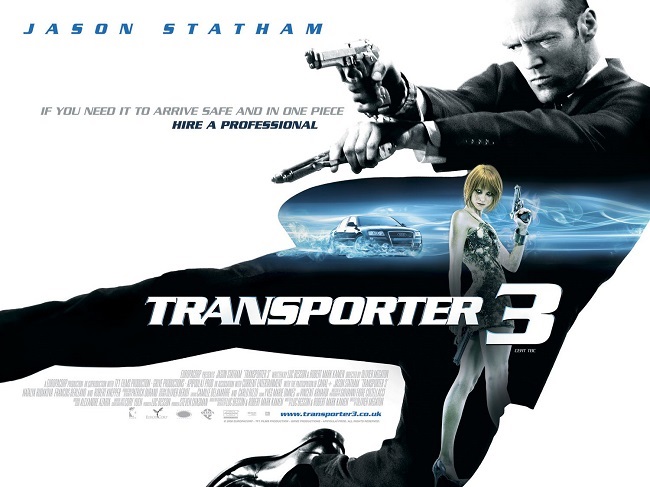
Director Oliver Megaton is a very inconsistent film maker. Previous movies such as Colombiana and The Transporter 3 have been more than serviceable. Yet more recent titles such as Taken 2 and Taken 3 are lacking in polish. In this latest instalment the even the ever-dependable Forest Whitaker is left with precious little to do as the Police Inspector tracking down Brian Mills. He tries to bring embellishments to the character, such as his habit of wearing rubber bands around the wrists and carrying a solitary chess piece, but there simply isn't enough material for him to work with. Sam Spruell similarly has a vague role, as Malankov, the villain of the proceedings. Both these actors are potential assets to the movie, but Megaton simply neglects them, focusing more of unnecessary chases and CGI effects.
A Walk Among the Tombstones proved that Liam Neeson can still produce quality performances when given a well written screenplay. He is a good actor and a genuine screen presence. It is the latter attribute that allows him to bluff his way through such unmitigated nonsense as Taken 3. I won't deny that I had fun watching the film (the unrated version naturally), although that was mainly due to my revelling in its iniquities and failings. However, I do recognise that if you are not as forgiving towards Mr. Neeson as I am, then all you will see if a crass, overcooked action movie starring an ageing Irish man who seems nice in-between breaking people’s limbs.
Taken 2 (2012)
If it worked once already, why not just do it all again irrespective of logic and statistical likelihood? Thus, in Taken 2 Ex-CIA operative (and mail order catalogue) Bryan Mills (Liam Neeson) is struggling to come to terms with his daughter Kim (Maggie Grace) growing up and his relationship with his ex-wife Lenore (Famke Janssen). If life wasn't complicated enough with being a Dad, Bryan finds himself up against a vengeful Albanian gang. It would appear that they're somewhat annoyed that he slaughtered their brethren in the previous instalment. Hence Bryan and Lenore are kidnapped whilst on vacation in Istanbul and face a grim death at the hands of the gang's patriarch, Murad Hoxha (Rade Šerbedžija). Once again, the criminal fraternity underestimates the resourcefulness of Mr. Mills and it is not long before the tables are turned.
If it worked once already, why not just do it all again irrespective of logic and statistical likelihood? Thus, in Taken 2 Ex-CIA operative (and mail order catalogue) Bryan Mills (Liam Neeson) is struggling to come to terms with his daughter Kim (Maggie Grace) growing up and his relationship with his ex-wife Lenore (Famke Janssen). If life wasn't complicated enough with being a Dad, Bryan finds himself up against a vengeful Albanian gang. It would appear that they're somewhat annoyed that he slaughtered their brethren in the previous instalment. Hence Bryan and Lenore are kidnapped whilst on vacation in Istanbul and face a grim death at the hands of the gang's patriarch, Murad Hoxha (Rade Šerbedžija). Once again, the criminal fraternity underestimates the resourcefulness of Mr. Mills and it is not long before the tables are turned.
Taken 2 is a tonally odd movie. It bookends the action content with what feels like a quasi-soap opera. A sort of "Life with the Mills family", where Bryan blunders through every stereotype about being a modern Dad. Again, there are plot holes a mile wide along with a total disregard for the laws of sovereign nations. It would appear that running gun battles, car chases and the use of hand grenades are not a big deal in Turkey, just like they weren't in Paris in the first movie. In this alternative universe, people also recover very quickly from traumatic, life altering events such as kidnapping, a near fatal wound and both physical and psychological torture. "Oh, those pesky Albanian gangsters really are a nuisance. Who wants an ice cream?"
Yet despite the complete stupidity of virtually every aspect of Taken 2, it still manages to shrug off all these criticisms and play a lone trump card that saves it. Yes, Liam Neeson manages to carry Taken 2, by the sheer force of his personality, irrespective of the ludicrous dialogue, crass narrative and total lack of internal logic. I don't quite know how to define it, but Mr. Neeson has a quality about him that somehow cancels out all these negative points. He commands the viewers’ attention by being a sort of alpha male, “pater familias”, sexy old death machine. A real achievement for a sixty-year-old man (at the time of filming).
There is a paradox regarding the action sequences in Taken 2. There are some very interesting techniques used, but they are somewhat difficult to discern due to the lightning editing. There is a telescopic baton fight of note and a climatic hand-to-hand battle that is very impressive. Again, I can only recommend the unrated version of the film. The theatrical version was reduced in content to obtain lower ratings on both sides of the Atlantic. Unlike the perfunctory nature of US action movies, there is a noticeable cruel streak running through Taken 2. Some may find this unpalatable. The torture of Lenore focuses very much upon her psychological suffering as the villain brandishes the instruments, he intends to use upon her.
Critics lined up to pour scorn on Taken 2 upon release. Director Olivier Megaton was quickly accused of being the French McG. The film certainly is quite spectacularly preposterous, yet still manages to entertain with it's interesting locations and the towering presence of Liam Neeson. Plus, any movie that advocates locating people by using a map, a bootlace, a pen and several hand grenades deserves some credit. So, I do not feel disposed to join others in beating of this particular cinematic piñata. We all choose to adopt some waif and stray or lost cause at some point. Taken 2 is mine.
Taken (2008)
Sometimes when a movie chimes with the public is goes from being a box office success to becoming part of popular culture. The Taken franchise has done exactly that and a piece of iconic dialogue has now become a perennial internet meme. But if you look beyond this “baggage” and subsequently judge the film by the standards of the genre, you’ll find there’s more than meets the eye. On paper Taken is a fairly formulaic thriller. But it boasts a more interesting pedigree than other movies of this kind. Written by Luc Besson and directed by Pierre Morel (of District 13 fame), the action driven story set in Paris, has all the benefits that come from a European production. But the most intriguing aspect of Taken is the casting of the lead character Bryan Mills. Instead of relying on a known action star, the part ended up with Oscar nominated actor Liam Nesson. As you can imagine, the results are not as you would expect and as a result a serious actor re-invented himself as an action star.
Sometimes when a movie chimes with the public is goes from being a box office success to becoming part of popular culture. The Taken franchise has done exactly that and a piece of iconic dialogue has now become a perennial internet meme. But if you look beyond this “baggage” and subsequently judge the film by the standards of the genre, you’ll find there’s more than meets the eye. On paper Taken is a fairly formulaic thriller. But it boasts a more interesting pedigree than other movies of this kind. Written by Luc Besson and directed by Pierre Morel (of District 13 fame), the action driven story set in Paris, has all the benefits that come from a European production. But the most intriguing aspect of Taken is the casting of the lead character Bryan Mills. Instead of relying on a known action star, the part ended up with Oscar nominated actor Liam Nesson. As you can imagine, the results are not as you would expect and as a result a serious actor re-invented himself as an action star.
Bryan Mills (Liam Nesson), a retired US government agent, is trying to rebuild his relationship with his 17-year-old daughter Kim (Maggie Grace) who lives with his ex-wife (Famke Janssen) and her new husband. Kim, despite her father’s concerns, takes a trip to Paris with her friend Amanda on the pretext of seeing the sights. Her real motive is to follow U2 as they tour Europe. However, events take a bad turn when both girls are abducted by the Albanian Mafia who intend to sell them into slavery. But they do not realise that Kim's Father has a unique set of skills gained from his former line of work. He subsequently brings them to bear in rescuing his daughter. Naturally mayhem follows.
The plot is simple and doesn’t attempt to re-invent the wheel. There are numerous logical flaws, and some may argue that Taken trivialises the issue of human trafficking. But this is an action film and therefore its not obliged to serve as a serious analysis on contemporary social problems. What it does have is a lead actor who is skilled in his craft, bringing an element of credibility and gravitas to a genre known for poor performances. There is also the advantage of a French director who approaches the subject with a little more respect than average US studio. There is no smug humour, designed to mitigate the violence. There is also no moral agenda, self-justification or a requirement for redemption. The characters do what they do and are what they are.
Taken has its flaws. It ignores the laws of a sovereign nation and has an ending similar to that of the 1979 action film Ashanti, which also dealt with modern day slavery. But it also has exceptionally plausible fight scenes using credible techniques. Fight choreographer Olivier Schneider (Transporter, Kiss of The Dragon and District 13) utilises throat punches, wrist and elbow locks, along with realistic knife usage and accurate gun stances. Liam Neeson, an ex-boxer who is well over 6 foot, acquits himself well for a man of his age (he was 56 at the time of shooting). Taken and its subsequent sequels were all edited for a PG-13 rating when released theatrically in the US. However, uncut versions are available on DVD and Blu-ray and it is these editions that action fans should seek out.
X-Men: First Class (2011)
Falling somewhere between a sequel and a reboot, director Matthew Vaughn has managed to make X-Men: First Class a worthy entry in the X-Men franchise that successfully explores the origins of the characters as well as Christopher Nolan did with Batman Begins. X-Men: Last Stand painted the movie series into a difficult corner by killing off key characters. This movie provides a clever means of bypassing such issue by offering an origins story that subsequent leads in later sequels to an alternative timeline that redresses past mistakes. X-Men: First Class opens with a rather bleak and dark pre-credit sequence set in a WWII concentration camp that sets up the central protagonists and antagonist. It then maintains a steady pace and unlike other more recent bloated blockbusters, it's running time works in its favour and not against it.
Falling somewhere between a sequel and a reboot, director Matthew Vaughn has managed to make X-Men: First Class a worthy entry in the X-Men franchise that successfully explores the origins of the characters as well as Christopher Nolan did with Batman Begins. X-Men: Last Stand painted the movie series into a difficult corner by killing off key characters. This movie provides a clever means of bypassing such issue by offering an origins story that subsequent leads in later sequels to an alternative timeline that redresses past mistakes. X-Men: First Class opens with a rather bleak and dark pre-credit sequence set in a WWII concentration camp that sets up the central protagonists and antagonist. It then maintains a steady pace and unlike other more recent bloated blockbusters, it's running time works in its favour and not against it.
Underpinning the film are the central performances of James McAvoy and Michael Fassbender as Charles Xavier and Erik Lensherr. Both excel in their respective roles, and unusually for a genre piece, have been given a screenplay that doesn't merely paint them as black and white caricatures. The set pieces, especially the denouement set against the Cuban blockade, are impressive but do not overwhelm the story line. The plot device of setting the film in 1963, works surprisingly well and does not make the mistake of becoming some sort of sub Austin Powers cliché. There is even room for homages to such films as Goldfinger, The Odessa File and The Marathon Man, courtesy of the films Nazi sub-plot.
Despite its PG -13/12 rating, X-Men: First Class cunningly exploits as much adult material that the classification allows. The is a high emphasis on sexuality and some rather hard-edged action. I was amused to see the use of one major profanity, which was neatly designed to embellish a standout vignette featuring a clever cameo. Overall this is a superior mainstream comic adaptation that seems to knowingly cater for all viewing demographics. The film also fairs well due to the rather lacklustre previous entry in the franchise. It is hard not to be superior to the incredibly flat and by the numbers X-Men: Last Stand. The emphasis this time is on motivation, politics and revenge rather than a need to string together endless scenes of destruction.
Bullet to the Head (2012)
Walter Hill is a director whose work is often overlooked or marginalised by critics who fail to appreciate its wider merits. Yet despite this, over the course of four decades he has consistently produced thoughtful, intelligent and sometimes positively subversive movies. He has a connection with the past and succeeds in creating stories that often reflect periods of transition and how such times effect the protagonists. There is no denying his flair for crating action sequences and frequently coaxes strong performances from actors, often with the minimum of dialogue. He also has a great understanding of the importance of a movies soundtrack and his collaboration with Ry Cooder has produced some memorable scores.
Walter Hill is a director whose work is often overlooked or marginalised by critics who fail to appreciate its wider merits. Yet despite this, over the course of four decades he has consistently produced thoughtful, intelligent and sometimes positively subversive movies. He has a connection with the past and succeeds in creating stories that often reflect periods of transition and how such times effect the protagonists. There is no denying his flair for crating action sequences and frequently coaxes strong performances from actors, often with the minimum of dialogue. He also has a great understanding of the importance of a movies soundtrack and his collaboration with Ry Cooder has produced some memorable scores.
So, it was Walter Hill's name on the credits for Bullet to the Head that was my main interest. He has not made many movies of late, having focused on his television and movie production work. Naturally seeing his credentials attached to an action picture offered great promise, especially in an age when the art of making such movies is waning. However, I was well aware that the production of Bullet to the Head had not been a straight forward enterprise and that many individuals involved with the project had come and gone. Therefore, I was not expecting a movie comparable to 48 Hrs or Southern Comfort.
The story centres around hit man James "Bobo" Bonomo (Stallone) who is double-crossed by his employers, leaving his partner Louis (Jon Seda) dead. Jimmy has to form an uneasy alliance with cop Taylor Kwon (Sung Kang) as they go up against crime lord Morel (Adewale Akinnuoye-Agbaje) and his enforcer Keegan (Jason Momoa). It's formulaic and strictly by the numbers with all the standard tropes of the buddy movie sub-genre. Cultural difference, borderline racism and snappy one liners. Bullet to the Head is exceeding conventional in its remit. Even the old plot device of a family member being kidnapped is thrown into the mix. Yet it is saved from totally mediocrity due to the charisma of Stallone, the banter between the main characters and the fact that even with such safe material, Walter Hill still manages to stamp his own brand on the action sequences.
The real selling points for Bullet to the Head are Adewale Akinnuoye-Agbaje and Jason Momoa who manage to achieve performances of interest, despite the fact that the screenplay gives them little to go on. Alessandro Camon’s adaptation of Alexis Nolent’s graphic novel is perfunctory to say the least. Things like the use of voice-over to bridge the narrative are tired clichés. Yet every now and then there is a spark in the dialogue between leads or a nod and a wink to the old days of the genre. Overall, there are enough positive attributes to Bullet to the Head to cancel out its own stupidity and down play its familiar nature. Without the direction of Walter Hill, this movie would have been a misfire. The director has a flair for the excessive that few other film makers can get away with (like an axe fight). As it is, it’s a step down from Red Heat, which itself was inferior to 48 Hrs.
The Expendables 2 (2012)
After viewing The Expendables 2, I read back through my notes. They ran as follows: People were shot. Stuff exploded. Quips were made. Amusing. And that is pretty much all you need to know, because if you watch this movie expecting anything more, then you'll be disappointed (and possibly a fool). So, Barney Ross (Stallone) and co are back and this time they have a better (by genre standards) script which is a little more equitable with the screen time (Terry Crews and Randy Couture fans take note). Gallows humour and self-referential one-liners abound, and the plot is rife with over the top situations and features an absurdly named villain (Jean-Claude Van Damme). Mickey Rourke is replaced by Chinese star Yu Nan’s Maggie, and Liam Hemsworth. Oh, and there's lots of mayhem. The movie has the trademark high body count.
After viewing The Expendables 2, I read back through my notes. They ran as follows: People were shot. Stuff exploded. Quips were made. Amusing. And that is pretty much all you need to know, because if you watch this movie expecting anything more, then you'll be disappointed (and possibly a fool). So, Barney Ross (Stallone) and co are back and this time they have a better (by genre standards) script which is a little more equitable with the screen time (Terry Crews and Randy Couture fans take note). Gallows humour and self-referential one-liners abound, and the plot is rife with over the top situations and features an absurdly named villain (Jean-Claude Van Damme). Mickey Rourke is replaced by Chinese star Yu Nan’s Maggie, and Liam Hemsworth. Oh, and there's lots of mayhem. The movie has the trademark high body count.
Director Simon West provides the audience with a suitable homage to eighties action movies, that is a slicker, more robust and at ease with itself that its predecessor. He does not quite reach the heights of his Magnum Opus, Con-Air, but The Expendables 2 is a worthy genre piece. Furthermore, he presents the action is a way that is discernible to the viewer and fun. We are not subjected to a lot of shaky cam, lightning edited bilge, but actually get to see the carnage in all its glory (although a lot of that is CGI bullet hits). The physical stunts are top notch and the fights extremely well-choreographed.
The plot is standard with the team sent to collect the content of a crashed military airplane. Of course, it's not as easy as that, with other parties showing an interest in its plutonium cargo. The subsequent clash between groups results in the death of one of the team, making matters personal. You don't have to be a genius to figure out what happens next. Not only are we treated to one hundred minutes of old school action, but also a who's who of eighties action heroes. Furthermore, they are all happy to send themselves up. It's all a lot better this time round because the production team know what works and what doesn't. Dolph Lundgren steals the show with his banter and casual asides. It is this shift in tone that improves this outing over the first.
Not everything succeeds as well as it could, though. The climatic shootout is not as strong a set piece as some of the proceeding sequences and somehow, I expected the arrival of Schwarzenegger, Willis, and Chuck Norris to have a little more impact. That's not to say it's not good. I was just expected something more bombastic. Two of the three have been out of the acting game for a while (at the time of filming), so I guess we should cut them some slack. It is also curious to note that although the film has a lot of violence, the use of profanity is quite restrained. It is present but tends use a lot of milder terms. A concession of some kind perhaps? It certainly does not spoil The Expendables 2. I picked up on it just because bad language is so prevalent in this genre.
The Expendables 2 manages to find the right balance between loud action, tongue in-cheek humour and respect for the genre. It is also a most welcome change to modern PG-13 rated action movies that want to be hard hitting and tough but cannot countenance depicting violence for fear of tipping over into a higher rating. It is the honesty of The Expendables 2 that is one of its strongest assets, along with the fact that it does exactly what it sets out to do. That and of course Schwarzenegger and Willis in a Smart Car, shooting the crap out of things. When you add on top of that Chuck Norris quoting his own "facts" then you are in action movie hog heaven.
The Last Stand (2012)
Upon release The Last Stands opening weekend box office returns were not as much as Lionsgate pictures had anticipated. The long-term worldwide gross was only $48 million, for a movie that had cost over $40 million. There was talk in the mainstream movie press of Arnie's comeback stalling and that the sky was falling for R rated action movies. Theatres at the time were thriving on “Jason Bourne” style thrillers and the ubiquitous Marvel Cinematic Universe. Critics were also mixed in their opinions regarding the film. Some were quite dismissive, citing the very things that an ageing Arnold Schwarzenegger brings to the table in The Last Stand, as faults. Exactly what were they expecting? It's like criticising a dog for barking.
Upon release The Last Stands opening weekend box office returns were not as much as Lionsgate pictures had anticipated. The long-term worldwide gross was only $48 million, for a movie that had cost over $40 million. There was talk in the mainstream movie press of Arnie's comeback stalling and that the sky was falling for R rated action movies. Theatres at the time were thriving on “Jason Bourne” style thrillers and the ubiquitous Marvel Cinematic Universe. Critics were also mixed in their opinions regarding the film. Some were quite dismissive, citing the very things that an ageing Arnold Schwarzenegger brings to the table in The Last Stand, as faults. Exactly what were they expecting? It's like criticising a dog for barking.
When I saw The Last Stand upon its UK release, it was well received by the audience. There was laughter at the one liners and at some of the death scenes. There was even a smattering of applause at the end. As we left the screening, knowing looks and nods were exchanged. By and large the consensus was one of a job well done, because The Last Stand provided everything that we expected. A modern action movie, with an ageing star, making copious amounts of references to his age and the incongruity of the situation in a humorous way. The set pieces were competent and hard edged, and the overall film was relatively low key compared to the excesses of the star’s former works, such as Total Recall. A recent second viewing has re-iterated my opinion that it was the right sort of comeback vehicle for such a star.
The story is a very traditional set up, that lends itself perfectly to delivering the sort of content that fans of this genre (and in particular this star) actually want. The head of a Mexican drug cartel (Eduardo Noriega) escapes FBI custody, leaving a senior agent (Forest Whitaker) pondering how he will get across the border. The trail points to the sleepy town of Sommerton Junction. As an army of hired mercenaries descend upon the town to facilitate their bosses return to Mexico, it falls to local Sheriff (Schwarzenegger) and his deputies, Jamie Alexander, Luis Guzman and Zach Gilford to thwart their plans. Assisted by eccentric local gun collector Lewis Dinkum (Johnny Knoxville) they barricade the main street and make their proverbial last stand.
The Last Stand is surprisingly a little more than just the sum of its parts. Director Kim Ji-woon brings a subtly different look and feel to the proceedings, taking what is essentially a western and tempering it with an Asiatic aesthetic and better than average script (as far as action movies go). The movie benefits from interesting characters who you can relate to and who are quite endearing. There are elements of emotional drama here, that you don't often get in this genre. Arnold Schwarzenegger is actually a better actor than a lot of people think, and his portrayal of world-weary sheriff Ray Owens is pretty good. When a particular cast member dies in the second act, it is handled well by all the cast and it is a surprisingly sad scene. It's not Shakespeare but is light years beyond a lot of movies these days, who are populated by disposable characters you are totally indifferent to.
The less is more (by Arnie standards) approach of The Last Stand works well. It is nice to see physical car stunts and action set pieces when they’re used in these sorts of productions. Yes, there are elements of CGI but not to the extent of other genre movies. It is also a pleasant change to see a production of this kind receiving a higher rating and nailing its colours firmly to the mast. Also, an action movie of this scope with a body count in the dozens rather than hundreds, seems to be far more appropriate for a man of Mr. Schwarzenegger age. The Last Stand is not a perfect movie, but it is certainly not the pedestrian misfire some would have you believe. However, Arnold Schwarzenegger appeal is a generational thing. Upon mature reflection, if this movie had been released on Netflix then it may well have found a wider audience among fans who grew up with his work.
The Expendables Extended Director's Cut (2010)
If you are expecting more violence, explosions and sundry mayhem in the extended director's cut of The Expendables, then you'll find none. What you will discover is an additional ten minutes of character development and back story, which greatly improves the overall film. The theatrical cut was certainly not lacking in the action department but was a bit thin on narrative and back story. This extended version of the movie with over two hundred changes to the original cut, bolsters the dramatic elements of the plot. We get to know more about the team and as a result care a little more for them. You can find a comprehensive comparison over at moviecensorship.com of both versions of the movie.
If you are expecting more violence, explosions and sundry mayhem in the extended director's cut of The Expendables, then you'll find none. What you will discover is an additional ten minutes of character development and back story, which greatly improves the overall film. The theatrical cut was certainly not lacking in the action department but was a bit thin on narrative and back story. This extended version of the movie with over two hundred changes to the original cut, bolsters the dramatic elements of the plot. We get to know more about the team and as a result care a little more for them. You can find a comprehensive comparison over at moviecensorship.com of both versions of the movie.
A further improvement that has been made in the extended director's cut is that several of the action scenes have been re-edited. Not for any censorship reasons but mainly to improve the flow of the content. The water-boarding sequence now seems more relevant and clinical, rather than just brutal. The infamous knife twisting in the throat scene which was dropped from the UK theatrical print has been shortened in the extended cut. The hand amputation and decapitation that proceeded it, have had a few frames added and the entire sequence now seems to be structured better, allowing the viewer to follow what is happening on screen a lot more easily. I am not a fan of the modern style of lightning editing and felt that some sequences where quite jarring when I first saw The Expendables in the cinema. These revisions and others have addressed this issue. The style is still very fast but what is depicted can be visually assimilated a lot more easily.
Although there is much to enjoy about this film, one of its biggest shortcomings is its reliance on CGI FX over traditional physical effects. A lot of the bullet hits, knife wounds and blood splatter have been added in post-production. I'm sure time constraints and budgetary restrictions where deciding factors as to why the production chose this approach, but the reality is that these FX sequences often don't work. Take for the example the scene where the Somalia pirate gets blown in half by Dolph Lundgren. The sequence does not look at all credible and all the surrounding extras are conspicuously free from blood splatter. A simple physical effect using a prosthetic body would have been infinitely superior. Eric Roberts demise is similarly poorly realised, which is a shame because it diminishes the impact of the scene.
I don't expect to be schooled in military geo-politics by a movie such as The Expendables. Nor do I expect it to afford me any insight into the human condition, the horrors of war or the nature of the soul (although the scene where Mickey Rourke talks about how he failed to stop a suicide attempt was extremely well acted and somewhat out of place). What I do expect is hard edged action, quirky characters, witty banter and genuine love of the genre in question. The Expendables achieves all of these and does so with aplomb. Too often, equivalent movies fail to do this because they’re fundamentally dishonest. The soulless manner in which they’re contrived to retrofit a money-making formula shows nothing but contempt for their target audience. Whatever your view on the merits of The Expendables its heart is clearly in the right place, which is a rare quality these days.
Sherlock Holmes: A Game of Shadows (2011)
Sherlock Holmes: A Game of Shadows, is very much a film of two halves. The initial hour is filled with gunfights, explosions, and bullet time fist fights. Sherlock Holmes (Robert Downey, Jr.) and Dr. Watson (Jude Law) unravel the sinister plans of Professor Moriarty (Jared Harris) and proceed to deal with it in the idiom of Frank Martin, as director Guy Ritchie's pulls every visual trick he knows out of the bag. The pace is fast yet a fairly strong script and superb chemistry between central characters, makes this a cut above the usual PG-13 rated action fodder served to the masses at present. It is beneficial that the bulk of the original cast and crew returned for this sequel as it maintains a strong sense of continuity with it predecessor.
Sherlock Holmes: A Game of Shadows, is very much a film of two halves. The initial hour is filled with gunfights, explosions, and bullet time fist fights. Sherlock Holmes (Robert Downey, Jr.) and Dr. Watson (Jude Law) unravel the sinister plans of Professor Moriarty (Jared Harris) and proceed to deal with it in the idiom of Frank Martin, as director Guy Ritchie's pulls every visual trick he knows out of the bag. The pace is fast yet a fairly strong script and superb chemistry between central characters, makes this a cut above the usual PG-13 rated action fodder served to the masses at present. It is beneficial that the bulk of the original cast and crew returned for this sequel as it maintains a strong sense of continuity with it predecessor.
Inspector Lastrade (Eddie Marsan) is sidelined in this story and Holmes's love, Irene Adler (Rachel McAdams) is dispensed with quite early in the proceedings, leaving us with much more interaction between Holmes and Watson. A dynamic that is skewed by Watson's marriage, leading to an unconventional love triangle. Sadly, there are a few weaknesses in the finished film. Gypsy leader Madam Simza Heron (Noomi Rapace) has a great introduction then is left somewhat under developed. Also, the disgraced Colonel and crack shot, Sebastian Moran is similarly vague. He also drops out of the film towards the end, providing a suitable antagonist for a third instalment.
But these issues notwithstanding, the second half, quickly shifts from action to the traditional game of intellectual cat and mouse between our hero and his arch nemesis. It is during these verbal confrontations that the more traditional elements of Sir Arthur Conan Doyle's work come through. The final battle via a game of chess on a balcony overlooking the Reichenbach falls, is ingenious and enthralling. Guy Ritchie's has certainly found the right mix between old school cerebral sleuthing and contemporary action styles. He also understands that the linchpin of these films is the relationship between leads and he handles this dynamic skilfully. Hans Zimmer's soundtrack once gain embellishes the film and avoids the usual musical clichés associated with this unique sub-genre.
Sherlock Holmes: A Game of Shadows is very entertaining holiday fare and is certainly not an inferior sequel. Twice now director Guy Ritchie has exceeded expectations and made amends for previous sins (need we list them?). Plus, it is always a pleasure to see genre stalwart, rent-a-German and purveyor of Ferrero Roche, Wolf Kahler back on the screen. On a parting note, Sherlock Holmes: A Game of Shadows is quite surprisingly strong in content. It is interesting to see how Mr. Ritchie has carefully shot and choreographed the violence so as to secure a PG-13 rating/12 Certificate. I was quite surprised about one scene in which Sherlock Holmes is rather brutally interrogated. Although the unpleasantness is justified, viewers should be aware of this hard edge to the movie.
Sherlock Holmes (2009)
For me the inherent appeal of Conan Doyle’s great detective is the way in which it lends itself to continuous reinvention and interpretation. And so, I was greatly surprised by how well director Guy Ritchie handled the 2009 reboot. He in fact did so well, that you could argue it put his career back on track. You won’t find a deerstalker on the head of Robert Downey Jr’s Holmes. This is very much a Holmes for the current times, with bar knuckle boxing, explosions and frenetic chases around a stylised CGI London, but despite how it sounds it works extremely well. The pacing, tone and humour are just right and so the movie avoid becoming a caricature. Under all the modern trappings the screenplay retains the essential elements of source text, such as a densely plotted narrative, cunning mental gymnastics and of course the complex dynamics of the Holmes, Watson relationship.
For me the inherent appeal of Conan Doyle’s great detective is the way in which it lends itself to continuous reinvention and interpretation. And so, I was greatly surprised by how well director Guy Ritchie handled the 2009 reboot. He in fact did so well, that you could argue it put his career back on track. You won’t find a deerstalker on the head of Robert Downey Jr’s Holmes. This is very much a Holmes for the current times, with bar knuckle boxing, explosions and frenetic chases around a stylised CGI London, but despite how it sounds it works extremely well. The pacing, tone and humour are just right and so the movie avoid becoming a caricature. Under all the modern trappings the screenplay retains the essential elements of source text, such as a densely plotted narrative, cunning mental gymnastics and of course the complex dynamics of the Holmes, Watson relationship.
Robert Downey Jr is a far cry from Peter Cushing’s Holmes. He introduces a slovenly element to the character who’s continuously intellectually absorbed at the expense of others and worldly social niceties. Opium addiction is not mentioned this time round. He excels at the things that engage his intellect, including pugilism, so we have some solid set pieces, driven by Holmes pre-fight analysis. Jude Law’s Doctor Watson is an amiable and long-suffering foil, very much in the Danny Glover mould from Lethal Weapon. He offsets Holmes’s intellect perfectly with his common sense and sarcasm. As for the plot, it centres upon an aristocratic serial killer called Lord Blackwood (Mark Strong), who is caught and tried, sent to the gallows and placed in his family tomb. However, he subsequently appears to rise from the dead, and returns to his killing spree.
It’s all very fast paced and at times you can see how certain characters are introduced to simply expedite the plot and allow Holmes to do his quota of “sleuthing” before the next action sequence. Sarah Greenwood’s production design is a definite high point with here stylised, even borderline steampunk “Victoriana”. Ritchie attends to the proceeding well and balances the films elements, ensuring that just as things start to get a bit silly, he moves them on to another diversion. There is also a great score by Hans Zimmer which is radically different from the usual Violin driven motifs one associates with Holmes. Rachel McAdams, as American femme fatale Irene Adler, is more than the usual window-dressing female characters have in such movies and as ever Eddie Marsan is extremely watchable as the hang dog Inspector Lestrade.
Considering that Sherlock Holmes was released as the MCU was beginning to get traction with cinema audiences, it does well not to just repackage the great detective as yet another superhero. Yes, there are some very flashy visual affectations and contemporary editing techniques but there is still room for film to focus on the dynamics of Holmes and Watson relationship. There is a definite chemistry between both leads and it is the ongoing examination of relationship that once again underpins the story and makes it worth watching. This coupled with the right tone and visual embellishments meant that Sherlock Holmes found an audience and did well at the box office, with the cast and director returning for a sequel.
Megiddo: The Omega Code 2 (2001)
If at first you don’t succeed, try the exact same thing over again with more money. Megiddo: The Omega Code 2 is the follow up to the 1999 film The Omega Code. Technically, the film is a quasi-prequel (plot wise) which covers Politician, Industrialist and Antichrist Alexander Stone’s (Michael York) rise to power and his subsequent feud with his younger brother. It then deviates from the sequence of events in the first movie by ending in a large-scale battle at Megiddo between the forces or good and evil, both of whom favour the use of tanks and helicopter gunships. Megiddo: The Omega Code 2 benefits from a substantially larger budget and from superior direction by veteran film maker Brian Trenchard-Smith. It’s hardly a genre milestone but it’s a step in the right direction compared to its predecessor.
If at first you don’t succeed, try the exact same thing over again with more money. Megiddo: The Omega Code 2 is the follow up to the 1999 film The Omega Code. Technically, the film is a quasi-prequel (plot wise) which covers Politician, Industrialist and Antichrist Alexander Stone’s (Michael York) rise to power and his subsequent feud with his younger brother. It then deviates from the sequence of events in the first movie by ending in a large-scale battle at Megiddo between the forces or good and evil, both of whom favour the use of tanks and helicopter gunships. Megiddo: The Omega Code 2 benefits from a substantially larger budget and from superior direction by veteran film maker Brian Trenchard-Smith. It’s hardly a genre milestone but it’s a step in the right direction compared to its predecessor.
Sadly, the script is still weak and therefore the biggest flaw in the production and not even the tinkering of script doctor John Fasano cures it of its failings. Despite the overtly religious framing of the narrative there seems to be little insight into the forces of good. God and Jesus are seldom mentioned, and the plot still focuses on the rise of the beast. The production values are higher than its predecessor and some of the action scenes are okay. However, the use of CGI is variable ranging from adequate to poor. The destruction of the Coliseum in Rome is noticeably inept. In between the action we have a notable cast of international character actors such as Michael Biehn, David Hedison, Udo Kier and Franco Nero. In a fit of inspired casting, R Lee Ermey plays the president of the United States! They all spend their time looking earnest and moving the clumsy story line forward.
Considering the nature of the story, you would expect some flamboyant dialogue and clever theological cut and thrust. But such an approach is distinctly lacking. There are also several plot holes that must surely spring to mind to even the most casual viewer. For example, what is the Pope doing during these proceedings? Is he not Gods representative on earth? Surely the Catholic Church has a few thoughts on the rise of the Antichrist? Also, how does Islam react to these events? The screenplay chooses to omit these lines of enquiry. There is also no mention of the number of the beast, which tends to be a key point in the Book of Revelations. You do not have to be a major religious scholar to realise that Megiddo: The Omega Code 2 is simply cherry picking various religious texts to justify its own narrative. But then again this is a movie funded by evangelical Christians.
However, despite these shortcomings, this is by and large a more enjoyable film than the first instalment. The reliable cast do their best to tackle the screenplay and plot with stoic professionalism. Director Brian Trenchard-Smith stated that he treated the movie as a “a fun romp, not usually what happens with a religious film”. I still got the feeling that I was watching a sanitised version of a The Final Conflict but that is the price you have to pay to reach the widest audience with the ubiquitous PG-13 rating. Oh, and there's no reference to the code of the title in this particular movie. So, if you endured the first movie and feel the need for a second round, then Megiddo: The Omega Code 2 is a more rewarding experience. It still isn’t anywhere near as good as it could’ve been but it’s an improvement. Perhaps if there had been a third instalment, they may have got it right. However, poor box office returns brought this distinctly niche franchise to an end.